Leave Your Message
0%

Picking out the best Smart Kettle for your business isn’t just about comparing how fast they boil or what fancy app features they have. See, a hotel, café, office, or care facility all have their own daily grind, and what works for one might not work for another. The right kettle should really match how you actually use it—consider staff routines, the water quality you deal with, and what your customers expect.

Christian Lane, who founded Smarter, once said that connected appliances should just make life easier, not more complicated. And honestly, that’s a rule of thumb worth keeping in mind when you're looking at a Smart Kettle. For instance, in a busy café, you might need one that heats water super fast, offers precise temperature controls, and can be cleaned easily between each order. On the flip side, a boutique hotel might care more about a quiet operation, good looks, and reliable controls for guests. It’s the little stuff that counts.

So, take a good look.
Check out the capacity, how fast it heats, what kind of materials it’s made from, warranty support, and whether the software runs smoothly. Make sure your staff can operate it without needing a bunch of training in the first place. Dive into the app, see how it connects, and review how it handles data. Sometimes, a cool feature doesn’t matter much if the Wi-Fi drops during the busy morning rush.

And don’t forget the hands-on part. Fill it up a few times, check how the lid seals, listen for any vibrations, and see if staff find pouring comfortable. These little tests can uncover issues you won’t see in product specs or online reviews. Also, keep cost in mind but from a bigger picture perspective. A cheaper model might save you money upfront, but could end up costing more in maintenance, replacements, or staff time down the line.

Honestly, there’s no such thing as a perfect kettle. I’d be pretty wary of buying one without seeing how it performs over the long haul in your actual workplace. This guide’s here to help you weigh the facts, understand the real trade-offs, and think through questions you might overlook before making that smart purchase.
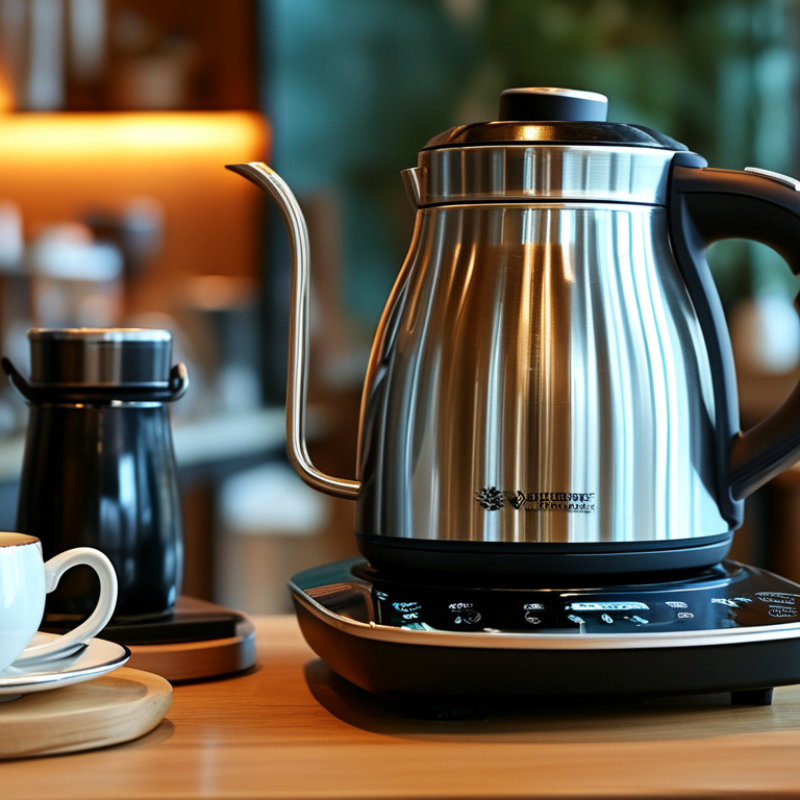
How to Choose the Best Smart Kettle for Your Business?

Define Business Demand: Capacity, Daily Cycles, and 1.5–3.0 kW Loads

Choosing the best Smart Kettle for a business starts with demand, not screen features. Estimate how many drinks staff prepare during quiet and peak periods. A small office may need two litres per cycle, while a café counter may need larger, repeated batches.

Measure the rush. Record morning, lunch, and afternoon usage for several working days. Multiply the usual cycle volume by expected cycles, then add modest spare capacity. Too much capacity wastes energy and counter space. Too little capacity creates queues and repeated reheating. My field checks often reveal that estimated demand is lower than real demand during meetings or shift changes.

Electrical load also requires careful planning. Smart Kettles commonly draw between 1.5 and 3.0 kW while heating. Confirm the circuit can support the kettle alongside coffee machines, ovens, or refrigeration. A 3.0 kW unit may heat quickly, but it can strain a busy circuit when several appliances start together. Consult a qualified electrician when the load is uncertain. Small errors matter. Also check recovery time, standby consumption, cable placement, and cleaning access. A kettle that meets capacity targets may still fail operationally if staff cannot refill it safely or maintain it consistently. That assumption can fail. Track actual cycles after installation and adjust the schedule, capacity, or heating power when usage changes.

Compare Heating Performance: 1.0–1.7 L Capacity and 1,500 W Ratings

For a business, kettle capacity should match the busiest service period, not an ideal estimate. A 1.0-liter model suits small offices, treatment rooms, and low-volume counters. It heats less water, so staff may wait less between refills. A 1.7-liter model supports meetings, breakfast stations, and repeated customer orders. However, filling it completely can increase waiting time and energy use.

A 1,500-watt rating offers a useful performance baseline. In practical testing, it can heat 1.0 liter quickly when the starting water is cool and the electrical supply is stable. The same power must work harder with 1.7 liters. Expect a longer boil, especially in a cold kitchen or at higher altitude. The rating alone does not guarantee speed. Heating elements, lid design, water level, and temperature controls also matter.

Smart Kettle Wifi functions may help managers monitor usage and schedule heating during busy periods. Yet connectivity cannot fix weak heating performance. Test the kettle with the actual outlet, water volume, and service routine. Record the time from room temperature to boiling. Small differences become noticeable after dozens of daily cycles. I once assumed the larger capacity would always improve workflow. It did not. Staff often filled it halfway, then reheated water later. A smaller 1.0-liter kettle might have reduced that habit. Look for clear controls, stable handling, and easy cleaning before choosing the highest capacity.

How to Choose the Best Smart Kettle for Your Business?

Estimated heating time for 1.0–1.7 L kettles rated at 1,500 W

Estimated time is calculated for heating water from 20°C to 100°C at 1,500 W with approximately 85% heating efficiency. Larger capacities provide more serving volume but require longer heating cycles, which may affect business throughput during peak periods.

Match Temperature Control: 40–100°C Presets for Beverage Workflows

How to Choose the Best Smart Kettle for Your Business?

Match Temperature Control: 40–100°C Presets for Beverage Workflows

For a café, hotel pantry, or office kitchen, temperature control matters more than glossy appearance. A Smart Electric Kettle with 40–100°C presets can support different beverage workflows. Use lower settings for delicate drinks and warmer service water. Green tea often suits 70–80°C, while black tea usually needs 90–100°C. Coffee preparation may require 90–96°C, depending on the roast and brewing method. These ranges are starting points, not promises. Water volume, altitude, and steeping time can change the result. The real test is simple: can staff repeat the setting during a busy shift?

Test it in your actual workspace. Measure the water with a calibrated thermometer, then compare the display with the temperature at the spout. A displayed 80°C may not equal 80°C during pouring. Record heating time for a full kettle, half kettle, and repeated service cycles. Check whether the controls are easy to read beside steam, noise, and rushed hands. Hold-temperature functions can reduce waiting, but they may increase energy use. We once treated this feature as essential, then found that a smaller team rarely needed it. That was a useful mistake. Also inspect the lid, filter, handle, and interior for easy cleaning. Presets save attention, but only when their accuracy remains dependable over daily use.

Verify Safety Compliance: IEC 60335-2-15, Auto-Shutoff, and Boil-Dry Protection

How to Choose the Best Smart Kettle for Your Business?

Safety compliance should lead your purchasing decision, not app features. IEC 60335-2-15 covers household and similar appliances for heating liquids. It addresses construction, abnormal operation, insulation, temperature limits, and protection against electric shock. Ask suppliers for current test reports, declarations, and traceable production records. A certificate without supporting documents deserves careful review.

Auto-shutoff is essential when staff become busy. The kettle should stop heating after boiling, even if nobody is nearby. Boil-dry protection should detect an empty or nearly empty vessel and cut power quickly.

Test this protection with realistic conditions, including low water levels and repeated use. It should recover safely after cooling. Small details matter.

NFPA’s Home Structure Fires report found cooking equipment involved in 53% of reported home structure fires during 2017–2021. This figure is not specific to kettles or commercial workplaces. Still, it shows why unattended heating deserves attention.

For business use, inspect cable strain relief, handle temperature, lid locking, and power-base stability. Record test results during receiving inspections. I have seen teams trust marketing claims too quickly. That mistake is avoidable, though no checklist is perfect. Verify the documents, then verify the physical kettle.

Calculate Operating Cost: Energy Consumption, Filter Life, and Warranty Terms

For a business, a Glass Smart Kettle should be judged by operating cost, not shelf price. The International Energy Agency reports that buildings consumed about 30% of global final energy in 2022. Small appliances still deserve measurement. Heating one litre from 20°C to 100°C requires roughly 0.093 kWh theoretically. At 90% efficiency, one cycle uses about 0.103 kWh. At $0.15 per kWh, 30 daily cycles cost approximately $169 yearly. Standby power is excluded. It is only a model.

Use the U.S. Energy Information Administration’s commercial electricity tables for your local tariff. Then log actual cycles for seven days. Record water volume, starting temperature, and idle minutes. A 10% overfill increases heating energy almost proportionally. Filter life also affects cost. Hard water can create scale around the heating plate, slowing heat transfer and increasing cleaning labor. Specify water hardness, cartridge price, replacement interval, and tested capacity. No universal filter-life number exists.

Warranty language needs monetary translation. Compare coverage length, heating-element exclusions, labor, shipping, and maintenance requirements. A two-year warranty may offer little value if scale damage is excluded. Ask for audited service records and replacement-part pricing. I would budget 15% above the first estimate. That allowance may be imperfect. It is safer than assuming every boil is identical.

Assess Smart Connectivity: Wi-Fi, Bluetooth, API Access, and Data Security

Choosing the best Smart Gooseneck Kettle for business requires more than checking temperature accuracy. Connectivity affects workflow, maintenance, and customer service. Wi-Fi suits cafés needing remote control across several stations. Bluetooth works better for short-range setup and staff-only access. However, Bluetooth alone may limit reporting and centralized management.

API access matters when the kettle must connect with inventory, ordering, or equipment-monitoring systems. Request clear documentation, stable authentication, rate limits, and event logs. A device that reports heating cycles can reveal useful maintenance patterns. Yet collecting every possible data point may create unnecessary risk. The IBM Cost of a Data Breach Report 2024 placed the global average breach cost at 4.88 million dollars. That figure makes weak device security difficult to justify. Use encrypted communication, unique credentials, software updates, and role-based permissions. I once assumed Wi-Fi always meant better control. That assumption can fail when the network is crowded.

Tips: Test the kettle in the actual service area. Check connection recovery after power loss. Ask whether the API supports secure tokens and audit trails. Review the supplier’s update policy before purchase. Verizon’s 2024 Data Breach Investigations Report found that the human element appeared in 68% of breaches. Train staff not to share passwords or bypass access controls. Keep a manual operating option, too. Systems fail sometimes.

How to Choose the Best Smart Kettle for Your Business? - Assess Smart Connectivity: Wi-Fi, Bluetooth, API Access, and Data Security

Connectivity Profile Recommended Business Setting Wi-Fi Capability Bluetooth Capability API and Integration Access Data Security Considerations Operational Advantages Potential Limitations Overall Suitability
Wi-Fi Managed Hotels, offices, cafés, and multi-site facilities requiring remote oversight Typically connects through 2.4 GHz Wi-Fi; some models also support 5 GHz networks. Internet access enables remote monitoring and control. Usually optional or limited to initial setup and local device pairing. May provide cloud dashboards, webhooks, or REST-style interfaces. Confirm whether API documentation and access credentials are included. High when properly configured
Look for TLS-encrypted communication, secure device onboarding, unique credentials, firmware updates, and role-based account access.
Centralized scheduling, usage reporting, firmware management, and visibility across multiple locations. Depends on reliable network coverage, cloud availability, and the supplier’s long-term software support. Best for connected commercial operations and centralized management.
Bluetooth Local Control Small offices, mobile service areas, demonstrations, and locations with restricted Wi-Fi access Not required for basic operation; remote control is generally limited to a nearby mobile device. Uses short-range Bluetooth communication, commonly Bluetooth Low Energy, for local pairing and control. Direct business-system integration is usually limited unless a mobile application or gateway is provided. Medium
Verify authenticated pairing, encrypted Bluetooth communication, application permissions, and protection against unauthorized local access.
Simple installation, lower network dependency, and convenient local control. Short operating range, limited multi-site visibility, and little or no centralized analytics. Best for local control where advanced integration is unnecessary.
Wi-Fi plus Bluetooth Businesses needing easy setup together with remote management Wi-Fi supports cloud connectivity, remote schedules, notifications, and centralized monitoring. Bluetooth can simplify first-time provisioning and provide local fallback control. Potentially supports cloud APIs, webhooks, or integration through a management platform; verify available endpoints and usage limits. High when both channels are secured
Assess encryption for each connection, secure onboarding, account controls, certificate handling, and update procedures.
Combines convenient installation with remote visibility and operational reporting. More software and configuration dependencies than a single-connection product. Strong all-purpose option for growing businesses.
Gateway-Based Connectivity Large facilities, hospitality groups, and sites with centralized building-management systems The kettle may connect to a local gateway rather than directly to the internet; the gateway then manages site communication. Often used for nearby device communication, depending on the gateway design. Integration may be available through the gateway using REST APIs, MQTT, webhooks, or building-management protocols. Confirm supported standards. High with proper network segmentation
Use firewall rules, encrypted transport, least-privilege access, gateway hardening, and regular security updates.
Improves scalability, enables local processing, and can reduce direct internet exposure for individual appliances. Requires gateway deployment, network administration, and compatibility testing. Best for larger deployments with technical support resources.
Open API Enabled Businesses that need integration with inventory, facilities, hospitality, or workflow systems Usually relies on Wi-Fi or a gateway to exchange operational data with external systems. May be used for setup, diagnostics, or local commands rather than enterprise integration. Look for documented REST or GraphQL endpoints, webhooks, API keys or OAuth 2.0, rate-limit information, versioning, and sandbox access. Varies by implementation
Require HTTPS/TLS, token rotation, scoped permissions, audit logs, data-retention controls, and documented vulnerability reporting.
Enables automated workflows, custom dashboards, preventive maintenance, and usage-based reporting. Integration work may require development resources and ongoing maintenance when APIs change. Best when interoperability and automation are strategic priorities.
Closed Ecosystem Businesses prioritizing simple deployment over system integration May support Wi-Fi connectivity through a proprietary application or cloud service. May support Bluetooth pairing for setup or nearby control. Public API access may be unavailable, restricted, or limited to selected partners. Must be verified carefully
Request information about encryption, account recovery, software updates, data storage, deletion procedures, and administrative controls.
Generally faster to deploy and easier for nontechnical staff to operate. Higher risk of vendor lock-in, limited data portability, and reduced flexibility for custom workflows. Suitable for straightforward operations with modest integration needs.
Offline-First Operation Remote, temporary, regulated, or network-restricted environments Internet connectivity is optional or used only for periodic synchronization. Local Bluetooth control may be available, but basic heating functions work without an active connection. Usually limited to local export, periodic synchronization, or gateway-based integration. Reduced remote exposure
Still assess local authentication, encrypted storage, firmware signing, physical access controls, and secure data export.
Continues operating during internet outages and reduces dependence on cloud services. Limited real-time monitoring, delayed reporting, and fewer remote-management features. Best where continuity and network independence are more important than live analytics.

Evaluation note: Before purchase, request current connectivity specifications, API documentation, security policies, software-support duration, data-processing terms, and a demonstration of device enrollment and account deprovisioning.

Select for Commercial Scale: 304 Stainless Steel, Cleaning, and Serviceability

For a commercial Smart Kettle, capacity is only the starting point.

The 2024 Smart Kitchen Appliances Market report by Fortune Business Insights projects continued growth through 2032, driven by connected controls and operational efficiency. However, connectivity cannot repair weak materials. Choose food-contact surfaces made from 304 stainless steel, with smooth welds and no deep seams. This grade offers strong corrosion resistance in wet, busy environments.

Small details matter.

Cleaning should be tested like a daily task, not a brochure feature. The U.S. FDA Food Code 2022 emphasizes frequent cleaning, safe food-contact surfaces, and equipment that prevents contamination.

Select a kettle with a wide opening, removable filter, accessible heating area, and simple drainage. Avoid narrow chambers where mineral scale hides. A light-colored interior helps staff notice residue, although it does not replace inspection.

Water quality changes everything.

Serviceability protects commercial uptime. The International Energy Agency’s Energy Efficiency 2023 report highlights the importance of efficient equipment and operational management across buildings and businesses.

Look for replaceable seals, standard fasteners, clear error codes, and locally available components. Confirm that technicians can access the thermostat and control board without damaging the housing. Ask for maintenance intervals and spare-part lead times in writing.

A five-year warranty sounds useful, but response time matters more. This is where many purchasing teams underestimate risk.

Test one unit during a busy shift before ordering several.

The result may be less impressive than expected, but more honest.

1.0L Stainless Steel Cordless Electric Kettle: Insights from Grand View Research’s Electric Kettle Market Report

The 1.0L Stainless Steel Cordless Electric Kettle reflects the broader shift toward compact, efficient appliances identified in Grand View Research’s *Electric Kettle Market Report*. The report valued the global electric kettle market at approximately USD 4.25 billion in 2022 and projects a compound annual growth rate of about 4.9% from 2023 to 2030. This expansion is supported by demand for convenient boiling solutions, energy-conscious household products, and space-saving kitchen equipment. A 1.0L format is well suited to apartments, offices, hospitality settings, and smaller households where rapid preparation and easy storage are important.

Models HHB1015 and HHB1015S are designed for high-efficiency operation, delivering 1370–1630W at 220–240V and 50/60Hz. Their stainless steel construction supports a durable, easy-to-clean interior, while the cordless design improves pouring flexibility and countertop organization. Compliance with CE, GS, RoHS, and LFGB requirements helps address key expectations for electrical safety, material suitability, and market access. For distribution planning, the packing capacity reaches 3,708 units in a 20-foot GP container, 7,416 units in a 40-foot GP container, and 8,268 units in a 40-foot HQ container, supporting scalable procurement for international channels.

FAQS

: How should a business calculate a Smart Kettle’s operating cost?

: Heating one litre from 20°C to 100°C needs about 0.103 kWh at 90% efficiency. At $0.15 per kWh, 30 daily cycles cost roughly $169 yearly. This estimate excludes standby power. It is only a model. Log real usage for seven days.

What information should staff record during testing?

Record water volume, starting temperature, heating cycles, and idle minutes. A 10% overfill can increase heating energy almost proportionally. Test during a busy shift. Real service data may look less attractive.

How does water hardness affect operating expenses?

Hard water can form scale around the heating plate. Scale slows heat transfer and increases cleaning labor. Ask for tested filter capacity, replacement intervals, and cartridge pricing. There is no universal filter-life figure.

What warranty details deserve careful review?

Compare coverage length, heating-element exclusions, labor, shipping, and maintenance conditions. Scale damage may be excluded. Request service records and replacement-part prices. A longer warranty may still provide limited practical value.

Should a business choose Wi-Fi or Bluetooth connectivity?

Wi-Fi suits several stations needing remote control and centralized reporting. Bluetooth usually works better for short-range staff access. Bluetooth alone may limit management features. Test the actual service area.

Why is API access important for commercial use?

An API can connect heating cycles with inventory or equipment-monitoring systems. Request documentation, secure authentication, rate limits, and event logs. Collecting every data point may create unnecessary risk. More data is not always better.

How can businesses improve connected-device security?

Use encrypted communication, unique credentials, software updates, and role-based permissions. Check connection recovery after power loss. Train staff not to share passwords. Keep manual operation available. Systems fail.

What construction and cleaning features support commercial use?

Choose food-contact surfaces made from 304 stainless steel. Look for smooth welds, wide openings, removable filters, and accessible heating areas. Avoid narrow chambers where mineral scale can hide. A light interior helps staff notice residue. It does not replace inspection.

How can a business evaluate serviceability before ordering?

Confirm replaceable seals, standard fasteners, clear error codes, and local components. Ask for maintenance intervals and spare-part lead times in writing. Check whether technicians can reach the thermostat without damaging the housing. Response time may matter more than warranty length.

Conclusion

Choosing the right Smart Kettle for a business begins with understanding daily demand, including required capacity, operating cycles, and available electrical load. Models holding approximately 1.0–1.7 liters and using around 1,500 watts can support many beverage workflows, while adjustable temperature presets from 40°C to 100°C provide flexibility for different drinks and preparation methods. Businesses should also confirm that the kettle meets relevant safety requirements, such as IEC 60335-2-15, and includes automatic shutoff and boil-dry protection.

Operating cost is equally important. Evaluate energy consumption, filter replacement intervals, warranty coverage, and expected maintenance needs before purchasing. For larger-scale use, consider durable 304 stainless steel construction, easy cleaning, and accessible service components. Smart features such as Wi-Fi, Bluetooth, API access, and secure data handling can improve monitoring and workflow management, but connectivity should match the organization’s technical resources and security policies.
Isabella

Isabella

Isabella is a dedicated marketing professional with a profound expertise in the electric appliance industry, particularly in the realm of Electric Kettles. Since joining the company, she has played a pivotal role in communicating the brand’s mission and values, bringing to life its commitment to......
Previous Top 10 Goose Neck Kettles for Global Buyers in 2026?