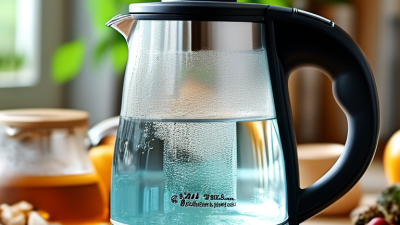
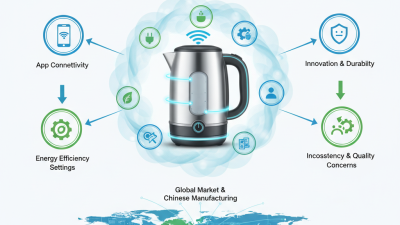
Picking out the right Glass Kettle isn’t just about how good it looks. Sure, design matters, but you also gotta think about heat resistance, how much control you have over brewing, capacity, and how easy it is to handle day-to-day. Seeing that clear glass body? It’s pretty satisfying — you get to watch water go from still to a full rolling boil. That little detail actually makes tea-making more precise and, honestly, way more fun.
Most good models are made from borosilicate glass, which handles temperature swings much better than regular glass. Many Electric Glass Kettles come with handy features like automatic shut-off and boil-dry protection. They help keep things safe and simple, but you still gotta use your brain and don’t rely on them completely. On the stovetop side, glass kettles tend to be quieter and simpler—no bells and whistles—yet you need to pay a bit more attention when heating. Some models also let you dial in specific temperatures for different things like green tea, coffee, or even baby water. Just keep in mind, those temp readings are guides—they’re good for getting close, but don’t assume they’re absolute.
Choosing the perfect kettle really depends on your routine. If you’re often making tea for a crowd, a 1.7-liter one might be perfect. But if it’s just you, a smaller size could save some energy. Wide openings definitely make cleaning a lot easier—especially when mineral build-up starts to appear around the base. The handle should stay comfy and secure, even when the kettle’s full. Honestly, no kettle is perfect. Glass can still crack if it gets knocked or suddenly cooled down—so a little care goes a long way. I’ve learned that sometimes, convenience beats fancy features. A gorgeous kettle won’t do much good if the filter clogs up quickly or if the lid feels flimsy. This guide breaks down the main types of Glass Kettles, helping you weigh things like performance, safety, maintenance, and value—so you can set your expectations a little more realistically.
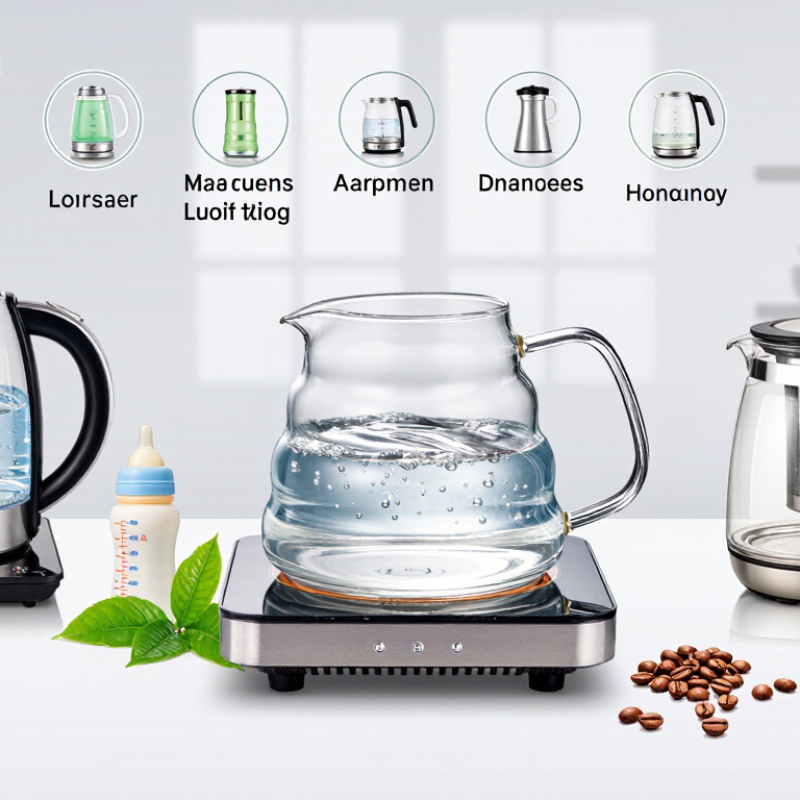
Glass Kettle Basics: Design, Materials, and Heating Methods
A Glass Kettle makes the water level and bubbling easy to see. That simple view is useful when filling it for one cup, though mineral marks also show quickly. Borosilicate glass handles temperature changes better than ordinary glass, but it is not unbreakable. Check the body for chips or hairline cracks, especially near the handle and spout. ATea Kettle Glassmodel may use a concealed heating plate or a stovetop-safe base. Do not assume every Glass Kettle can go directly on a burner; check its instructions. The base, lid, and handle matter too. A broad opening makes cleaning easier, while a steady handle helps when pouring.
Tips: Let the kettle cool before cleaning. Wipe visible scale with a soft cloth and follow the care instructions. Small details count.
Heating speed depends on the kettle’s power, water volume, and whether the lid stays closed. A tight-fitting lid can help retain heat, but it should still open smoothly for filling. Look for stable footing and a spout that pours without splashing. Transparency is a real advantage, yet it can make a kettle look untidy between cleanings. That trade-off is easy to miss in product photos.
Glass Kettle Basics: Comparing Glass Types
Borosilicate glass typically expands less with temperature changes than soda-lime glass, which can help it better withstand thermal shock. These representative coefficients are not a guarantee of kettle safety: design, manufacturing, and use also matter.
Borosilicate Glass Kettles for Everyday Boiling
Borosilicate Glass Kettles are a practical choice for everyday boiling because the glass tolerates temperature changes better than ordinary glass. That helps during routine use, but it does not make the kettle unbreakable. A knock against a stone countertop or a sudden change from very cold to hot can still cause damage. Handle it with care. The clear walls also make it easy to see water levels and mineral buildup. That visibility is useful, though it can mean more frequent cleaning than an opaque kettle requires.
When choosing one, check for a stable base, a comfortable handle, and clear minimum and maximum fill marks. Safety features such as automatic shutoff and boil-dry protection are worth checking in the specifications; they are not guaranteed on every model. A Digital Glass Kettle may offer temperature settings, but consider whether you will use them for tea or other drinks before paying extra. For plain boiling, simple controls may be enough. Follow the care instructions, especially when removing limescale, and let the kettle cool before washing. One small compromise: glass shows the water beautifully, but fingerprints and droplets can make the outside look untidy. That is easy to overlook in product photos.
Cordless and Electric Glass Kettles for Convenient Use
Cordless Glass Kettles pair a clear carafe with a detachable powered base, so you can pour without a trailing cord. A 360-degree base suits either hand and fits neatly on a crowded counter. For daily use, aGlass Kettle Electric model with a wide opening is easier to fill and descale. Glass also lets you see the water level and mineral deposits. That visibility is useful, though it does not make cleaning optional.
Convenience depends on more than appearance. Look for automatic shutoff, boil-dry protection, a stable handle, and a removable scale filter. A keep-warm setting can help when several cups are needed, but it may use extra electricity. The U.S. Energy Information Administration reported average annual electricity use of 10,715 kWh per U.S. residential customer in 2020. As a simple estimate, a 1,500-watt kettle running four minutes daily uses about 36.5 kWh yearly. Actual use varies with fill level and boiling time.
Tips: Measure only the water you need, and dry the base before returning the kettle. Check that the lid opens easily; a stiff latch becomes annoying fast. Clear glass shows limescale plainly, so plan occasional descaling. The convenience is real, but the upkeep is easy to underestimate.
Glass Kettles with Infusers for Tea and Specialty Drinks
A Glass Electric Kettle with a removable infuser makes loose-leaf tea easier to brew and inspect. You can watch the leaves unfurl, then lift out the basket when the flavor is ready. Choose a roomy stainless-steel infuser; tightly packed leaves often brew unevenly. That matters at home. A fine mesh also helps keep small leaves and herbs out of the cup.
The Tea Association of the U.S.A.’s 2024 Tea Fact Sheet reports that Americans consumed more than 85 billion servings of tea in 2023. It also estimates that 75–80% of tea consumed in the United States is iced. Those figures make versatility useful: brew a concentrated infusion, pour it over ice, and add citrus or mint. For green tea, heat water separately to the temperature recommended for the leaves; boiling water can flatten delicate flavors. Check the kettle’s manual before steeping inside it.
Infusers suit black, green, herbal, and fruit blends, but not every specialty drink. Fine powders can cloud the water, and dense ingredients may clog mesh. Small details matter. Rinse the basket soon after use, especially after fragrant spices. Glass shows stains and residue clearly, which helps with cleaning, though it can feel fragile beside a busy sink. Verify the glass type and temperature limits, and avoid sudden temperature changes.
Safety Features and Durability in Modern Glass Kettles
For many kitchens, a glass kettle with borosilicate glass offers a useful balance of visibility and heat resistance. You can watch the water bubble and spot mineral buildup before it becomes heavy. Still, “heat resistant” does not mean unbreakable. A kettle can crack after a hard knock or a sudden change from very hot to cold. Choose a sturdy base, a securely attached handle, and a lid that opens without placing your hand over rising steam.
Safety features matter as much as the glass. Automatic shutoff should stop heating after the water boils, while boil-dry protection can help prevent the kettle from running empty. A stable base and a well-insulated handle also reduce everyday risks. Check that the spout pours cleanly; drips down the side can reach your fingers. I would not rely on one feature alone. Even a well-designed kettle needs careful handling.
Tips: Let the kettle cool before rinsing it, and avoid pouring cold water into hot glass. Set it on a flat, dry surface, away from counter edges. Look for chips or hairline cracks regularly. Small details matter. Scale can usually be removed with a suitable descaling method, but follow the care instructions for the specific kettle. I sometimes forget to check the lid hinge, though it can loosen with frequent use. Inspect it now and then.
What Are the Best Types of Glass Kettles? - Safety Features and Durability in Modern Glass Kettles
| Kettle Type | Typical Construction | Safety Features to Look For | Durability Considerations | Best Suited For |
| Standard cordless electric glass kettle | Glass vessel on a powered base, with a central connector and a lifting handle. | Automatic shutoff after boiling, boil-dry protection, a stable base, and a lid that opens safely. | Borosilicate glass is commonly used because it tolerates temperature changes better than ordinary soda-lime glass; it can still crack from impact or severe thermal shock. | Everyday boiling when a clear view of the water level is useful. |
| Double-wall glass electric kettle | Two glass layers with an insulating air gap; the outer surface may remain cooler than a single-wall vessel. | Check for automatic shutoff, boil-dry protection, a secure handle, and clear hot-surface guidance. The outer wall is not necessarily cool enough to touch during use. | The extra layer can help reduce heat transfer, but the glass remains vulnerable to knocks, drops, and abrupt temperature changes. | Users who want improved insulation and a potentially cooler exterior. |
| Variable-temperature glass kettle | Electric glass kettle with temperature controls, often offering preset temperatures or a keep-warm function. | Look for an automatic shutoff, boil-dry protection, clear temperature indicators, and controls positioned away from steam. | More controls and sensors add components that may require careful handling; follow the cleaning and descaling instructions to help maintain performance. | Tea, coffee, and other drinks that benefit from water below boiling temperature. |
| Stovetop-safe glass kettle | Glass vessel designed for direct heating on specified cooktops; compatibility depends on the product design. | Use only when the manufacturer identifies the kettle as stovetop-safe and lists the compatible heat source. A stovetop model does not have electric-kettle auto shutoff. | Avoid sudden temperature changes, empty heating, and direct flame unless explicitly permitted; these can damage or break glass. | Those who prefer stovetop heating and can follow the specified heating instructions. |
| Glass kettle with removable tea infuser | Glass kettle or tea-making vessel with a removable mesh or perforated infuser; heating method varies by model. | For electric versions, check for automatic shutoff and boil-dry protection. Remove or position the infuser as directed to prevent contact with heating parts. | The infuser is usually removable for cleaning, but its mesh and fittings can wear or bend; glass still needs protection from impact and thermal shock. | Brewing loose-leaf tea directly in the vessel. |
Safety and durability depend on the specific design, materials, and care instructions. Check the product manual for heating compatibility, cleaning guidance, and required safety functions.
Conclusion
A Glass Kettle combines clear, practical design with different materials and heating methods to suit everyday routines. Borosilicate glass is a popular choice because it can handle the repeated heating and cooling involved in boiling water. Electric and cordless models offer convenient operation, while features such as temperature controls let users heat water to a level suited to different teas and other drinks.
For tea lovers, a built-in infuser can make it easy to steep loose leaves directly in the kettle. When comparing options, consider more than appearance: helpful safety features may include automatic shutoff, boil-dry protection, and a heat-resistant handle. The glass should be sturdy, easy to clean, and designed for regular use. The best type depends on whether you value simple boiling, precise brewing, or added versatility.

 0086-574-62518288
 Contact Email