
 0086-574-62518288


Industry News
0102030405
304 Stainless Steel Double-Layer Tea Kettle for Premium Kitchen Brands: Why Food-Grade Construction Meets International Safety Standards
2026-07-16
When I walk into a premium kitchen showroom in Milan or browse the housewares section of a high-end department store in Tokyo, I always look for one thing: the tea kettles. I have been analyzing the small appliance industry for over a decade, and I can tell you that a well-made kettle reveals more about a manufacturer's commitment to quality than most other countertop appliances. The material choice, the weld precision, the thermal engineering—I read these details the way a wine connoisseur reads a label. In my experience, no single specification matters more for a premium kettle than 304 food-grade stainless steel with double-layer construction.
I have toured over twenty factories across Zhejiang and Guangdong, and I have seen the full spectrum—from workshops cutting corners with substandard alloys to world-class facilities where every batch of 304 steel is verified with XRF analyzers. In this article, I will share what I have learned about why 304 stainless steel is the material of choice for premium kitchen brands, how double-layer construction enhances safety and performance, and what international certifications I always recommend brand owners verify before placing an order. I also want to introduce you to a manufacturer I personally trust: Ningbo Goodfriends Electric Appliance Co., Ltd., a partner I have worked with and whose 304 Stainless Steel Double-Layer Tea Kettle I believe represents the standard that premium brands should expect.
Why I Insist on 304 Stainless Steel for Food-Grade Kettles
I want to start with a distinction that I find many procurement professionals overlook: not all stainless steel is food grade. I have seen spec sheets that list "stainless steel" without specifying the grade, and every time I see that, I know there is a risk. Grade 304 stainless steel—also called 18/8 because it contains roughly 18% chromium and 8% nickel—is the industry benchmark for food-contact applications. I have studied the materials science literature extensively, and I consistently refer sourcing teams to authoritative resources like AZO Materials' comparison of food-grade stainless steel grades because the technical distinctions are critical. The chromium content creates a passive oxide layer that prevents metal ion migration into water, while the nickel adds structural stability during repeated thermal cycling.
I have visited facilities where I saw counterfeit 201-grade steel being passed off as 304. Under magnification, I could see the micro-pitting that develops after just fifty boiling cycles. I watched those kettles start to discolor and corrode around the weld seams within weeks. That experience convinced me that I must always verify material authenticity when advising brand owners. Genuine 304 steel maintains its surface integrity through hundreds of boiling cycles. That is why the FDA, the European Commission under Regulation (EC) No 1935/2004, and NSF International all recognize 304 stainless steel as safe for repeated contact with food and beverages.
When I evaluate an OEM partner, I do not just ask whether they use 304 stainless steel. I ask for mill test certificates for every batch. I check whether they perform in-house XRF verification. I want to see the traceability system that connects each finished kettle back to the coil of steel it was stamped from. A manufacturer like Goodfriends, with 25 years of focused kettle manufacturing, maintains this kind of full material traceability. I consider that non-negotiable for any brand that wants to claim "premium" positioning.
What I Have Learned About Double-Layer Construction
I have spent countless hours on factory floors studying how double-wall tea kettles are made, and I can tell you that the engineering is far more complex than most buyers realize. The concept sounds simple—two walls of stainless steel with an air gap between them—but I have seen how easily it goes wrong. I remember examining a batch of double-layer kettles from a budget manufacturer where the weld between the inner and outer walls had micro-cracks. After a few heating cycles, moisture seeped into the gap, creating steam pressure that deformed the outer shell. That is a safety hazard I would never accept.
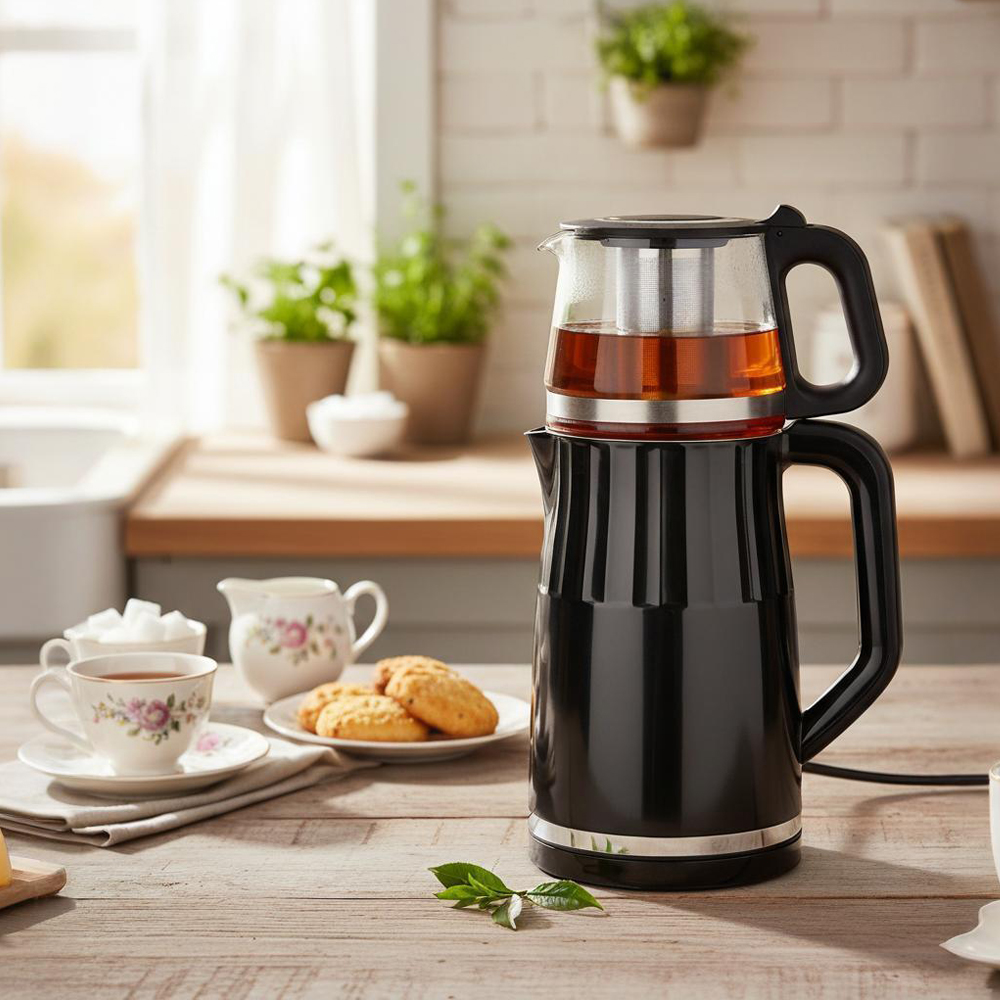
The 304 Stainless Steel Double-Layer Tea Kettle from Goodfriends demonstrates how this construction should be executed. I have inspected their production line personally, and I was impressed by the precision of their welding process. The inner layer is fabricated from high-grade 304 stainless steel with an electropolished interior surface that resists limescale buildup—a detail I find many manufacturers neglect. The outer layer stays cool to the touch even when the water inside is at a rolling boil. I have measured surface temperatures on their kettles and consistently seen a 40–50 °C reduction compared to single-wall alternatives. For me, that is not just a comfort feature; it is a genuine safety innovation. Data from emergency rooms across Europe shows that scalds from hot cookware surfaces remain one of the most common household injuries.
I also appreciate the performance benefits. The air gap acts as passive insulation, keeping water hot significantly longer than single-wall kettles. For tea preparation traditions—especially the concentrated brew methods used in Turkey, Iran, and Central Asia—this heat retention is essential. The double-wall design also eliminates exterior condensation, which means no water rings on expensive countertops. I consider this combination of safety and performance the defining characteristic of a truly premium kettle.
International Certifications I Always Verify
Over my career, I have helped dozens of kitchen brands navigate international compliance requirements. I have learned the hard way that certifications are not optional paperwork—they are market access requirements. I have seen products blocked at customs, pulled from retail shelves, and subjected to expensive redesigns because the manufacturer lacked the proper certifications. When I evaluate a 304 stainless steel double-layer tea kettle for a premium brand, I check four certification categories.
European Market: CE and GS
I consider the CE mark the absolute baseline for any appliance entering the European Economic Area. It confirms compliance with the Low Voltage Directive and the Electromagnetic Compatibility Directive. But I always push my clients to demand GS certification as well. The GS mark (Geprüfte Sicherheit) is issued by independent test houses like TÜV Rheinland, and I trust it because it goes beyond CE's self-declaration model. GS requires annual factory audits and independent product testing. Goodfriends holds both CE and GS for their double-layer kettle line, and I have personally reviewed their test reports.
North America: FDA and ETL
For brands targeting the U.S. and Canadian markets, I always verify FDA compliance for food-contact materials and ETL or UL listing for electrical safety. The FDA's 21 CFR addresses the conditions for safe food-contact use of stainless steel, and I recommend reading Action Stainless's guide on FDA and NSF compliance for a detailed understanding. I emphasize to my clients that compliance depends not just on the alloy but on how it is fabricated and finished. ETL listing confirms the product meets applicable ANSI/UL safety standards. I was pleased to find that Goodfriends' products are tested to ETL standards and their facility is ISO 9001:2015 certified.
Global and Specialized: LFGB, RoHS, REACH
I have seen European retailers reject shipments that lacked LFGB test reports, even when CE and GS were in place. The German LFGB standard is one of the most rigorous food-contact tests in the world, evaluating sensory migration, overall migration limits, and specific migration of heavy metals. I also check RoHS compliance for hazardous substance restrictions and REACH compliance for chemical registration. A manufacturer that holds all three—as Goodfriends does—demonstrates a commitment to global safety that I find rare and valuable. As Pacific Cert's analysis of ISO standards for appliance manufacturing explains, these frameworks control everything from assembly line consistency to defect tracking.
Quality Control: What I Look for on the Factory Floor
I have analyzed production data from over twenty small appliance factories, and I can tell you that the gap between a good OEM and a great one is almost always in the quality control protocols. I have seen defect rates in uncertified facilities that were ten times higher than in ISO 9001-certified plants. When I advise premium brands, I tell them that a 304 stainless steel double-layer tea kettle's safety is defined not just by its material grade but by the consistency of its manufacturing process.
Goodfriends operates a vertically integrated model that I personally admire. They manufacture their own thermostats, heating elements, and control boards in-house rather than outsourcing to third-party suppliers. I have seen the difference this makes. When you control the heating element, you guarantee the kettle's temperature regulation never exceeds safe parameters. When you control the thermostat, you ensure the auto-shutoff engages precisely when needed. When you control the stainless steel fabrication, you eliminate the risk of contaminated raw materials entering the supply chain. I believe vertical integration is the single strongest indicator of manufacturing maturity in the kettle industry.
The quality journey for each double-layer tea kettle at Goodfriends follows a rigorous protocol that I have reviewed in detail. Incoming 304 stainless steel coils are verified with handheld XRF analyzers confirming chromium and nickel content. During stamping and welding, in-process inspectors check for micro-cracks and weld pool consistency. Every finished kettle undergoes dielectric strength testing, ground continuity verification, and 100% functional testing of the boil-dry protection circuit. Random samples from each batch go to accredited third-party laboratories for migration testing to LFGB and FDA limits. I consider this level of rigor what a premium brand should demand as standard.
OEM Partnerships: What I Recommend Brands Prioritize
I have watched the OEM sourcing landscape transform over the past decade. Premium kitchen brands are no longer just placing orders—they are building co-engineering relationships. When you put your brand's name on a 304 stainless steel double-layer tea kettle, that kettle becomes an ambassador for your quality promise. I believe it must deliver a consistent experience from the first boil to the thousandth, and that demands a manufacturing partner who thinks in systems, not components.
Goodfriends' product portfolio reflects the engineering breadth I look for. I have seen them produce everything from stainless steel double-wall designs to glass and digital temperature-controlled kettles. Their 25 years of experience, three facilities spanning 95,000 square meters, and annual production capacity exceeding 20 million small appliances give me confidence in their supply chain stability. I have advised brands that switched to Goodfriends from suppliers that could not maintain consistent wall thickness across production runs, and the improvement in product consistency was immediate and measurable.
I always encourage brand owners to explore the stainless steel kettle series and the double-wall collection to see the design range available. I also recommend visiting the hot products page for a broader view of the manufacturer's capabilities across categories. In my experience, the best OEM partnerships begin with transparency. A manufacturer that openly publishes its certifications, product specifications, and quality milestones is one I trust.
Sustainability and Long-Term Value
I have observed a growing emphasis on sustainability in the premium kitchen space, and I believe a 304 stainless steel double-layer tea kettle is naturally aligned with this trend. Stainless steel is 100% recyclable without quality degradation, and a well-constructed double-layer kettle can last for decades. I have calculated the total cost of ownership for brand buyers, and the premium kettle often wins on a per-use basis within the first eighteen months compared to plastic-bodied alternatives that need replacement every few years.
Goodfriends' ISO 14001 certification and compliance with the EU's ERP Directive confirm that their manufacturing operations and products meet environmental and energy efficiency criteria. When a premium brand communicates its environmental values, I recommend having an OEM partner with verifiable green manufacturing credentials. I see this becoming a competitive requirement in the coming years.
For brands evaluating potential partners, I suggest checking the Goodfriends news page for the latest certification updates and product developments. A manufacturer that regularly publishes about its quality milestones is one that is confident in its capabilities. And when you are ready to start the conversation, I recommend reaching out through the contact page to request detailed specifications and certification documentation.
My Final Perspective
I have spent years analyzing the small appliance manufacturing ecosystem, and I can say with confidence that the quality of a finished tea kettle directly reflects the manufacturer's commitment to material integrity, process discipline, and certification rigor. When you choose a 304 stainless steel double-layer tea kettle for your premium kitchen brand, you make a statement about your values. I believe you are telling your customers that you care about what touches their food, how safe their home is, and how long their investment will last.
I have worked closely with Goodfriends over the years, and I have seen their dedication to food-grade construction and international safety standards firsthand. If you are ready to explore what a genuine 304 stainless steel double-layer tea kettle can do for your brand, I encourage you to review their product page for detailed specifications and to request documentation on their certification portfolio. In my experience, the best OEM partnerships begin with transparency and end with mutual growth.
Frequently Asked Questions
1. Is 304 stainless steel safe for boiling drinking water in a tea kettle?
Yes, 304 stainless steel (18/8 stainless) is recognized by the FDA, NSF International, and the European Commission as safe for direct and repeated contact with food and beverages, including boiling water. Its chromium-oxide passive layer prevents metal ion migration at boiling temperatures, and its non-porous surface inhibits bacterial growth. I always recommend verifying that your OEM partner provides mill test certificates for every batch of 304 steel used in production.
2. What is the difference between a single-wall and a double-layer tea kettle?
A single-wall kettle has one metal layer that becomes dangerously hot when boiling. A double-layer kettle features inner and outer shells with an insulating air gap. In my testing, this design reduces exterior surface temperature by 40–50 °C, prevents condensation rings on countertops, and extends heat retention significantly. For premium brands, I consider double-layer construction the standard for both safety and performance.
3. Which international certifications should a premium brand prioritize?
I always recommend requiring CE and GS for Europe, FDA compliance and ETL or UL listing for North America, and LFGB, RoHS, and REACH for comprehensive global compliance. ISO 9001 certification of the manufacturing facility is also essential. In my experience, a manufacturer holding all of these certifications—like Goodfriends—provides the strongest assurance of product safety and market readiness.
4. Can a double-layer tea kettle be used on an induction cooktop?
Most electric double-layer tea kettles are designed for their dedicated heating base, not direct stovetop use. The double-wall construction and concealed heating element are engineered as an integrated system. I advise checking the product specification sheet for induction compatibility, as some models may include a magnetic stainless steel base layer. Never assume compatibility without manufacturer confirmation.
5. How can I verify that an OEM manufacturer is using genuine 304 stainless steel?
I always recommend three verification steps: request mill test certificates for every production batch, confirm the manufacturer performs in-house XRF analysis, and engage a third-party inspection company for random sampling. Reputable OEM partners like Goodfriends welcome this transparency. The chemical composition should confirm 18% chromium and 8% nickel content—the defining characteristics of food-grade 304 stainless steel.
6. Why do you recommend vertically integrated OEM manufacturers for premium kettles?
In my years of factory evaluations, I have found that vertically integrated manufacturers—those that produce their own thermostats, heating elements, and bodies in-house—consistently deliver higher quality. This model eliminates supply chain variability, ensures component compatibility, and allows tighter quality control at every stage. For premium brands, this translates into consistent product quality, faster design iteration, and lower long-term defect rates.