
 0086-574-62518288


Industry News
0102030405
304 vs 316L Stainless Kettles: Which Grade to Specify
2026-07-23
Why Grade Selection Matters More Than You Think
When procurement engineers issue a request for quotation on Stainless Steel Electric Kettles, the specification sheet almost always lists "stainless steel" as the body or heating-plate material. That single phrase conceals a critical decision. The difference between304 stainless steel and 316L stainless steel -- two of the most widely specified grades of stainless steel -- is not cosmetic. It affects corrosion resistance, regulatory compliance, tooling cost, per-unit BOM, and ultimately whether a shipment clears customs in its destination market without costly rework.
For Small Kitchen Appliances, and electric kettles in particular, the stakes are amplified by the nature of the product. A kettle boils water at 100 degrees Celsius multiple times per day for years. The interior surface is in constant contact with heated water, dissolved minerals, and in some use cases mildly acidic beverages. Material failure in this environment does not just shorten product life; it can trigger food-contact compliance violations under frameworks such asLFGB (Germany), EU Regulation 10/2011, and FDA 21 CFR in the United States.
This article provides a structured, data-backed comparison of 304 and 316L stainless steel as they apply to electric kettle manufacturing. It is written for procurement engineers, category managers, and private-label brand owners who need to make defensible material decisions before issuing a purchase order. Where relevant, we reference real product specifications from the Goodfriends stainless steel kettle series to ground the discussion in production reality.
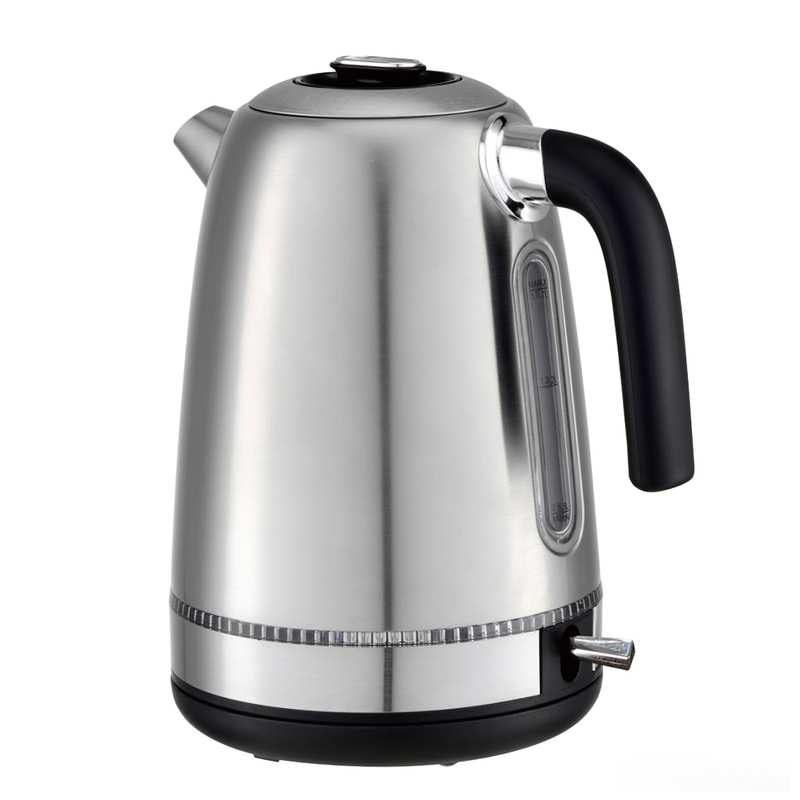
304 Stainless Steel: The Industry Standard for Electric Kettles
Grade 304, also designated 18/8 stainless steel, contains approximately 18 percent chromium and 8 percent nickel. This composition creates a stable austenitic crystal structure that resists oxidation in most freshwater and mildly acidic environments. It is, by a wide margin, the most commonly specified grade in the small appliance industry worldwide. The SAE designation for 304 has been in continuous industrial use since the mid-twentieth century, and its performance data in food-contact applications is extensive.
From a manufacturing standpoint, 304 stainless steel offers several decisive advantages. It is readily deep-drawn, stamped, and welded using standard tooling available at virtually every OEM facility in China, including Ningbo-based producers such as Goodfriends. Material availability is consistent, with multiple domestic mills supplying certified food-grade coil stock. Lead times for 304 coil are typically shorter than for 316L, and minimum order quantities are more flexible.
In terms of regulatory compliance, 304 stainless steel passes the migration testing thresholds established by LFGB, EU 10/2011, and FDA 21 CFR 175-178 when properly passivated. Most Electric Kettles sold in the European Union, the United Kingdom, Australia, and Southeast Asia use 304-grade bodies and lids. The Goodfriends model HHB8709, for example, specifies food-grade 304 stainless steel for its 1.7-liter body and carriesCE, GS, RoHS, and LFGB certifications, confirming its suitability for European market entry.
For procurement engineers working within standard BOM constraints, 304 is the default recommendation unless a specific environmental or regulatory requirement mandates a higher-grade alloy. Its mechanical properties, corrosion resistance profile, and regulatory track record make it the rational starting point for any kettle specification project.
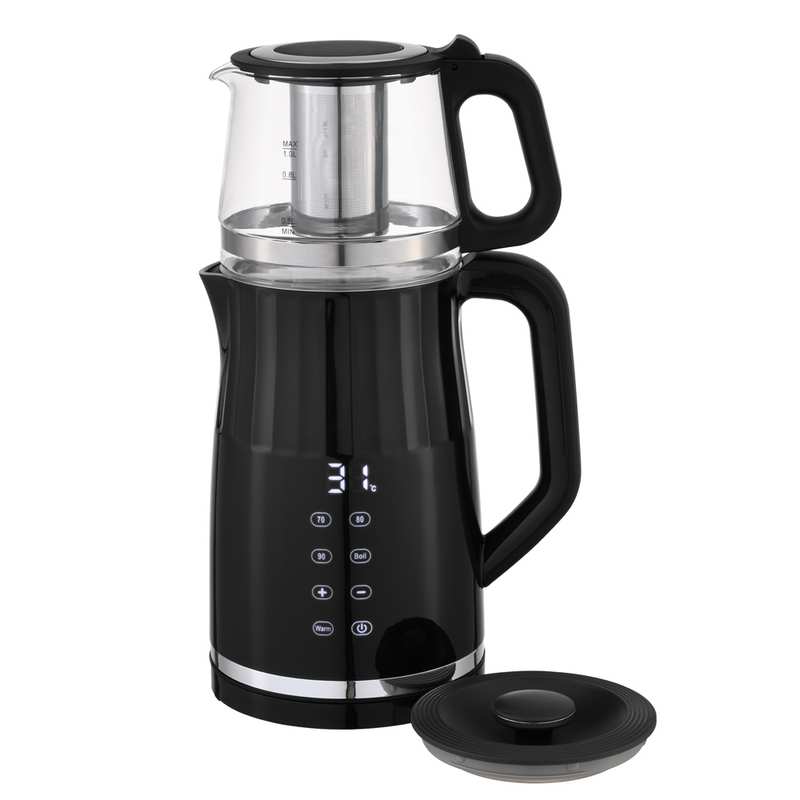
316L Stainless Steel: When and Why to Specify It
Grade 316L is an austenitic stainless steel that adds approximately 2 to 3 percent molybdenum to the chromium-nickel base of 304. The "L" designation indicates a low-carbon variant (maximum 0.03 percent carbon), which improves weldability and reduces the risk of intergranular corrosion in heat-affected zones. The molybdenum content is the primary differentiator: it significantly enhances resistance to pitting and crevice corrosion in chloride-rich environments.
For Electric Kettles, the question is whether this enhanced corrosion resistance is necessary. In most household and hospitality scenarios involving municipal tap water, the answer is no. However, there are specific use cases where 316L is justified or even required:
- Coastal and high-humidity regions: Salt-laden air can accelerate surface corrosion on 304 components, particularly on exterior surfaces and lid assemblies. Hotels and resorts in tropical coastal locations may specify 316L for longevity.
- Mineral-rich or acidic water sources: In regions where groundwater has elevated chloride, sulfate, or low-pH characteristics, 316L provides a wider safety margin against pitting corrosion on interior surfaces.
- Regulatory or institutional procurement policies: Certain healthcare, laboratory, and institutional buyers mandate 316 (or 316L) as a blanket requirement regardless of actual water chemistry, because their quality management systems reference ISO 9001 protocols that default to the higher-grade material.
- Premium brand positioning: Some private-label brands use 316L as a marketing differentiator, positioning the kettle as a "medical-grade" or "marine-grade" product. While the functional benefit in a kettle context is modest, the perceived value can support a higher retail price point.
From a production perspective, 316L requires adjusted welding parameters, more expensive filler wire, and longer passivation cycles. Not every kettle OEM has consistent experience with 316L fabrication, so supplier qualification is more rigorous. Container loading economics remain identical to 304 models (20GP holds 2,880 units, 40HQ holds 6,960 units for standard 1.7-liter configurations), but per-unit material cost is higher due to the molybdenum and increased nickel content.
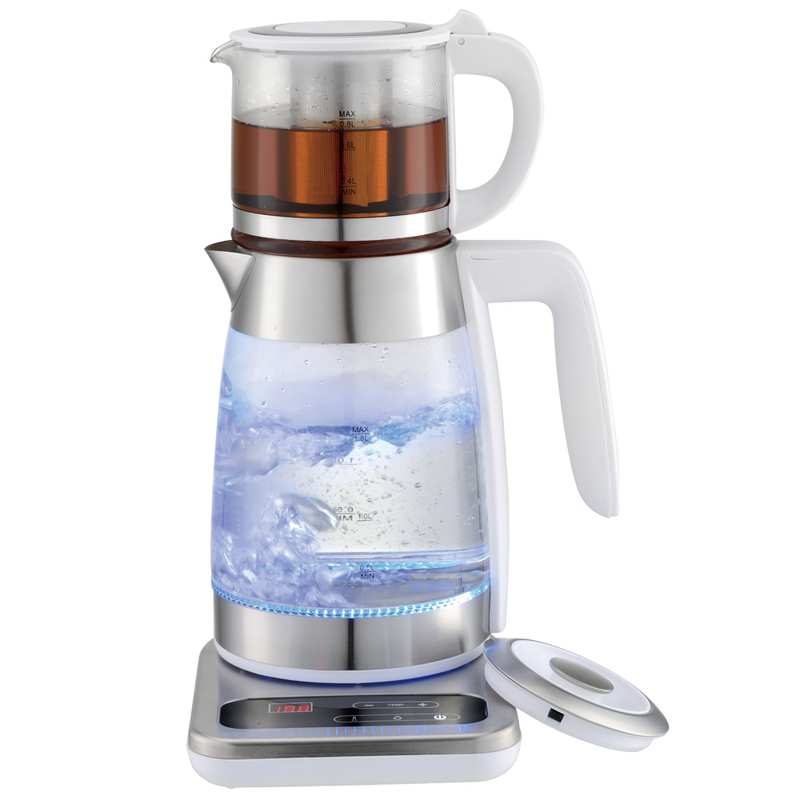
Head-to-Head: 304 vs 316L on Key Performance Metrics
The following comparison table summarizes the most relevant material properties for kettle procurement decisions. These values reflect standard annealed sheet conditions typical of kettle body manufacturing.
| Property | 304 Stainless Steel | 316L Stainless Steel | Kettle Relevance |
|---|---|---|---|
| Chromium Content | 18.0 - 20.0% | 16.0 - 18.0% | Oxidation resistance at boiling temperatures |
| Nickel Content | 8.0 - 10.5% | 10.0 - 14.0% | Structural stability and formability |
| Molybdenum Content | None (trace) | 2.0 - 3.0% | Pitting resistance in chloride environments |
| Pitting Resistance Equivalent (PREN) | 18.0 - 20.0 | 23.0 - 28.0 | Higher is better for aggressive water |
| Max Service Temperature | 870 deg C (intermittent) | 870 deg C (intermittent) | Both exceed kettle operating range |
| Deep Draw Formability | Excellent | Good | 304 easier for complex kettle body shapes |
| Weldability | Excellent | Excellent (low carbon) | Both suitable; 316L needs matched filler |
| Relative Material Cost Index | 1.00 (baseline) | 1.25 - 1.40 | BOM impact scales with sheet thickness |
| LFGB Compliance (typical) | Pass | Pass | Both grades meet EU food-contact limits |
| RoHS Compliance | Pass | Pass | No lead, cadmium, or restricted substances |
As the data shows, both grades exceed the performance thresholds required for domestic and commercial kettle applications. The key differentiator is molybdenum-driven pitting resistance, which only becomes operationally significant in environments with elevated chloride exposure. For the vast majority of procurement scenarios, 304 stainless steel delivers equivalent functional performance at a lower material cost.
It is also worth noting that the mechanical strength difference between 304 and 316L is minimal at kettle wall thicknesses (typically 0.4 to 0.6 mm). Neither grade presents a structural advantage in normal use. The decision therefore comes down to corrosion environment, regulatory mandate, and brand strategy rather than mechanical performance.
Total Cost Impact: How Grade Affects Your BOM and Compliance
Procurement engineers are rightly focused on total landed cost, not just unit price. The material grade decision influences multiple cost layers beyond the raw stainless steel coil price. Here is how the BOM impact breaks down for a typical 1.7-liter electric kettle:
- Raw material: 316L coil stock typically carries a 25 to 40 percent premium over 304, depending on global nickel and molybdenum commodity prices and the supplier's mill source. For a kettle body using approximately 0.5 kg of stainless steel, this translates to a meaningful per-unit cost increase that compounds across container quantities.
- Manufacturing adjustments: Welding 316L requires ER316L filler wire instead of ER308L, which is more expensive. Passivation baths may need longer dwell times or different acid concentrations. These are incremental costs, but they add up across high-volume runs.
- Testing and certification: If the existing product line is certified for 304 and you switch to 316L, migration testing under LFGB or EU 10/2011 must be repeated with the new material. This involves third-party laboratory fees and lead time. However, if the product is already dual-certified (as many Goodfriends models are), this cost is avoided.
- Inventory and SKU complexity: Offering both 304 and 316L variants doubles the stainless steel procurement stream and increases warehouse complexity. Some importers find it more efficient to specify a single grade across all markets to simplify logistics.
- Shipping and container economics: The weight difference between 304 and 316L kettles of identical dimensions is negligible (less than 1 percent). Container loading counts remain the same: 2,880 units in a 20GP, 5,920 in a 40GP, and 6,960 in a 40HQ for standard 1.7-liter models.
The compliance dimension is equally important. Both grades meet the requirements of RoHS, CE, GS, FDA, and LFGB when properly sourced from certified mills. The critical factor is not the grade itself but the material traceability: mill certificates, lot numbers, and passivation records. A 304 kettle with complete documentation is more defensible in a regulatory audit than a 316L kettle with incomplete paperwork.
Procurement Tip: When evaluating supplier quotes, request the mill test certificate (MTC) for the stainless steel coil used in production. Verify that the chromium, nickel, and carbon percentages match the specified grade. This single document is the most effective safeguard against material substitution, which is a documented risk in high-volume OEM manufacturing.
Decision Framework: Choosing the Right Grade for Your Market
Rather than treating the 304-versus-316L question as a binary choice, procurement engineers should apply a structured decision framework that accounts for market requirements, product positioning, and total cost of ownership. The following decision tree provides a practical starting point:
- Identify the target market's regulatory baseline. For the EU, UK, Australia, and most of Southeast Asia, 304 is fully compliant. For markets with specific institutional procurement standards (e.g., certain Middle Eastern government tenders), check whether 316 is explicitly required.
- Assess the water chemistry in end-use environments. If the kettle will be used in coastal, industrial, or high-chloride settings, 316L provides measurable longevity benefits. For standard municipal water, 304 is sufficient.
- Evaluate brand positioning and retail price tolerance. If the product is positioned as premium or professional-grade, 316L can serve as a legitimate differentiator. If the product competes on value, 304 keeps the BOM lean.
- Confirm supplier capability and material traceability. Before specifying 316L, verify that the OEM has documented experience fabricating kettles in this grade. Request sample MTCs and ask about passivation process controls. Goodfriends, for instance, produces both 304 and 316L variants and can provide grade-specific certification documentation.
- Calculate total landed cost, not just material cost. Factor in testing fees, certification renewal, inventory carrying cost, and potential warranty claims related to corrosion. In many cases, the total cost difference between grades is smaller than the raw material premium suggests.
This framework applies equally to single-SKU launches and to multi-market product lines where different regions may require different grades. The goal is to make the grade decision once, document it thoroughly, and communicate it clearly to the OEM through the technical specification sheet.
For buyers who are also considering alternative materials, Goodfriends' product range includes borosilicate Glass Kettles alongside their stainless steel lines. A detailed comparison of 304 stainless steel versus borosilicate glass for hospitality applications is available in theirmaterial specification comparison guide.
Common Specification Mistakes in Kettle Procurement
Years of B2B sourcing experience reveal recurring errors in how procurement teams write kettle material specifications. These mistakes can lead to quality issues, compliance failures, or unnecessary cost inflation. Avoid the following:
- Specifying "stainless steel" without a grade designation. This leaves the material choice entirely to the OEM, who may select a lower-cost ferritic grade (such as 430) that lacks the nickel content needed for food-contact compliance in many markets. Always specify the exact UNS or SAE number.
- Assuming 316L is "better" without a technical justification. Higher grade does not mean better performance if the operating environment does not demand it. Specifying 316L for a kettle that will only contact treated municipal water adds cost without functional benefit.
- Neglecting passivation requirements. Both 304 and 316L require passivation after fabrication to remove free iron particles and establish the chromium oxide passive layer. Failure to specify passivation in the quality agreement is a common oversight that can lead to surface rust complaints.
- Ignoring the heating plate material. Many specifications focus on the kettle body but omit the heating element plate. If the plate is a different alloy (common in some budget configurations), galvanic corrosion at the weld junction can occur. Specify consistent grade across all wetted surfaces.
- Not requesting migration testing reports. A certificate that states "LFGB compliant" is not sufficient. Request the actual migration test report showing chromium, nickel, and manganese release values. These must fall below the limits in EU Regulation 10/2011 Annex I.
- Overlooking surface finish specifications. Interior surface roughness (Ra value) affects both cleanability and corrosion initiation. Specify a maximum Ra value (typically 0.8 micrometers or less for food-contact surfaces) in the technical drawing.
Correcting these mistakes does not require advanced metallurgical knowledge. It requires discipline in the specification writing process and a willingness to ask the OEM detailed questions about their material sourcing and process controls. A well-written specification protects both the buyer and the manufacturer by establishing clear, measurable acceptance criteria.
Frequently Asked Questions
Is 304 stainless steel safe for boiling water in electric kettles?
Yes. Grade 304 stainless steel is the most widely used food-contact material in electric kettle manufacturing. It contains approximately 18 percent chromium and 8 percent nickel, forming a stable passive oxide layer that resists corrosion at boiling temperatures and prevents metallic ion migration into water at levels that breach regulatory limits. When properly passivated and sourced from certified mills, 304 meets the migration thresholds established by LFGB, EU Regulation 10/2011, and FDA 21 CFR. Millions of 304 Stainless Steel Kettles are sold annually across Europe, North America, and Asia-Pacific without material-related safety incidents. The Goodfriends HHB8709 model uses food-grade 304 and carries CE, GS, RoHS, and LFGB certifications, demonstrating that this grade is fully adequate for global market compliance.
Does 316L stainless steel make a kettle last significantly longer than 304?
In standard household conditions with treated municipal water, the practical lifespan difference between 304 and 316L kettles is negligible. Both grades will far outlast the electrical components, thermostat assemblies, seals, and switches that typically determine a kettle's useful service life. The longevity advantage of 316L becomes meaningful only in aggressive environments: coastal locations with salt-laden air, industrial zones with airborne contaminants, or regions where groundwater contains elevated chloride concentrations. In those specific scenarios, the molybdenum content in 316L provides measurably superior resistance to pitting and crevice corrosion. For the majority of buyers serving standard residential or office markets, 304 provides more than adequate durability at a lower material cost, making 316L an unnecessary specification expense.
Can the same OEM tooling be used for both 304 and 316L kettle production?
In most cases, yes. The deep-drawing dies, stamping tools, and welding jigs used for 304 kettles can typically process 316L without significant modification, because both grades share a similar austenitic crystal structure and comparable formability characteristics. However, welding parameters such as current, travel speed, and shielding gas flow rate may require adjustment when switching grades. The filler wire must be changed to a 316L-compatible grade such as ER316L to ensure weld integrity and corrosion resistance at the joint. Passivation parameters may also need minor adjustments. Discuss tooling compatibility with your OEM before committing to a dual-grade production plan, as some older setups may require validation runs to ensure consistent quality across both grades.
How can a buyer verify that the OEM is using the specified stainless steel grade?
The most reliable verification method is to request the mill test certificate, commonly abbreviated as MTC, for each coil batch used in production. The MTC lists the exact chemical composition including chromium, nickel, molybdenum, and carbon percentages. Cross-reference these values against the ASTM A240 or EN 10088 standard for the claimed grade to confirm conformity. Additionally, third-party XRF (X-ray fluorescence) testing can confirm alloy composition non-destructively on finished kettles without damaging the product. For ongoing quality assurance, include material verification clauses in your supply agreement and conduct periodic factory audits. Reputable manufacturers such as Goodfriends maintain traceable MTC documentation and welcome buyer audits as part of their established quality management protocols.
What certifications are required for stainless steel kettles sold in the European Union?
For EU market entry, your kettle specification should require at minimum the CE mark, confirming compliance with the Low Voltage Directive and EMC Directive. RoHS compliance under Directive 2011/65/EU is mandatory and restricts hazardous substances including lead and cadmium. Food-contact compliance falls under framework Regulation (EC) No. 1935/2004, with specific migration limits for metals defined in EU Regulation 10/2011. The German LFGB standard, while not an EU-wide legal requirement, is widely recognized as a rigorous food-safety benchmark accepted across all member states. The GS mark, though voluntary, is strongly recommended for the German market as it provides third-party safety validation. Ensure your OEM provides documentation for each certification rather than a blanket compliance statement.
Should procurement teams specify 316L for all markets to simplify supply chain management?
While standardizing on 316L across all markets might seem like a way to reduce SKU complexity, it is generally not cost-effective for most procurement scenarios. The 25 to 40 percent material cost premium over 304 applies to every unit regardless of whether the destination market requires enhanced corrosion resistance. A more efficient approach is to segment by market: specify 304 for standard residential and office markets where municipal water quality is consistent, and reserve 316L for coastal, institutional, or premium-positioned product lines. This tiered strategy keeps the BOM lean for high-volume SKUs while addressing markets with legitimate material requirements. Discuss dual-grade planning with your OEM early in sourcing to establish separate quality protocols and traceability documentation for each variant.