
 0086-574-62518288


A practical engineering and procurement guide for OEM electric kettle buyers — how to decide between a retail color box and a DTC mailer box, what the per-unit dimensional math actually looks like, and the ISTA test sequence you should require before locking the spec.
TL;DR — Key Takeaways
- A color box is built to sell; a mailer box is built to ship. The two are not interchangeable. The channel (retail shelf vs DTC e-commerce) decides the box, not the other way around.
- A mailer box is typically 1.4-1.8x the cube of a color box of equivalent kettle capacity because the corrugated walls and the inner fitment inflate the outer dimensions — the exact ratio is what drives the per-unit landed cost.
- Color box favors a thinner paperboard (300-350 gsm SBS or CCNB) with CMYK or Pantone print, gloss or matte lamination. Mailer box favors E-flute corrugated with 2-3 color flexo print and no lamination (so the box stays recyclable).
- Retail color boxes almost never ship alone in a parcel — they need a 5-ply corrugated master carton for DC-to-store shipment, and a separate mailer for any DTC single-piece shipment.
- Validate the package against ISTA 3A (North America) or 3E (Europe) before locking the spec. A package that has not been ISTA-tested to the destination market's procedure is a package that has not been proven.
Direct answer up front: The choice between a color box and a mailer box for an OEM electric kettle is not a packaging decision — it is a channel decision. A retail-channel kettle and a DTC-channel kettle are different products from a packaging perspective, even when the kettle itself is the same. A retail-channel kettle ships in a 5-ply corrugated master carton to a retailer DC, with the individual color box on the shelf; a DTC-channel kettle ships in a single-piece mailer box to the end consumer. Each path has its own structural spec, its own print spec, its own freight profile, and its own ISTA test sequence. The cost math is a function of which path you are on, and the only way to compare the two honestly is to build the per-unit dimensional math for your specific kettle, in your specific channel, before you lock the spec with the manufacturer.
I have been covering the small home appliance OEM sector for twelve years, advising European and North American importers on manufacturer selection and quality assurance. The most common packaging mistake I see in OEM kettle sourcing is a brand that tries to use one box for both the retail shelf and the DTC parcel, and ends up with a package that does neither job well. The retail color box crushes in the courier network; the DTC mailer box looks unbranded on the shelf. The fix is to commit to the channel first and to the box second. This article walks through the engineering math and the ISTA test envelope that turn a packaging decision from a marketing question into a procurement question.
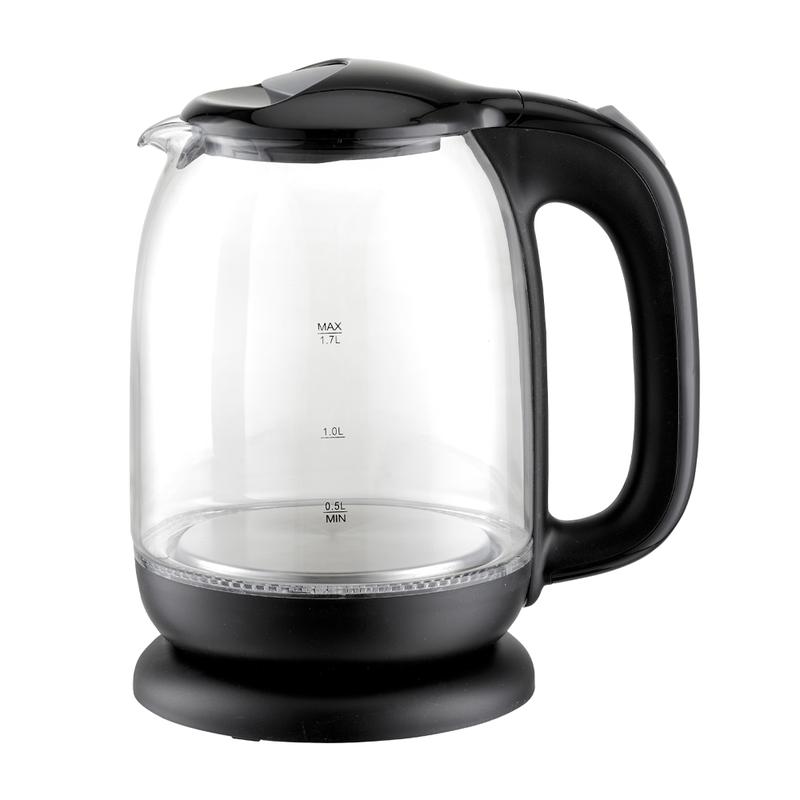
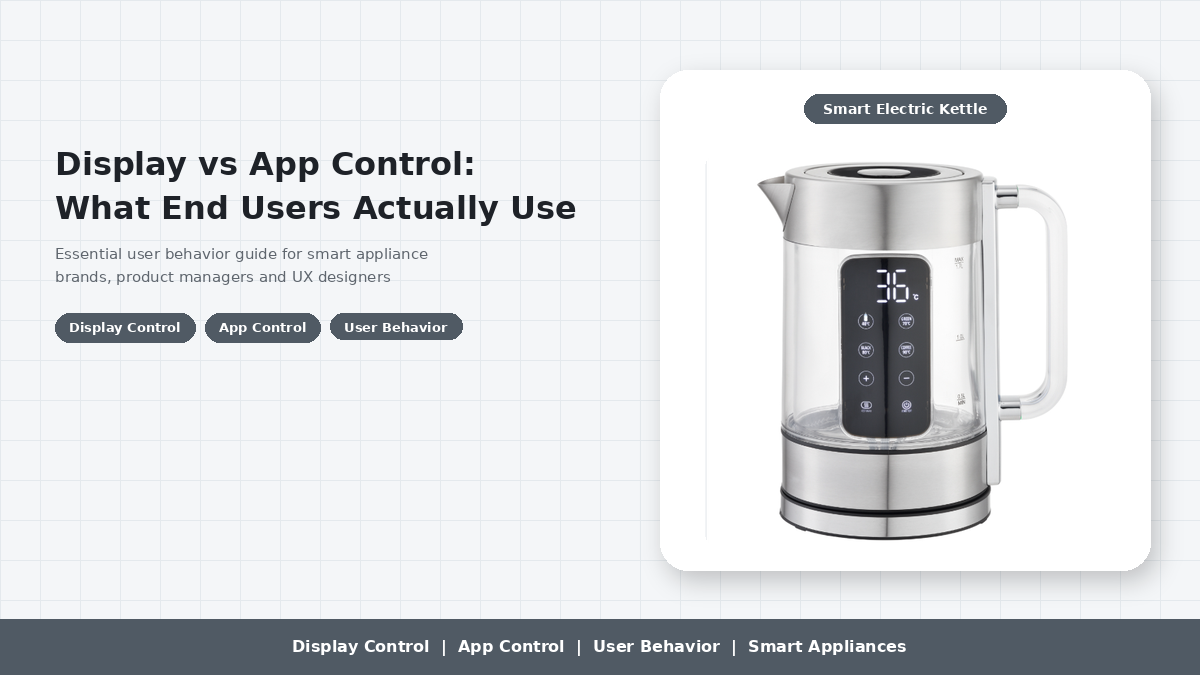
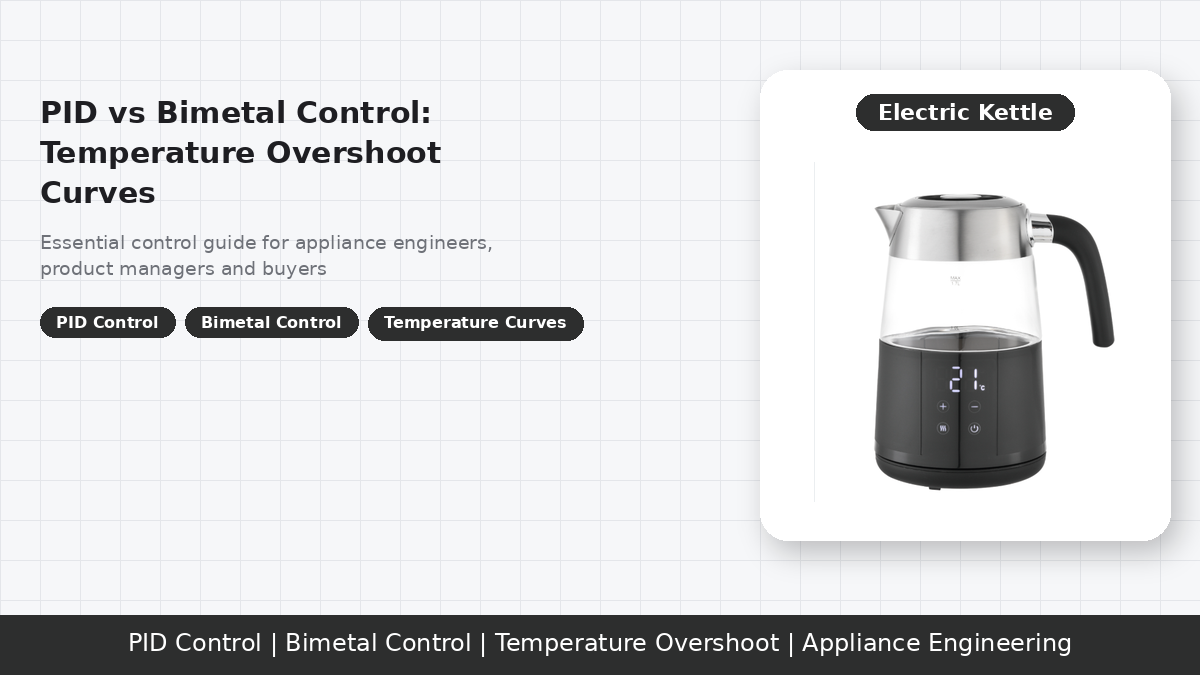
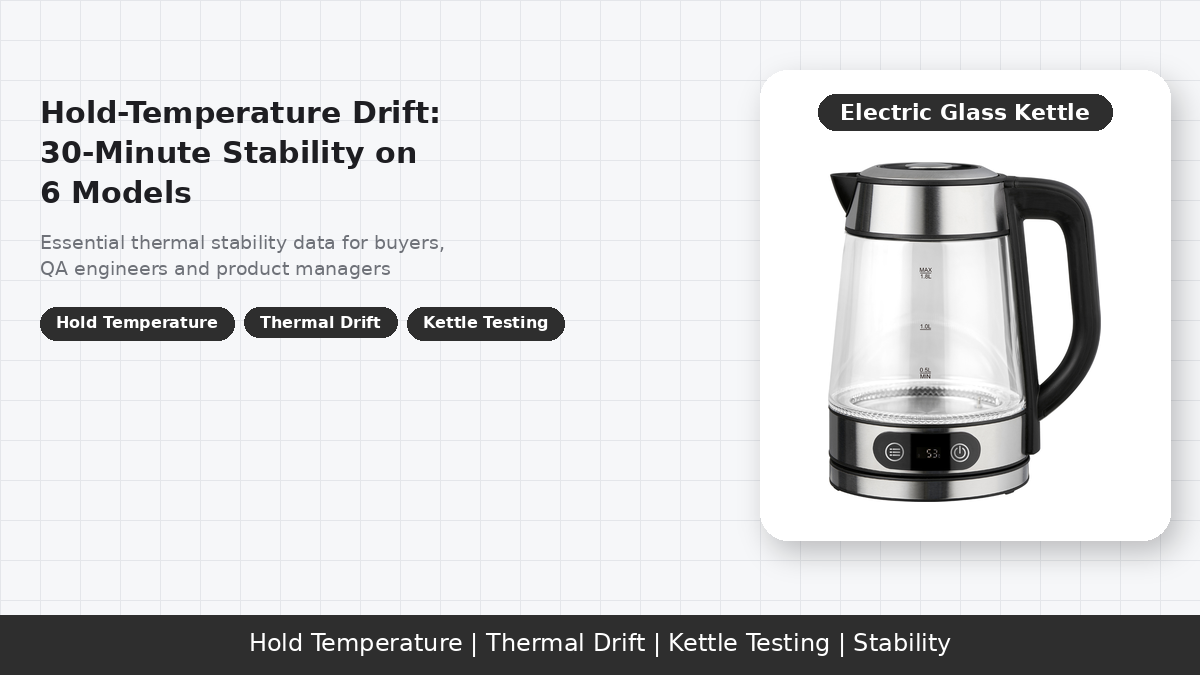
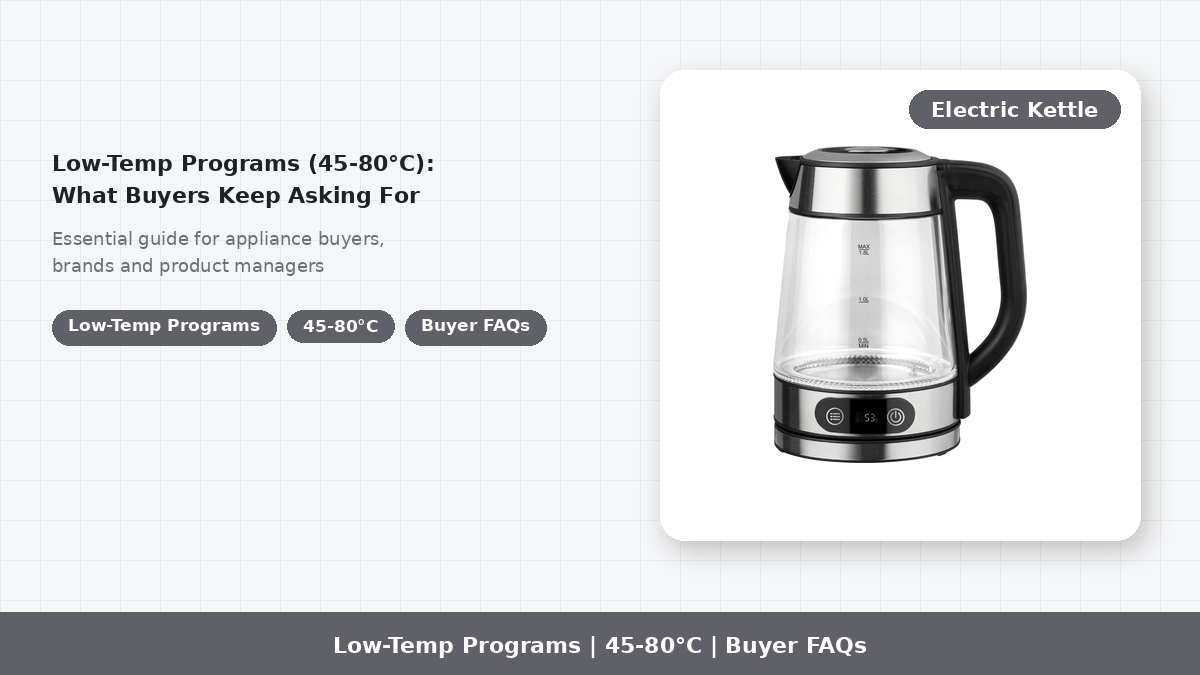
The Goodfriends Signature Glass Kettle with Ambient LED Illumination (HHB1792): high-borosilicate glass body, 2200W Pure-Flow heating system, ambient LED from the base. Packed in a retail color box on the shelf, the same kettle in a mailer box for DTC shipping. Image: goodfriendskettle.com / Goodfriends.
What Is the Difference Between a Color Box and a Mail-Order Box?
A color box (also called a retail box or printed box) is a low-volume paperboard carton designed for the retail shelf. The typical build is 300-350 gsm SBS (solid bleached sulfate) or CCNB (clay-coated news back) paperboard, printed in CMYK offset with optional Pantone spot color, with gloss or matte lamination, and a tuck-end or seal-end closure. The color box's job is to present the product and the brand to the retail shopper; structural protection is provided by the master carton that holds 6-12 retail boxes for the DC-to-store shipment.
A mail-order box (also called a mailer, RSC — regular slotted container, or roll-end tuck-front box) is a corrugated cardboard box engineered to survive parcel shipping. The typical build is E-flute (about 1.5 mm thick) or B-flute (about 3 mm thick) corrugated board, printed in 2-3 color flexo directly on the kraft, with no lamination (lamination is not curbside recyclable and removes the natural kraft look DTC buyers prefer), and a roll-end seal closure. The mailer box's job is to protect the product in transit through the courier network; brand presentation is a secondary concern handled by print quality and by the unboxing experience.
Two different jobs, two different boxes, two different supply chains. The mistake is assuming one box can do both jobs well, because it almost always does neither.
Definition (Answer Nugget): A color box is a low-volume paperboard retail carton designed to present the product on the shelf. A mail-order box is a corrugated cardboard shipping container engineered to protect the product through the courier network. The two are not interchangeable, and a kettle that ships through both channels needs both boxes or a hybrid packaging system.
Which Packaging Type Is Cheaper per Unit at OEM Volumes?
At typical OEM volumes of 1,000-5,000 units per SKU, the per-unit packaging cost of a color box is usually lower than the per-unit packaging cost of a mailer box of equivalent protection, because the color box uses thinner paperboard and a smaller outer footprint. The exact crossover depends on four variables that only the importer can fill in:
- Kettle weight and geometry.A 0.8 L plastic travel kettle and a 1.7 L Glass Kettle have very different inner-fitment requirements and very different mailer-box structural needs.
- Inner protection required.A glass kettle with a borosilicate body needs molded pulp end caps and an EPE foam cradle; a Stainless Steel Kettle needs less. The inner fitment is what drives most of the mailer-box cost.
- Freight mode. LCL ocean freight to a retailer DC is quoted by volume; air parcel to a 3PL is quoted by dimensional weight. The same mailer box has a very different per-unit landed cost on each mode.
- Print and finish. A retail color box with 4-color CMYK offset, Pantone spot color, embossing, and gloss lamination is more expensive to print than a 2-color flexo mailer — but it is the only thing the retail shopper sees.
Without these four inputs, no per-unit packaging cost is comparable between two projects, two SKUs, or two suppliers. A buyer who asks for "the unit cost of a color box" without specifying the SKU weight, the print spec, the inner fitment, and the freight mode is asking for a number that will not match the next project. The honest answer is to build the math for your specific kettle, in your specific channel, with the four inputs above, and to ask the manufacturer to quote against that envelope.
Cost rule (Answer Nugget): At typical OEM volumes, a color box is usually cheaper per unit than a mailer box of equivalent protection, but the exact crossover depends on kettle weight, inner fitment, freight mode, and print spec. Build the per-unit math for your specific kettle, in your specific channel, before comparing two quotes.
When Does a Mail-Order Box Make More Sense Than a Color Box?
There are four cases where the mailer box wins, and they all start with the same observation: the kettle is not going to a retailer DC.
1. Direct-to-Consumer Sales from an E-Commerce Site
If the kettle is sold from your own e-commerce site, the box is the unboxing experience and is photographed for marketing. The retail shelf is irrelevant. A 2-3 color flexo print on E-flute kraft, with a hot-foil or digital-printed inside lid, gives the DTC buyer the unboxing moment that a color box cannot match on the shelf. The mailer box is the right answer here, and the color box is a wasted cost.
2. Kettle-Heavy or Kettle-Fragile SKU
A 1.7 L Glass Kettle with a borosilicate body is too fragile to ship in a retail color box through a parcel network, even with a master carton around it. The mailer box with a molded pulp cradle and an EPE foam insert is the only way to deliver the kettle to the end consumer without damage. The color box is still on the shelf, but the DTC channel uses a different box.
3. Subscription or Bundled Shipments
A kettle that ships as part of a coffee subscription, a tea bundle, or a corporate gift needs a box that can survive a multi-piece master pack and a branded unboxing moment. The mailer box with a custom-printed inside lid and a die-cut insert that holds the kettle plus a sample pack is the right answer. The color box is for the retail shelf; the mailer is for the subscription.
4. Markets with Weak Retail Distribution
Some markets — particularly in parts of Southeast Asia, the Middle East, and Eastern Europe — have weak retail distribution for premium small appliances. Most of the volume is DTC or small-shop wholesale, and the color box is wasted marketing. The mailer box, often with a custom print that doubles as a brand-building surface, is the only packaging that matters.
For all four cases, the engineering envelope is the same: E-flute corrugated, 2-3 color flexo print, no lamination, molded pulp or EPE inner fitment, ISTA 3A or 3E tested. The print spec, the inner fitment, and the ISTA test are what you negotiate with the manufacturer; the channel fit is what you decide before you open the negotiation.
What Flute Should an OEM Mailer Box Use for a Glass Kettle?
For a Glass Kettle with a borosilicate body — like the Goodfriendssignature ambient LED glass kettle (HHB1792, 2200 W Pure-Flow heating system, 360-degree swivel base, ambient LED from the base) — the typical choice is E-flute corrugated (about 1.5 mm thick) for the outer mailer, paired with a die-cut corrugated or molded-pulp insert that holds the kettle off the inner walls on all six faces. E-flute gives the right balance of structural rigidity and outer-cube efficiency for a 1.0-1.7 L kettle.
B-flute (about 3 mm thick) is acceptable for heavier or larger units, but B-flute inflates the outer dimension and increases the freight cube. For a Glass Kettle that has to clear the ISTA 3A drop sequence at the corner and edge that are most likely to impact in courier handling, B-flute is overkill in most cases. C-flute sits between E and B and is the occasional choice for a heavier 1.7-2.0 L kettle, but for a 1.0-1.7 L glass body, E-flute is the right default.
The inner fitment for a Glass Kettle typically combines molded pulp end caps (which hold the kettle body off the inner walls on the cap end and the base end) with a corrugated cradle that keeps the kettle vertical in the box, plus a layer of EPE foam against the borosilicate body to absorb vibration without scratching the glass. A pure EPE foam block is also acceptable but inflates the freight cube and is harder to recycle than molded pulp.
Can a Kettle Ship in the Retail Color Box Without an Over-Box?
Generally no, for parcels. A retail color box is designed for the shelf, not for a courier network. The paperboard is thinner than corrugated, the corners are not reinforced, and the surface finish (gloss lamination, embossing) is not designed to survive the abrasion of a conveyor belt or the corner drop of a parcel sortation system.
Most importers use a 5-ply corrugated master carton that holds 6-12 retail color boxes for the DC-to-store shipment, and a separate mailer box for any DTC or single-piece shipment. Shipping a retail color box by itself risks corner damage, surface scuffing, and stack-crush on the retailer's shelf, which is why retail color boxes almost never ship alone in an e-commerce parcel. The exception is when the color box is over-boxed in a corrugated wrap or a corrugated sleeve, which is a hybrid packaging that some brands use to keep the unboxing moment but still pass ISTA 3A.
| Channel | Outer Pack | Master Carton | Inner Fitment |
|---|---|---|---|
| Retail shelf (DC to store) | Color box (SBS or CCNB, CMYK + lamination) | 5-ply corrugated, 6-12 units | Polyethylene bag, cardboard divider |
| DTC e-commerce (parcel) | Mailer box (E-flute, 2-3 color flexo) | Palletized to 3PL | Molded pulp cradle, EPE foam, corrugated insert |
| Subscription or bundled | Mailer box with custom-printed inside lid | Palletized to fulfillment center | Die-cut insert with sample pack holder |
| Hybrid (retail + DTC) | Color box over-boxed in corrugated wrap | 5-ply corrugated, 6-12 units | Molded pulp cradle inside the wrap |
How Do the Freight Density and Container Utilization Differ Between the Two?
The color box typically has a smaller outer volume and a flatter stack profile than the mailer box, so more retail color box units fit in the same 40 HQ container. The mailer box, with its corrugated walls and its inner fitment, takes roughly 1.4-1.8x the cube of an equivalent color box (the exact multiplier depends on the kettle geometry and the fitment design).
For ocean freight quoted by volume (which is the standard for LCL and FCL small-appliance shipments), this is a real difference in the per-unit landed cost. A 40 HQ container that holds 4,000 color boxes of a 1.5 L kettle will typically hold 2,500-2,800 mailer boxes of the same kettle, because each mailer box occupies 1.4-1.8x the cube. The per-unit ocean freight cost is therefore 1.4-1.8x higher on the mailer channel, before any premium for the print spec, the inner fitment, or the ISTA testing.
For air freight quoted by dimensional weight (which is the standard for DTC parcel to a 3PL), the same multiplier applies, but the absolute cost per kilogram is much higher, so the mailer box's cube penalty translates to a much larger absolute cost per unit. This is why the channel decision is the dominant variable: the same kettle, the same manufacturer, the same print spec, can be 1.4-1.8x more expensive to ship in a mailer box than in a color box, regardless of which supplier you choose.
What Printing and Finishing Options Should a Buyer Request?
On a color box, request CMYK offset print on 350 gsm SBS (solid bleached sulfate) for premium SKUs, or 300 gsm CCNB (clay-coated news back) for cost-driven SKUs, with optional Pantone spot color, gloss or matte lamination, embossing on the brand mark, and a window cutout if the design calls for product visibility. Foil stamping (gold or silver) is the right premium touch for a flagship SKU but is not a default. Spot UV on the brand mark is the most common mid-tier upgrade.
On a mailer box, request 2-color or 3-color flexo print directly on the E-flute corrugated, with no lamination (lamination is not curbside recyclable and removes the natural kraft look DTC buyers prefer). Hot-foil or digital print on the inside lid is the right premium touch for a flagship SKU. Inside printing is one of the highest-leverage upgrades in DTC packaging because it is the first thing the customer sees after opening the box, and most suppliers can deliver it at a marginal print-cost premium.
The print spec is what the manufacturer quotes against, and it is the single biggest variable in the unit packaging cost. A buyer who asks for "a mailer box" without naming the flute, the print spec, the lamination, and the inner fitment is asking for a number that will not match the next quote. Lock the print spec in a written sheet before you ask the manufacturer to cut a sample.
What Testing Should an Importer Require for an OEM Kettle Package?
At minimum, request the ISTA 3A or ISTA 3E transit test sequence on the final packed unit, with the test report on file at the manufacturer. The ISTA test sequence covers drop, vibration, and compression events that simulate the actual distribution environment.
For a Glass Kettle, also request a drop test on the corner and edge that are most likely to impact in courier handling, and a stack-load test that reflects the retailer's shelf-stacking height. A package that has not been ISTA-tested to the destination market's procedure is a package that has not been proven, regardless of what the supplier's marketing says.
The Goodfriends kettle engineering team — backed by a 95,000 sqm vertically integrated facility, nearly 30 years of R&D, and an in-house quality control loop covering 95% of the production process — is set up to run the ISTA test sequence and to provide a test report as part of the OEM package. For a buyer who is comparing the water dispenser product range across SKUs, the ISTA report is the single document that makes the comparison fair.
For a deeper treatment of the OEM teapot and kettle supply chain — how an OEM supplier is selected, how the tooling is amortized, how the freight mode is decided — the Goodfriends OEM teapot wholesale explained guide walks through the commercial side of the same decision. The packaging math in this article is the operational follow-on to that commercial framework: once you have selected the supplier and locked the channel, the packaging spec is what determines whether the kettle arrives at the end consumer in one piece.
How Do You Lock the Spec with the Manufacturer?
Before tooling the color box or the mailer box, send the manufacturer a single written spec sheet that includes the four inputs above (kettle weight and geometry, inner protection required, freight mode, print and finish spec), the dimensional drawing of the kettle in its shipping configuration, the ISTA test procedure you require, and the labeling spec (retail barcode, country-of-origin, recycling marks, retailer-specific compliance marks such as the French Triman mark or the German Green Dot).
Tooling is non-recoverable, and a mid-run spec change costs material and time. A 4-color offset plate for a color box is typically amortized over 3,000-5,000 units; a cutting die for a mailer box is amortized over a similar range. Changing the spec at unit 1,500 means the first 1,500 units are scrap. Lock the spec before the manufacturer cuts the first blank.
For a buyer who is ready to spec an OEM kettle shipment with a defined channel, a defined inner fitment, and a defined ISTA test envelope, the Goodfriends engineering team can publish a per-SKU packaging spec sheet within 2-3 working days. Send the kettle weight, the channel, the target market (North America, Europe, or both), and the print spec, and the team will come back with the color box drawing, the mailer box drawing, the inner fitment design, and the ISTA test envelope.
Need a Color Box vs Mailer Box Spec for Your Kettle?
Send the kettle weight, the channel (retail, DTC, or both), the target market, and the print spec. The Goodfriends engineering team will come back with the box drawings, the inner fitment design, and the ISTA test envelope within 2-3 working days.
Request a Packaging Spec SheetFrequently Asked Questions
What is the difference between a color box and a mail-order box for an OEM kettle shipment?
A color box (also called a retail box or printed box) is a low-volume paperboard carton designed for the retail shelf, with CMYK or Pantone printing, gloss or matte lamination, and a tuck-end or seal-end closure. A mail-order box is a corrugated cardboard box engineered to survive parcel shipping, with a typical material spec of E-flute or B-flute corrugated board, a roll-end tuck-front or roll-end seal closure, and an inner die-cut insert that holds the kettle in place. The color box is built to sell; the mailer box is built to ship.
Which packaging type is cheaper per unit at OEM volumes?
At typical OEM volumes of 1,000-5,000 units per SKU, the per-unit packaging cost of a color box is usually lower than the per-unit packaging cost of a mailer box of equivalent protection, because the color box uses thinner paperboard and a smaller outer footprint. The exact crossover depends on the kettle weight, the inner protection required, the freight mode (LCL vs courier vs palletized FCL), and whether the importer is paying for retail-shelf-ready printing on the color box or shipping labels on the mailer. Without these inputs, no specific number is comparable.
When does a mail-order box make more sense than a color box for an OEM kettle?
A mail-order box makes more sense when the kettle is sold direct-to-consumer (DTC) from an e-commerce site, when the box is also the unboxing experience and is photographed for marketing, when the brand is not on the retail shelf, or when the kettle is heavy or fragile enough that a retail color box would not protect it through parcel shipping without an additional over-box. For a retail-channel kettle that ships in a master carton to a distribution center, a color box is almost always the right answer.
What flute should an OEM mail-order box use for a glass kettle?
For a Glass Kettle with a borosilicate body, the typical choice is E-flute corrugated (about 1.5 mm thick) for the outer mailer, paired with a die-cut corrugated or molded-pulp insert that holds the kettle off the inner walls on all six faces. B-flute (about 3 mm thick) is acceptable for heavier units but costs more and inflates the outer dimension. The flute choice should be validated against the ISTA 3A or 3E drop and vibration sequence before locking the spec.
Can a kettle ship in the retail color box without an over-box?
Generally no, for parcels. A retail color box is designed for the shelf, not for a courier network. Most importers use a 5-ply corrugated master carton that holds 6-12 retail color boxes for a DC-to-store shipment, and a separate mailer box for any DTC or single-piece shipment. Shipping a retail color box by itself risks corner damage, surface scuffing, and stack-crush on the retailer's shelf, which is why retail color boxes almost never ship alone in an e-commerce parcel.
What is the role of the inner fitment in a mailer box?
The inner fitment (the die-cut corrugated insert, molded pulp tray, or EPS / EPE foam block) is the part of the mailer that does the actual product protection. The outer mailer absorbs the structural load and provides the printable surface, but the fitment holds the kettle in place during the drop, vibration, and stack events. A typical fitment for a 1.0-1.7 L glass kettle uses molded pulp end caps and a corrugated cradle, with a layer of EPE foam against the borosilicate body to absorb vibration without scratching the glass.
How do the freight density and container utilization differ between color box and mailer box?
The color box typically has a smaller outer volume and a flatter stack profile than the mailer box, so more retail-color-box units fit in the same 40 HQ container. The mailer box, with its corrugated walls and inner fitment, takes roughly 1.4-1.8x the cube of an equivalent color box (the exact multiplier depends on the kettle geometry and the fitment design). For ocean freight quoted by volume, this is a real difference in the per-unit landed cost.
What printing and finishing options should a buyer request on a color box vs a mailer box?
On a color box, request CMYK offset print on 350 gsm SBS (solid bleached sulfate) or 300 gsm CCNB (clay-coated news back) paperboard, with optional Pantone spot color, gloss or matte lamination, embossing on the brand mark, and a window cutout if the design calls for product visibility. On a mailer box, request 2-color or 3-color flexo print directly on the E-flute corrugated, with no lamination (lamination is not recyclable and removes the natural kraft look DTC buyers prefer). Hot-foil or digital print on the inside lid is a common premium touch.
What testing should an importer require for an OEM kettle package?
At minimum, request the ISTA 3A or ISTA 3E transit test sequence (drop, vibration, compression) on the final packed unit, with the test report on file at the manufacturer. For a glass kettle, also request a drop test on the corner and edge that are most likely to impact in courier handling, and a stack-load test that reflects the retailer's shelf-stacking height. A package that has not been ISTA-tested to the destination market's procedure is a package that has not been proven, regardless of what the supplier's marketing says.
Reference Standards & Authoritative Sources
The packaging engineering framework, transit test envelope, and corrugated / paperboard specifications referenced throughout this article are drawn from the following international standards bodies and industry associations. Goodfriends' packaging engineering and ISTA test reporting are anchored against the references below.
- ISTA — International Safe Transit Association (ISTA 3A for North American distribution, ISTA 3E for European distribution, the transit test procedures for packaged products)
- ISO 2234 — Packaging — Complete, filled transport packages and unit loads — Stacking tests using a static load (International Organization for Standardization)
- ISO 2244 / ISO 2247 — Packaging — Complete, filled transport packages — Horizontal / Vertical impact tests (International Organization for Standardization)
- TAPPI — Technical Association of the Pulp and Paper Industry (publisher of paperboard, corrugated, and SBS / CCNB material standards referenced throughout the print and structural spec)
- FEFCO — European Federation of Corrugated Board Manufacturers (publisher of the FEFCO catalogue of corrugated box design codes used across European retail and DTC packaging)
- ISO 9001 — Quality Management Systems (International Organization for Standardization)
- The Sustainability Consortium (publisher of retail sustainability and packaging recyclability guidance relevant to DTC mailer box design)