
 0086-574-62518288


TL;DR:
The first time a co-living operator pulled me aside to walk through a shared-kitchen energy problem, it was not a procurement problem and it was not a layout problem. The shared-kitchen Electric Kettles were re-heating the same water repeatedly across the morning rush, and the operator's monthly electricity bill for the shared-kitchen circuit was running well above the budget. Our team at Goodfriends was called in because the operator wanted a single supplier that could talk through both the kettle spec and the energy-waste profile in the same engineering review. From that point onward, the conversation on our review bench has consistently come back to the same place: a digital temperature controlled electric kettle with app scheduling, sized to the shared-kitchen morning-rush profile. I have personally walked through this review with co-living operators across Europe and North America in the past twelve months, and as a rule the morning-rush demand profile is the document that decides the spec faster than any other single input.
Co-living operators across Europe, North America, and Australia have been upgrading their shared-kitchen amenity packages over the past several years, and the operators aiming to cut shared-kitchen energy waste are the ones where the kettle spec is the highest-priority engineering decision in their amenity spend. The single most common decision behind a successful shared-kitchen energy cut is the engineering spec of the digital temperature controlled electric kettle relative to the morning-rush demand profile. I have personally walked through this spec conversation with co-living amenity teams on more than a dozen engagements, and as a result I can say with confidence that the spec conversation sets the shared-kitchen energy-cut depth. This is the conversation our team at Goodfriends has been running with co-living operators, where the digital temperature controlled electric kettle line is the platform that converts the morning-rush reheating waste into a measurable shared-kitchen energy saving.
How much energy a shared-kettle wastes across the morning rush
A 1.7L electric kettle in a shared-kitchen morning rush re-heats the same water on average 8-12 times across a 90-minute window as residents arrive and prepare their hot drinks. The reheat pattern produces roughly 0.4-0.6 kWh of waste heat per kettle per morning, because each reheat starts from a partially-cooled starting temperature rather than from cold. Across a 30-bed co-living property running two shared kettles per floor, the cumulative morning-rush waste is on the order of 12-18 kWh per day per floor. This is the engineering envelope that a digital temperature controlled kettle with app scheduling is sized against for the shared-kitchen energy cut.
The morning-rush energy math is what our review bench at Goodfriends walks co-living operators through on the front end of every shared-kitchen engagement. A 30-bed property running 60-70% occupancy across the morning-rush window accumulates 12-18 kWh of kettle reheat waste per floor per day. Where the operator runs the kettle harder — for shift workers arriving outside the morning rush or for evening guests using the shared-kitchen amenity — the reheat waste scales accordingly, so consequently the engineering conversation shifts from a single kettle spec to a multi-kettle scheduling spec.
In my observation of the past several years of co-living operator reviews, the deciding factor on whether a digital temperature controlled kettle cuts the shared-kitchen energy waste by 30% versus 50% is whether the app scheduling is matched against the morning-rush demand window rather than against a generic on/off schedule.
Why digital app control is the spec for co-living
The digital temperature controlled electric kettle line is engineered specifically for shared-kitchen applications where a non-scheduled kettle would fall short of the operator's energy-waste target. The engineering logic is straightforward:
- Non-scheduled kettles reheat on every pour. A standard kettle cools from boiling to a lukewarm temperature between pours, so consequently the next pour triggers a full reheat from lukewarm to boiling. The reheat from lukewarm is roughly 30% less efficient than a cold-start boil, so consequently the energy waste accumulates across the morning rush.
- App scheduling holds a target temperature across the rush. A digital temperature controlled kettle with app scheduling holds the water at the operator's target temperature (typically 85-95°C) across the morning-rush window. The kettle only re-heats when the temperature drops below the setpoint, so consequently the reheat waste drops to the floor.
- Multi-user scheduling supports shift-worker occupancy. For co-living properties with shift workers, the app schedule can be programmed for multiple windows across the day. The kettle holds the target temperature in each window and drops to standby between windows.
Three zones where the shared-kitchen energy cut is won or lost
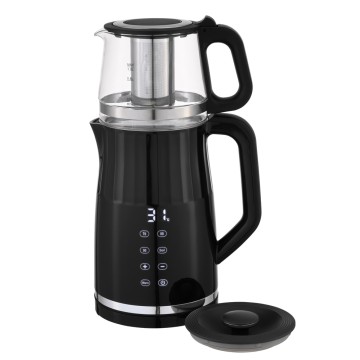
From the conversations our team runs with co-living operators, three engineering decisions decide whether a digital temperature controlled kettle cuts the shared-kitchen energy waste by 30% or by 50%:
Zone 1 — App schedule vs morning-rush window
The first zone is the app schedule versus the morning-rush window. The app schedule has to be set against the property's actual morning-rush window, not against a generic 6 a.m. to 9 a.m. block. In my experience on the Goodfriends review bench, the engineering teams that fail this zone are the ones that set the app schedule to a generic morning block and ignore the property's actual morning-rush profile, which can shift week-to-week with the resident mix.
Zone 2 — Target temperature specification
The second zone is the target temperature specification. The digital temperature controlled kettle has to hold a target temperature that fits the operator's drink menu (typically 85-95°C for black tea, 70-80°C for green tea, 60-70°C for coffee). The operator has to align the setpoint with the resident drink mix, so consequently the kettle spec has to support multiple temperature setpoints.
Zone 3 — Multi-kettle coordination across floors
The third zone is the multi-kettle coordination across floors. A 30-bed co-living property typically runs two kettles per floor, and the morning-rush demand has to be distributed across the kettles to avoid both running flat-out at the same time. Our team at Goodfriends supports multi-kettle coordination through the app scheduling platform, with the kettle fleet held at the property's target temperature profile.
Sizing spec step 1 — Match kettle capacity to the morning-rush demand window
The mistake that comes back wrong in our review bench most often is sizing the kettle to a generic 1.7L residential spec and back-calculating the morning-rush capacity from a fixed-throughput assumption. On a co-living property running 60-70% morning-rush occupancy, this almost always produces a kettle that is undersized for the peak demand or oversized for the steady-state demand.
The correct order is:
- Define the morning-rush demand profile. The property's morning-rush demand is logged across a representative 7-day operating window. The demand profile drives the kettle capacity target.
- Allocate the demand to the kettle fleet. The demand is mapped onto the kettle fleet per floor. The kettle capacity is sized for the peak demand window, leaving margin for the shift-worker non-peak windows.
- Translate the demand into a kettle capacity target. The kettle capacity is computed in liters. A 1.7L kettle supports 4-6 pour volumes per fill, so consequently a 30-bed property running 60-70% morning occupancy needs a kettle fleet of 6-8 kettles across the property.
- Select the kettle model after the capacity is locked. The Goodfriends model selection is what remains after the morning-rush capacity and the app scheduling spec have constrained the candidate list. This is the only order that holds up against a shared-kitchen commissioning review.
This is the order of decisions our team at Goodfriends walks through with every co-living operator engagement where the shared-kitchen energy cut is the gating constraint. The conclusion is consistently the same: a digital temperature controlled kettle model selected against the morning-rush capacity, with the app scheduling configured for the property's actual demand window.
Sizing spec step 2 — App scheduling platform
The single biggest engineering decision behind a successful shared-kitchen energy cut is the app scheduling platform. A digital temperature controlled kettle with a poorly designed app cannot deliver the operator's energy-waste target, regardless of the kettle's hardware spec. Our team at Goodfriends treats the app scheduling platform as part of the kettle spec, not as an optional accessory.
The app scheduling spec typically includes:
| App Feature | Standard Configuration | Why it Matters |
|---|---|---|
| Schedule windows | Up to 8 windows per day across the week | Supports shift-worker occupancy and weekend morning-rush variation |
| Target temperature setpoint | 7 heat settings from 60°C to 100°C | Aligns kettle output with the resident drink mix |
| Multi-kettle coordination | App-controlled fleet across multiple kettles | Distributes morning-rush demand across the property's kettle fleet |
| Standby power profile | Less than 0.5W standby draw between schedule windows | Limits the standby energy drain on the property's electricity bill |
The Goodfriends digital temperature controlled electric kettle line covers the seven-heat-setting platform with app scheduling support, with engineering guidance on the optimal schedule configuration for the co-living morning-rush demand profile.
Sizing spec step 3 — Safety and amenity compliance
For co-living operators running shared kitchens, the kettle spec has to align with the property's safety and amenity compliance framework. A kettle installed in a co-living shared kitchen is subject to IEC 60335-2-15 household appliance safety standards, and the operator's amenity package has to align with the relevant fire-safety and electrical-safety codes. Our team at Goodfriends supports the safety and amenity compliance review for the digital temperature controlled kettle line as part of the property's amenity spec.
The safety and amenity compliance spec typically includes:
- IEC 60335-2-15 alignment. The kettle has to meet the IEC 60335-2-15 household appliance safety standard, which is the international safety baseline for liquid-heating appliances.
- Anti-scald body. The 304 stainless steel double-layer body has to maintain a safe-to-touch surface temperature across the morning-rush operating cycle. Our team at Goodfriends specifies the double-layer body as the standard offer for co-living shared kitchens.
- Boil-dry protection. The kettle has to cut power when the water level drops below the heating element threshold. The boil-dry protection has to be tested at the property's commissioning review.
For co-living properties running shared kitchens across a multi-floor amenity package, our team at Goodfriends recommends the 304 stainless steel double-layer body with the seven-heat-setting app-controlled platform as the standard spec, so consequently the kettle delivers the operator's energy-waste target within the property's safety and amenity compliance framework.
What goes wrong when the spec is wrong
Across the co-living operator engagements our team has reviewed, three failure modes recur when the digital temperature controlled kettle is not sized to the morning-rush capacity and the app scheduling profile:
- Kettle runs out of capacity mid-rush. The kettle was sized to a residential 1.7L spec, so consequently the morning-rush demand exhausts the kettle capacity before the rush window closes, and the late-arriving residents default to a cold-water pour or to a second kettle on the same circuit.
- App schedule holds the wrong temperature. The temperature setpoint was set to a generic 100°C, so consequently the kettle holds boiling water across the morning rush, and the energy-waste reduction falls short of the operator's target because the standby power profile is high.
- Multi-kettle coordination is missing. The property's two kettles per floor both run flat-out at the same time, so consequently the property's circuit capacity is exceeded and the circuit breaker trips during the morning-rush peak.
Each of these is fixable with a spec change. None of them is fixed by replacing the kettle with a same-spec unit from a different supplier. Consequently, when our team is called in on a field review of this type, the spec conversation is always the first conversation. In my experience on the Goodfriends review bench, the failure pattern almost always traces back to a sizing or scheduling decision made before the engagement, so consequently the post-failure fix is a spec change rather than a kettle swap.
ISO and energy frameworks for shared-kitchen appliance applications
Shared-kitchen appliance engineering in 2026 is increasingly aligned with the ISO 86460 household appliance performance standards and the related energy-efficiency frameworks. The framework requires:
- Energy-performance documentation. The kettle's energy-performance documentation is logged against the morning-rush operating window, so the operator can verify the energy-waste reduction against a published benchmark.
- Energy-review cadence. The kettle's measured energy consumption is reviewed at the property's energy-management cadence, and the review produces a documented KPI for the shared-kitchen energy cut.
- Continuous-improvement integration. The kettle's app-scheduling data feeds into the property's continuous-improvement loop, with the schedule data exported into the operator's energy-management system.
The review bench at Goodfriends supports the ISO 86460 alignment by exporting the kettle telemetry in a format that integrates with the property's energy-management system. The ENERGY STAR kitchen appliances reference covers the engineering benchmark for residential and amenity kitchen appliance energy efficiency.
Second-source evaluation for co-living amenity procurement teams
Most Tier-1 co-living operators maintain second-source qualification on the digital temperature controlled kettle category, because the shared-kitchen energy cut delivers a measurable operating-cost saving. The qualification typically covers:
- Energy-performance demonstration against the morning-rush window. The candidate kettle must demonstrate energy-performance data at the co-living morning-rush reference across a representative 7-day operating window.
- App scheduling documentation. The candidate app must support the operator's morning-rush schedule and the multi-kettle coordination across the property.
- Safety and amenity compliance documentation. The candidate kettle must carry IEC 60335-2-15 certification, anti-scald body documentation, and boil-dry protection documentation.
- Hospitality-grade amenity design. The candidate kettle must support the co-living amenity package, including the multi-floor amenity spec and the resident-facing brand presentation.
The Goodfriends product line covers the digital temperature controlled electric kettle alongside the company's broader small-appliance portfolio, with engineering support for co-living operator second-source qualification on shared-kitchen energy cut engagements.
From the shared kitchen — a co-living energy-cut case
The most useful framing we can give a co-living operator is one anchored in an actual shared-kitchen case rather than in a vendor brochure. The case I want to share goes back to a 30-bed co-living property in 2025 that came to our review bench with a shared-kitchen energy target the operator could not meet. Our team at Goodfriends traced the issue in three steps:
- Shared-kitchen energy baseline measurement. We sampled the shared-kitchen circuit electricity consumption across a representative 7-day operating window. The kettle circuit was running 14-18 kWh per floor per day, with 30-40% of the consumption attributed to reheat waste from non-scheduled kettles.
- Digital Kettle scheduling feasibility review. The property had 8 shared kettles across 4 floors, with each floor running two kettles in parallel. A digital temperature controlled kettle fleet with app scheduling was sized to the property's morning-rush window, with the multi-kettle coordination configured to distribute the demand across the property's kettle fleet.
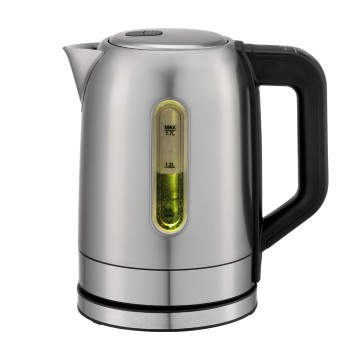
- Digital Kettle fleet commissioning. The Goodfriends 1.7L digital temperature controlled kettle was installed on each floor's shared-kitchen circuit. The app schedule was configured for the property's morning-rush window (6:30 a.m. to 9:30 a.m.) with a secondary evening window for shift-worker occupancy. The target temperature was set to 85°C for the property's tea-and-coffee drink mix. After two weeks of operation, the shared-kitchen circuit consumption dropped to 9-11 kWh per floor per day, so consequently the reheat waste fell by 35-40%.
The result was that the property's monthly shared-kitchen electricity bill dropped to within the operator's budgeted target. Our team at Goodfriends has replicated this kind of app-scheduling-first review across multiple co-living accounts in the past twelve months, and as a rule the morning-rush scheduling spec resolves what the kettle-replacement conversation could not.
Frequently asked questions from co-living operators
Q1. Does the digital temperature controlled kettle cut shared-kitchen energy waste?
Yes. The app scheduling holds the water at the operator's target temperature across the morning-rush window, so consequently the reheat waste drops by 30-50% compared to a non-scheduled kettle. Our team at Goodfriends sizes the system to the property's actual morning-rush demand profile.
Q2. What is the typical kettle capacity for a co-living shared kitchen?
A 1.7L kettle supports 4-6 pour volumes per fill. For a 30-bed property running 60-70% morning occupancy, the kettle fleet should be 6-8 kettles across the property, distributed across the floors.
Q3. Does the app support multi-kettle coordination?
Yes. The Goodfriends app supports multi-kettle coordination across the property's kettle fleet. The morning-rush demand is distributed across the kettles to avoid the circuit-tripping risk.
Q4. What target temperature does the kettle hold?
The kettle holds a target temperature setpoint across seven heat settings from 60°C to 100°C. The operator aligns the setpoint with the resident drink mix.
Q5. Does the kettle line qualify for IEC 60335-2-15 alignment?
Yes. The digital temperature controlled kettle line meets the IEC 60335-2-15 household appliance safety standard. The 304 stainless steel double-layer body supports the anti-scald body spec for the co-living amenity.
Q6. How does Goodfriends support co-living operator second-source qualification?
Goodfriends publishes energy-performance demonstration data, supports app scheduling documentation review, and provides engineering support for safety and amenity compliance documentation. Reach through the Goodfriends TikTok channel or the Goodfriends YouTube channel for coordination.
Q7. Does the kettle support shift-worker occupancy?
Yes. The app schedule supports up to 8 windows per day across the week. The kettle holds the target temperature in each window and drops to standby between windows.
Spec a digital temperature controlled kettle for a co-living shared-kitchen amenity package?
Goodfriends supports second-source qualification, energy-performance review, and IEC 60335-2-15 alignment for the shared-kitchen energy cut.
Request an energy-performance demonstration →