
 0086-574-62518288


Industry News
0102030405
Double Wall vs. Single Wall Stainless Steel Kettles — Thermal Performance, Safety and OEM Manufacturing Considerations
2026-07-02
Key Takeaways for Kettle Brand Buyers
- Double wall kettles: vacuum/air gap reduces outer wall temp to 35–50°C (vs 80–100°C single wall) and heat loss to 5–8°C/hr (vs 15–25°C/hr). Safer for households with children, premium positioning.
- Standard grade: 304 (18/8) inner wall + 430 (18/0) outer wall. Premium upgrade: 316 (18/10 marine grade) for hard water environments and commercial use. All compliant with FDA/EU 1935/2004/LFGB.
- OEM MOQ: 500–1,000 units single wall (30–45 days), 1,000–2,000 units double wall (45–60 days), 2,000–5,000 units custom (60–90 days). Vacuum sealing adds 15–20 days lead time for double wall.
The electric kettle is one of the most ubiquitous small appliances in the global consumer market, with global demand exceeding 100 million units annually and steady growth driven by the replacement cycle, the premium segment expansion, and the emerging market adoption. The two dominant configurations are single wall and double wall, with the choice between them affecting the thermal performance, the user safety, the manufacturing complexity, and the retail price point. For a kettle brand evaluating which configuration to specify for a new product launch, the decision is driven by the target market (developed vs emerging), the price point (premium vs budget), the user profile (households with children vs single adults), and the brand positioning (premium vs mass market).
GOODFRIENDS, the Ningbo-based electric kettle OEM manufacturer whose product catalog includes both single wall and double wall configurations in capacities from 0.8L to 1.8L, has been producing kettles for global brands for over a decade. The factory's experience with both configurations is, in our work with global kettle brands, a useful reference for understanding the trade-offs that the single wall vs double wall decision involves.
Thermal Performance: The Heat Retention Comparison
The thermal performance difference between a double wall and a single wall Stainless Steel Kettle is significant, with the double wall configuration delivering a meaningful improvement in heat retention. A single wall kettle loses heat through the outer wall at a rate of 15–25°C per hour, depending on the ambient temperature and the kettle's insulation (or lack thereof). A double wall kettle with a vacuum insulation between the inner and outer walls loses heat at a rate of 5–8°C per hour, which is a 60–75% reduction. The heat retention matters for two use cases: keeping the water hot between boils (useful for tea drinkers who make multiple cups over an hour), and reducing the energy consumption of re-boiling (which matters for energy-conscious consumers and for markets with high electricity prices). For technical reference, see goodfriendskettle.com.
The heat retention is also affected by the lid design. A loose-fitting lid can increase the heat loss by 30–50% compared to a tight-fitting lid, with the heat loss through the lid gap being the dominant heat loss pathway for many kettles. A double wall kettle typically has a tight-fitting lid as part of the insulation system, with the lid sealing against the inner wall to maintain the vacuum integrity. A single wall kettle typically has a looser-fitting lid, with the lid primarily serving as a splash guard rather than an insulation component.
The thermal performance also affects the boiling time. A double wall kettle typically takes 10–20 seconds longer to bring the water to a boil compared to a single wall kettle, because the heating element must also heat the inner wall to the boiling temperature (the inner wall acts as a thermal mass that absorbs heat before transferring it to the water). The boiling time difference is small in absolute terms (typically 10–20 seconds for a 1.5L kettle), but it is noticeable for users who are used to the faster boiling of a single wall kettle.
Surface Temperature and User Safety
The surface temperature of the outer wall is the most consequential safety difference between a double wall and a single wall kettle. A single wall kettle's outer wall reaches 80–100°C during operation, with the exact temperature depending on the heating element power, the water level, and the operating duration. At 80–100°C, the outer wall is well above the burn threshold for adult skin (approximately 50–55°C for a 10-second contact) and far above the burn threshold for child skin (approximately 45–50°C for a 10-second contact). A single wall kettle therefore poses a burn risk if a child or an unaware adult touches the outer wall during or shortly after operation. For technical reference, see goodfriendskettle.com/products.
A double wall kettle's outer wall reaches only 35–50°C during operation, which is well below the burn threshold for both adult and child skin. The reduced surface temperature is the result of the vacuum or air gap insulation, which limits the heat transfer from the inner wall to the outer wall. The reduced surface temperature is the primary safety advantage of the double wall configuration, and it is the reason that the double wall configuration is the standard for households with children.
The surface temperature also matters for the kettle's placement on the counter or table. A single wall kettle can scorch a wooden countertop or melt a plastic mat if placed immediately after boiling. A double wall kettle can be placed on any surface without risk of damage, which is a meaningful usability advantage. The double wall configuration also reduces the risk of the kettle being knocked over by a child or pet reaching for the outer wall, because the outer wall does not feel hot and is not an obvious hazard. ISO 9001 provides additional reference.
Stainless Steel Grades: 304, 430, and 316
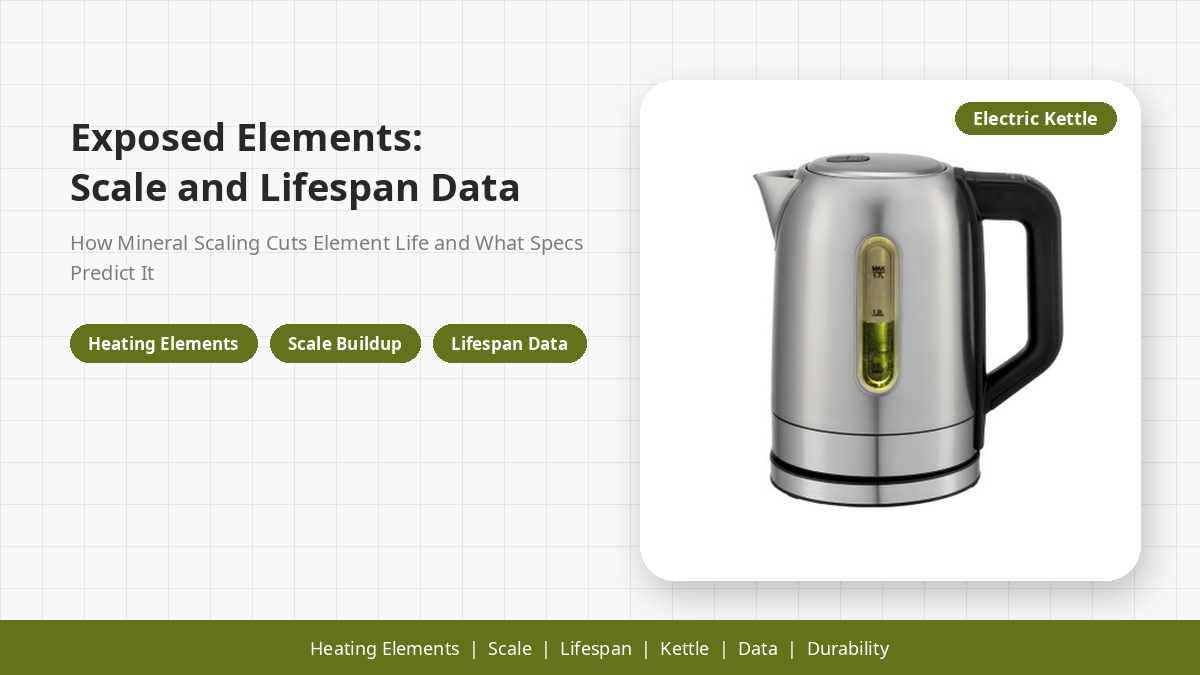
The stainless steel grade is the third major comparison parameter between double wall and single wall kettles, with the grade selection affecting the corrosion resistance, the food contact compliance, and the cost. The standard grade for premium Electric Kettles is 304 (also known as 18/8 or AISI 304, with 18% chromium and 8% nickel). Grade 304 is specified for the inner wall (the surface in contact with the water) because of its excellent corrosion resistance in hot water environments and its compliance with food contact regulations. For technical reference, see goodfriendskettle.com/products.
For the outer wall, the grade can be 304 or 430 (also known as 18/0, with 18% chromium and no nickel). Grade 430 is less expensive and less corrosion-resistant than 304, but it is adequate for the outer wall where the surface is not in contact with food or water. The outer wall grade selection is typically a cost optimization decision: a kettle using 304 for both walls has the highest corrosion resistance and the highest cost; a kettle using 304 for the inner wall and 430 for the outer wall has a slightly lower cost with no functional compromise. IEC 60335-2-15 provides additional reference.
Some premium kettles use 316 stainless steel (also known as 18/10 or marine grade, with 16–18% chromium, 10–14% nickel, and 2–3% molybdenum) for the inner wall. Grade 316 provides additional corrosion resistance in hard water environments and in environments with high chloride content (e.g., coastal areas, areas with salty air). The additional corrosion resistance comes at a cost premium of 30–50% over grade 304, which is justified for high-end or commercial use but is not justified for typical residential use. GOODFRIENDS's standard kettle line uses 304 for the inner wall and 430 for the outer wall, with 316 available as a premium upgrade for the destination markets where the additional cost is justified. ASTM food contact provides additional reference.
OEM Manufacturing Complexity: Single Wall vs Double Wall
The OEM manufacturing complexity differs significantly between single wall and double wall kettles, with the double wall configuration requiring additional process steps and additional quality control. A single wall kettle manufacturing process involves: stainless steel sheet cutting and forming (a single body), welding the seam (typically TIG welding), polishing the surface, installing the heating element and the controller, installing the lid and the handle, pressure testing the water chamber, electrical safety testing, and packaging. The process is well-established and the quality control is straightforward. For technical reference, see goodfriendskettle.com/about-us.html.
A double wall kettle manufacturing process involves: stainless steel sheet cutting and forming (two bodies, inner and outer), welding the inner body seam, welding the outer body seam, assembling the inner body inside the outer body with a precise gap (or under vacuum), sealing the gap between the two bodies (typically at the bottom, with a small access hole for vacuum pumping), vacuum pumping and sealing the access hole, polishing the outer surface, installing the heating element and the controller, installing the lid and the handle, vacuum integrity testing (every unit, with a helium leak detector or a similar sensitive test), pressure testing the water chamber, electrical safety testing, and packaging. The process adds 8–12 steps compared to the single wall process, and the vacuum integrity testing adds a significant cost and time component. EFSA food contact provides additional reference.
The double wall kettle's quality control is more rigorous than the single wall's, with the vacuum integrity test being the most consequential addition. A vacuum leak in a double wall kettle results in the inner and outer walls coming into thermal contact, which eliminates the insulation benefit and reduces the outer wall temperature safety. The vacuum integrity test is typically done using a helium mass spectrometer leak detector, with the acceptable leak rate specified as <1 × 10^-7 atm·cc/sec. A kettle that fails the vacuum integrity test is rejected and either reworked or scrapped. GOODFRIENDS's standard quality system, in our work with global kettle brands, includes the helium leak test on every double wall unit, with the test results documented in the lot certification.
OEM MOQ, Lead Time, and Cost Structure
The OEM MOQ for a private label kettle program depends on the configuration. For a single wall kettle in a standard configuration (1.0–1.7L capacity, 304 inner wall, 1500W heating element, standard controller), the MOQ is typically 500–1,000 units, with a lead time of 30–45 days from artwork approval to first delivery. For a double wall kettle in a standard configuration (1.0–1.7L capacity, 304 inner wall, vacuum-insulated, 1500W heating element, standard controller), the MOQ is typically 1,000–2,000 units, with a lead time of 45–60 days (the additional lead time is for the vacuum sealing process and the vacuum integrity testing). For technical reference, see goodfriendskettle.com/contact-us.html.
For a custom configuration (a new capacity, a new shape, a new controller, or a new color), the MOQ is typically 2,000–5,000 units, with a lead time of 60–90 days (the additional lead time is for the tooling and the first-article qualification). The shipping lead time from the Chinese factory to the destination port adds another 20–35 days for sea freight. A well-run brand places the OEM order 90–120 days before the intended retail launch, with the production lead time and the shipping lead time running in parallel.
The cost structure for a kettle OEM order is determined by the unit cost (stainless steel body, heating element, controller, lid, handle, packaging), the setup cost (tooling for the body, tooling for the controller, screen printing or laser marking setup), the certification cost (CE for EU, UL for US, CCC for China, KC for Korea, PSE for Japan, RCM for Australia), and the shipping cost. The unit cost is the largest component, with the stainless steel body and the heating element accounting for the majority. The certification cost is a one-time cost per destination market, with the CE certification (which covers the EU) typically the most expensive due to the rigorous testing requirements. The shipping cost is a function of the volume and the destination port, with sea freight being the most cost-effective for large production runs.
Destination Market Certification Package
The destination market certification package for an electric kettle is demanding, with the certification requirements varying by market but consistently requiring electrical safety testing, electromagnetic compatibility (EMC) testing, and food contact material testing. The standard certification package for the US market is UL 1082 (the standard for household Electric Kettles), FCC Part 15 (EMC for unintentional radiators), and FDA 21 CFR 174–179 (food contact for the inner wall). The standard package for the EU market is the Low Voltage Directive (LVD) 2014/35/EU, the EMC Directive 2014/30/EU, the RoHS Directive 2011/65/EU (restriction of hazardous substances), and EU Regulation 1935/2004 (food contact for the inner wall). For technical reference, see ul.com.
The standard package for the German market includes the LFGB food contact certification (more stringent than the EU baseline), with the LFGB certification including sensory testing (the kettle does not impart taste or odor to the water) and specific migration testing. The standard package for the Chinese market is the CCC (China Compulsory Certification), with the CCC certification covering electrical safety and EMC. The standard package for the Korean market is the KC (Korea Certification), with the KC certification covering electrical safety and EMC. The standard package for the Japanese market is the PSE (Product Safety Electrical) certification, with the PSE certification covering electrical safety. The standard package for the Australian market is the RCM (Regulatory Compliance Mark), with the RCM certification covering electrical safety and EMC.
A well-run kettle OEM factory has the certification package in place for the major destination markets, with the certification documentation available to the brand's regulatory team on request. GOODFRIENDS's standard certification package, in our work with global kettle brands, covers CE (EU), FCC (US), LFGB (Germany), CCC (China), and PSE (Japan), with the documentation package including the test reports, the certificates, and the technical construction file. The brand's regulatory team should review the certification documentation before placing the OEM order to ensure that the destination market requirements are fully covered.
Frequently Asked Questions
What is the thermal performance difference between a double wall and a single wall Stainless Steel Kettle, and how should a brand decide which configuration to specify?
The thermal performance difference between a double wall and a single wall Stainless Steel Kettle is significant. A single wall kettle transfers heat directly from the heating element to the water, with the heat also transferring to the outer wall (which can reach 80–100°C during operation, posing a burn risk if touched). A double wall kettle has a vacuum or air gap between the inner wall (in contact with the water) and the outer wall (the user-facing surface), with the vacuum or air gap reducing the heat transfer to the outer wall by 60–80%. The outer wall of a double wall kettle typically reaches only 35–50°C during operation, which is well below the burn threshold. The double wall configuration also retains heat longer: a double wall kettle typically loses 5–8°C per hour vs 15–25°C per hour for a single wall kettle. The trade-off is the manufacturing complexity: a double wall kettle requires two stainless steel bodies, a vacuum sealing process (for vacuum-insulated) or precise gap spacing (for air-gap insulated), and more rigorous quality control to ensure the vacuum integrity or gap consistency. A brand should specify the double wall configuration for premium positioning, for households with children, and for use cases where the kettle is left on the counter for extended periods between uses. The single wall configuration is appropriate for budget positioning, for use cases where the kettle is used immediately after boiling, and for markets where the burn risk is less of a concern (e.g., commercial kitchens, where the user is a trained adult). FDA 21 CFR 174-179 provides additional reference.
What stainless steel grade is standard for premium Electric Kettles, and why?
The standard stainless steel grade for premium Electric Kettles is 304 (also known as 18/8 or AISI 304, with 18% chromium and 8% nickel), which is specified for the inner wall (in contact with the water) because of its excellent corrosion resistance in hot water environments and its compliance with food contact regulations (FDA 21 CFR 174–179 for the US market, EU Regulation 1935/2004 for the EU market, LFGB for the German market). For the outer wall, the grade can be 304 or 430 (also known as 18/0, with 18% chromium and no nickel), with 430 being less expensive and less corrosion-resistant but adequate for the outer wall where the surface is not in contact with food or water. Some premium kettles use 316 stainless steel (also known as 18/10 or marine grade, with 16–18% chromium, 10–14% nickel, and 2–3% molybdenum) for the inner wall, which provides additional corrosion resistance in hard water environments and is specified for high-end or commercial use. GOODFRIENDS's standard kettle line uses 304 for the inner wall and 430 for the outer wall, with 316 available as a premium upgrade for the destination markets where the additional cost is justified.
What is the typical OEM MOQ and lead time for a private label kettle program with a Chinese factory?
The OEM MOQ for a private label kettle program depends on the configuration. For a single wall kettle in a standard configuration (1.0–1.7L capacity, 304 inner wall, 1500W heating element, standard controller), the MOQ is typically 500–1,000 units, with a lead time of 30–45 days from artwork approval to first delivery. For a double wall kettle in a standard configuration (1.0–1.7L capacity, 304 inner wall, vacuum-insulated, 1500W heating element, standard controller), the MOQ is typically 1,000–2,000 units, with a lead time of 45–60 days (the additional lead time is for the vacuum sealing process and the vacuum integrity testing). For a custom configuration (a new capacity, a new shape, a new controller, or a new color), the MOQ is typically 2,000–5,000 units, with a lead time of 60–90 days (the additional lead time is for the tooling and the first-article qualification). The shipping lead time from the Chinese factory to the destination port adds another 20–35 days for sea freight. GOODFRIENDS supports all three configurations in its standard OEM program, with the company's product page describing the standard configurations and the OEM team available for custom program quotes.