
 0086-574-62518288


Industry News
0102030405
Electric Kettle ODM Development - From Concept toContainer for Global Kitchen Appliance Brands
2026-07-03
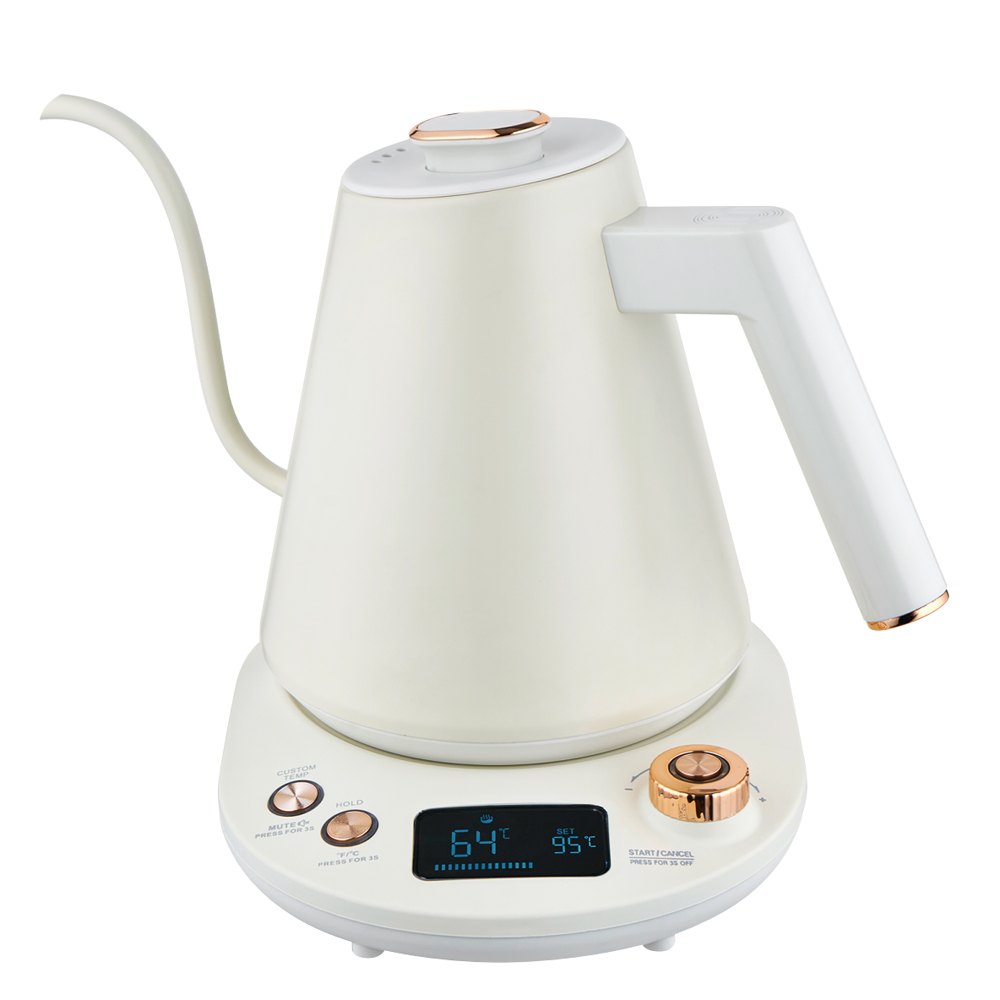
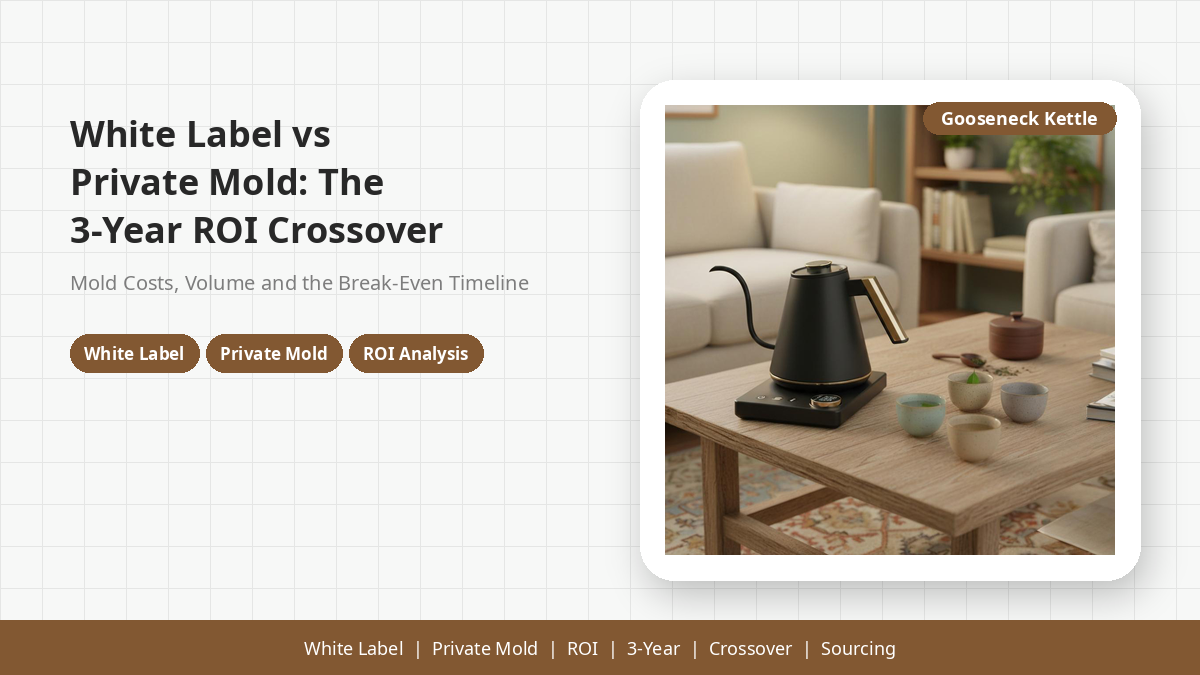
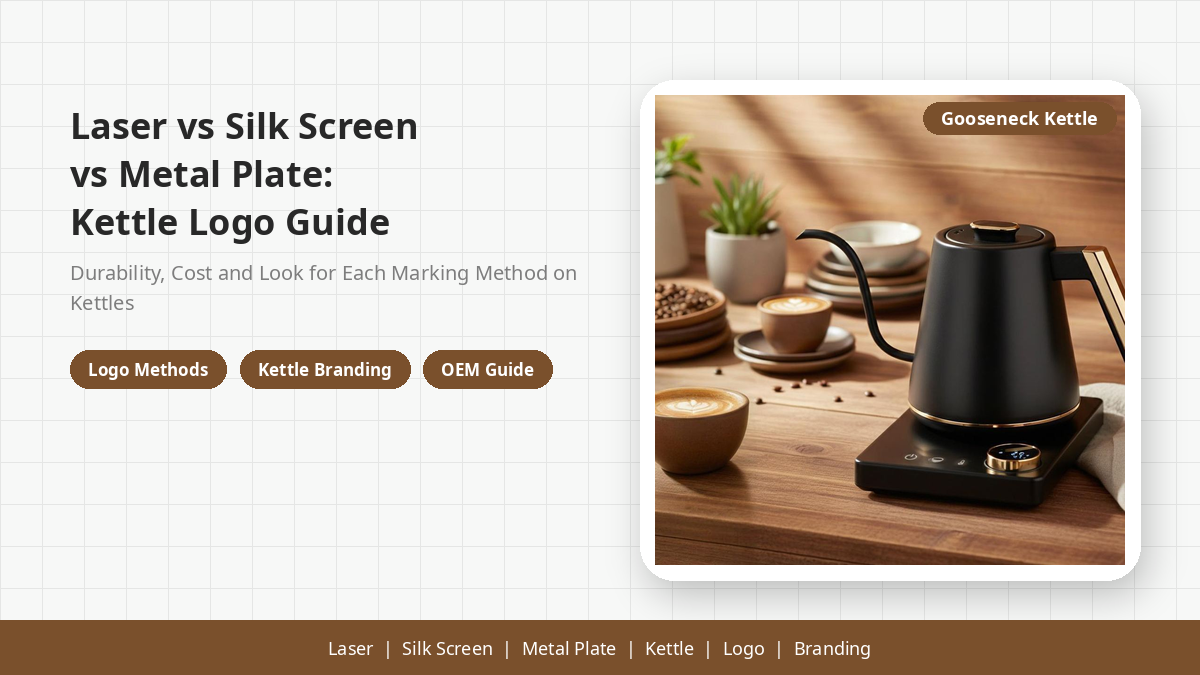
A specialty-coffee shop cannot source a generic stovetop kettle and call it good. The pour-over coffee extraction depends on three equipment-grade specifications that a stovetop kettle cannot deliver: a precision-pour gooseneck spout that delivers a steady, focused pour at 4-8 ounces per minute without splitting or spurting, a PID temperature-control system that maintains the 90-96 degrees C brew setpoint within plus or minus 0.5 degrees C across the full 8-12 minute brew session, and a food-grade 304 stainless steel inner vessel that satisfies the EU 1935/2004 and U.S. FDA 21 CFR 175.300 extractables test documentation. Specialty-coffee shop buyers, specialty-tea programs, and the OEM/ODM launch teams at branded specialty coffee-equipment companies are looking for a manufacturer that has the kettle-line engineering, the food-grade metallurgy, the precision-pour spout tooling, and the temperature-control firmware in place. Goodfriends has built that capability through a focused gooseneck-kettle product platform that is documented at the Goodfriends gooseneck kettle series product page, with the OEM/ODM partnership framework that specialty-coffee equipment importers launch with for pour-over coffee programs at the product reference link.
Why the Gooseneck Kettle Is Now an OEM/ODM Category, Not a Retail SKU
The specialty-coffee category went through a structural shift between 2018 and 2024 where the gooseneck kettle graduated from a specialty-coffee enthusiast niche product to an OEM/ODM category that branded specialty-coffee-equipment companies launch into. The structural shift was driven by three market forces: the consumer-facing rise of pour-over coffee on the retail side (which expanded the addressable market for the equipment), the specialty-coffee-shop consolidation across North America, Europe, and Australia (which moved the per-store equipment specification from a single proprietor's taste to a procurement-level decision), and the OEM/ODM consolidation of the kettle-manufacturing supply chain in the Ningbo and Guangdong regions (which made the branded-launch pathway substantially less expensive than the vertically-integrated-launch pathway). A branded specialty-coffee equipment company that wanted to launch a gooseneck-kettle line in 2015 had to commit to a $180,000-$260,000 initial tooling investment (across the spout-and-body tooling, the lid tooling, the handle tooling, the base-and-connector tooling, and the controller-housing tooling), a $60,000-$90,000 non-recurring-engineering investment (across firmware, electrical-engineering, certification, and brand-language industrial-design), and a 24-36 month product-development timeline. The same brand in 2026 partners with Goodfriends and avoids the initial tooling investment entirely (because the tooling is amortized into the per-unit wholesale), avoids the firmware-development cost entirely (because the controller firmware is shared across the program), and reduces the timeline to 10-14 weeks from concept-confirmation to first-retail-shipment. The OEM/ODM market-framework reference is documented in the World Bank SME trade and OEM/ODM framework, which is the framework the specialty-coffee-equipment-importer community references when planning branded-product launches.
The gooseneck-kettle specification matrix that a specialty-coffee equipment importer writes for an OEM/ODM branded launch is dominated by four variables: flow-rate precision at the spout, temperature-drift envelope at the brew setpoint, food-grade metallurgy of the inner vessel, and the certification footprint. Goodfriends delivers each of these variables at the OEM/ODM-branded-launch specification level: a flow rate of 5-10 grams per second at the spout (which corresponds to the 4-8 ounces per minute range that specialty-coffee shops specify for pour-over extraction), a temperature-drift envelope of plus or minus 0.5 degrees C at the 90-96 degrees C brew setpoint, a food-grade 304 stainless steel inner vessel with full EU 1935/2004 and U.S. FDA 21 CFR 175.300 extractables documentation, and the certification footprint of CE-EMC, CE-LVD, ETL (for the U.S. and Canada), FCC Part 15 (radio emissions for the smart-controller variant), and RoHS (restriction of hazardous substances). The full gooseneck-kettle product line including the smart-temperature-control, the temperature-display, the cordless-360-degree-base, the rapid-boil, and the specialty-tea variants is documented at the Goodfriends gooseneck kettle series product page with full technical specifications, certification status, and the OEM/ODM inquiry contact.
The Flow-Rate Precision and Spout-Geometry Engineering
The flow-rate precision at the spout is the single most important specification in a pour-over coffee-grade gooseneck kettle because the entire pour-over extraction process depends on the steadiness of the pour cone at the low flow-rate envelope. Specialty-coffee shops specify a flow-rate range of 4-8 ounces per minute at the spout, which corresponds to 5-10 grams per second for water at room temperature. The flow-rate stability depends on the spout-geometry engineering: the inside diameter at the spout tip, the curvature of the gooseneck bend, the radius of the spout exit, and the surface roughness of the inside of the spout. Goodfriends specifies a 6 mm inside-diameter at the spout tip on the OEM/ODM gooseneck-kettle series — a specification that produces a focused 2-3 mm pour cone at the 5 grams per second end of the flow-rate envelope and a wider 4-5 mm pour cone at the 10 grams per second end. The wider pour cone is too broad for the bloom step at the beginning of a pour-over brew (which requires the narrowest possible pour for the 30-45 second saturating-pour that releases the carbon dioxide from the freshly-ground coffee bed), but works for the main-pour step where the steady pour cone over the entire coffee-bed surface is more important than the narrowness of the cone. The Specialty Coffee Association reference document for pour-over extraction is the Specialty Coffee Association (SCA) brewing standards reference, which Goodfriends cross-references in the engineering specification for every specialty-coffee-quotation spout-geometry review.
The spout-geometry engineering work that Goodfriends performs for every OEM/ODM branded launch goes beyond the simple inside-diameter specification. The gooseneck bend is typically specified at a 35-45 degree included-angle, with the inner radius of the bend tuned to maintain a smooth flow profile without flow-separation at the inside of the bend (which would create a turbulent-jet pattern that disrupts the pour cone). The exit-orifice radius is specified at 0.3-0.5 mm to deliver a clean pour-cone edge. The inside surface roughness of the spout is specified at less than 0.8 micrometers Ra (a mirror-finish roughness that prevents water droplets from clinging to the inside surface and dropping intermittently into the pour cone, which would create the spurting pattern that pour-over specialty-coffee shops reject). The full spout-geometry specification is documented in the Goodfriends engineering-team deliverable that ships with every OEM/ODM branded-launch quotation package. The pour-over coffee-equipment manufacturing reference is documented at the SCA coffee brewing standards reference, which is the canonical reference for spout-geometry engineering tolerance and flow-rate measurement protocol.
PID Temperature Control and the 90-96 Degrees C Brew Setpoint
The PID temperature-control system is the second-most-important specification in a pour-over coffee-grade gooseneck kettle because the specialty-coffee extraction temperature window is narrow (90-96 degrees C), and going outside the window on either side produces a defective cup. The Specialty Coffee Association reference document specifies 93 degrees C plus or minus 2 degrees C as the optimal extraction-temperature envelope, with the lower end (90 degrees C) producing under-extracted cups that taste sour and the upper end (96 degrees C) producing over-extracted cups that taste bitter. A PID-controlled gooseneck kettle from Goodfriends maintains the 90-96 degrees C brew setpoint within a plus or minus 0.5 degrees C envelope across the typical 8-12 minute brew session, which is well within the SCA envelope. The PID feedback loop runs at a 1 Hz update rate, the heater element is sized to provide 1,000-1,500 W of heating capacity that can recover from the brew-temperature drop within 8-15 seconds of a fresh pour, and the temperature sensor is a Type-K thermocouple mounted at the spout-base where the temperature is most relevant to the brew-water delivery. The PID tuning is documented in the engineering specification that ships with every OEM/ODM branded launch, with the proportional-and-derivative tuning constants exposed for review by the brand partner's engineering team. The PID control-loop reference for consumer-appliance applications is documented at the ISO 12242 process control and PID tuning reference, which Goodfriends cross-references in the firmware-tuning deliverable.
The food-grade 304 stainless steel inner-vessel migration-test documentation that Goodfriends provides to specialty-coffee-equipment importers is the third-most-important specification. Food-grade 304 stainless steel is the industry standard for kettle inner vessels in the specialty-coffee category because it has the chromium-oxide passive layer that prevents iron leaching into the brew water (which would otherwise produce an off-taste), it has the nickel-content that provides the corrosion resistance to withstand the daily thermal-cycling between room temperature and 100 degrees C, and it has the surface-finish compatibility with the brewing-water chemistry that specialty-coffee equipment importers specify. The migration-test documentation covers three regulatory frameworks: the EU Regulation 1935/2004 framework (which is the European Union framework for food-contact materials), the U.S. FDA 21 CFR 175.300 extractables framework (which is the United States framework for food-contact coatings), and the German LFGB Section 31 food-contact-material framework (which is the German framework that is frequently used as a benchmark for the broader EU compliance documentation). The 304 stainless steel composition includes 18-20% chromium, 8-10.5% nickel, 2% maximum manganese, with the low-carbon 304L variant available for applications that require post-weld corrosion resistance such as the spout-and-body welded joint on the gooseneck-kettle series. The migration-test documentation reference is documented at the U.S. FDA food-contact material guidance documentation, which is the reference Goodfriends cross-references for every specialty-coffee-equipment-importer quotation.
The Specialty-Tea Application and the Gooseneck-Kettle Temperature Setpoint Library
The specialty-tea application of the Goodfriends gooseneck kettle series extends the temperature-control envelope beyond the pour-over coffee 90-96 degrees C setpoint to the specialty-tea 70-95 degrees C setpoint range. The temperature setpoint library that Goodfriends builds into the OEM/ODM gooseneck-kettle firmware includes the white-tea setpoint at 70-75 degrees C (where the lower-temperature envelope protects the delicate tea-leaf compounds from being extracted at higher temperatures), the green-tea setpoint at 75-82 degrees C (where the medium-temperature envelope is the optimal extraction for the green-tea flavonoid compounds), the oolong-tea setpoint at 85-90 degrees C (where the higher-temperature envelope extracts the oolong-tea polyphenol compounds), and the black-tea setpoint at 95-100 degrees C (where the higher-temperature envelope is required for the black-tea theaflavin extraction). The Goodfriends OEM/ODM branded-launch program can configure the firmware to include all four specialty-tea temperature setpoints plus the 90-96 degrees C pour-over coffee setpoint, with the user-facing digital display showing the selected temperature setpoint with a plus or minus 0.5 degrees C accuracy envelope. The specialty-tea industry reference is documented at the Tea Association of the USA specialty tea industry reference, which Goodfriends cross-references in the specialty-tea OEM/ODM delivery documentation.
OEM/ODM Branding, MOQ, Lead Time, and the Concept-to-Market Timeline
The OEM/ODM branded-launch MOQ structure for gooseneck-kettle programs is substantially lower than the launch MOQ for the cordless-pool-cleaner or for the high-cycle engine-parts categories because the gooseneck-kettle mechanical-and-electrical complexity is lower (no lithium-ion battery pack, no brushless DC motor, no IPX8 water-ingress certification, no high-cycle fatigue regime). The launch MOQ for a custom-color custom-logo specification is 500-1,000 units, which corresponds to a single full-container-load at the standard 40-foot container size. The lead time from order-confirmation to first-article inspection is typically 4-6 weeks, with the bulk-production lead time of 3-4 weeks following first-article approval. The total concept-to-market timeline is 10-14 weeks for a branded gooseneck-kettle program, which includes the custom-color-and-logo design specification, the packaging specification, the user-manual localization, and the certification refresh. Goodfriends supports the launch timeline with a pre-engineered controller platform (with the temperature-control firmware already developed and tested), a pre-engineered spout-and-body geometry (with the spout-geometry already optimized for the 5-10 grams per second flow-rate envelope), and a pre-engineered certification footprint (with the CE-EMC, CE-LVD, ETL, FCC Part 15, and RoHS certifications already in place on the platform product — which the brand partner inherits when launching under the OEM/ODM framework).
| Phase | Duration | Key Deliverables |
|---|---|---|
| Phase 1: Concept alignment + brand-language review | 2-3 weeks | Brand-language review, color/logo specification, packaging review |
| Phase 2: Controller firmware tuning + spout-geometry validation | 2-3 weeks | PID tuning, Type-K thermocouple validation, spout-geometry test pour |
| Phase 3: Tooling refresh for custom-color shell | 3-4 weeks | Shell-color tooling change, lid-color refresh, handle-color refresh |
| Phase 4: First-article inspection + pilot production | 1-2 weeks | First-article approval, 50-100 unit pilot run, factory-acceptance test |
| Phase 5: CE/ETL/FCC certification refresh | 2-3 weeks (parallel) | CE-EMC, CE-LVD, ETL, FCC Part 15, RoHS refresh, migration-test report |
| Launch MOQ | Volume | Per-Unit Wholesale Range |
| Initial launch | 500-1,000 units | $38-58 per unit |
| First-year production | 2,000-5,000 units | $32-48 per unit |
| Second-year production | 10,000+ units | $28-42 per unit |
FAQ
What flow-rate precision does a specialty-coffee-grade gooseneck kettle typically deliver at the spout, and how is the flow-rate measurement executed?
A specialty-coffee-grade gooseneck kettle from the Goodfriends gooseneck kettle series typically delivers a flow rate of 5-10 grams per second at the spout, which corresponds to the 4-8 ounces per minute range that specialty-coffee shops specify for pour-over extraction. The flow-rate measurement is executed by pouring 500 grams of room-temperature water through the spout into a calibrated beaker and timing the pour, with the measurement repeated three times for averaging. The Goodfriends engineering team cross-references the SCAA pour-over flow-rate protocol in every specialty-coffee quotation, with the spout-geometry optimized for the 6 mm inside-diameter at the spout tip that produces a steady, focused pour cone.
What is the realistic temperature-drift envelope on a PID-controlled gooseneck kettle at the 90-96 degrees C brew temperature setpoint?
A PID-controlled gooseneck kettle from Goodfriends maintains the 90-96 degrees C brew temperature setpoint within a plus or minus 0.5 degrees C envelope across the typical 8-12 minute brew session, with the PID feedback loop running at a 1 Hz update rate and the heater element sized to provide 1,000-1,500 W of heating capacity that can recover from the brew-temperature drop within 8-15 seconds of a fresh pour. The Specialty Coffee Association brew temperature standard is documented at 93 degrees C plus or minus 2 degrees C for optimal extraction.
What are the typical OEM/ODM MOQ and lead-time parameters for a branded gooseneck kettle launch?
Goodfriends operates a relatively low minimum-order-quantity structure for OEM/ODM branded gooseneck kettle launches, with the launch MOQ at 500-1,000 units for a custom-color custom-logo specification. The lead time from order-confirmation to first-article inspection is typically 4-6 weeks, with the bulk-production lead time of 3-4 weeks following first-article approval. Total concept-to-market timeline is typically 10-14 weeks.
What food-grade 304 stainless steel migration-test documentation does Goodfriends provide to specialty coffee equipment importers for the EU and U.S. markets?
Goodfriends provides full food-grade 304 stainless steel migration-test documentation covering the EU Regulation 1935/2004 framework, the U.S. FDA 21 CFR 175.300 extractables framework, and the German LFGB Section 31 food-contact-material framework. The migration-test report is refreshed every 12 months or whenever the stainless-steel supplier changes.