
 0086-574-62518288


Industry News
0102030405
Exposed Elements: Scale and Lifespan Data
2026-09-24
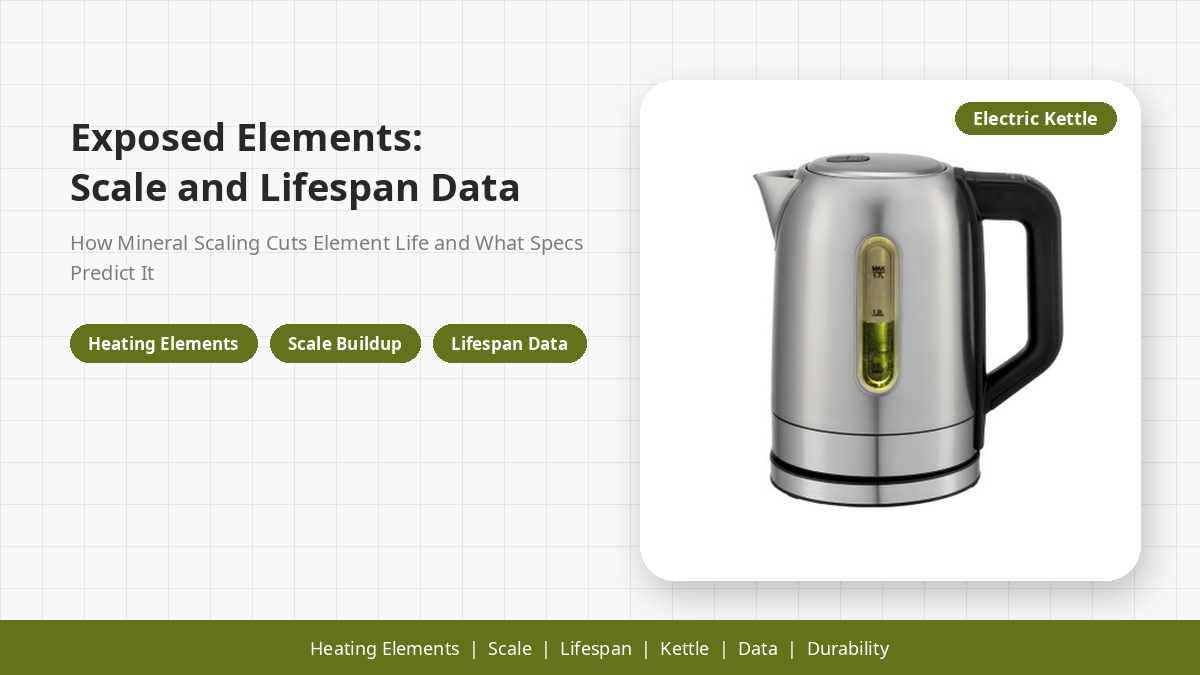
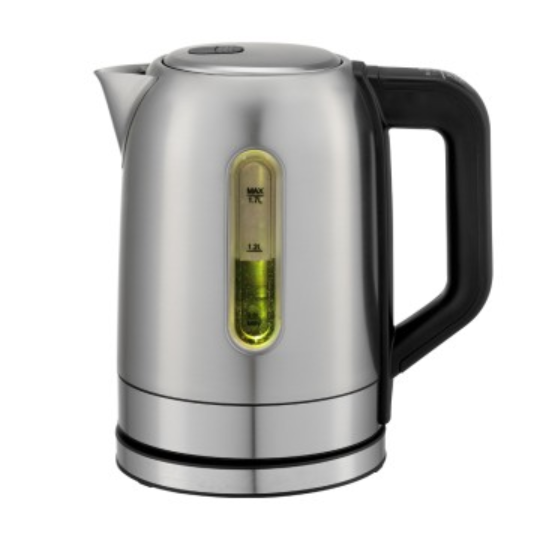
The exposed heating element in a Stainless Steel Kettle is not a defect — it is the original architecture that most catalog kettles still ship with. The reason the question keeps coming up is that scale forms faster on an exposed element than on a concealed element, the exposed element's efficiency decays faster as the scale builds, and the descaling labor is what a buyer or a hospitality operator notices in the lifecycle cost. The right conversation for a procurement manager choosing a kettle architecture for residential, hospitality, office, or commercial duty is not "exposed versus concealed" — it is which architecture matches the application duty cycle, the cleaning-cycle tolerance, and the per-boil-cycle cost the application supports.
Quick Summary
- Concealed element typically delivers 4,000 to 8,000 boil cycles vs. 1,500 to 3,000 for exposed element — the lifespan difference is the headline data the buyer should anchor the per-boil-cycle cost calculation against.
- Concealed element extends the descaling interval by roughly 2x to 3x — because the scale forms on the stainless floor rather than directly on the heating coil.
- Concealed element retains heat-transfer efficiency over the service life — the exposed element loses 10 to 20 percent of its heat-transfer efficiency as scale builds, which means the kettle draws more power per boil cycle as the element ages.
- The right standard reference is IEC 60335-2-15, with UL 1082 and EN 60335-2-15 covering North American and European markets respectively — the standards framework the right program references.
- The right answer depends on water hardness at the application site, cleaning-cycle tolerance, and lifespan target — not on unit price alone. The exposed element is cheaper; the concealed element is cheaper across the lifecycle.
For a procurement manager, hospitality operator, or private-label buyer choosing a kettle architecture for a new program, the right framework is the framework that compares the two architectures against the application duty cycle rather than against the unit price. The framework below is the five-step procedure Good Friends runs against every program.
Why Does Scale Form on a Kettle Heating Element?
Scale forms because the calcium and magnesium ions that hard water carries precipitate out of solution at the high-temperature surface of the heating element. The exposed element presents a higher surface temperature than the concealed-element architecture, which means the precipitation rate is faster. The concealed element's heat-transfer surface is the stainless floor, which runs at a lower surface temperature than the exposed element and therefore precipitates scale more slowly.
The single most under-appreciated variable in real programs: the water hardness at the application site. A buyer who specifies a concealed element for a soft-water geography (below 60 mg/L calcium carbonate) overpays for the architecture — the cleaning interval advantage of a concealed element is small in soft water. The right program is the program that maps the water hardness against the architecture choice from the start.
For a procurement manager evaluating a kettle against the concealed element stainless steel kettle series, the scale-formation conversation is the engineering layer that sits on top of the catalog frame. The high-efficiency heating element kettle product page covers the standard catalog range; the multipurpose kettle features explained blog covers the broader feature comparison.
What Is the Right Water Hardness Threshold?
Above roughly 120 mg/L calcium carbonate, scale forms visibly inside the kettle within weeks. Above 180 mg/L, the scale formation accelerates and the exposed element begins to lose efficiency inside the first six months. The right conversation is the conversation that maps the hardness against the element choice from the start, because the wrong choice at the wrong water hardness is the choice that drives the cleaning-cycle labor cost to where the operational complaint originates.
| Water Hardness (mg/L CaCO3) | Exposed Element Behavior | Concealed Element Behavior | Right Architecture |
|---|---|---|---|
| Soft (below 60) | Minimal scale; descaling every 12 months | Minimal scale; descaling every 18 to 24 months | Either (cost drives the choice) |
| Moderate (60 to 120) | Visible scale in 4 to 8 weeks; descaling every 6 to 10 weeks | Minimal scale in 4 to 8 weeks; descaling every 12 to 16 weeks | Concealed for hospitality or office duty |
| Hard (120 to 180) | Visible scale in 2 to 4 weeks; descaling every 3 to 6 weeks | Visible scale in 6 to 10 weeks; descaling every 10 to 14 weeks | Concealed, with descaling discipline |
| Very hard (above 180) | Visible scale in 1 to 2 weeks; descaling every 2 to 4 weeks | Visible scale in 4 to 8 weeks; descaling every 8 to 12 weeks | Concealed, with pre-filter or in-line conditioner |
The right way to think about the water hardness threshold: it is the design input, not a downstream variable. A program that picks the kettle first and the water conditioner second is a program that pays for both the concealed element and the in-line conditioner, when one or the other would have done the job.
What Are the Published Lifespan Numbers?
A concealed heating element typically delivers 4,000 to 8,000 boil cycles before failure under residential and light-commercial duty, compared to the 1,500 to 3,000 cycles typical of exposed elements. The lifespan depends on the water hardness at the application, the cleaning-cycle frequency, and the duty cycle.
The right program budgets for the cycle count, not the calendar life, when comparing the two architectures. A concealed-element kettle in heavy hospitality duty may reach its end of life inside two years of calendar time, while the same kettle in light residential duty may run for five years. The cycle count is the metric, the calendar is the consequence.
How Do You Choose Between the Two Architectures?
The choice is a five-step framework that aligns the kettle architecture against the application duty cycle.
Step 1 — Quantify the water hardness at the application site
Pull the water hardness (typically expressed as calcium carbonate equivalent, mg/L or grains per gallon) for the application geography. Above roughly 120 mg/L calcium carbonate, scale forms visibly inside the kettle within weeks; above 180 mg/L, the scale formation accelerates and the exposed element begins to lose efficiency inside the first six months.
Step 2 — Define the cleaning-cycle tolerance
Determine how often the buyer or the end user is willing to descale the kettle. An exposed element requires descaling every 4 to 8 weeks in hard water; a concealed element extends that interval by 2x to 3x because the scale forms on the stainless floor rather than directly on the heating coil.
Step 3 — Define the lifespan target
Set the lifespan target — typically 3 to 5 years for residential, 5 to 7 years for hospitality and office, and 7+ years for commercial duty. The right architecture is the one that matches the lifespan target against the application duty cycle.
Step 4 — Define the energy-efficiency target
Set the energy-efficiency target. The exposed element loses 10 to 20 percent of its heat-transfer efficiency as scale builds, which means the kettle draws more power per boil cycle as the element ages. The concealed element keeps its heat-transfer surface clean for longer, which means the kettle's energy efficiency holds over the rated service life. ENERGY STAR publishes the energy-efficiency benchmarks that the right program can reference.
Step 5 — Compare the per-boil-cycle cost
Compute the per-boil-cycle cost across the lifespan — the kettle acquisition cost plus the energy cost plus the cleaning-cycle maintenance labor — and compare the two architectures against the application duty cycle. The exposed element has the lower acquisition cost but the higher lifecycle cost; the concealed element has the higher acquisition cost but the lower lifecycle cost.
The single most under-resourced step in real programs: the per-boil-cycle cost comparison. A buyer who chooses on unit price alone chooses the wrong architecture in hard water; a buyer who chooses on per-boil-cycle cost chooses the right architecture for the application duty cycle. The right conversation is the conversation that brings the per-boil-cycle cost into the specification before the catalog shortlist is locked.
What Standards Apply to Concealed Element Kettles?
The right program references the IEC 60335-2-15 standard for household Electric Kettles, which theInternational Electrotechnical Commission publishes. The UL 1082 standard covers the equivalent North American framework, which Underwriters Laboratories publishes. The EN 60335-2-15 standard covers the European framework, which the British Standards Institution and the European standards bodies publish.
Food-grade stainless steel and food-contact compliance typically reference the FDA framework in the US and the EU food-contact framework in Europe. ASTM International publishes the materials standards that the stainless steel grade (typically 304 vs 430) is referenced against. The EPA SaferChoice program and the Federal Register publish the broader chemical-safety framework that the right program aligns with. OSHA covers the workplace-safety framework for commercial kettle installations.
Can a Descaled Exposed Element Recover Its Original Efficiency?
Partially. An exposed element that has been descaled recovers some of its heat-transfer efficiency, but the underlying heating coil accumulates permanent scale deposits that cannot be descaled, and the wire base becomes coated in a thin layer that permanently reduces the heat-transfer coefficient. The right program treats the exposed element as a wear part whose efficiency decays with the service life, not as a part that can be restored to factory-new performance by descaling.
Honest caveat: a concealed element is not the right answer for every application. A buyer who is specifying a kettle for a soft-water geography, a low-duty-cycle application, or a short-term promotion overpays for the concealed-element architecture. The right conversation is the conversation that maps the application duty cycle against the architecture from the start, not the conversation that defaults to the concealed element on every program.
Frequently Asked Questions
What is a concealed heating element in a Stainless Steel Kettle?
A concealed heating element is a flat heating element that is integrated under the stainless steel floor of the kettle, so the element itself does not contact the water directly. Instead, the heat transfers through the stainless floor to the water column. The architecture contrasts with the traditional exposed element, which is a coiled metal loop that sits inside the water column and is in direct contact with the water.
How long does a concealed heating element last?
A concealed heating element typically delivers 4,000 to 8,000 boil cycles before failure under residential and light-commercial duty, compared to the 1,500 to 3,000 cycles typical of exposed elements. The lifespan depends on the water hardness at the application, the cleaning-cycle frequency, and the duty cycle. The right program budgets for the cycle count, not the calendar life, when comparing the two architectures.
How often does a concealed element need descaling?
A concealed element extends the descaling interval by roughly 2x to 3x compared to an exposed element in the same water hardness, because the scale forms on the stainless floor rather than directly on the heating coil. In hard water (above 180 mg/L calcium carbonate), a concealed-element kettle typically needs descaling every 12 to 24 weeks, compared to every 4 to 8 weeks for an exposed-element kettle in the same conditions.
What standards apply to concealed element kettles?
The right program references the IEC 60335-2-15standard for household Electric Kettles, theUL 1082 standard for the equivalent North American framework, and the EN 60335-2-15 standard for the European framework. Food-grade stainless steel and food-contact compliance typically reference the FDA framework in the US and the EU food-contact framework in Europe.
Why does scale form on a kettle heating element?
Scale forms because the calcium and magnesium ions that hard water carries precipitate out of solution at the high-temperature surface of the heating element. The exposed element presents a higher surface temperature than the concealed-element architecture, which means the precipitation rate is faster. The concealed element's heat-transfer surface is the stainless floor, which runs at a lower surface temperature than the exposed element and therefore precipitates scale more slowly.
Can a descaled exposed element recover its original efficiency?
Partially. An exposed element that has been descaled recovers some of its heat-transfer efficiency, but the underlying heating coil accumulates permanent scale deposits that cannot be descaled, and the wire base becomes coated in a thin layer that permanently reduces the heat-transfer coefficient. The right program treats the exposed element as a wear part whose efficiency decays with the service life, not as a part that can be restored to factory-new performance by descaling.
Is a concealed element kettle quieter than an exposed element kettle?
Sometimes. The concealed element's heat transfer through the stainless floor can produce a different acoustic profile from the exposed element's direct water-contact boiling, and the difference is most noticeable at the moment of boil-off when the element is hottest. The right program is the program that listens to the kettle in the application environment, because the quieting depends on the kettle's thermal mass, the heating element power, and the water volume.
Does a concealed element kettle cost more than an exposed element kettle?
Yes, in most market segments. The concealed-element architecture adds the flat-element assembly, the integrated stainless floor, and the precision welding, which lands the concealed-element kettle at a modest unit-cost premium over the exposed-element kettle. The right program is the program that compares the per-boil-cycle cost across the application duty cycle, because the concealed-element kettle's higher acquisition cost is recovered from the lower lifecycle cost over the rated service life.
How Does Good Friends Kettle Run the Program Against This Framework?
Good Friends produces the stainless steel kettle series on a Guangdong manufacturing footprint, with both exposed-element and concealed-element architectures available across residential, hospitality, office, and commercial duty cycles. The high-efficiency heating element kettle product page covers the standard catalog range; the multipurpose kettle features blog covers the broader feature comparison the buyer can reference.
The framework in this article is the framework Good Friends runs against every program — the right water hardness, the right cleaning-cycle tolerance, the right lifespan target, the right energy-efficiency target, and the right per-boil-cycle cost. The program that runs all five against the application duty cycle is the program that picks the right architecture for the application.
Spec'ing a kettle program against an application duty cycle?
Send us the water hardness at the application site, the duty cycle, and the lifespan target. We will return a written architecture comparison and a sample plan.