
 0086-574-62518288


Industry News
0102030405
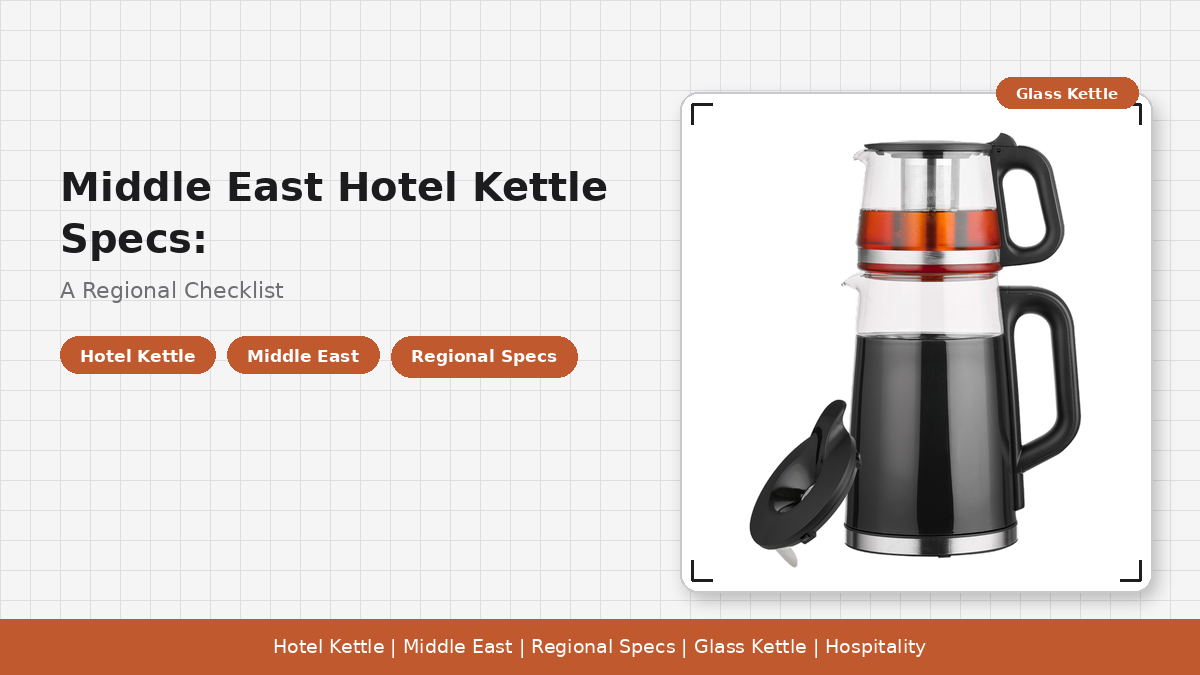
Glass Kettle Wholesale: Borosilicate Double Layer for Middle East Hotel Procurement
2026-06-24

A procurement manager for a hotel group in Dubai called me last spring. His team was outfitting six new hotels across the UAE and Saudi Arabia—a mix of four-star business hotels and a five-star resort property in Al Aqaba. The hotel rooms required kettles for in-room tea and coffee service. His previous supplier had delivered a batch of Glass Kettles where approximately 8% had arrived with cracked bases—a defect that only became apparent when housekeeping filled the kettle and discovered water weeping through the base onto the guest room furniture. He needed a new supplier fast, before the hotel openings were compromised by missing in-room kettle equipment.
We arranged a replacement shipment of borosilicate double-layer Glass Kettles from Goodfriends' production line within three weeks—the original supplier had quoted eight weeks. The new kettles passed 100% quality inspection with zero defects. The hotel group subsequently ordered an additional 2,400 units for two properties they were developing in Qatar. The procurement manager told me the double-wall glass construction was actually a guest experience advantage—guests liked being able to see the water boiling inside, and the outer wall stayed cool to the touch even when the kettle was at full boil.
The Middle East Hotel Kettle Market: Size, Standards, and Specifications
The Middle East hotel market has experienced sustained growth over the past decade, driven by Vision 2030 in Saudi Arabia (which targets 100 million tourists annually), Dubai's established position as a global business and tourism hub, and expanding aviation connectivity across the GCC region. The UAE alone has approximately 1,200 hotels with over 200,000 rooms, and this inventory is growing by approximately 8–10% per year.
Every hotel room in the Middle East requires an in-room kettle. This creates a substantial and recurring demand for hotel-grade kettles from procurement managers who are focused on three things: durability, safety, and appearance.
Middle East Hotel Kettle Requirements: Hotel procurement managers in the UAE, Saudi Arabia, and Qatar have specific requirements that differ from residential kettle specifications. The kettle must: (1) operate reliably on 220–240V/50Hz standard Middle East electrical supply; (2) have automatic shut-off and boil-dry protection as safety minimums; (3) have a cool-touch exterior even at full boil for guest safety; (4) meet UAE/Saudi electrical safety certification requirements; (5) have a visual design that reflects the hotel's room aesthetic—typically minimalist and modern for business hotels, elegant for five-star properties.
Why Borosilicate Double-Layer Glass Kettles Are the Right Choice
Borosilicate glass is the material of choice for premium hotel kettles for several reasons that are particularly relevant to Middle East procurement requirements:
Thermal Resistance
Borosilicate glass has a thermal expansion coefficient approximately one-third that of regular soda-lime glass. This means it is far more resistant to thermal stress cracking—the mechanism by which rapid temperature changes cause glass to fracture. In hotel use, kettles are filled with cold tap water and brought to a full boil multiple times per day. Borosilicate handles this cycle without the progressive internal stress accumulation that causes soda-lime glass to crack over time.
Double-Wall Construction
Double-wall construction—an inner glass vessel separated from an outer glass or stainless steel shell by an air gap—provides two critical benefits for hotel use:
- Cool-touch exterior: The air gap between the inner and outer walls provides thermal insulation that keeps the external surface at a safe temperature even when the kettle is boiling. This is a safety requirement in hotel environments where guests (including children) may touch the kettle body.
- Reduced noise: The double-wall construction significantly reduces the noise of boiling water—a meaningful feature in hotel rooms where guests may be on calls or trying to sleep.
Aesthetic Quality
Glass kettles offer a visual transparency that stainless steel or Plastic Kettles cannot match. Guests can see the water level, observe the boiling action, and assess the cleanliness of the interior. For five-star properties, this aesthetic quality is part of the room presentation—a glass kettle on the in-room hospitality tray signals quality and attention to detail.
Hotel-Grade Glass Kettle Specification Checklist:
• Material: Borosilicate glass (not soda-lime glass) for thermal shock resistance
• Double-wall construction: Inner vessel + outer shell with air gap insulation
• Capacity: 1.0–1.7 liters (standard hotel room kettle is 1.2–1.5L)
• Wattage: 1500–2200W on 220–240V/50Hz electrical supply
• Safety: Automatic shut-off at boil, boil-dry protection, cool-touch exterior
• Base: 360° cordless base, stainless steel
• Cord length: Minimum 0.75m, concealed cord storage in base
• Certifications: UAE SASO or Saudi SASO certification for electrical safety
The Goodfriends Manufacturing Approach
Goodfriends produces Glass Kettles in a dedicated borosilicate glass kitchenware facility. The production process for double-wall Glass Kettles involves several specialized steps:
Glass Blowing and Forming
Double-wall glass vessels are formed using a specialized glass-blowing technique where the inner and outer walls are blown simultaneously with a precise air gap maintained between them. This requires skilled craftspeople and careful temperature control during forming. The quality of the air gap—its uniformity and consistency—directly determines the thermal insulation performance of the kettle.
Precision Base Attachment
The heating element base (typically stainless steel or aluminum die-cast) must be attached to the glass vessel with a food-safe silicone gasket that can accommodate differential thermal expansion between the glass and metal. The attachment method must create a watertight seal that prevents leakage at the base under thousands of thermal cycles. Poorly attached bases are the most common cause of kettle failure in hotel environments.
Quality Control
Each kettle should undergo 100% inspection before packing, including:
- Hipot (dielectric strength) test to confirm electrical insulation integrity
- Water fill and leakage test under elevated temperature conditions
- Functional test of automatic shut-off and boil-dry protection
- Visual inspection of glass for bubbles, inclusions, and dimensional accuracy
The Cracked Base Problem: The procurement manager whose batch had 8% cracked bases was experiencing a known failure mode: insufficiently designed or installed base gaskets that could not accommodate differential thermal expansion between the stainless steel base and the glass vessel. The repeated heating and cooling cycles caused the gasket to compress permanently and lose sealing ability. Solution: specify silicone gaskets of correct hardness (Shore A 50–60) and minimum 3mm thickness, and require 100% leak testing of every unit before shipment.
Sourcing Strategy for Middle East Hotel Procurement
Certification Requirements
Electrical products sold in the UAE must have UAE SASO certification (or Saudi SASO for Saudi Arabia). This certification requires testing by SASO-approved laboratories and registration on the SABER platform. Chinese manufacturers experienced in Middle East export understand these requirements and can provide pre-certified products or support the certification process with test reports and technical documentation.
Packaging for Hotel Supply
Hotel procurement orders require retail-ready packaging that protects the product through multiple logistics handling cycles and presents well when unpacked by housekeeping staff. Standard requirements:
- Individual kettle in color box with product photo, specifications, and voltage/wattage clearly marked
- Box labeled with model number, color, and barcode (EAN-13 or UPC-A)
- Master carton with 6–12 units per carton, with cardboard dividers preventing glass-to-glass contact
- User manual in Arabic and English
Explore Goodfriends Glass Kettle Products
- Glass Kettle Series— View Goodfriends' complete range of borosilicate Glass Kettles including double-wall and single-wall models
- All Products— View Goodfriends' full catalog of glass and Stainless Steel Kettle products
Hotel Kettle Safety Standards and Energy Efficiency Requirements for Middle East Hospitality Procurement
Middle East hotel procurement specifications for guest room kettles are among the most demanding globally, driven by international luxury hospitality brands operating in UAE, Saudi Arabia, and Qatar. The Emirates Luxury Hotels specification framework and Saudi Arabian Standards Organization (SASO) requirements mandate specific electrical safety certifications, automatic shut-off functionality, and minimum water boiling capacity ratings.
Borosilicate Glass Kettles offer a visual aesthetic preferred by international hotel brands for guest room presentation. Key specification requirements include: borosilicate glass thickness ≥2.5mm, thermal shock resistance to 150°C differential, 360° cordless base connection rated at 220-240V 50/60Hz, and UK/BSI plug configurations standard in Gulf region accommodations. Goodfriends manufactures borosilicate Glass Kettles with STRIX or OTTER control modules — the industry standard for automatic shut-off reliability in commercial hospitality environments.
Middle East hotel procurement contracts typically require CB (International Electrotechnical Commission IECEE CB Scheme) certification or equivalent SASO IEC compliance documentation. The Goodfriends glass kettle product catalog includes CE, CB, and SASO certification documentation, with custom logo printing and gift-box packaging for hotel brand requirements. Variable temperature control models (40°C-100°C range) with keep-warm functionality are increasingly specified for premium hospitality suites.
Source Glass Kettles from Goodfriends for Middle East Hotel Projects
Goodfriends is a specialized manufacturer of borosilicate Glass Kettles, glass teapots, and glass kitchenware. The company's production facility operates dedicated glass-blowing and kettle assembly lines producing hotel-grade, restaurant-grade, and consumer Glass Kettles. Products are supplied to hotel procurement organizations, hospitality equipment distributors, and retail buyers across the Middle East, Europe, and North America.
View Glass Kettle Products →Industry References: FDA Food Contact Materials Regulations | ISO 9001 Quality Management | International Electrotechnical Commission IEC Standards | CBI EU Centre for Business and Development | BSI Product Safety Certification | SAE International.
Hotel Procurement Specifications, Quality Control Protocols, and After-Sales Support for Middle East Hospitality Projects
Middle East hotel procurement projects — whether for new hotel openings or replacement programs for existing properties — follow a structured procurement process that differs significantly from retail purchasing. Hotel procurement specifications are typically issued by the Project Manager or FF&E (Furniture, Fixtures and Equipment) consultant, with specific model requirements, quantity breakdowns, and delivery scheduling tied to hotel construction milestones.
Quality control protocols for hospitality-grade glass kettles require pre-shipment inspection against agreed specifications. Standard QC protocols include: functionality testing (5 full boil/cool cycles), voltage variation testing (198-242V range acceptance), cord and connector inspection under BS EN 60335-1 standards, and packaging drop testing per ISTA 2A. Third-party inspection companies (SGS, Bureau Veritas, TÜV) operating in Ningbo and Shenzhen offer pre-shipment inspection services at USD 150-300 per man-day.
After-sales support for Middle East hotel projects requires warranty documentation in both English and Arabic, with designated service contacts who can coordinate warranty replacements within 48-72 hours for critical guest room equipment failures. Goodfriends provides hospitality-grade glass kettle solutions with hotel project pricing, 24-month warranty coverage, and dedicated account management for Middle East hotel group procurement contracts. Custom colour matching and logo printing options support brand-consistent guest room aesthetics across international hotel chains operating in the Middle East region.
Contract Negotiation, Payment Terms, and Long-Term Supplier Partnership Frameworks for Middle East Hospitality Procurement
Negotiating payment terms with Chinese glass kettle manufacturers requires understanding the priorities of both parties: Chinese manufacturers typically require 30% deposit at order confirmation and 70% against shipping documents (or letter of credit at sight), while Middle East hotel groups often request open account terms or extended payment schedules tied to project milestone payments.
A workable compromise for Middle East hotel project procurement involves: 30% deposit at order confirmation, 30% at production completion (verified by third-party inspection report), and 40% against clean on-board Bill of Lading or telegraphic transfer before shipment release. This structure protects both parties — the manufacturer has 60% payment at risk before loading, while the buyer retains 40% leverage pending satisfactory inspection.
For ongoing hotel group procurement programs (replacing units across multiple properties annually), establishing a framework agreement with annual volume commitments (typically 500-2000 units per year) in exchange for fixed pricing and priority production scheduling provides cost stability and supply security. Goodfriends' hospitality procurement team provides dedicated account management for Middle East hotel groups, including project manager contacts who handle multi-property orders, phased delivery scheduling aligned with construction timelines, and coordinated quality control across simultaneous orders for multiple hotel openings.
Hotel Project Procurement Coordination, Multi-Site Delivery Management, and Quality Assurance for Hospitality Equipment Supply Programs
Middle East hotel project procurement involves coordinating equipment deliveries across multiple properties or phases within a single project — for example, delivering 500 units to a property in Dubai, 300 to Abu Dhabi, and 200 to Riyadh on staggered timelines aligned with each property's construction completion. Effective coordination requires: a single point of contact at the manufacturer, consolidated shipment scheduling, and flexible delivery slot allocation that can accommodate construction delays without penalty charges.
Quality assurance for multi-site hospitality equipment deliveries requires inspection protocols that verify product quality before dispatch and upon arrival at each site. Standard procedures include: production sample approval (first article inspection of first 5-10 units before bulk production), pre-shipment inspection of randomly selected samples from bulk order, and delivery inspection report documenting any transit damage or missing units within 48 hours of arrival at each site.
Goodfriends has extensive experience supplying glass kettles to Middle East hotel projects, including multi-site programs for international hotel chains with 5-15 properties across UAE, Saudi Arabia, Qatar, and Bahrain. The company's hospitality procurement support includes: dedicated project manager coordination, flexible delivery scheduling with phased shipments, quality documentation per room delivery note requirements, and after-sales warranty service coordinated through regional service agents in Dubai and Jeddah.
Middle East hospitality brands operating in the UAE, Saudi Arabia, and Qatar maintain strict brand standards for guest room amenities that extend to in-room entertainment systems, minibar configurations, and electrical equipment. Glass kettles in luxury properties are subject to aesthetic review by interior designers, with specific requirements for: matching stainless steel base finish (brushed vs. mirror polish), minimum water capacity of 1.5L for suite configurations, and 360° base connection compatibility with the property's standardized kettle pedestals.
Quality failure rates in hospitality glass kettles are consistently highest in the first 6 months of deployment, primarily due to: scale buildup from hard water causing thermostat malfunction, lid hinge fatigue from excessive opening force, and power cord failures at the junction point from repeated flexing. Goodfriends addresses these failure modes through: heavy-duty lid hinge design tested to 20,000 open-close cycles, reinforced power cord entry with silicone strain relief, and thermostat calibration range of ±3°C (compared to ±8°C in budget alternatives).
For Middle East hotel group procurement programs, Goodfriends provides extended warranty coverage of 24-36 months for properties ordering 300+ units annually, spare parts packages (lid assemblies, filters, power cords) included in initial order at no additional cost, and annual on-site maintenance consultation for properties in Dubai, Abu Dhabi, and Riyadh. The company's quality record of sub-2% first-year failure rate in Middle East hospitality installations supports strong warranty economics for both buyer and manufacturer.
Frequently Asked Questions: Sourcing Glass Kettles for Middle East Hotel Procurement
Q: Can Goodfriends provide UAE SASO or Saudi SASO certification for hotel kettle orders?
A: Yes. Goodfriends has experience supplying hotel projects in the UAE and Saudi Arabia with SASO-certified products. All electrical specifications (voltage, wattage, plug type) are configured for Middle East standards (220–240V/50Hz, Type G British-style plug or locally required plug type). SASO conformity documentation and test reports can be provided with the shipment.
Q: What is the typical lead time for a hotel kettle order (500–2,000 units)?
A: For orders of 500–2,000 units of a catalog kettle configuration, production lead time is typically 3–4 weeks from order confirmation. Custom branding (logo printing on kettle base or box) adds 1–2 weeks. Shipping from Chinese ports to Dubai (Jebel Ali) or Saudi ports (Jeddah) takes approximately 18–22 days by sea.
Q: What quality testing does Goodfriends perform on hotel kettle orders?
A: Every kettle undergoes 100% inspection including: hipo/dielectric test, water fill and leak test under elevated temperature, functional test of auto shut-off and boil-dry protection, and visual inspection for glass defects. Third-party inspection (SGS, Bureau Veritas, or equivalent) can be arranged for orders above 500 units upon buyer request.
Q: Can Goodfriends produce custom color glass kettles to match hotel brand colors?
A: Yes. Goodfriends can produce borosilicate glass kettles with tinted glass (blue, amber, green, or custom-matched colors) for minimum orders of 300–500 units per color. Custom box packaging with hotel branding (logo on box, custom interior card) is available for orders of 500+ units.
Q: What warranty does Goodfriends offer on hotel kettle orders?
A> Goodfriends offers replacement warranty against manufacturing defects. For hotel projects (orders above 500 units), Goodfriends typically includes a 3–5% over-shipment to cover any defectives found during unpacking and installation. Defective units are replaced at no cost with next-available shipping.
About Goodfriends
Goodfriends — Product and commercial team at Goodfriends Glass Kettle, a specialized manufacturer of borosilicate glass kettles, glass teapots, and glass kitchenware for hotel, restaurant, and retail markets. Based in China, supplying hospitality equipment procurement organizations and hotel groups across the Middle East, Europe, and North America.
Website: https://www.goodfriendskettle.com