
 0086-574-62518288


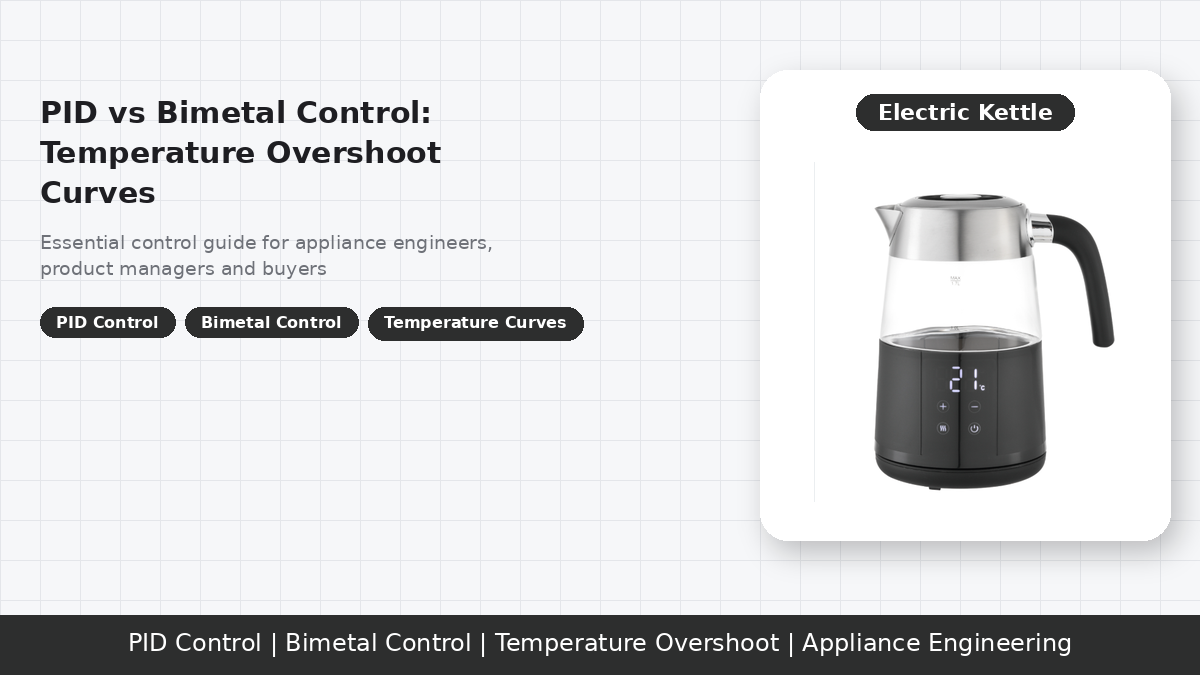
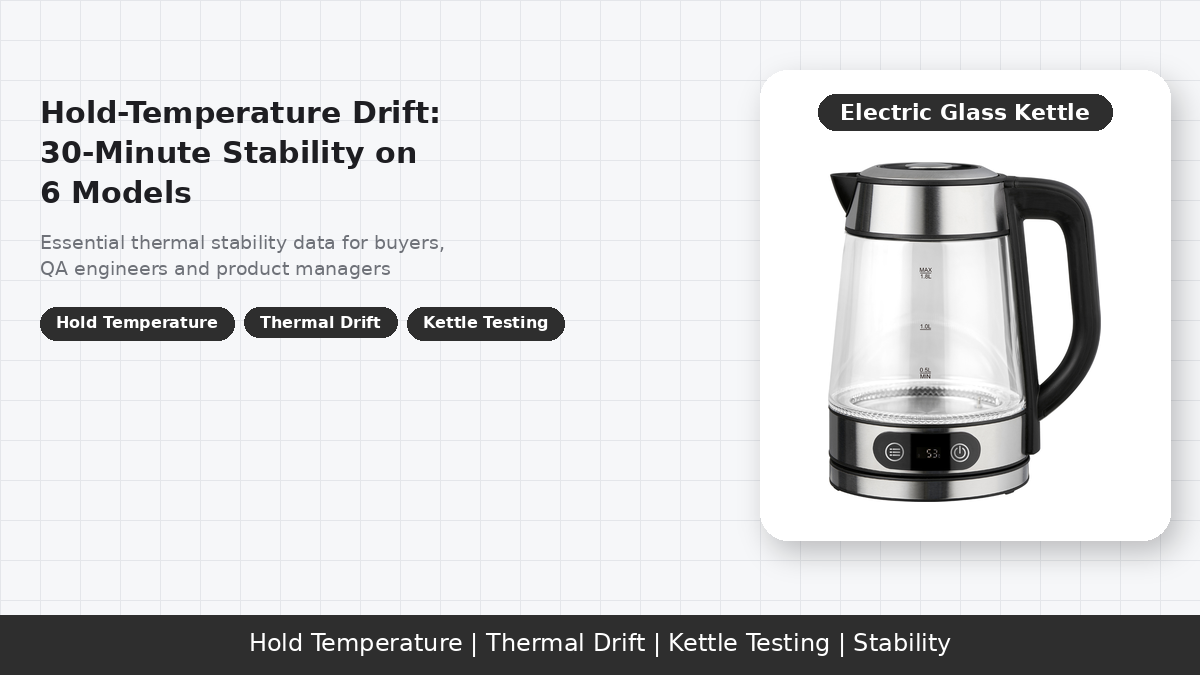
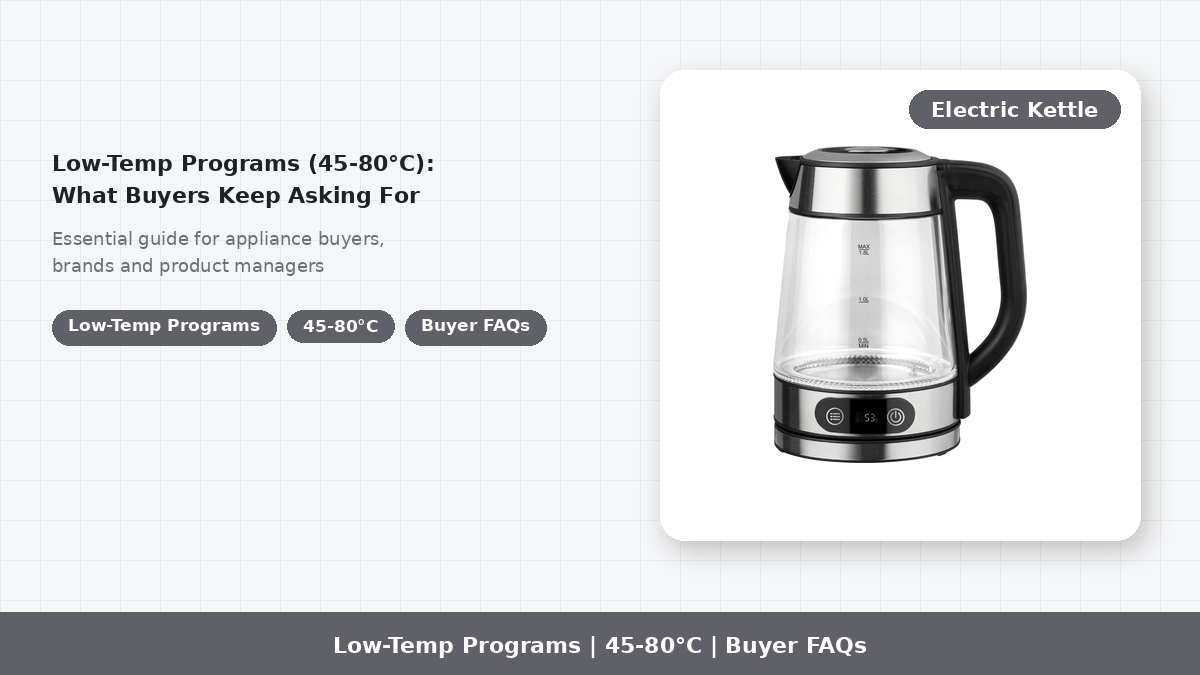
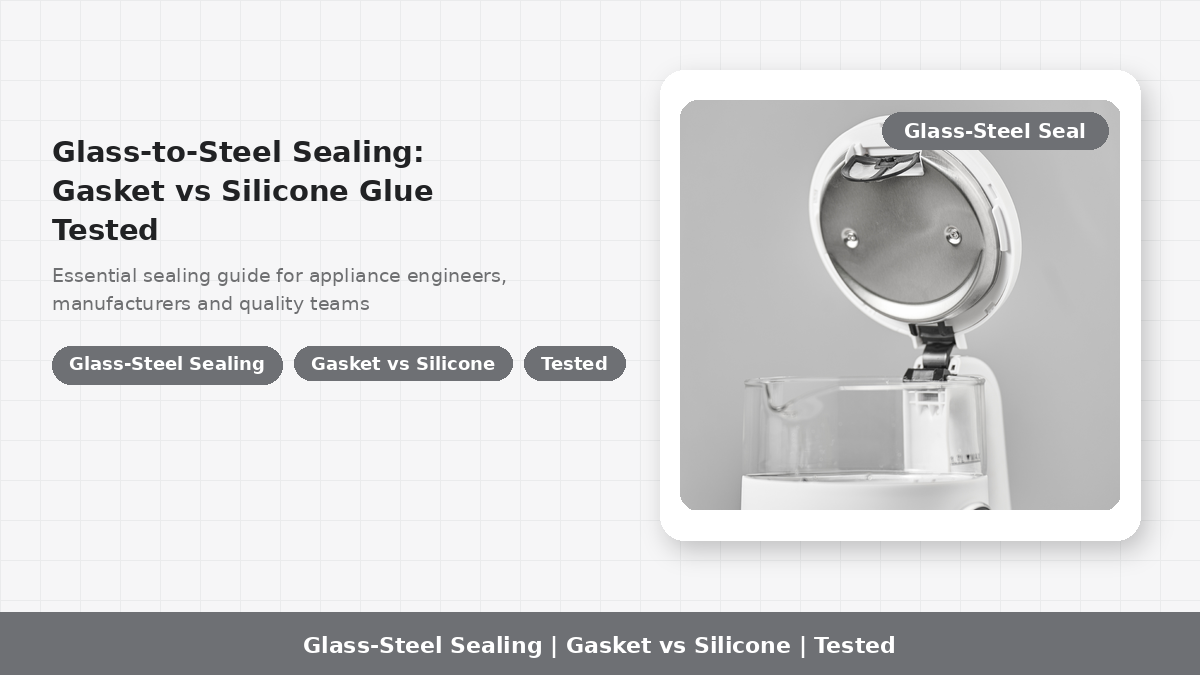
Every Glass Kettle has one interface that decides whether it survives: borosilicate glass meeting stainless steel at the base. You can seal that interface two ways — a silicone gasket, or a silicone adhesive bond — and they are not interchangeable. One is a designed service part. The other is a permanent process decision. Choosing wrongly is how a kettle ends up leaking at the base after eighteen months, or arriving in a carton with a permanent bond that nobody can legally take apart.
TL;DR
- A silicone gasket and a silicone adhesive solve different problems: the gasket is a replaceable seal that compresses against a flat steel land, while the adhesive is a permanent bond that distributes load across the joint.
- The gasket wins on repairability, serviceability and consumer expectations, and it is the only choice that lets you replace a failed seal without destroying the kettle.
- The adhesive wins on cost and on permanent leak resistance, but it converts a serviceable appliance into a disposable one, which matters directly for your warranty exposure and for right-to-repair regulation.
- The real failure mode is not the seal material, it is the land: a steel heating plate that is not flat, not concentric or not thermally compatible will fail a good gasket and a good bond equally.
- Because the interface is where food contact and electrical safety meet, the compliance burden falls on the whole assembly, and Regulation (EC) No 1935/2004 on food contact materials applies to any silicone in the water path, not only to the gasket.
The short answer: specify a gasket unless you have a specific reason not to, and treat the adhesive bond as a cost decision rather than a sealing decision.I have reviewed more Glass Kettle base failures than I would like to admit, and the pattern is consistent. Almost none of them are seal material failures. They are flatness failures, concentricity failures, and thermal-cycling failures, and both sealing methods would have failed them identically.
So let me be careful about what this article does and does not claim. Because the difference between a gasket and an adhesive bond is mostly a question of service life, serviceability and compliance rather than of sealing performance, the honest comparison is not which one leaks less — it is which failure you would rather have in the field, and what it costs you when it happens.
The models I am drawing on are all published in our sealed glass kettle series, and the construction is consistent across them: a high borosilicate glass vessel, a food-grade 304 stainless steel heating plate and base assembly, and a mating steel land that the glass seats against. The double-wall glass electric kettle HHB6702D is the clearest example — inner borosilicate glass, matt PP outer shell, stainless steel inner lid, rated 1850–2200 W at 220–240 V, and a 360° rotatable base. That base interface is what this article is about.

Why the Glass-to-Steel Interface Is the Weak Point
The glass-to-steel base interface is the weak point in a Glass Kettle because it is the only place in the appliance where a hard, brittle, thermally expansive material is joined to a different metal, repeatedly heated and cooled, while carrying both the weight of the water above it and the current for the element below it. Get that wrong and everything else about the kettle becomes irrelevant.
Four things are happening at that joint at once, and they pull in different directions.
- Thermal expansion mismatch. Borosilicate glass and 304 stainless steel expand at different rates, and they do it over a wide temperature swing in a product that boils water. A joint that is rigid over a wide range will develop stress at the edges of the sealing land, which is where a leak starts.
- Continuous mechanical load. A full 1.7 L of water is roughly 1.7 kg, and the vessel plus base assembly is more again. That load is carried across the sealing interface continuously, and it is not a static load, because a user lifting a full kettle off the base and setting it back down is a shock load on the same joint.
- Differential heating of the two materials. The steel plate is the hot surface and the glass rim is not, so the joint sees a temperature gradient across a very short distance. A seal has to accommodate that gradient every single heating cycle.
- Food contact and electrical isolation in one place. The same interface separates drinking water from a live heating element, and a seal that is also the electrical isolation path is a part with two different failure consequences depending on how it fails.
Because the joint has to survive all four at once, the failure mode of a Glass Kettle base is rarely a clean split. In my experience of sample teardowns it is a slow weeping from one point on the land, often starting in a corner where the steel land and the glass rim are least concentric, and it usually appears as a damp ring on the base plate rather than as water on the counter. That is why it gets missed, and it is why it becomes a safety complaint rather than a returns issue.
Gasket vs Silicone Glue: What Each One Actually Does
A silicone gasket is a compressible seal that sits in a defined groove and is squeezed between the glass rim and a flat steel land; a silicone adhesive bond is a cured joint that fuses the glass to the steel so the two become, in effect, one assembly. Every practical difference between them follows from that single distinction.
| Criterion | Silicone gasket | Silicone adhesive bond |
|---|---|---|
| How it seals | Compression against a flat steel land, with a defined groove and compression ratio. | Cured adhesion across the joint surface, with load carried by the bond itself. |
| Repairable after failure | Yes. The gasket is a service part and can be replaced without destroying the kettle. | No. The joint is permanent, so a leak means the kettle is scrap. |
| Visible wear over life | Compression set and hardening are visible and progressive, and a worn gasket can be inspected. | No consumable part to inspect, so the only symptom is the leak itself. |
| Thermal cycling | Absorbs differential expansion elastically, within the compression range. | Relies on adhesion holding across a stress concentration, which is where it initiates. |
| Manufacturing implications | Requires a grooved or stepped land on the steel, which is a tooling change but not a bonding operation. | Requires a dispensing, curing and fixturing operation on every unit, plus cure time in the line. |
| Service and warranty exposure | Bounded. A failed gasket is a known, cheap, in-warranty fix that keeps the appliance in service. | Open-ended. Every joint failure is a total loss of the appliance, and there is no salvage path. |
| Right-to-repair and repairability regulation | Compatible. The seal can be reached and renewed without dismantling the appliance irreparably. | A materially negative factor in jurisdictions with repairability scoring, because the appliance cannot be opened without destroying the joint. |
| Best fit | Consumer and hospitality kettles expected to be serviced, and any product where you want a bounded warranty cost. | Applications where the joint will never be opened, the cost pressure is severe, and permanent sealing is acceptable. |
Two further points on the comparison that I would want a buyer to hold onto before we talk about failure.
The first is that silicone is a family and not a material, and the adhesive and the gasket are almost never the same silicone even when both are described as food-grade silicone. A cured adhesive and a moulded gasket differ in cure chemistry, in filler loading and in how they behave under sustained compression. A buyer who specifies “silicone” for both and assumes interchangeability is making an assumption that the datasheet will contradict.
The second is that the gasket is a designed part with a designed interface, and the adhesive is a process with a process window, and a process window cannot be inspected on an assembled product after the fact. You can take a gasket apart and look at it. You cannot take a cured bond apart and confirm the bond line is complete without destroying the joint, which is exactly why a gasket-based design is so much easier to quality-assure in a volume production line.
Where Sealing Actually Fails: The Land, Not the Seal
Most Glass Kettle base leaks are land failures, not seal failures, and no choice between gasket and glue changes that. This is the most important thing in this article, and it is the part I would push back on if I were reviewing a competitor’s gasket-versus-glue comparison.
1. Flatness of the steel land
A gasket seals by compressing. If the steel land is not flat, the gasket does not compress evenly, and you get a high point that takes the load while the rest of the seal barely touches. Because a high point concentrates the entire closing force onto a small area of the gasket, the leak path forms there first, and no gasket hardness or silicone grade will fix a land that is out of flat.
This is a machining tolerance question, and it belongs on the drawing as a flatness callout on the land rather than as a general note about the base assembly.
2. Concentricity and the glass rim
The other half of the joint is the glass rim, and glass is the harder problem. Because a borosilicate rim is formed and fired rather than machined, its flatness and its concentricity relative to the vessel axis vary with the forming process, and a seal that is concentric to the steel but not to the glass will still leak on one side. This is the single most common cause of the asymmetric weeping I mentioned earlier, and it is why the glass-to-steel joint has to be designed as a pair rather than as a good steel part and a good glass part.
3. Thermal compatibility of the land material
The land sits in the thermal path. A steel land that is a different alloy or a different surface finish from the rest of the base assembly will behave differently under heat, and a seal compressed between two materials that move differently under temperature will see a cyclic squeeze it was not sized for. Because our published base construction across the glass range consistently pairs borosilicate glass with food-grade 304 stainless steel — the HHB1788, the HHB6706 and the HHB6707 are all published as borosilicate glass with food-grade 304 stainless steel — the metal side of that interface is one material system, and the seal is designed into it rather than added to it.
4. Cure and fit-up for the bonded version
If you choose the adhesive, you have added a process variable that the gasket design does not have. Because the quality of a cured bond depends on surface preparation, mix ratio, dispensed volume, fixturing pressure and cure time, and because every one of those is a variable that can drift on a line running at volume, a bonded interface inherits the variability of the dispensing operation directly into the leak rate. A gasket, by contrast, either seats or it does not, and a mis-seated gasket is visible at assembly.
5. The fix that is not a fix
And the failure mode I see most often in teardowns is the one that would have been avoided by drawing the joint correctly in the first place. Because a bonded glass-to-steel interface cannot be resealed, and because the obvious field response to a leaking base is to apply more adhesive around the rim, this repair is common in the secondary market and it is the worst possible outcome for a brand, because it converts a factory fault into an undetectable field fault. If your product is going to be bonded, you should plan for the fact that it will be resealed with something by somebody who is not you.
The Compliance Dimension Nobody Puts in the Specification
Any silicone in the water path of a kettle must satisfy the food contact material rules for the market it is sold into, and a gasket and an adhesive are both in the water path even when only one of them touches the water. This is a procurement point that gets discovered late, so let me put it plainly.
Regulation (EC) No 1935/2004 on materials and articles intended to come into contact with food governs materials in contact with drinking water, and it requires that those materials be based on a positive list, that migration limits are met, and that the material be labelled with the identity of the manufacturer or supplier. Because a food-grade claim on a gasket datasheet and a food-grade claim on an adhesive datasheet are made against different intended uses, a buyer who accepts one certificate and assumes it covers the other interface has a gap in the compliance file that surfaces at a customs or retailer audit rather than at the factory.
And then there is the electrical side, which the seal influences directly. Because the glass-to-steel interface sits between a live heating element and the water, the seal is part of the electrical safety case, and a seal that hardens, shrinks or loses dielectric strength over time is a safety-relevant part, not a sealing part that happens to be near the electronics. That is why a gasket with a specified durometer and a specified compression set matters, and why a vague “silicone” on a purchase order is not a sufficient specification for a food-contact, mains-connected appliance.
Our own published certification sets give you a sense of what this involves. The HHB1788 borosilicate Glass Kettle and the HHB6706 are published as CE, GS and RoHS compliant; the HHB6705D double-wall Glass Kettle adds LVD and EMC testing to CE; and the mother-son tea systems, the HHB8717DH and the HHB1805DH, are published as CE, GS, RoHS andLFGB compliant, which is the German food contact framework and is the one that matters most if you are shipping into Germany or Austria. Because LFGB compliance is the strictest of the food contact routes our tea systems are sold under, and because a seal is part of that assessment, specifying the seal before the certification is scheduled is the difference between a certificate you hold and a certificate you are waiting for.
How to Specify a Glass Kettle Base Seal
Six things belong in a Glass Kettle base seal specification, and four of them are about the land rather than about the seal material. This is the checklist I would hand a supplier or a product engineer, and it is short on purpose, because a seal specification that does not mention the land is not a seal specification.
- Seal form: gasket or bond. State it as a design decision, not a material preference. Gasket means a replaceable silicone ring seated in a defined groove with a specified compression ratio. Bond means a specified adhesive applied to a specified prepared surface with a specified cure.
- Material and food contact basis. The silicone grade, the durometer, the compliance route to the target market — EU 1935/2004, and LFGB if Germany or Austria is in scope — and the supplier identification required on the material.
- Compression and geometry. For a gasket, the groove dimensions, the compression ratio at the assembled state, and the allowable compression set over the product's service life. For a bond, the bond-line width, the surface finish on the glass and the steel, the cleanliness requirement and the cure schedule.
- Land flatness and concentricity. A flatness callout on the steel land, and a concentricity tolerance between the land and the vessel axis. This is the pair of numbers that actually determine the leak rate.
- Thermal cycle qualification. The number of full heat cycles the joint must survive at rated power, and the acceptance criterion, which for a gasket is about compression set and for a bond is about bond integrity. Our published power figures, 1850–2200 W, and the 2 h keep-warm and 13-level temperature features across our double-wall range, are the operating envelope this has to be qualified against.
- Failure and warranty position. What the failure looks like, what the end user or service partner does about it, and what it costs you. This is the item that should decide gasket versus bond, and it belongs in the specification rather than in a meeting.
Because the last of those six is the only one that changes with your business model rather than with the engineering, I would write it first, because it determines the answer to the other five.
Which Should You Choose?
Let me give a decision guide rather than a recommendation, because the right answer genuinely depends on where the kettle is sold and what happens to it after three years.
Choose a gasket when the kettle is sold to consumers who may keep it for years, when you sell into markets with repairability or sustainability scoring that penalise products which cannot be opened, when your warranty cost is per-unit and you would rather pay a small known amount than risk a total loss, or when you expect a service partner or a refurbisher to handle the product. In every one of those cases the gasket wins, and it is not a close call.
Choose a bonded joint when the product is a sealed disposable unit, the market is heavily price-competitive and the joint is never opened, you control the whole service experience yourself, and your cost structure makes a serviceable seal uneconomic. Even then, I would want the land geometry specified as carefully as the bond, because the bond is only as good as the surface it is stuck to.
And there is a third option that is worth considering for a specific segment. Because a double-wall Glass Kettle has an outer shell that is already a separate structural part, the sealing problem in a mother-son configuration is different again, because the inner glass vessel is heated by a separate element and the outer body is largely a visual and thermal-insulation layer — which is why our HHB8717DH and HHB1805DH mother-son systems pair a 1.7 L main pot with a 1.0 L brewing pot and carry the seal load on the smaller, more protected joint.
What I Would Tell a Buyer Arriving With This Question
Three pieces of practical advice, in the order I would give them.
First, do not let the supplier choose the seal method for you by default. It is a design decision with warranty and compliance consequences that sit with your brand, and a factory that quietly specifies a bond because it is cheaper is making your product disposable without telling you.
Second, ask for the land specifications, not just the seal material. When I review a kettle for a buyer, the first thing I look at is not the silicone and it is not the glass, it is the flatness callout on the steel land and whether the glass rim concentricity is specified at all. That is where the leak rate is actually set.
Third, ask to see a sectioned sample of the joint. Not a photograph of a finished kettle and not a datasheet — a cut section through the glass-to-steel interface. It takes ten minutes and it tells you in one glance whether the land is machined, whether the gasket groove has any depth, whether the bond line is continuous, and whether the glass rim is supported around its full circumference or only at a few points. I have seen more problems caught at a sectioned sample than in a month of sample testing, and it is the cheapest hour in the whole programme.
For context on where these products sit, our glass kettles for tea connoisseurs range serves the segment where temperature precision and visible purity dominate the purchase decision, and our published figures for that segment include a 13-level temperature adjustment from 40 °C to 95 °C, 2 h keep-warm and memory functions, and PID-class accuracy. Because a buyer in that segment is paying for the glass to be visible and the water to be pure, the base seal is not a hidden engineering detail to them but part of the product they are photographing, and the repairability of a gasket is consistent with the rest of the proposition.
Send us the model and we will tell you which seal method it uses
Share the model number, the target market and whether you need a repairable seal, and we will map it against our published sealed glass kettle series and the double-wall glass electric kettle construction, and return the base interface detail, the published certification set and the packing and loading data for that model. We will also tell you honestly where a gasket is the wrong choice for your market, and where a bonded joint would be defensible. Start with our contact page and we will take it from there.
Where This Leaves the Gasket-vs-Glue Question
Let me be direct, because the framing of this question tends to encourage a false choice.
Because a gasket and a silicone adhesive solve different problems, and because the problem a Glass Kettle base actually has is land geometry rather than seal chemistry, the choice between them is a decision about what happens when the joint fails rather than about whether it will. A gasket fails and the kettle is repairable. A bond fails and the kettle is scrap. A bad land fails both, and the seal choice never got a vote.
There is a version of this article that concludes with a percentage, a life expectancy figure and a cost comparison between two bonding approaches. I have written that article, and I have watched buyers make decisions on numbers that were not measured on their product. Because every base interface in a Glass Kettle is a combination of one specific glass rim geometry and one specific steel land, and because the leak rate is set by that pairing rather than by the seal in the abstract, I would rather give you the six things to specify and the one photograph to ask for than a benchmark that will not transfer to your model.
That is the honest version. Specify the land, specify the food contact basis, specify the thermal cycle, and decide in advance whether your product is a serviceable appliance or a disposable one — because that decision, and not the silicone, is what the gasket is for.
Frequently Asked Questions About Glass Kettle Base Seals
Is a silicone gasket or a silicone adhesive better for a glass kettle base?
Neither is better at sealing in the abstract, and the question is usually asked in the wrong terms. A gasket is a compressible seal that can be replaced when it fails; an adhesive bond is a permanent joint that cannot be opened without destroying the kettle. For a consumer or hospitality product that will be serviced, the gasket is the better engineering choice because it bounds the warranty cost and keeps the appliance in service.
What actually causes most glass kettle base leaks?
Land geometry, not seal material. The common causes are a steel heating plate that is not flat enough, a glass rim that is not concentric to the vessel axis, and a thermal gradient across a joint that was not sized for it. A high point on the land concentrates the whole closing force onto a small area of gasket, and the leak starts there. Neither a better silicone nor a better adhesive changes that outcome.
Can a leaking glass kettle base be resealed with silicone adhesive in the field?
Technically yes, and that is precisely why it is a problem for a brand. Because a bonded glass-to-steel interface cannot be resealed, the obvious field response to a leaking base is to apply more adhesive around the rim, which converts a factory fault into an undetectable field fault. It also invalidates any food contact declaration you hold for the assembly, because the material in the water path has changed without being re-assessed.
Does a glass kettle base seal need food contact certification?
Yes, and the point that gets missed is that both the gasket and the adhesive sit in the water path even when only one of them touches the water. Regulation (EC) No 1935/2004 requires materials in contact with food to be based on a positive list, to meet migration limits and to carry supplier identification. A buyer who accepts a gasket datasheet and assumes it covers a separate adhesive has a gap that surfaces at an audit rather than at the factory.
What is the difference between LFGB and EU food contact compliance for a kettle seal?
LFGB is the German framework and it is the stricter of the two routes, and it is the one that matters if you are shipping into Germany or Austria. Our mother-son tea systems, the HHB8717DH and the HHB1805DH, are published as CE, GS, RoHS and LFGB compliant, while the single-vessel glass kettles such as the HHB1788 and the HHB6706 are published as CE, GS and RoHS compliant. If a seal has to pass LFGB, that needs to be settled before certification is scheduled rather than after.
Does a gasket make a glass kettle less safe than a bonded joint?
No, and this is a common misconception driven by the fact that a gasket is a part that can be removed. The seal is part of the electrical safety case because it sits between a live element and the water, so what matters is a specified durometer, a specified compression set and a specified service life, not whether the seal is a separate part. A well-specified gasket with a defined replacement interval is a safer arrangement than an unspecified bond.
How does repairability regulation affect the choice between gasket and glue?
It is a materially negative factor for a bonded joint, because a permanently bonded appliance cannot be opened without destroying it, and that is exactly what repairability scoring measures. The same argument applies to right-to-repair rules and to the sustainability scoring some retailers now apply. If your product will be sold into any of those regimes, the gasket is the safer commercial position as well as the better engineering one.
What flatness tolerance should I specify for the steel base land?
Specify it as an explicit flatness callout on the land rather than as a general note on the base assembly, and specify the concentricity between the land and the vessel axis at the same time. I will not put a number on this article for a specific model, because the correct value depends on the glass rim geometry paired with that land and the only meaningful figure is the one your glass and steel supplier have validated together. Ask for a sectioned sample; that shows the land, the groove and the bond line in one view.
Does a double-wall glass kettle have the same base sealing problem as a single-wall one?
It has a different one, because the load path and the thermal path are not the same. In a double-wall construction such as the HHB6702D, the inner borosilicate vessel is separated from the matt PP outer shell by a cool-touch air gap, so the glass-to-steel interface carries a different load and sees a different thermal gradient. In a mother-son configuration, with a 1.7 L main pot and a 1.0 L brewing pot, the inner vessel is heated by its own element and the seal load sits on the smaller, more protected joint.
How long should a glass kettle base seal last?
It depends on the cycle count, the temperature and the seal material, and any figure I gave you without those three would be a guess dressed as a specification. The defensible approach is to define a thermal cycle qualification against the product's own operating envelope, including the published 1850–2200 W heating and the 2 h keep-warm function, and then set a replacement or inspection interval against a service-life figure you have validated on your own units rather than a generic one.
What should I ask a supplier to show me before specifying a base seal?
Ask for a sectioned sample of the glass-to-steel joint, the land flatness and concentricity callouts, the food contact declaration for the specific seal material and the intended market, and the thermal cycle qualification record for that configuration. A sectioned sample takes ten minutes and shows in one glance whether the land is machined, whether the gasket groove has real depth, whether the bond line is continuous, and whether the glass rim is supported around its full circumference. It catches more problems than a month of sample testing.