
 0086-574-62518288


News
0102030405
How to Choose the Right Electric Kettle OEM Manufacturer for Your Brand in 2026
2026-05-14
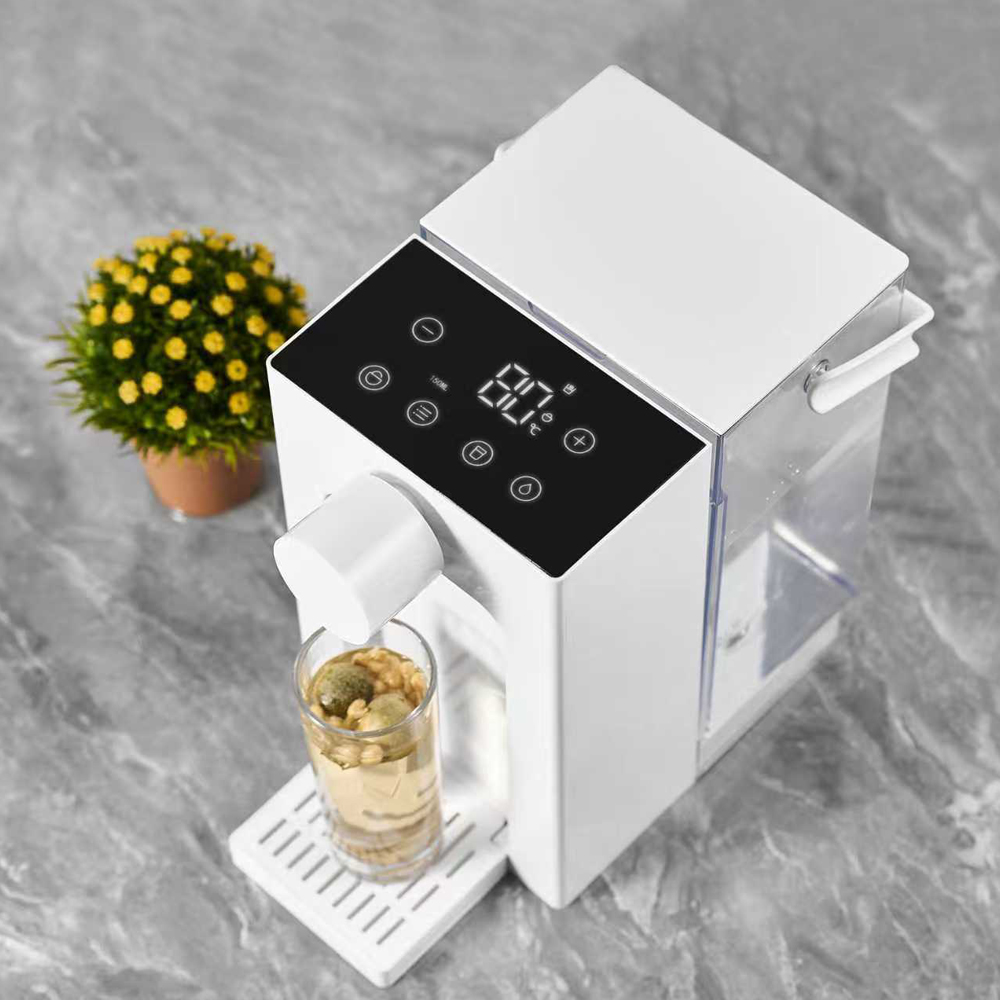
The global electric kettle market is projected to reach USD 14.8 billion by 2030, growing at a CAGR of 6.2% (Grand View Research, 2024). For brands looking to enter or expand in this space, choosing the right electric kettle OEM manufacturer is the single most critical decision that determines product quality, time-to-market, and long-term profitability.
Whether you are launching a private label electric kettle line in Europe, North America, or Southeast Asia, this comprehensive guide walks through the seven essential criteria every procurement professional must evaluate before signing a manufacturing agreement.
1. Why Your Choice of OEM Partner Defines Your Brand's Success
⚠️ Critical Market Factors
A 2023 survey by McKinsey revealed that 73% of procurement failures in consumer appliances traced back to inadequate supplier vetting during the selection phase. When sourcing from a China electric kettle OEM supplier, the stakes are particularly high due to:
- Regulatory compliance — Kettles are regulated appliances in nearly every developed market
- Product safety liability — A single recall can destroy years of brand equity
- MOQ commitment — Factory minimum order quantities lock you into volume commitments
- Lead times — Production delays ripple across your entire supply chain
Partnering with an experienced electric kettle OEM manufacturer with proven export credentials mitigates these risks significantly.
2. The Seven-Point OEM Supplier Evaluation Framework
Procurement professionals evaluating custom electric kettle manufacturing partners should apply the following checklist:
2.1 Certifications — Your Non-Negotiable Baseline
Every reputable electric kettle factory should hold these certifications as a minimum:
| Certification | Market Required | What It Covers |
|---|---|---|
| GS / CE | European Union | Product safety & low-voltage directive compliance |
| ETL / UL | North America | Electrical safety certification |
| LFGB / FDA | EU / USA | Food-contact material safety |
| RoHS / REACH | Global | Restriction of hazardous substances |
| ISO 9001:2015 | Global | Quality management systems |
| BSCI | EU Retail | Social compliance & ethical manufacturing |
| ERP Energy Directive | EU | Energy efficiency & standby power limits |
Factories like Goodfriends Electric — holding all the above certifications simultaneously — demonstrate readiness for global markets without additional retooling or compliance delays.
2.2 Vertical Integration — The Quality Differentiator
The most reliable stainless steel electric kettle manufacturer operates with high vertical integration. Why this matters:
- Thermostat production in-house — The thermostat controls auto-shutoff, the #1 safety feature in any kettle
- Heating element manufacturing — Core to boil efficiency and energy consumption ratings
- Injection molding capability — Consistency in handle, lid, and base components
When 95% of core components are produced in-house, as is the case with vertically integrated factories, the supplier eliminates dependency on third-party quality variability — a common failure point in lower-tier OEM operations.
2.3 Production Capacity & Scale
Before committing, verify the factory's annual output against your projected growth. Key metrics to request:
- Annual export volume — Look for factories exporting 10M+ units annually
- Manufacturing footprint — Facilities over 50,000 sqm indicate scalable operations
- Production line count — More lines = lower risk of capacity bottlenecks
- Peak capacity buffer — Can they handle a 30% surge without delaying existing orders?
2.4 Quality Control Protocols
The best private label electric kettle factory applies multi-stage QC:
- Incoming material inspection (IQC) — Raw material verification for food-grade compliance
- In-process quality control (IPQC) — Real-time checks during assembly
- Outgoing quality control (OQC) — 100% functional testing before packaging
- Third-party inspection — Factories that welcome SGS, TÜV, or Bureau Veritas audits are more trustworthy
2.5 OEM vs. ODM — Understanding the Difference
| Criteria | OEM (Original Equipment Manufacturing) | ODM (Original Design Manufacturing) |
|---|---|---|
| Design ownership | Buyer provides specifications | Supplier offers existing designs |
| Time to market | 8–16 weeks (tooling + sampling) | 2–4 weeks (label customization only) |
| MOQ requirement | Higher (3,000–10,000 pcs per SKU) | Lower (500–2,000 pcs per SKU) |
| NRE costs | Tooling & mold fees apply | Minimal or zero NRE |
| Best for | Established brands with unique designs | New entrants testing the market |
A mature electric kettle OEM manufacturer should support both models, allowing you to start with ODM for speed-to-market and transition to full OEM as your brand matures.
2.6 After-Sales Support & Warranty
Procurement contracts should specify:
- Warranty period (industry standard: 12–24 months from shipment)
- Defect rate threshold (acceptable: < 0.5% return rate)
- Replacement parts availability (minimum 3–5 years post-production)
- Technical support response time (48 hours or less)
2.7 Logistics & Export Experience
A factory that has consistently exported to your target region understands:
- Country-specific plug types and voltage configurations
- Customs documentation requirements
- Incoterms best practices (FOB Shanghai or CIF Rotterdam)
- Shipping lane optimization to minimize freight costs
3. Real-World Results: What Brands Experience After Switching Partners
"We switched our electric kettle production from a general appliance supplier to Goodfriends in 2023. The difference was immediate — our defect rate dropped from 2.3% to 0.3%, and we received our first CE compliance approval with zero rework."
— Sourcing Director, European Home Appliance Brand (anonymous)
"For a startup launching a premium Stainless Steel Kettle line, Goodfriends' ODM program was a game-changer. We went from concept to first shipment in 5 weeks, and their existing GS/ETL certifications meant we didn't need to spend months on compliance testing."
— Founder, North American Premium Kettle Brand (anonymous)
These outcomes are not coincidental. They reflect the ROI of selecting a B2B electric kettle wholesale partner with deep category specialization — a factory that has been perfecting a single product category for over 25 years.
4. Common Mistakes When Selecting an Electric Kettle Factory
Mistake 1: Prioritizing Price Over Total Cost of Ownership (TCO)
The lowest unit price often masks hidden costs — poor quality yields, rework delays, higher defect rates, and compliance re-testing. A factory charging 10% more upfront but delivering 2% defect rates versus 5% is ultimately cheaper.
Mistake 2: Skipping Factory Audits
Virtual meetings are not enough. Arrange a physical audit or hire a third-party inspection firm. Evaluate working conditions, production line organization, and material storage practices first-hand.
Mistake 3: Ignoring Material Traceability
Insist on documented traceability for food-grade stainless steel (304 or 316 grade) and plastic components. The LFGB and FDA certifications verify food-contact safety, but only if the factory actually sources certified raw materials.
5. Frequently Asked Questions About Electric Kettle OEM Manufacturing
What certifications should a China electric kettle OEM supplier have for the EU market?
For the European market, your supplier must hold CE, GS, RoHS, REACH, LFGB, and ERP Energy Directive certifications. These cover electrical safety, material safety, chemical restrictions, and energy efficiency compliance under EU regulations. Many factories hold only CE, making GS certification a strong differentiator for quality.
How long does custom electric kettle manufacturing typically take?
For ODM projects (customizing existing designs), the timeline is typically 2–4 weeks for sample preparation and 25–35 days for mass production. Full OEM projects with new mold development require 8–16 weeks depending on design complexity. A reliable electric kettle OEM manufacturer will provide a detailed production schedule with milestones.
What is the minimum order quantity for private label electric kettles?
MOQ varies significantly by factory. For ODM orders, MOQ ranges from 500 to 2,000 units per SKU. For OEM orders requiring new tooling, expect 3,000 to 10,000 units to amortize mold costs. Some large-scale manufacturers offer flexible arrangements for trial orders before committing to full production volume.
How do I verify the quality of a stainless steel electric kettle manufacturer before ordering?
Request three quality benchmarks: (1) Third-party test reports from SGS, TÜV, or Intertek verifying material composition and safety; (2) Customer audit reports or factory visit logs from current clients; (3) A pre-production sample that undergoes your internal testing protocol, including boil cycles (minimum 3,000 cycles), handle pull strength, and lid hinge durability.
What is the difference between 304 and 316 stainless steel for electric kettles?
304 stainless steelis the industry standard for Electric Kettles — food-grade, corrosion-resistant, and affordable.316 stainless steel contains molybdenum, offering superior resistance to chloride corrosion (ideal for seawater environments or acidic water). For 99% of consumer kettle applications, 304 stainless steel provides excellent performance and cost efficiency. Always verify that your custom electric kettle supplier uses certified 304-grade material with documented traceability.
Conclusion: Your Next Step
Selecting the right electric kettle OEM manufacturer is a strategic decision that directly impacts your product quality, compliance speed, and brand reputation. Use the seven-point framework in this guide to evaluate potential partners, and never compromise on certifications, vertical integration, or quality control protocols.
When you are ready to explore partnership, request factory audit documentation, certification copies, and customized product samples from shortlisted suppliers. A factory's willingness to be transparent at this stage is itself a strong indicator of a reliable long-term partnership.
Looking for a proven partner? Goodfriends Electric — with 25+ years of focused electric kettle manufacturing, 13M+ annual exports, and full compliance with global certifications — welcomes procurement inquiries for OEM and ODM collaboration.
This article was researched using publicly available market data from Grand View Research (2024), McKinsey Supplier Survey (2023), and compliance standards published by the European Commission, UL LLC, and the U.S. FDA. Product-specific claims are based on verified manufacturer specifications.