
 0086-574-62518288


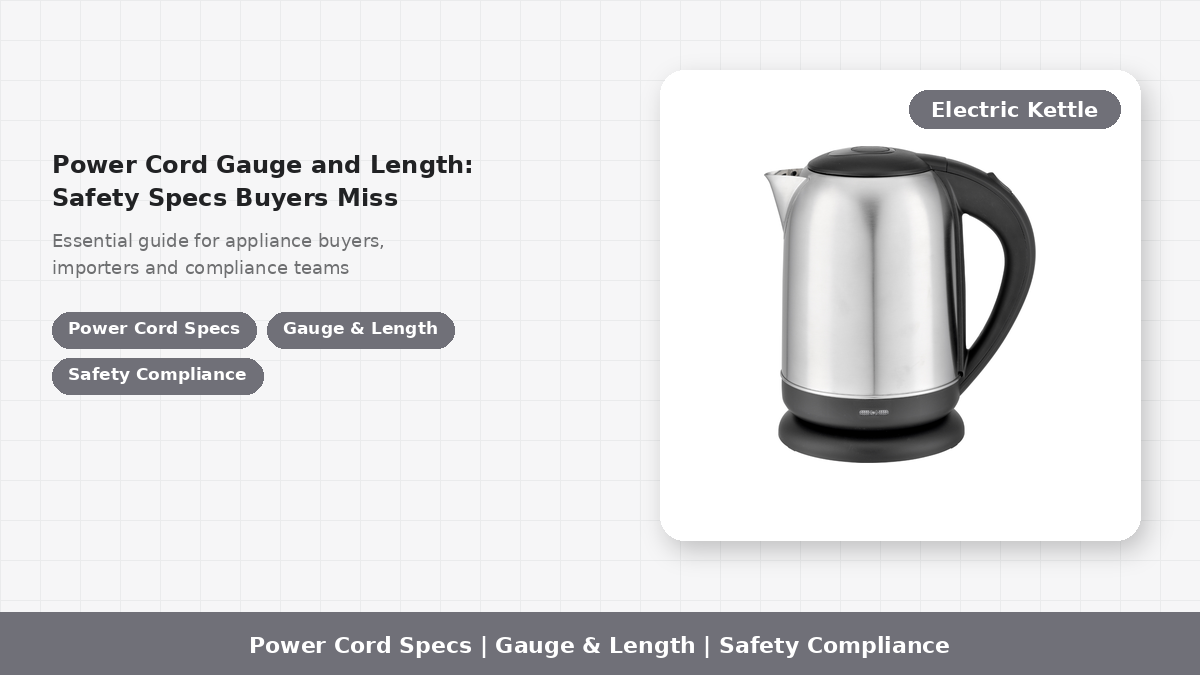
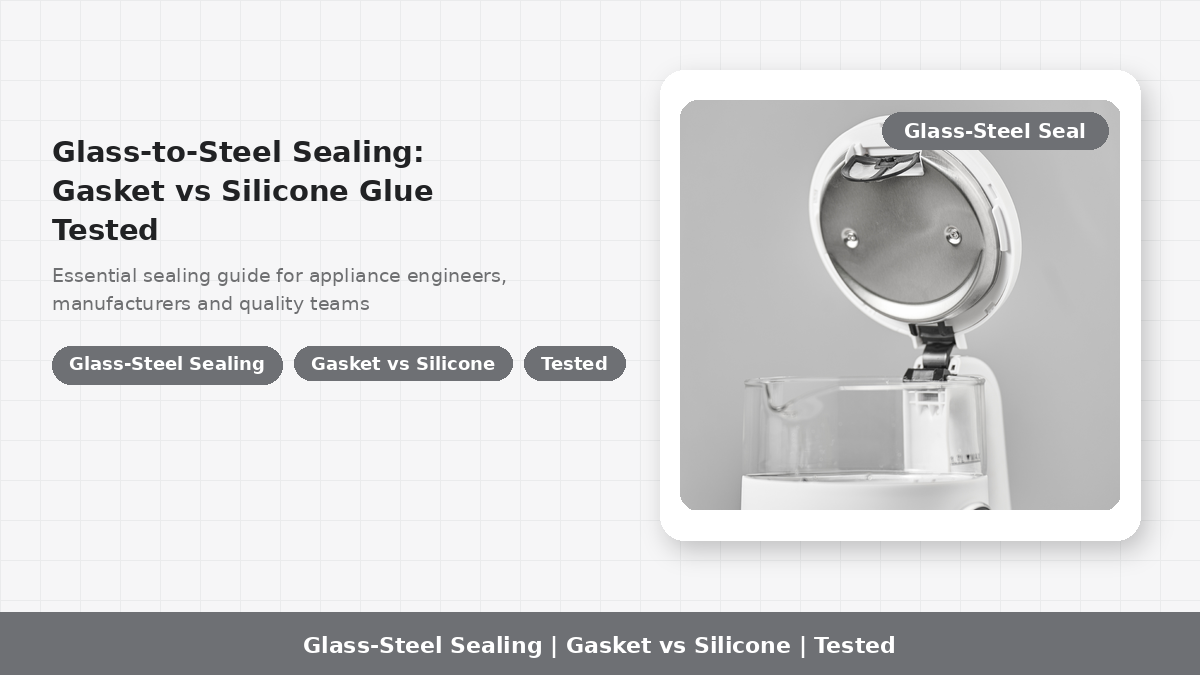
An electric kettle sold in Korea must carry the KC mark; an electric kettle sold in Japan must carry the PSE mark (specifically the diamond PSE for this product category). For a Chinese electric kettle OEM shipping into either market, the two certification systems look similar on the surface — both are mandatory, both involve accredited third-party testing, both require an in-country representative, and both depend on factory audit. They differ in their scope logic, their test standard, their documentation, their mark design, and the way the in-country representative is structured. A buyer who plans to ship the same kettle into both markets cannot use a single certification for both, and a buyer who treats the two systems as interchangeable is the buyer who misses the launch window.
This guide is written for the Chinese electric kettle OEM preparing to ship into Korea and Japan — the factory export manager, the compliance documentation owner, and the importer-distributor evaluating a Chinese supplier. The framework below is built around the Goodfriends digital glass kettle program and the smart LED glass kettle product page as the reference product family, cross-referenced against the Goodfriends news article on the new smart electric kettle series for global markets. The Goodfriends home page lists the full product family and the about-us page documents the 25-year kettle manufacturing history and the certification base the factory already holds. Authoritative references for the certification framework include the Korean Agency for Technology and Standards (KATS) safety certification overview, the Korean Electrical Appliances Safety Control Act portal, the Japanese Ministry of Economy, Trade and Industry (METI) electrical appliance safety overview, the IEC 60335-2-15 standard for liquid heating appliances, and the IECEE CB scheme for mutual recognition of test certificates.
Quick Read
- KC is the Korean unified safety mark, governed by the Korean Agency for Technology and Standards (KATS) under the Electrical Appliances Safety Control Act. An electric kettle falls under Safety Certification (the higher of two KC tiers), requires in-country Korean representation, and typically requires both accredited third-party testing and an initial factory audit.
- PSE is the Japanese Electrical Appliance and Material Safety Law mark, governed by the Ministry of Economy, Trade and Industry (METI). An electric kettle falls under the diamond PSE for Specific Electrical Appliances — the higher of two PSE tiers — and requires registration through an accredited conformity assessment body, an in-country import record holder, and factory inspection.
- Both marks are mandatory, both involve factory audit, both require an in-country representative. The marks are not interchangeable: a kettle that is KC-certified cannot be sold in Japan under the Korean mark, and a kettle that is PSE-certified cannot be sold in Korea under the Japanese mark.
- The common test basis is IEC 60335-2-15 (the international standard for the safety of household liquid heating appliances). The Korean national deviation is KC 60335-2-15; the Japanese national deviation is J 60335-2-15 / the Electrical Appliance and Material Safety Act's parallel standard. A kettle that has a current CB test certificate with the relevant national deviations is well-positioned for both KC and PSE submission.
- For a Chinese electric kettle OEM, the practical path is a five-step program that begins with a current CB test certificate and ends with the per-shipment documentation the in-country representative needs to file customs clearance.
Why KC and PSE matter separately
Korea and Japan are adjacent markets, share a free trade agreement through RCEP and bilateral arrangements, and have a high overlap in consumer appliance demand. A Chinese electric kettle OEM that ships the same product family to both markets will, on the surface, run what looks like the same kind of compliance work. The two certification systems are designed to operate independently of each other, however, and the compliance cost and the documentation load are additive, not substitutive.
The structural reason is that KC and PSE are national safety marks, and a national safety mark is recognised only inside the issuing country. KC is recognised inside Korea and is administered by KATS; PSE is recognised inside Japan and is administered by METI through accredited conformity assessment bodies. A Korean customs officer will not accept a PSE mark on an imported kettle, and a Japanese customs officer will not accept a KC mark on an imported kettle. The two marks have different visual designs, different document sets, different factory audit procedures, and different renewal cycles.
A Chinese electric kettle OEM that is building a long-term program for both markets therefore needs to plan for both marks from the start. The cost saving of "one test, two marks" is real — both systems accept a CB test certificate as a substantial part of the technical file — but the cost saving is partial, not total, and the documentation, the in-country representation, and the mark application are two separate workstreams that run in parallel.
KC: scope, structure, and what it covers for kettles
KC is the Korean national safety mark introduced in 2009 as a unified mark replacing the previous marks (eK, KC mark for children, KS mark for food, etc.) on a phased schedule. The KC mark on an electric kettle means the kettle has been assessed against the Korean Electrical Appliances Safety Control Act and its implementing regulations, and the kettle has been entered in the Korean safety certification database.
The KATS maintains two KC tiers. Safety Certificationis the higher tier and covers the higher-risk electrical products — air conditioners, refrigerators, washing machines, Electric Kettles, rice cookers, and similar heating appliances.Safety Confirmation is the lower tier for lower-risk products. An electric kettle is in the Safety Certification tier, which requires accredited third-party testing, an in-country Korean representative, an initial factory audit, and ongoing surveillance. A factory that wants to sell a kettle in Korea cannot skip any of these elements.
The technical basis for KC on an electric kettle is KC 60335-2-15, the Korean national standard for the safety of household liquid heating appliances, which is the Korean adoption of IEC 60335-2-15 with national deviations covering the Korean supply voltage (220V at 60Hz, the Korean grid standard) and the Korean safety mark application. A current CB test certificate issued against IEC 60335-2-15 with the Korean national deviation is a substantial part of the KC technical file, but the KC submission also requires the Korean representative's documentation, the production inspection at the Chinese factory, and the entry in the KATS database.
The in-country Korean representative is a non-negotiable element. A Chinese factory cannot file KC directly. The filing is done by a Korean representative — typically a Korean importer, a Korean compliance consultancy, or a Korean distributor — who holds the KC certificate in the KATS database and who is the point of accountability for the kettle once it is on the Korean market. The Korean representative's identity and the scope of the certification are recorded in the KATS database, and customs clearance of an imported kettle is checked against that record.
PSE: scope, structure, and what it covers for kettles
PSE is the Japanese mark for the Electrical Appliance and Material Safety Law. The law has been in continuous operation since 1962 and has been revised multiple times; the current law framework is the version effective from 2012 onwards, with periodic revisions on specific categories. METI is the governing ministry, and accredited conformity assessment bodies (the Japanese RCB) carry out the conformity assessment on METI's behalf.
PSE has two tiers, distinguished by mark shape. The circular PSE covers non-specific electrical appliances, a list of 116 product categories. The diamond PSE covers specific electrical appliances, a list of 341 product categories that includes the higher-risk products. An electric kettle is in the diamond PSE list, which is the higher tier and the tier that requires accredited third-party testing, an in-country import record holder, and factory inspection.
The technical basis for PSE on an electric kettle is the Japanese national standard J 60335-2-15 (or the equivalent Electrical Appliance and Material Safety Act technical standard for liquid heating appliances), which is the Japanese adoption of IEC 60335-2-15 with national deviations covering the Japanese supply voltage (100V at 50/60Hz, the Japanese grid standard) and the Japanese power plug and socket configuration. A current CB test certificate against IEC 60335-2-15 with the Japanese national deviation is a substantial part of the PSE technical file, and a PSE submission that cites a current CB test certificate can be expedited by the RCB.
The diamond PSE on a kettle is a self-declaration mark once the conformity assessment is complete. The RCB that issues the certificate (or the conformity assessment report) maintains the record, and the in-country import record holder is the Japanese importer of record. A Chinese factory cannot place a diamond PSE mark on a kettle without the conformity assessment and the in-country representation being in place. Additional reference context for the Japanese certification framework is available through the PSE mark product category database on the METI consumer affairs agency portal, the JIS Japanese Industrial Standards Committee, and the Japan Quality Certification Organization (JQA) as a representative accredited conformity assessment body. Manufacturing-quality context that supports the factory audit component of both KC and PSE is documented through the ISO 9001 quality management overview, which is a baseline reference for the audit-readiness discussion in the anti-trigger section.
The five steps of a dual-market approval program
For a Chinese electric kettle OEM that is preparing to ship into both Korea and Japan, the practical path is a five-step program that runs the KC and PSE workstreams in parallel, sharing the technical test file where possible.
Step 1: Technical file baseline. The factory's kettle has a current CB test certificate issued against IEC 60335-2-15 with the national deviations for the destination markets. For Korea, the deviation is the 220V 60Hz supply. For Japan, the deviation is the 100V 50/60Hz supply and the Japanese plug configuration. A kettle that is rated 100-240V at 50/60Hz covers both markets on the supply side; a kettle that is rated only 220-240V at 50/60Hz will need a separate Japan-spec variant or a Japanese-market-rated variant. The Goodfriends smart LED glass kettle is rated 220-240V 50-60Hz, which positions it well for the Korean market and for the European market, but a Japanese-market variant would need a 100V 50/60Hz motor and heating element specification.
Step 2: KC submission. The Korean representative files the KC Safety Certification application with the KATS through the Korean accredited testing body, citing the CB test certificate, providing the production inspection report from the Chinese factory, and providing the product documentation in Korean. The KATS review typically includes a technical review of the test file, the production inspection report verification, and the database entry. Once the KC certificate is issued, the kettle is entered in the KATS safety certification database, and the Korean representative can import the kettle under the KC certificate.
Step 3: PSE submission. The Japanese import record holder files the diamond PSE conformity assessment application with the Japanese RCB, citing the CB test certificate, providing the factory inspection report (which can be the same inspection report used for KC if the inspection was performed in the same window), and providing the product documentation in Japanese. The RCB reviews the technical file, confirms the factory inspection, and issues the conformity assessment report. Once the report is issued, the Japanese import record holder can place the diamond PSE mark on the kettle and import the kettle into Japan.
Step 4: Marking and packaging. The KC mark and the diamond PSE mark have different visual designs, different placement requirements, and different size specifications. The KC mark is placed on the product body and the packaging. The diamond PSE mark is placed on the product body and the packaging. A kettle that ships to both markets will carry both marks, with the Korean representative's certification number and the Japanese RCB's certificate number printed adjacent to the respective marks. The Korean product name plate and the Japanese product name plate are typically bilingual or separate per market.
Step 5: Per-shipment documentation. Each shipment to Korea is supported by a commercial invoice, a packing list, a bill of lading, a KC certificate copy, and a Korean representative's import declaration. Each shipment to Japan is supported by a commercial invoice, a packing list, a bill of lading, a PSE conformity assessment report copy, and the Japanese import record holder's import declaration. The factory's export documentation team manages both per-shipment packages in parallel.
Five case studies for the kettle OEM
The case studies below illustrate how the five-step program applies to specific kettle categories that a Chinese factory might ship to Korea and Japan.
Case study 1: Standard 1.7L Cordless Electric Kettle.A 1.7L Cordless Kettle rated 220-240V 50/60Hz with a 304 stainless steel inner liner, a concealed heating element, and a simple boil-only control is a strong candidate for the Korean market, where the 220V 60Hz grid is a direct match. For the Japanese market, a 100V 50/60Hz motor and heating element variant is required. The CB test certificate against IEC 60335-2-15 covers both variants with the relevant national deviation; the KC and PSE submissions are filed in parallel against the same technical file. TheGoodfriends digital glass kettle program is the type of product family that fits this case study.
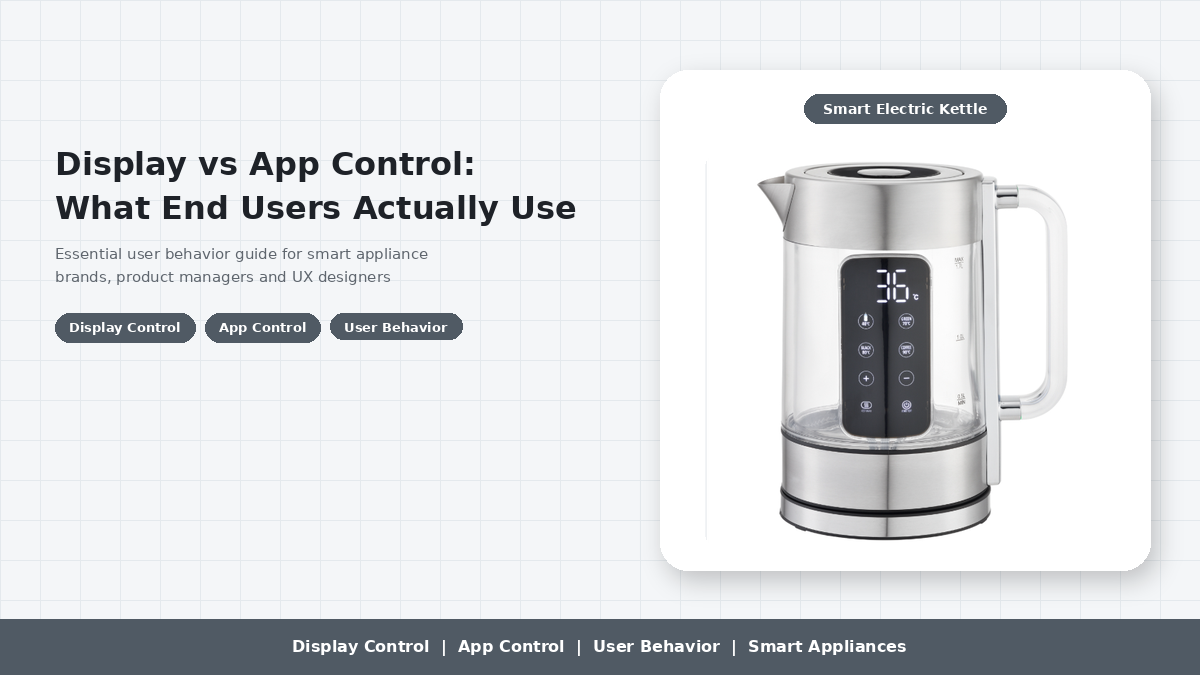
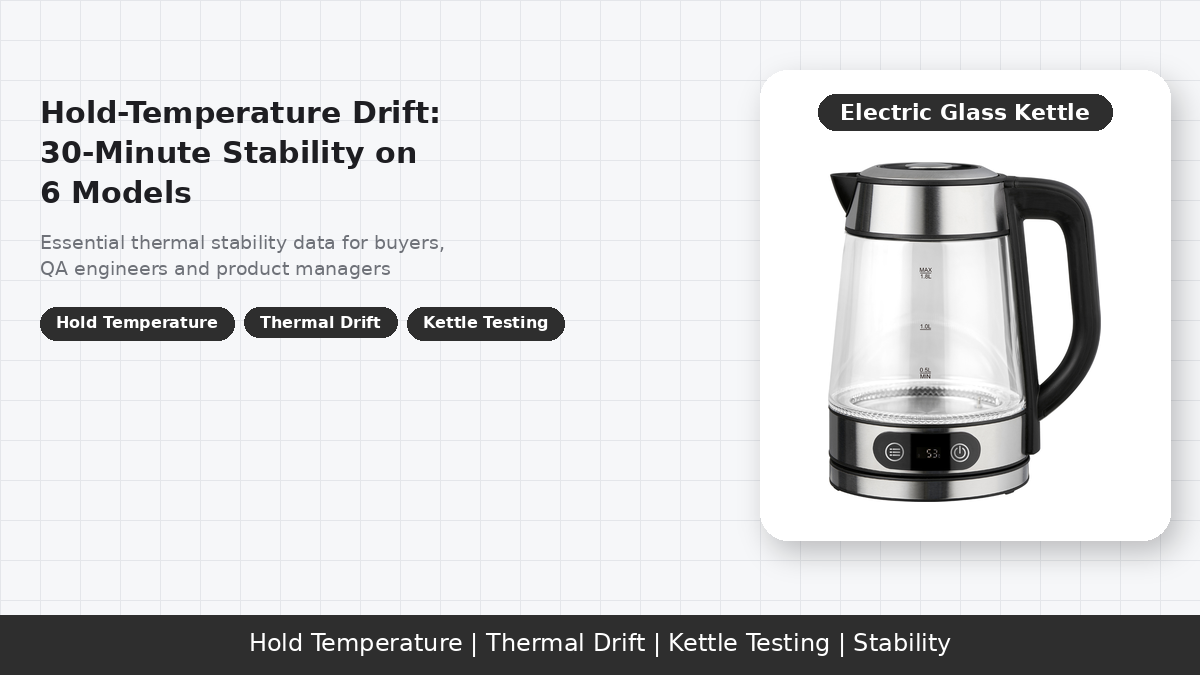
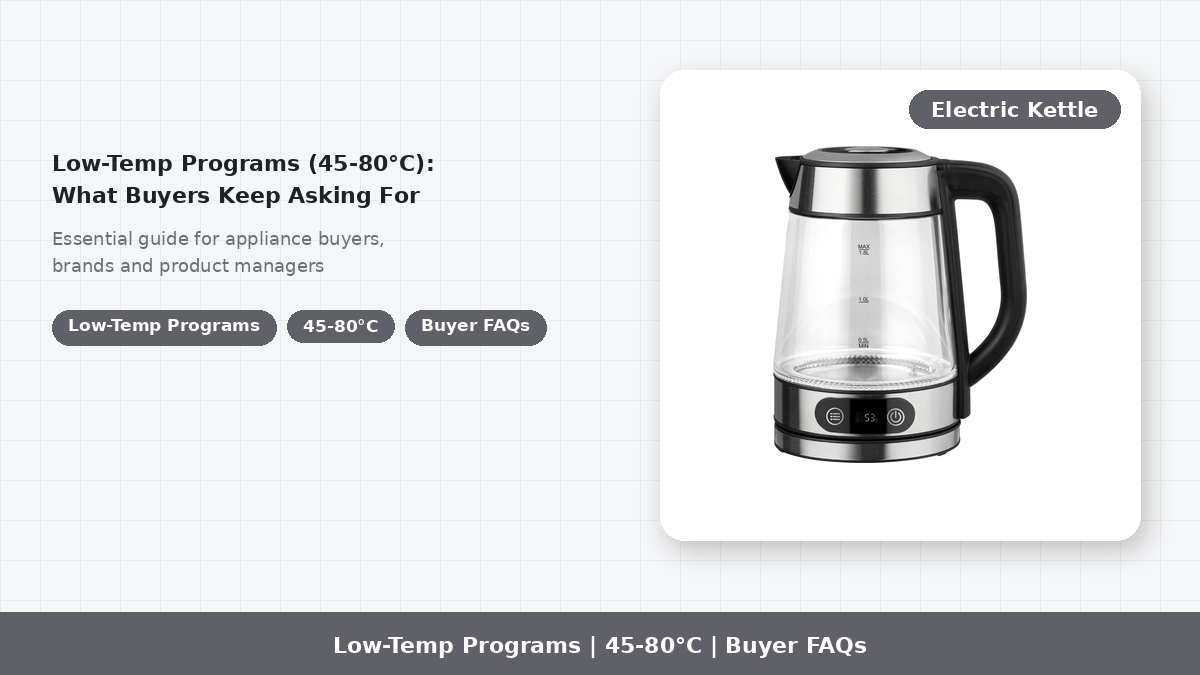
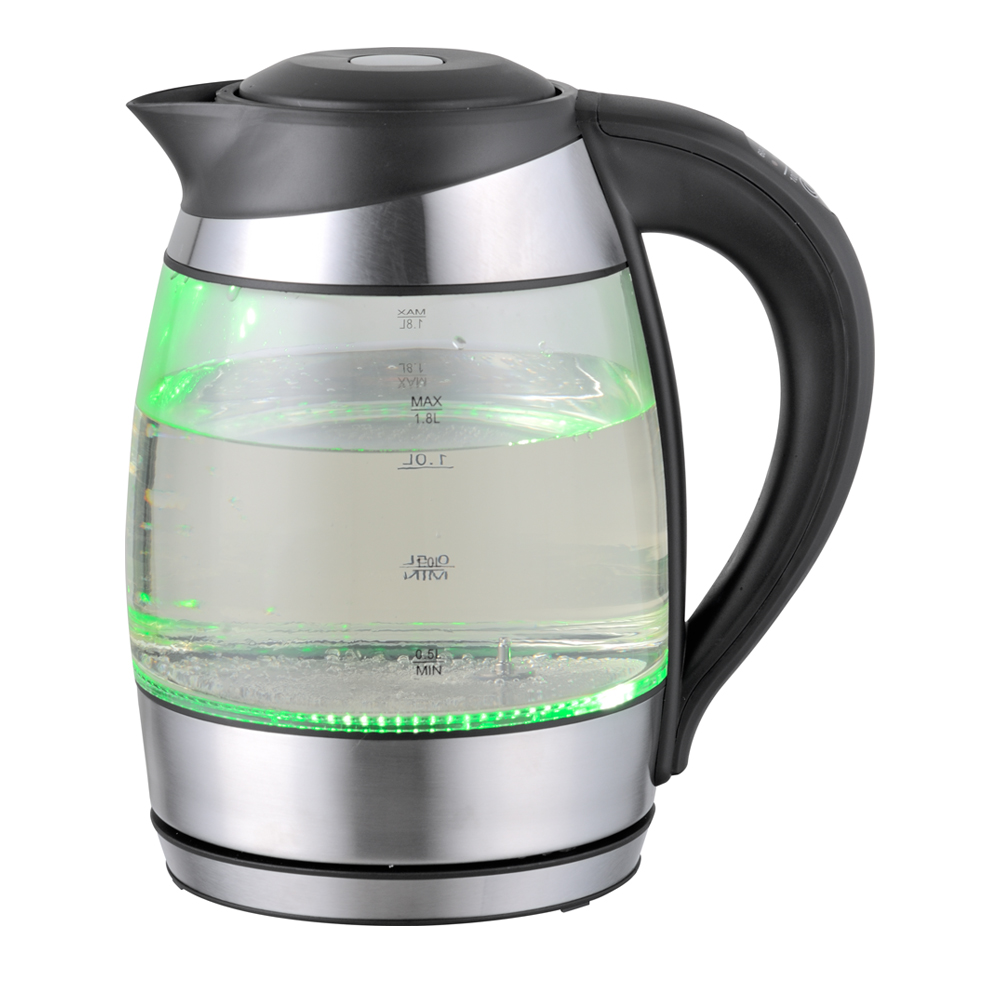
Case study 2: Smart LED Glass Kettle with temperature control.A 1.8L smart LED Glass Kettle with multi-level temperature settings (60°C / 70°C / 80°C / 90°C / boil) and 2-hour keep-warm is a higher-complexity product with electronic control board and LED indicators. The CB test certificate has to cover the electronic control board and the LED subsystem in addition to the basic kettle. The Korean KC submission needs the electronic control board documentation, and the Japanese PSE submission needs the same. TheGoodfriends smart LED glass kettle product is the reference product for this case study; the temperature control range 40-100°C and 2-hour keep-warm are within the test scope of the IEC 60335-2-15 standard.
Case study 3: Gooseneck kettle for pour-over coffee.A 1.0L Gooseneck Spout Kettle is a specialty product popular in the Korean and Japanese coffee markets. The gooseneck spout is a small geometry change relative to a standard kettle, and the CB test certificate covers the same heating and control standard. The Korean and Japanese submissions are similar to the standard kettle case study, with the additional documentation for the gooseneck spout geometry. TheGoodfriends gooseneck kettle series is the reference product family.
Case study 4: Double-wall Stainless Steel Kettle.A 1.7L double-wall Stainless Steel Kettle is a higher-end construction with a more complex body geometry and a higher thermal mass. The CB test certificate covers the double-wall construction and the related thermal insulation test requirements. The Korean and Japanese submissions are similar to the standard case study, with the additional thermal insulation documentation. TheGoodfriends double-wall stainless steel kettle series is the reference product family.
Case study 5: Travel folding kettle. A 0.6L travel folding kettle is a portable product with a flexible silicone body and a low-wattage heating element. The portable product classification places the kettle in a slightly different test scope in IEC 60335-2-15, and the travel folding design has additional mechanical test requirements. The Korean and Japanese submissions are similar to the standard case study, with the additional portable-product documentation. The Goodfriends travel folding kettle program is the reference product family.
The in-country representative: the most common oversight
The most common oversight in a first KC or PSE submission is the in-country representation. A Chinese factory that has a strong CB test certificate, a complete technical file, and a well-run production line is still not ready to ship a kettle to Korea or Japan until the in-country representative is in place.
In Korea, the in-country representative is the Korean importer of record, who is named in the KC certificate and in the KATS database. The Korean representative takes accountability for the kettle's compliance on the Korean market, files customs declarations, and is the point of contact for any Korean regulatory inquiry. A Chinese factory that ships a kettle to Korea without a Korean representative is in violation of the Korean Electrical Appliances Safety Control Act, and the shipment is subject to refusal at Korean customs.
In Japan, the in-country import record holder is the Japanese importer who has filed the import record with METI and who is named in the PSE conformity assessment record. The Japanese import record holder is the point of accountability for the kettle's compliance on the Japanese market and is the point of contact for any Japanese regulatory inquiry. A Chinese factory that ships a kettle to Japan without a Japanese import record holder is in violation of the Japanese Electrical Appliance and Material Safety Law, and the shipment is subject to refusal at Japanese customs.
A Chinese factory that wants to ship to both markets typically works with a Korean compliance consultancy or a Korean distributor for the Korean side, and a Japanese compliance consultancy or a Japanese distributor for the Japanese side. The Korean and Japanese compliance consultancies can be different entities, and the factory's export documentation team manages the relationship with both in parallel.
When KC or PSE is the wrong program
KC and PSE are the wrong program for a kettle that is not intended for the Korean or Japanese market. Five anti-trigger conditions are worth naming.
The kettle is being shipped to neither market. A Chinese factory that ships a kettle to Europe, the Middle East, or Latin America does not need KC or PSE for those shipments. CE, GS, RoHS, LFGB, and FDA are the European-relevant marks; G-Mark, SASO, and INMETRO are the Middle East and Latin America-relevant marks. KC and PSE add cost without benefit if the kettle is not being shipped into Korea or Japan.
The kettle has no Korean or Japanese importer. KC and PSE both require an in-country representative, and a Chinese factory without a Korean or Japanese importer is the factory that should not start the certification work yet. The first step is to find the in-country importer, and the certification work begins after the importer is in place.
The kettle's voltage and plug configuration are not matched to the destination market. A 220-240V kettle that ships into the Korean market is a direct match. A 220-240V kettle that ships into the Japanese market is not, and the kettle has to be re-engineered for 100V or a separate Japan-spec variant has to be produced. A factory that does not want to support a Japan-spec variant should not start the PSE submission.
The factory has no current CB test certificate against IEC 60335-2-15. A factory that has not yet invested in the CB test certificate has to do that investment before the KC and PSE submissions, and the cost and lead time of the CB test certificate has to be factored into the certification budget. A factory that cannot afford the CB test certificate cannot afford KC or PSE.
The factory's quality system cannot pass the initial factory audit. Both KC and PSE include an initial factory audit, and the audit covers the production process, the quality control records, the calibration of test equipment, and the traceability of components. A factory that cannot pass the audit cannot get the certificate, and the cost of the audit is wasted. The audit is performed at the Chinese factory, and the factory has to be audit-ready before the submission.
Sourcing a KC / PSE-ready electric kettle supplier
For a Korean or Japanese buyer evaluating a Chinese electric kettle supplier, the question of which supplier to source from is increasingly a question of which supplier has the KC and PSE documentation system in place. A supplier that has a current CB test certificate, an in-country Korean representative, an in-country Japanese import record holder, an audit-ready production line, and the per-shipment documentation packages for both markets can be onboarded into the buyer's import program. A supplier that lacks any one of these five pieces cannot be onboarded, and the buyer's only option is to find a different supplier.
The Goodfriends electric kettle programoperates the five-step documentation system described above for the digital Glass Kettle and smart LED Glass Kettle product families. The export sales team is the direct intake for the Korean and Japanese customer's KC and PSE documentation question, and the team is structured to coordinate the in-country representation and the per-shipment documentation for both markets in parallel. TheGoodfriends about-us page documents the 25-year kettle manufacturing history, the 95,000㎡ production base, the ISO9001 / ISO14001 / ISO45001 / BSCI certifications, and the existing CE / GS / RoHS / LFGB / FDA / ETL / REACH / ERP certification base that supports the KC and PSE submissions. The Goodfriends contact channel is the direct intake for Korean and Japanese buyers to begin the dual-market certification dialogue.
Frequently Asked Questions
Q1: Does a Chinese electric kettle need both KC and PSE to be sold in Korea and Japan?
A: Yes. KC is the Korean mark and is recognised only inside Korea; PSE is the Japanese mark and is recognised only inside Japan. A kettle that is KC-certified cannot be sold in Japan under the Korean mark, and a kettle that is PSE-certified cannot be sold in Korea under the Japanese mark. A Chinese factory shipping to both markets needs both certificates, with the respective in-country representatives.
Q2: What is the technical test standard for an electric kettle under KC and PSE?
A: The international standard is IEC 60335-2-15 (the safety of household liquid heating appliances). The Korean national adoption is KC 60335-2-15, and the Japanese national adoption is J 60335-2-15 (or the equivalent Electrical Appliance and Material Safety Act technical standard). A current CB test certificate against IEC 60335-2-15 with the national deviations for the destination markets is a substantial part of both the KC and PSE technical files.
Q3: Does a factory need a Korean representative to file KC?
A: Yes. The Korean in-country representative is a non-negotiable element of the KC submission. The representative is the Korean importer of record, is named in the KC certificate and in the KATS database, and is the point of accountability for the kettle on the Korean market. A Chinese factory that ships a kettle to Korea without a Korean representative is in violation of the Korean Electrical Appliances Safety Control Act.
Q4: Does a factory need a Japanese import record holder to file diamond PSE?
A: Yes. The Japanese import record holder is a non-negotiable element of the diamond PSE submission. The record holder is the Japanese importer of record, is named in the PSE conformity assessment record, and is the point of accountability for the kettle on the Japanese market. A Chinese factory that ships a kettle to Japan without a Japanese import record holder is in violation of the Japanese Electrical Appliance and Material Safety Law.
Q5: Can the same CB test certificate support both the KC and PSE submissions?
A: Yes, a current CB test certificate against IEC 60335-2-15 with the relevant national deviations supports both the KC and PSE submissions, and the cost saving of a single test for two certifications is real. The certificate is shared, but the national deviation sections (220V 60Hz for Korea, 100V 50/60Hz for Japan) have to be in the test scope, and the factory has to commission the national-deviation testing if it is not already in the existing CB certificate scope.
Q6: What happens if the kettle is rated 220-240V but the Japanese market requires 100V?
A: The kettle has to be re-engineered for 100V or a separate Japan-spec variant has to be produced. A 220-240V kettle cannot be sold in Japan without a step-down transformer, and a step-down transformer changes the kettle's compliance profile and is not a typical solution. A Chinese factory that wants to sell the same kettle in both markets typically supports a Korea-spec 220V variant and a Japan-spec 100V variant in the production line, and the variant differences are limited to the motor and the heating element.
Q7: What is the cost difference between KC and PSE?
A: The cost components for each certification are similar: the test fee, the certificate fee, the in-country representation fee, the factory audit fee, and the per-shipment documentation fee. The total cost depends on the specific test scope, the specific factory audit depth, and the specific representative arrangement. A Chinese factory should expect the KC and PSE submissions to be similar in total cost, and the cost saving of sharing the CB test certificate is meaningful but not total.
Q8: How long does a KC or PSE submission take?
A: The submission lead time depends on the readiness of the technical file, the in-country representative's documentation, the factory's production line readiness, and the testing body's or RCB's workload. A Chinese factory with a current CB test certificate, an in-country representative in place, and an audit-ready production line can expect a faster submission than a factory that has to commission the CB test certificate, find the in-country representative, and prepare for the factory audit. The Korean and Japanese regulatory bodies publish their current processing time on their websites.
Q9: Where does a Chinese electric kettle supplier start the dual-market certification conversation?
A: The first conversation is with the export sales team of the Chinese supplier. The supplier should be able to confirm whether the kettle has a current CB test certificate against IEC 60335-2-15 with the Korean and Japanese national deviations, whether the supplier has an in-country Korean representative and an in-country Japanese import record holder, whether the production line is audit-ready, and whether the per-shipment documentation packages are in place. The Goodfriends contact channel is one example of a KC and PSE-ready supplier's direct intake for the dual-market certification dialogue.