
 0086-574-62518288


TL;DR
- The spread between the low and high end of an electric kettle tooling quote is driven by six variables: cavity count, steel grade, runner system, surface finish class, rated tool life, and the tooling IP clause.
- The single largest variable is cavity count, because the cost of a 2-cavity tool is meaningfully less than two single-cavity tools but the per-part cycle time is roughly half, which compounds across the program life.
- A hot-runner system eliminates the cold runner waste and pays back within the first production year on a high-volume program, but is the wrong choice for a market-test run under 20,000 units per year.
- Tooling IP and ownership is the single most common dispute in cross-border OEM/ODM, and the only way to avoid the dispute is to write the ownership, storage, and right-to-take-physical-possession clause into the contract before the first cut of steel.
- Two quotes at the same headline number with different line-item structures are not equivalent, and the difference is what determines which quote is the better buy.
The most common question I get from European and North American importers approaching a new private mold double-wall kettle program is the same every time: why does the same kettle, with the same drawing, the same cavity count, and the same surface finish, come back at a low quote and a high quote that are meaningfully different, often by a factor of three or four? The spread is not a scam, and it is not a reflection of one factory being honest and the other not. It is the natural output of six cost variables, and the only way to compare two quotes is to break them down to the line items and check which variables each quote is actually spending on.
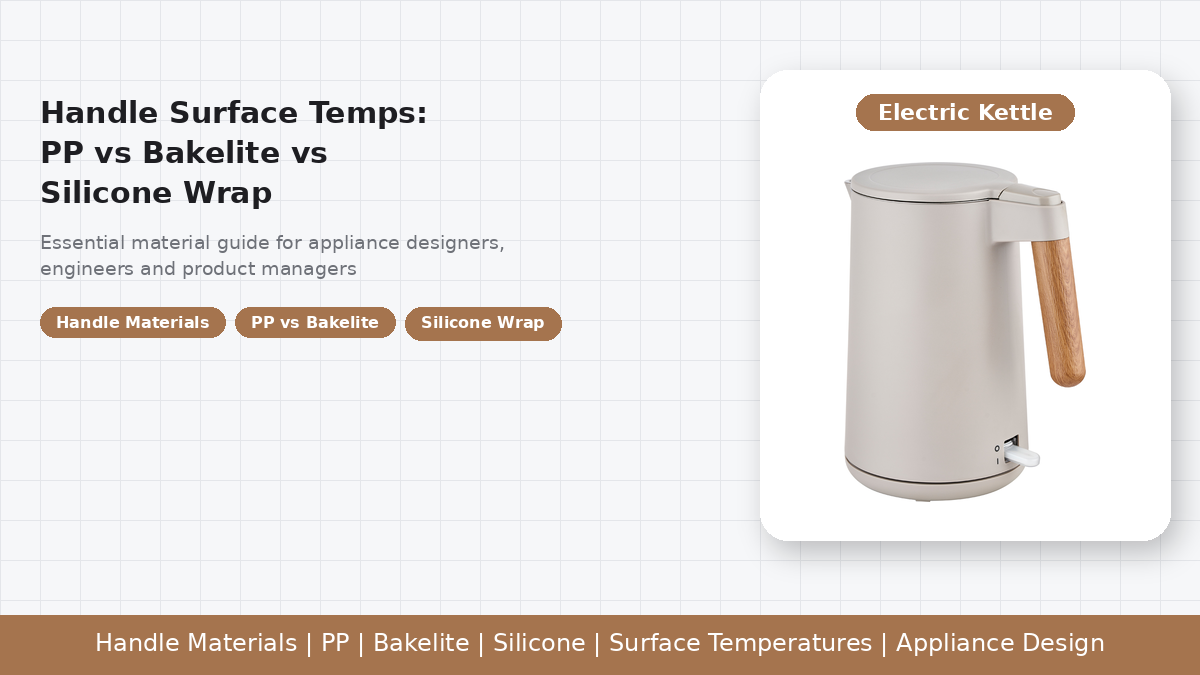
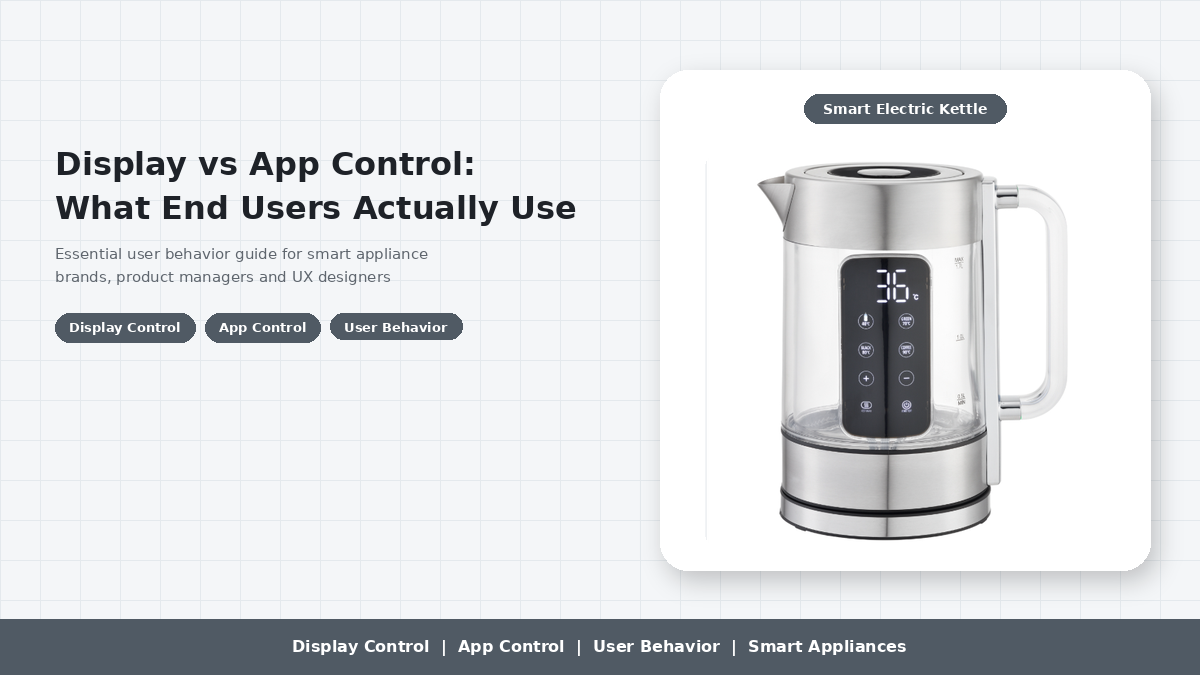
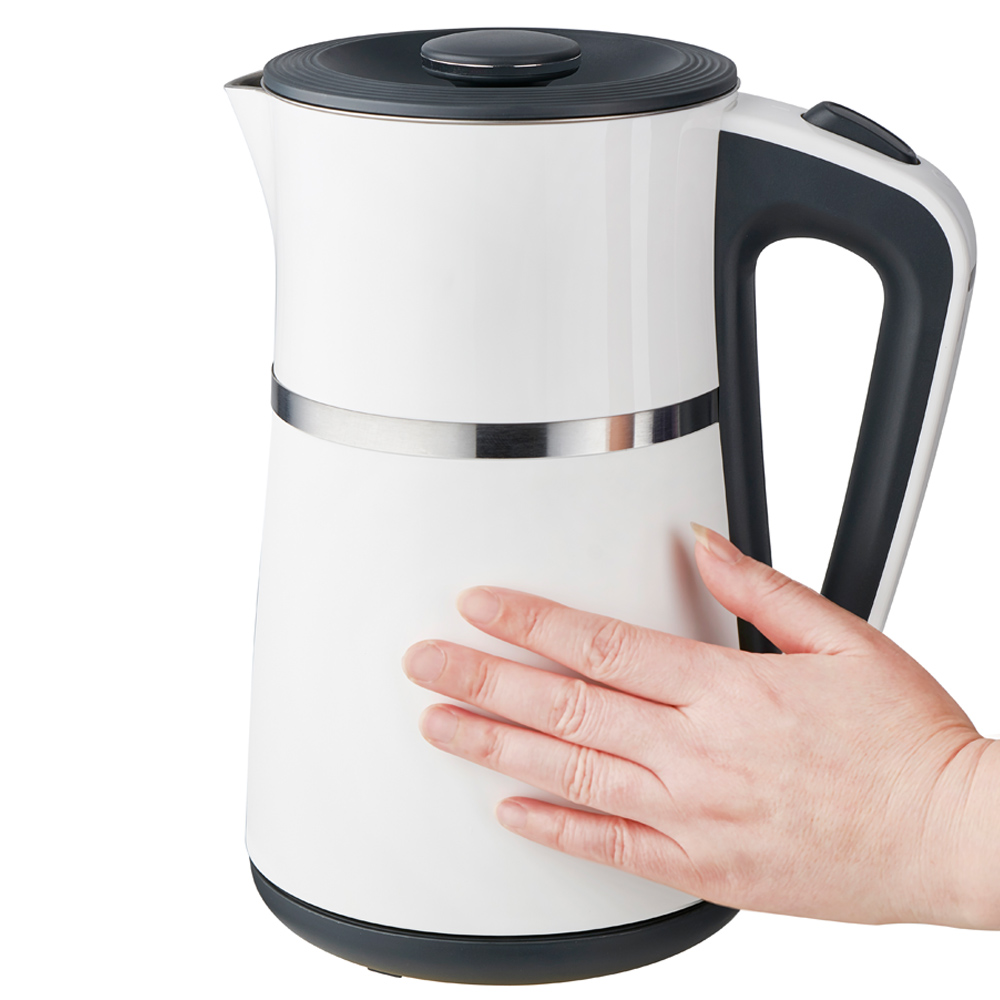
Across the OEM/ODM RFQs I have reviewed for Electric Kettles specifically, a typical new tooling project is a multi-part mold package: the inner wall, the outer housing, the lid, the handle, the base, the spout, the switch actuator, and any sub-assembly fixtures for the heating element and the control board. The headline number on the quotation is the sum of those line items plus the assembly and tryout cost, and the spread on the headline number is a function of how each line item was specified. TheGoodfriends 1.7L double-wall variable temperature digital kettle in the HHB8715 / HHB8715D series is a good reference for the line-item structure, because the standard spec includes a 304 stainless steel inner wall, a PP outer housing, a 1.7L capacity, and a 5-setting temperature panel, and the part count matches what a typical OEM program needs.
The Six Variables That Drive the Spread
Every electric kettle tooling quote I have seen in the last five years can be attributed to the same six variables, and the headline number on the quote is the sum of what each line is asking for. The variables are listed in the order of the size of their contribution to the spread.
Variable 1: Cavity count
The single largest variable. A kettle inner wall can be molded in a 1-cavity, 2-cavity, 4-cavity, or in rare cases an 8-cavity tool. The per-tool cost rises non-linearly with cavity count, but the per-part cycle time drops by approximately the same factor. The break-even calculation is: if the per-tool cost difference between a 1-cavity and a 2-cavity tool is X, and the per-part cycle time difference is Y seconds, then the per-part savings is Y times the planned annual run rate times the hourly machine rate. When the cumulative per-part savings equal X, the 2-cavity tool has paid for itself. Below that volume, the 1-cavity tool is the lower-cost choice over the program life.
The right cavity count for a market-test run under 20,000 units per year is almost always 1-cavity. For an established SKU at 50,000-100,000 units per year, 2-cavity is the standard. For a high-volume program above 200,000 units per year, 4-cavity is the right call. Above 4 cavities, the complexity premium (more slides, more hot-runner drops, more ejector detail) usually outweighs the cycle-time benefit unless the program is genuinely mega-volume.
Variable 2: Steel grade
The second largest variable. The most common steel grades for kettle tooling are P20 (pre-hardened, 30-36 HRC) and 2738 (through-hardened variant, 35-38 HRC), with H13 and S7 used for high-wear inserts and slides. A pre-hardened P20 cavity delivers rated tool life toward the lower end of the kettle-tooling range and costs less at the tool maker. A through-hardened 2738 cavity delivers rated tool life toward the high end and costs more. The two grades are not interchangeable on price, and the quote comparison must reflect the grade difference. A quote that specifies P20 pre-hard and a quote that specifies 2738 through-hard should not be compared on the headline number alone; the lifecycle cost is the right comparator.
Variable 3: Runner system (cold vs hot)
A cold runner system is the default and the lower-cost choice for a market-test run or a low-volume program. A hot-runner system keeps the plastic melt at processing temperature all the way to the cavity gate, eliminating the cold runner that would otherwise be reground and reprocessed. For a high-volume production run, the per-part material savings typically pay back the hot-runner system within the first production year. The break-even depends on the per-part runner waste percentage (typically 15-30% for a cold runner, depending on part size and runner layout) and the planned annual run rate.
The right way to decide is to ask the tool maker for the per-part runner waste percentage and the per-part material savings under hot-runner, then compare the cumulative savings against the system cost at the planned annual run rate. A hot-runner system is also more forgiving on part consistency, which matters for visible cosmetic parts like the kettle outer housing.
Variable 4: Surface finish class
The fourth variable, and the one that often surprises the buyer. A polished surface finish that meets the kettle aesthetic standard is a non-trivial additional cost vs a standard machine finish. The Society of the Plastics Industry (SPI) surface finish standard classifies cavity finishes from SPI-A1 (mirror polish, typically used for clear optical parts) down to SPI-C3 (satin, typically used for hidden structural parts). A kettle outer housing that needs to look good in a retail photo usually requires SPI-B2 or SPI-B3, which is meaningfully more expensive than SPI-C1 or SPI-C2. The inner wall, which is in contact with the water, usually requires a fine polish for hygiene reasons, but the polish standard is set by the food-grade certification rather than the aesthetic standard.
Variable 5: Rated tool life and refurbishment cost
A well-maintained injection mold for a PP kettle housing typically delivers several hundred thousand shots before the cavity surface needs refurbishment, with a hardened steel insert delivering toward the high end of that range and a softer pre-hardened steel insert delivering toward the low end. The rated tool life and the refurbishment cost are the variables that determine the lifecycle cost, and a quote that looks cheap at the front end can be the more expensive option over a multi-year program. The right question to ask the tool maker is: rated tool life in shots, expected refurbishment cost per 100,000 shots, and the typical number of refurbishment cycles before the tool needs to be retired.
Variable 6: Tooling IP and ownership
The sixth variable is the only one that does not affect the dollar amount on the quotation, but it is the variable that determines whether the project survives a dispute. The default position across the OEM/ODM industry is that the buyer who paid for the tool owns the tool, and the factory is the custodian. The contract should specify the tool-storage location, the periodic maintenance schedule, the refurbishment responsibility, and the buyer's right to take physical possession of the tool on 30-60 days notice. Reputable factories will sign a tooling IP agreement that codifies these terms before the first cut of steel. The single most common dispute in cross-border OEM/ODM is the tooling-ownership clause, and the only way to avoid the dispute is to write the clause down before the project starts.
How to Read a Quote You Cannot Verify
For a buyer who is new to the OEM/ODM process, the first two or three quotes are essentially unreadable, because the line items do not map to anything the buyer has ever specified. The fastest way to make a quote readable is to ask the tool maker to provide a per-part, per-cavity, per-steel-grade breakdown on the same page. A factory that is structured for OEM/ODM business will produce this breakdown on the first revision. A factory that is structured for spot-trade business will push back, which is itself a signal that the OEM/ODM program will be harder to manage with that factory.
Per the ISO 9001:2015 quality management standard, the documentation that supports a tooling project should include the design review record, the steel certification, the cavity surface finish record, the tryout sample record, and the dimensional inspection report. A factory that produces all five on request is auditable. A factory that produces none of them is a spot-trade supplier, and an OEM program with a spot-trade supplier is a risk.
Why Two Quotes at the Same Headline Number Are Not Equivalent
The single most expensive mistake an OEM buyer makes is to compare two quotes on the headline number. Two quotes at the same number can have meaningfully different lifecycle costs if the cavity count, the steel grade, the runner system, the surface finish, the rated tool life, and the refurbishment cost are not the same. The way to compare two quotes apples-to-apples is to normalize the line items, then look at the lifecycle cost over the planned program run rate and program duration.
For a 100,000-unit annual program running over 3 years, a 2-cavity 2738 through-hard tool with a hot-runner and a SPI-B2 finish will outproduce a 1-cavity P20 pre-hard tool with a cold runner and a SPI-C1 finish by a wide margin on per-part cost, even if the headline number on the first quote was lower. The right way to ask the question is: per-part cost at the planned annual run rate, including refurbishment, over the program life.
What "Soft Tooling" Really Means
Soft tooling is a term that gets used in three different ways, and the ambiguity is a common source of buyer confusion. The first meaning is a 3D-printed or aluminum prototype tool used for design validation only, with a tool life in the hundreds of parts. The second meaning is a production-grade steel tool with a shorter lead time and a softer steel grade, intended for a market-test run. The third meaning is a used or refurbished tool, with the refurbishment record as the buyer's risk.
The right question to ask a tool maker is: what is the rated tool life in shots, and what is the steel grade. If the answer is single-digit thousands of shots, the tool is for prototype or sample only. If the answer is in the hundreds of thousands, the tool is for production. A soft-tooling conversation that does not surface the tool-life number is a sales conversation, not a procurement conversation, and the buyer should ask for the number on paper before any deposit is paid.
Where the Hidden Cost Actually Lives
The hidden cost in a kettle tooling program is not on the quotation. It is in the things that the quotation does not name: the tryout time on the factory floor, the engineering hours to refine the gate location and the cooling line layout, the sample shipping cost, the rework cost on the first 50-100 units of production, and the rework cost on the first refurbishment cycle. Across the projects I have reviewed, the hidden cost typically runs in the modest range of a low single-digit percentage of the tooling project value, and the right way to control it is to negotiate the tryout acceptance criteria, the sample approval workflow, and the refurbishment responsibility into the contract up front.
The factory that has the most predictable hidden cost is the factory that has done the most kettle tooling projects. A factory with a deep kettle-tooling backlog has a refined tryout procedure, a known sample approval workflow, and a documented refurbishment playbook. A factory that is quoting a kettle tool for the first time will be learning the project at the buyer's expense, and the buyer should expect the hidden cost to be at the high end of the typical range for a first-time kettle project.
How a Visit to the Factory Changes the Quote Comparison
For a buyer who is comparing two factory quotes, a VR factory tour is the closest substitute for an in-person visit, and the comparison is much sharper when the buyer has walked the factory floor in person. The things to look for are the press tonnage available (a kettle inner wall typically needs a 350-800 ton press), the CNC capacity, the EDM capacity, the tryout press capacity, the surface-finish and polishing capability, and the steel storage and certification. A factory that has all six is a credible OEM/ODM tool maker; a factory that has only one or two is a quote-collector, not a tool maker.
The in-person visit also gives the buyer a chance to see the previous tool projects the factory has completed. The sample wall is the single best evidence of capability, and a sample wall that includes kettle tooling projects at the same tonnage and complexity as the buyer's project is the strongest indication that the quote is realistic. A factory that is asking for a tooling deposit without showing a sample wall of comparable work is a factory the buyer should walk away from.
The Decision Framework: When to Pay More, When to Pay Less
The decision framework is straightforward once the six variables are normalized. For a market-test run under 20,000 units per year, pay less across the board: 1-cavity, P20 pre-hard, cold runner, SPI-C1 or SPI-C2 finish, standard refurbishment cycle, basic IP agreement. For an established SKU at 50,000-100,000 units per year, pay for the middle: 2-cavity, 2738 through-hard (or P20 with a hardened cavity insert at the wear points), cold runner (unless the per-part material savings justify a hot runner), SPI-B3 finish, scheduled refurbishment, full IP agreement. For a high-volume program above 200,000 units per year, pay more across the board: 4-cavity, 2738 through-hard with hardened insert, hot runner, SPI-B2 finish, scheduled refurbishment every 200,000 shots, full IP agreement with periodic tool audits.
The framework is not a procurement shortcut. It is a sanity check on the line-item structure of the quote. A quote that is at the low end of the framework should have a low-end line-item structure. A quote that is at the high end should have a high-end line-item structure. A quote that is at the high end with a low-end line-item structure is a margin quote, not a capability quote, and the buyer should ask why.
FAQ: Electric Kettle Mold Cost
- What is the average cost of a private electric kettle mold?
- Across the OEM RFQs I have reviewed, a private-mold electric kettle tooling project typically falls into a wide range, with the low end covering a single-cavity PP housing tool and the high end covering a multi-cavity stainless-steel inner wall tool with a hot-runner system and a polished surface finish. The single most important driver of where in that range a quote lands is the cavity count, followed by the steel grade and the surface finish specification. The exact number is per-quote and is not a published spec, which is why the only defensible answer is the per-supplier quotation on a per-project basis.
- Is a higher mold quote always better quality?
- No, not automatically. A higher quote can reflect higher steel grade, more cavities, a hot-runner system, or a tighter surface finish class. It can also reflect a higher factory overhead, a longer lead time, or a more cautious risk premium. The only way to know whether the higher number is buying higher capability is to compare the line items: steel grade, cavity count, runner system, surface finish class, expected tool life, and lead time. Two quotes at the same headline number can be very different in capability.
- How long does an electric kettle mold last?
- A well-maintained injection mold for a PP kettle housing typically delivers 300,000 to 1,000,000 shots before the cavity surface needs refurbishment, with a hardened steel insert delivering toward the high end of that range and a softer pre-hardened steel insert delivering toward the low end. A stainless steel deep-draw die has a different wear profile and is usually rated by sheet count rather than shot count, with the high end measured in hundreds of thousands of parts. The right way to compare tool life is to ask the tool maker for the rated tool life in shots or parts and the refurbishment cost per 100,000 shots.
- What is a hot-runner system and is it worth the cost?
- A hot-runner system keeps the plastic melt at processing temperature all the way to the cavity gate, eliminating the cold runner that would otherwise be reground and reprocessed. For a high-volume production run, the per-part material savings typically pay back the hot-runner system within the first production year. For a low-volume run, a cold runner is the lower-cost choice. The right way to decide is to ask the tool maker for the per-part runner waste percentage and the per-part material savings under hot-runner, then compare the cumulative savings against the system cost at the planned annual run rate.
- What cavity count should I order for a new kettle SKU?
- The right cavity count depends on the planned annual run rate and the unit price target. A single-cavity tool is the right call for a market-test run under 20,000 units per year, because the per-part cycle time is the limiting factor and the savings from a 2-cavity tool do not pay back the additional tool cost at that volume. A 2-cavity tool is the standard choice for an established SKU at 50,000-100,000 units per year. A 4-cavity tool is the right call for a high-volume program above 200,000 units per year, where the per-part cycle time reduction is large enough to offset the higher tool cost. Above 4 cavities, the complexity premium usually outweighs the cycle-time benefit unless the program is genuinely mega-volume.
- Who owns the mold after the buyer pays for it?
- The default position across the OEM/ODM industry is that the buyer who paid for the tool owns the tool, and the factory is the custodian. The contract should specify the tool-storage location, the periodic maintenance schedule, the refurbishment responsibility, and the buyer's right to take physical possession of the tool on 30-60 days notice. Reputable factories will sign a tooling IP agreement that codifies these terms before the first cut of steel. The single most common dispute in cross-border OEM/ODM is the tooling-ownership clause, and the only way to avoid the dispute is to write the clause down before the project starts.
Final Word on Kettle Tooling Cost
A wide tooling-quote spread is not a sign of a dishonest market. It is a sign that the buyer has not yet specified the line items, and the factory is filling in the gaps with assumptions. The way to close the spread is to specify the cavity count, the steel grade, the runner system, the surface finish class, the rated tool life, and the refurbishment responsibility on both quotes, and to ask the tool maker to line-item the answer on the same page. Once the line items are normalized, the spread collapses to a number that reflects a real difference in capability, and the buyer can make a defensible decision.
If you are evaluating a private mold double-wall kettle program, the HHB8715 / HHB8715D 1.7L double-wall variable temperature digital kettle is a good reference for the part count and the line-item structure a typical OEM program needs. A VR factory tour is the closest substitute for an in-person visit, and the sample wall at the end of the tour is the single best evidence of the factory's tooling capability.