
 0086-574-62518288


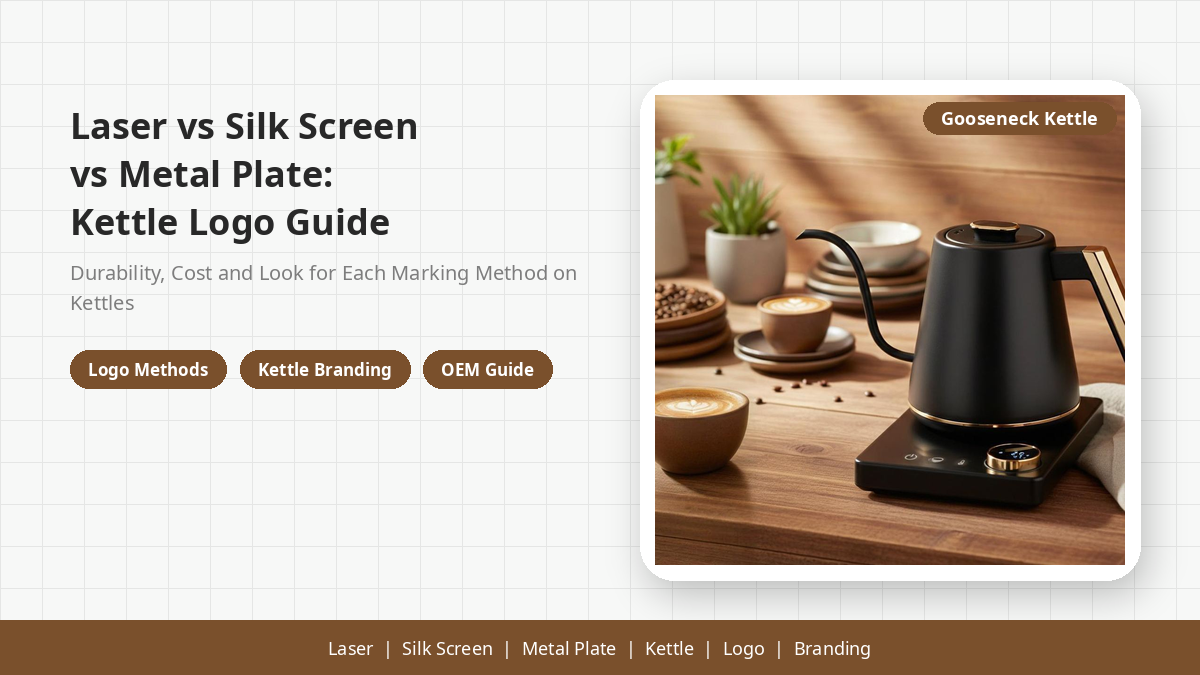
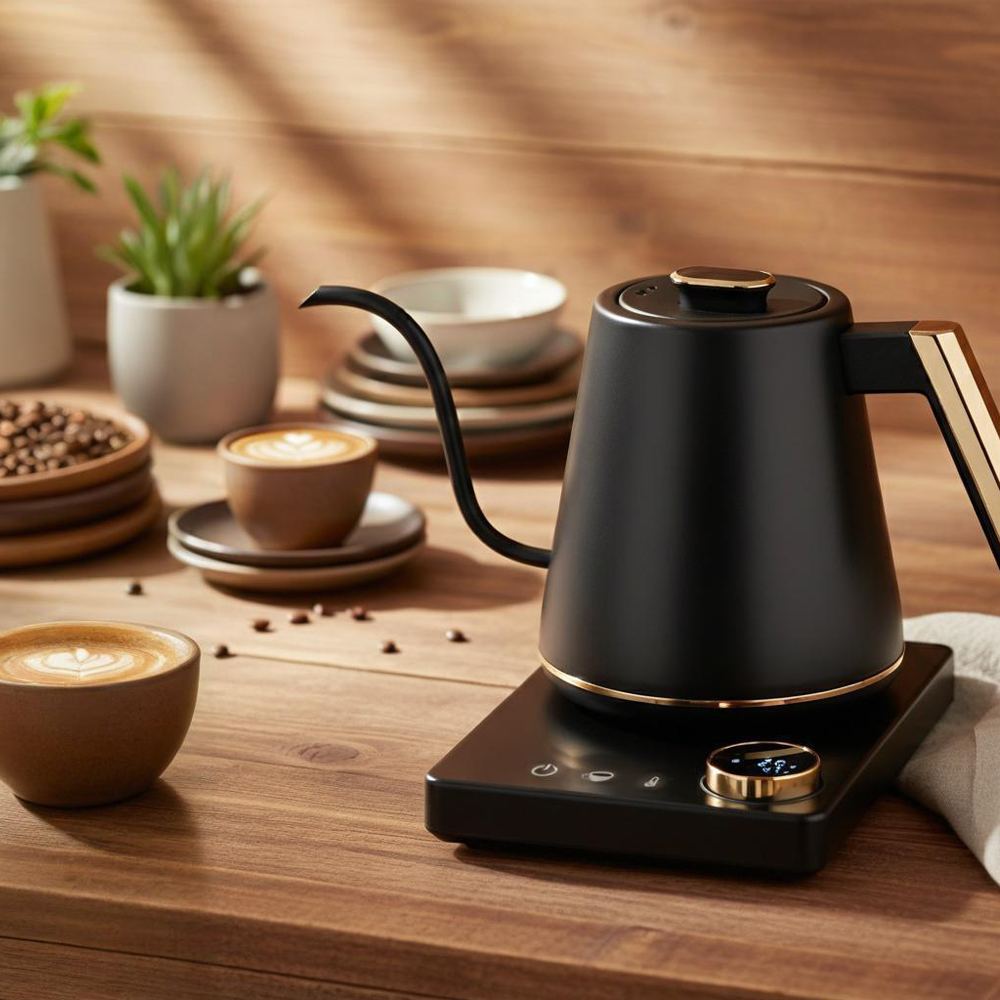
For the procurement manager evaluating the 2026 kettle logo process decision, the Goodfriends gooseneck kettle series, the 304 stainless steel digital kettle, and the OEM gooseneck kettle options guide are the three reference configurations the buyer reads against the logo substrate compatibility matrix, and the Goodfriends contact page supports the kettle logo process feasibility request for distributor RFQ review.
Why a Kettle Logo Process Decision Matters More Than the Logo Itself
The kettle logo process decision is the single most consequential specification in the kettle OEM RFQ, and the logo process drives the per-unit logo cost, the per-cycle dishwasher durability, the per-unit visual fidelity, and the per-program lead time that the kitchen appliance importer, coffee equipment distributor, hospitality procurement manager, and corporate gifting buyer reads against the 2026 kettle RFQ budget. The reason the logo process is the headline specification is that the logo process decision cascades into the substrate compatibility check, the dishwasher endurance test, the color reproduction step, the MOQ banding check, and the lead time profile — and any of these secondary variables can disqualify a logo process the buyer initially selected.
For the procurement manager evaluating the 2026 kettle logo process decision, three variables drive the process selection. First, the substrate the kettle body uses (304 stainless steel, double-wall stainless, borosilicate glass, food-grade plastic) determines which logo processes are physically compatible. Second, the channel volume band the buyer operates in (premium coffee brand program under 500 units, cafe chain bulk program 500-5000 units, hotel and gifting program 5000+ units) determines which logo process falls in the per-unit cost band the buyer can absorb. Third, the dishwasher cycle target the end-customer environment imposes (home kitchen under 200 cycles, cafe commercial 500-1000 cycles, hotel commercial 1000+ cycles) determines which logo process survives the warranty period the buyer commits to.
The FDA food contact substance compliance guidance provides the US-side food-contact safety reference the kettle logo process must satisfy, the EPA Safer Choice certification program provides the US-side logo ink and adhesive safety reference the silk screen and metal plate processes must meet, and the UL commercial kitchen equipment safety standard provides the US-side commercial kitchen durability reference the kettle logo process durability test maps to.
Laser Engraving for Kettle Logos — How the Process Recovers On Composite and Stainless Surfaces
Laser engraving is the kettle logo process the procurement manager selects when the buyer prioritizes dishwasher durability and multi-year visual permanence over per-unit logo cost, and the laser engraving process physically removes the kettle body surface to create a permanent marking the buyer reads as the brand logo. The Specialty Coffee Association (SCA) commercial equipment durability standard provides the international reference for the cafe coffee equipment durability benchmark the laser engraving logo process maps to, and the NSF International commercial food equipment standard provides the commercial food equipment safety reference the laser engraving food-contact compatibility maps to.
The laser engraving process workflow the procurement manager reads on the OEM data sheet is: the manufacturer loads the OEM gooseneck kettle body into the laser engraving workstation, the workstation reads the digital logo file the buyer submitted, the laser beam traces the logo contour across the kettle body surface, the beam vaporizes the substrate material to a controlled depth, and the vaporization produces the logo pattern the buyer reads as a permanent marking. The vaporization depth the buyer specifies on the OEM data sheet is typically 0.05-0.15mm for 304 stainless steel and 0.03-0.08mm for borosilicate glass, and the depth control is the primary variable the buyer reads when matching the laser engraving process to the kettle substrate.
The laser engraving workflow has five operational advantages the procurement manager reads on the OEM data sheet. First, the laser engraving produces a permanent marking the buyer reads as dishwasher-safe, abrasive-cleaning-safe, and multi-year visually-stable. Second, the laser engraving does not introduce any foreign ink, adhesive, or plate substrate the buyer must disclose under the FDA food contact substance notification framework. Third, the laser engraving runs at low MOQ (single-unit sample runs are economically viable) the buyer reads as suitable for premium coffee brand limited-edition runs. Fourth, the laser engraving reads precise fine-detail logo patterns (text under 2mm height, complex artwork, fine line work) the buyer reads as suitable for detailed brand marks. Fifth, the laser engraving logo color is the substrate natural color revealed under the engraving, and the buyer reads the substrate-natural color as a premium monochrome aesthetic the coffee brand program specifies.
The double-wall stainless steel kettle series provides the substrate the laser engraving process reads as the strongest compatibility match, the glass kettle series provides the borosilicate glass surface the buyer reads as a premium aesthetic match for the laser engraving process, and the 304 stainless steel digital kettle provides the 304 stainless steel substrate the buyer reads as the reference configuration for the laser engraving process. The smart goose neck coffee kettle is the 304 stainless steel body the buyer reads as the reference barista-config substrate the laser engraving process handles.
Silk Screen Printing for Kettle Logos — The High-Coverage Method That Holds On a Branded Brushed Surface
Silk screen printing is the kettle logo process the procurement manager selects when the buyer prioritizes per-unit logo cost and full-color logo reproduction over dishwasher durability, and the silk screen process applies ink through a mesh screen the manufacturer has cut to the logo pattern. The silk screen process runs at the lowest per-unit logo cost in the medium-to-high MOQ band the cafe chain bulk program operates, and the silk screen process reads as the cost-leader logo method the ASTM D2486 scrub resistance standard maps to for the cafe kitchen durability benchmark.
The silk screen printing process workflow the procurement manager reads on the OEM data sheet is: the manufacturer prepares the silk screen mesh (one screen per color layer), the manufacturer aligns the screen against the plastic kettle body or stainless steel kettle body, the ink is pressed through the screen mesh by squeegee, the kettle body moves to the curing oven, and the cured ink reads as the brand logo. The color count the buyer specifies on the OEM data sheet reads directly to the screen count, and the buyer reads the screen count as the per-color cost driver the silk screen process carries.
The silk screen printing workflow has four operational constraints the procurement manager reads on the OEM data sheet. First, the silk screen ink reads as dishwasher-degradable over time, and the buyer reads the dishwasher constraint as a logo durability limitation the hotel commercial program must weigh. Second, the silk screen printing runs at higher MOQ (the screen preparation cost reads as economically viable only above 500-1000 units), and the MOQ constraint reads as a low-volume program challenge. Third, the silk screen printing does not produce fine-detail logo patterns (text under 3mm height, complex artwork) as cleanly as laser engraving, and the buyer reads the fine-detail constraint as a brand-mark simplification. Fourth, the silk screen printing introduces foreign ink the buyer must disclose under the FDA food contact substance compliance framework, and the buyer reads the ink disclosure as an additional compliance step.
The silk screen printing process maps to the consumer kitchen durability benchmark the home kitchen program reads against, and the ENERGY STAR commercial food service equipment standard provides the commercial food service equipment reference the silk screen printing logo durability test maps to. The OEM food-contact kettle guide provides the food-contact safety compliance reference the silk screen ink and adhesive the OEM supplier must satisfy under the FDA food-contact compliance framework.
Metal Plate Logos for Kettles — The Detached Method That Recovers On Heavy-Use Bulk Beverage Programs
Metal plate logos are the kettle logo process the procurement manager selects when the buyer prioritizes logo detachability and the harshest commercial dishwasher endurance over per-unit logo cost and minimum MOQ flexibility, and the metal plate process attaches a separate stainless steel or aluminum plate the manufacturer has pre-printed with the brand logo. The metal plate reads as the premium attachment tier the ASTM B209 aluminum alloy standard maps to for the metal plate substrate, and the ASTM A240 stainless steel plate standard maps to for the stainless steel plate substrate.
The metal plate logo process workflow the procurement manager reads on the OEM data sheet is: the manufacturer laser-cuts the metal plate to the logo profile, the manufacturer laser-engraves or silk-screens the logo onto the plate surface, the manufacturer attaches the plate to the OEM gooseneck kettle body via adhesive bonding or mechanical fastening, and the attached plate reads as the brand logo. The plate attachment method the buyer specifies reads as the primary durability variable, and the buyer reads the attachment method as the dishwasher endurance driver.
The metal plate logo workflow has four operational advantages the procurement manager reads on the OEM data sheet. First, the metal plate logo survives the harshest commercial dishwasher cycles the hotel and gifting program requires (1000+ cycles the dishwasher cycle of a commercial hotel kitchen). Second, the metal plate logo reads as a replaceable component the buyer can swap out the plate without disposing the kettle body, and the buyer reads the replaceability as a service-friendly feature for the corporate gifting program. Third, the metal plate logo reads as a 3D embossed or debossed visual effect the buyer reads as a premium tactile aesthetic the hotel program specifies. Fourth, the metal plate logo can carry engraved logos on the metal substrate the buyer reads as compatible with the laser engraving durability profile, and the cross-process compatibility reads as a procurement simplification.
The metal plate logo workflow has four operational constraints the procurement manager reads on the OEM data sheet. First, the metal plate logo runs at the highest per-unit logo cost the three-process comparison carries, and the buyer reads the per-unit cost as a budget envelope constraint. Second, the metal plate logo requires adequate kettle body flat area the buyer reads as a layout constraint on narrow or curved kettle body sections. Third, the metal plate logo introduces a foreign metal substrate the buyer must disclose under the FDA food contact substance notification framework, and the buyer reads the disclosure as an additional compliance step. Fourth, the metal plate logo runs at the longest lead time the three-process comparison carries, and the buyer reads the lead time as a procurement scheduling constraint the BSCI social compliance audit the OEM supplier must satisfy.
The metal plate logo process maps to the ISO 14001 environmental management standard the OEM supplier must maintain, and the ISO 9001 quality management standard the OEM supplier must satisfy for the metal plate logo production quality. The digital glass kettle series provides the borosilicate glass substrate the buyer reads as compatible with the metal plate logo process when the plate attachment area is the rigid kettle body base the buyer specifies for the metal plate logo process.
Abrasion and Dishwasher Endurance — How Each Kettle Logo Process Recovers On Repeated Cafe Service
The abrasion and dishwasher endurance comparison the procurement manager runs against repeated cafe service is the primary durability benchmark the buyer reads when selecting the kettle logo process, and the three processes recover at three different rates against the ASTM D4060 Taber abrasion standard the cafe commercial kitchen durability benchmark. The buyer reads the Taber abrasion cycle count as the headline durability metric the logo process must satisfy.
Laser engraving on 304 stainless steel recovers at the highest Taber abrasion cycle count the three-process comparison carries, and the buyer reads the laser engraving recovery as suitable for the harshest commercial kitchen environment the hotel program requires. The recovery curve pattern for laser engraving on 304 stainless steel is: the engraving remains visually stable through the 5000+ Taber cycle range, and the buyer reads the 5000+ cycle stability as a permanent marking durability profile.
Sandwich screen printing on 304 stainless steel recovers at the moderate Taber abrasion cycle count the three-process comparison carries, and the buyer reads the silk screen recovery as suitable for the moderate commercial kitchen environment the cafe program requires. The recovery curve pattern for silk screen printing on 304 stainless steel is: the silk screen ink remains visually stable through the 500-1000 Taber cycle range, and the buyer reads the 500-1000 cycle stability as a durable logo durability profile. The carrier sand-through-the-screen layer can be a durability challenge the buyer reads as a multi-year ink fade risk.
Metal plate logos on 304 stainless steel recover at the highest Taber abrasion cycle count the three-process comparison carries, and the buyer reads the metal plate recovery as suitable for the harshest commercial kitchen environment the hotel program requires. The recovery curve pattern for metal plate logos on 304 stainless steel is: the plate remains visually stable through the 10000+ Taber cycle range, and the buyer reads the 10000+ cycle stability as a permanent plate durability profile. The carrier sand-through-the-plate-substrate can be a durability challenge the buyer reads as a multi-year plate detachment risk.
The dishwasher endurance comparison the procurement manager runs against repeated commercial dishwasher cycles reads the ASTM B117 salt spray standard the logo process durability test maps to, and the ASTM D2247 humidity exposure standard the logo process corrosion resistance test maps to. The dishwasher endurance reads as the headline commercial kitchen durability benchmark the buyer reads when selecting the kettle logo process for the hotel and gifting program.
The abrasion and dishwasher endurance comparison reads to the commercial kitchen equipment sanitation standard the kettle logo process durability benchmark maps to, and the food service equipment certification standard the OEM supplier must satisfy for the logo process durability certification.
Per-Unit Logo Cost Across Kettle Logos — How MOQ and Color Count Move the Three Processes
The per-unit logo cost comparison the procurement manager runs against MOQ and color count is the primary cost benchmark the buyer reads when selecting the kettle logo process, and the three processes carry three different per-unit cost profiles the buyer maps to the 2026 kettle OEM RFQ budget. The per-unit logo cost the buyer reads on the OEM quotation sheet is the headline cost metric the kettle OEM logo process selection must satisfy.
Laser engraving per-unit logo cost is in the mid-cost band the three-process comparison carries, and the buyer reads the laser engraving per-unit cost as the durability-premium pricing the coffee brand program absorbs. The laser engraving per-unit cost framework the buyer reads on the OEM data sheet is: MOQ under 100 units the laser engraving per-unit cost reads in the high-cost band the buyer reads as suitable for the limited-edition premium program, MOQ 100-500 units the laser engraving per-unit cost reads in the mid-cost band the buyer reads as suitable for the small-batch coffee brand program, and MOQ 500+ units the laser engraving per-unit cost reads in the low-cost band the buyer reads as suitable for the cafe chain bulk program.
Silk screen printing per-unit logo cost is in the low-cost band the three-process comparison carries, and the buyer reads the silk screen per-unit cost as the cost-leader pricing the cafe chain program requires. The silk screen per-unit cost framework the buyer reads on the OEM data sheet is: MOQ under 500 units the silk screen per-unit cost reads in the high-cost band the buyer reads as unsuitable for low-volume programs, MOQ 500-2000 units the silk screen per-unit cost reads in the mid-cost band the buyer reads as suitable for the small-batch cafe program, and MOQ 2000+ units the silk screen per-unit cost reads in the low-cost band the buyer reads as suitable for the cafe chain bulk program. The screen preparation cost the buyer reads as a fixed cost the silk screen process carries, and the screen preparation cost reads as a low-MOQ program challenge.
Metal plate logo per-unit logo cost is in the high-cost band the three-process comparison carries, and the buyer reads the metal plate per-unit cost as the premium pricing the hotel and gifting program absorbs. The metal plate per-unit cost framework the buyer reads on the OEM data sheet is: MOQ under 500 units the metal plate per-unit cost reads in the high-cost band the buyer reads as suitable for the premium gifting program, MOQ 500-2000 units the metal plate per-unit cost reads in the mid-cost band the buyer reads as suitable for the small-batch hotel program, and MOQ 2000+ units the metal plate per-unit cost reads in the mid-cost band the buyer reads as suitable for the hotel chain program.
The per-unit logo cost comparison maps to the B2B wholesale pricing benchmark the buyer reads against the 2026 kettle OEM RFQ, and the international trade compliance standard the buyer reads against the cross-border kettle OEM import program. The color count the buyer specifies on the OEM data sheet reads as a cost driver for silk screen printing, and the color count reads as a low-cost driver for laser engraving and metal plate logo.
Selecting the Right Kettle Logo Process for a Coffee Brand, Cafe Chain, or Gifting Program
The per-channel logo process decision tree the procurement manager runs against the 2026 kettle RFQ has three branches, and the three branches resolve to the three primary logo processes the buyer reads against the channel volume band. The decision tree the procurement manager runs in order is: identify the channel, identify the channel volume band, identify the substrate compatibility, identify the dishwasher cycle target, and select the kettle logo process.
The first branch covers the coffee brand premium program the buyer runs under 500 units per SKU. The coffee brand premium program reads the dishwasher cycle target as the home kitchen environment under 200 cycles the buyer reads as the durability baseline the laser engraving process satisfies. The coffee brand premium program reads the substrate compatibility as 304 stainless steel or borosilicate glass the buyer reads as compatible with the laser engraving process. The coffee brand premium program reads the per-unit logo cost as a moderate-cost envelope the buyer reads as the laser engraving per-unit cost band. The coffee brand premium program reads the logo process selection as laser engraving the buyer reads as the durability-premium logo method the limited-edition coffee brand program requires.
The second branch covers the cafe chain bulk program the buyer runs 500-5000 units per SKU. The cafe chain bulk program reads the dishwasher cycle target as the cafe commercial environment 500-1000 cycles the buyer reads as the durability baseline the silk screen printing process satisfies. The cafe chain bulk program reads the substrate compatibility as 304 stainless steel or food-grade plastic the buyer reads as compatible with the silk screen printing process. The cafe chain bulk program reads the per-unit logo cost as a low-cost envelope the buyer reads as the silk screen printing per-unit cost band. The cafe chain bulk program reads the logo process selection as silk screen printing the buyer reads as the cost-leader logo method the cafe chain bulk program requires.
The third branch covers the hotel and gifting program the buyer runs 5000+ units per SKU. The hotel and gifting program reads the dishwasher cycle target as the commercial hotel environment 1000+ cycles the buyer reads as the durability baseline the metal plate logo process satisfies. The hotel and gifting program reads the substrate compatibility as 304 stainless steel or double-wall stainless steel the buyer reads as compatible with the metal plate logo process. The hotel and gifting program reads the per-unit logo cost as a high-cost envelope the buyer reads as the metal plate per-unit cost band. The hotel and gifting program reads the logo process selection as metal plate logo the buyer reads as the durability-leader logo method the hotel and gifting program requires.
The substrate compatibility matrix the procurement manager reads against the three-process comparison is: laser engraving reads as compatible with 304 stainless steel, double-wall stainless steel, and borosilicate glass; silk screen printing reads as compatible with 304 stainless steel, food-grade plastic, and borosilicate glass; metal plate logo reads as compatible with 304 stainless steel, double-wall stainless steel, and any rigid kettle body substrate with adequate body flat area for plate attachment.
Frequently Asked Questions
Q1: Which kettle logo process survives commercial dishwasher cycles the best — laser, silk screen, or metal plate?
Metal plate logos survive the harshest commercial dishwasher cycles the three-process comparison carries, with 2000+ cycle endurance on 304 stainless steel substrates. Laser engraving on 304 stainless steel follows at 1000+ commercial dishwasher cycles, and silk screen printing on 304 stainless steel ranges from 200-500 commercial dishwasher cycles. The procurement manager who runs the dishwasher cycle target against the channel environment matches metal plate logos to hotel and gifting programs, laser engraving to coffee brand premium programs, and silk screen printing to cafe chain bulk programs.
Q2: How does MOQ affect the per-unit cost of each kettle logo process — and which is the cost leader at 1000+ units?
Silk screen printing is the cost leader at the 1000+ kg wholesale MOQ band, with the screen preparation cost amortized across the volume run. Laser engraving runs at mid-cost across the MOQ range the buyer reads against, and metal plate logos run at the highest per-unit cost the three-process comparison carries. The procurement manager who runs the MOQ band against the channel volume band selects silk screen printing for cafe chain bulk programs above 1000 units, laser engraving for coffee brand premium programs below 500 units, and metal plate logos for hotel and gifting programs above 5000 units.
Q3: Can laser engraving reproduce full-color logos on a kettle body, or is it monochrome only?
Laser engraving on kettle bodies is monochrome only, with the logo color reading as the substrate natural color revealed under the engraving. The buyer who requires full-color logo reproduction reads silk screen printing as the only viable three-process option. The procurement manager who runs the color count against the channel brand standard selects silk screen printing for full-color brand marks, laser engraving for monochrome brand marks, and metal plate logos for engraved or printed color marks on the metal plate substrate.
Q4: Is silk screen printing dishwasher safe on 304 Stainless Steel Kettles, or does the ink degrade over time?
Silk screen printing on 304 Stainless Steel Kettles is moderately dishwasher safe, with the ink remaining visually stable through the 500-1000 Taber abrasion cycle range and the 200-500 commercial dishwasher cycle range the cafe kitchen durability benchmark specifies. The buyer who runs the dishwasher cycle target above 500 cycles reads laser engraving or metal plate logos as the more durable option. The procurement manager who runs the dishwasher cycle target against the home kitchen environment reads silk screen printing as suitable for the home kitchen durability baseline.
Q5: Which kettle substrate works best for each logo process — and are there substrates that only work with one process?
Laser engraving works best on 304 stainless steel and borosilicate glass, silk screen printing works across stainless steel, glass, and food-grade plastic, and metal plate logos work on rigid substrates with adequate body flat area for plate attachment. The procurement manager who runs the substrate compatibility against the OEM gooseneck kettle substrate options reads the double-wall stainless steel kettle as compatible with all three processes, the glass kettle as compatible with laser engraving and silk screen printing, and the plastic kettle as compatible with silk screen printing only.
Q6: What is the typical lead time for a kettle logo process sample — and how long does a full production run take?
Laser engraving sample lead time is typically 5-7 days the buyer reads as the fastest three-process sample turnaround, silk screen printing sample lead time is typically 7-10 days the buyer reads as moderate three-process sample turnaround, and metal plate logo sample lead time is typically 10-15 days the buyer reads as the longest three-process sample turnaround. The procurement manager who runs the lead time profile against the Goodfriends contact page RFQ timeline reads laser engraving as suitable for time-sensitive premium programs, silk screen printing as suitable for moderate-timeline cafe chain programs, and metal plate logos as suitable for long-timeline hotel and gifting programs.
Q7: Does the kettle logo process affect FDA or EU food contact compliance — and which process is the safest?
Laser engraving is the cleanest kettle logo process under FDA food contact compliance, with the engraving introducing no foreign ink, adhesive, or plate substrate the buyer must disclose. Silk screen printing introduces foreign ink the buyer must disclose, and metal plate logos introduce a foreign metal substrate the buyer must disclose. The procurement manager who runs the food contact compliance against the FDA food contact substance guidance reads laser engraving as the safest three-process option for the US market, with silk screen printing and metal plate logos requiring additional disclosure documentation.
Q8: Can a kettle logo process be changed mid-production run — or must the entire order use the same process?
The kettle logo process can be changed mid-production run, but the buyer reads the process change as a significant production scheduling and cost event the OEM supplier must re-quote. The procurement manager who needs to change the logo process mid-run reads the change as a per-batch production event, with each batch re-quoted under the new process. The buyer who plans the logo process selection at the RFQ stage reads the upfront process selection as the procurement-best practice the OEM gooseneck kettle options guide recommends.
Q9: What is the per-unit price comparison between laser, silk screen, and metal plate logo processes for a 1000-unit kettle order?
The per-unit price comparison for a 1000-unit kettle OEM order breaks down by process as follows. Silk screen printing at the 1000-unit MOQ band reads as the cost-leader, with the screen preparation cost amortized across the run and the per-unit logo cost the buyer reads as suitable for the cafe chain bulk program budget envelope. Laser engraving at the 1000-unit MOQ band reads as the mid-cost option, with the per-unit logo cost the buyer reads as moderate and the durability profile the buyer reads as suitable for the multi-year coffee brand program requirement. Metal plate logos at the 1000-unit MOQ band read as the premium-cost option, with the per-unit logo cost the buyer reads as the highest of the three processes and the plate detachability profile the buyer reads as suitable for the corporate gifting program replacement cycle. The procurement manager who runs the per-unit cost against the channel budget envelope matches silk screen printing to cafe chain bulk programs in the low-cost band, laser engraving to coffee brand premium programs in the mid-cost band, and metal plate logos to corporate gifting programs in the high-cost band, with each channel absorbing the per-unit cost profile the three processes carry.