
 0086-574-62518288


Industry News
0102030405
Low-Temp Programs (45-80°C): What Buyers Keep Asking For
2026-11-02
The low-temperature kettle is no longer a niche product, it is a category with its own specification conversation. Here is the question set European and North American importers keep bringing to us, and the published answers behind it.
TL;DR
- A low-temperature programme is not a cooler kettle, it is a kettle with a defined preset band, a tolerance and a hold behaviour. Our published 7-level Glass Kettle runs from 40°C to 100°C, with 40°C for infant formula, 70°C and 80°C for honey and green tea, and 100°C for a rolling boil.
- The band is only half the specification. Buyers also ask how tightly it holds, whether it remembers, what touches the water, what the electrical and certification file covers, and how the carton loads.
- Control accuracy is the published benchmark: advanced PID controllers hold temperature within 0.5°C variance, which is the figure worth putting in a supply agreement.
- Commercial demand is published too: 89% of professional tea sommeliers treat temperature accuracy as their top equipment priority, 67% of consumers prioritise temperature control, and the Smart Kettle segment is growing 42%.
- Every figure in this guide comes from published product and application data, and no price, cost or margin figure is quoted anywhere in it.
Almost every importer I speak to about variable-temperature kettles arrives with the same three or four questions, and the reason they keep asking them is that the answers are rarely written down in a way they can put in front of their own product team. The questions are about the temperature band, the accuracy, the hold behaviour and the paperwork. They are not about the wattage, which is easy to find, and they are not about the colour, which is not the reason the product is interesting.
We have been designing and manufacturing Electric Kettles for more than 25 years for brands worldwide, and our published material covers the platforms, the specifications and the applications. This guide is built from that material, starting with ourelectric tea maker series, which is where the low-temperature platforms actually sit.
What a Low-Temperature Programme Actually Is
A low-temperature programme is a kettle sold for controlled brewing rather than for boiling, and it turns on one product decision: which preset steps exist below 100°C.
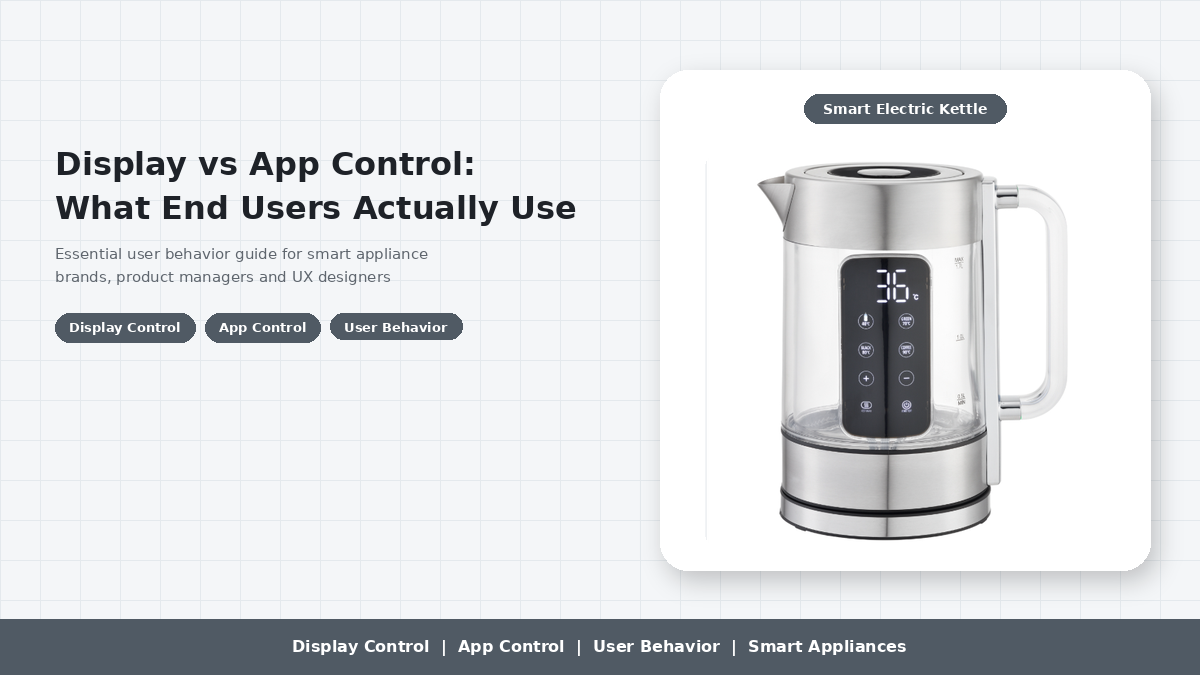
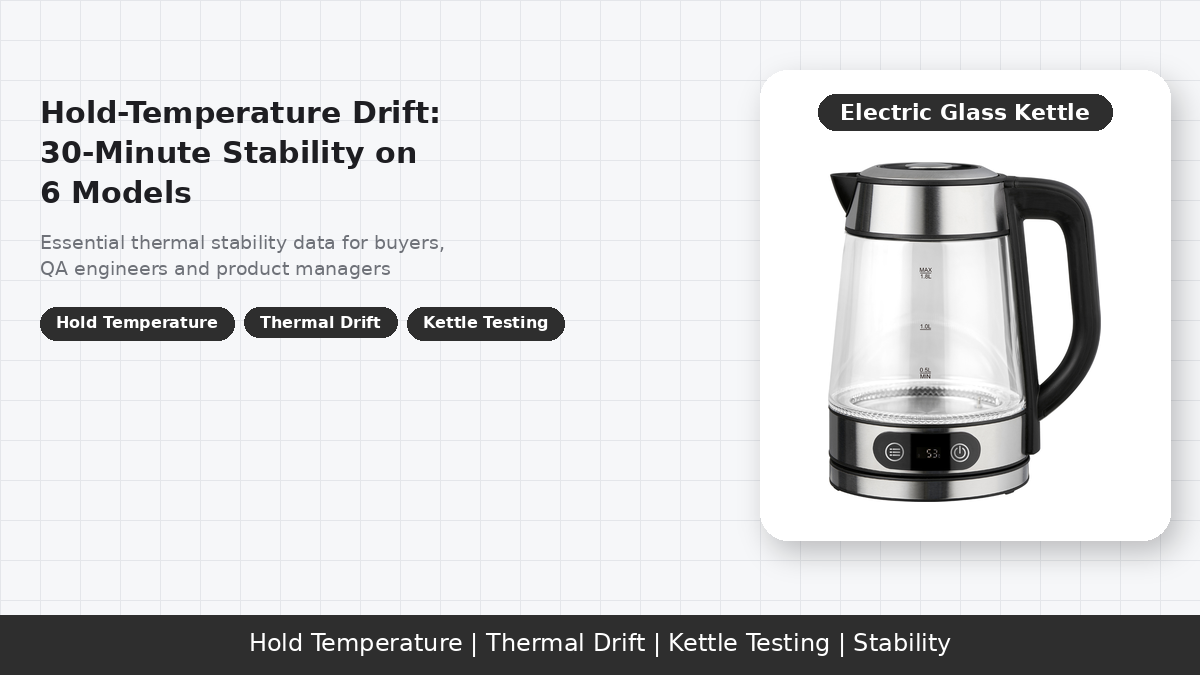
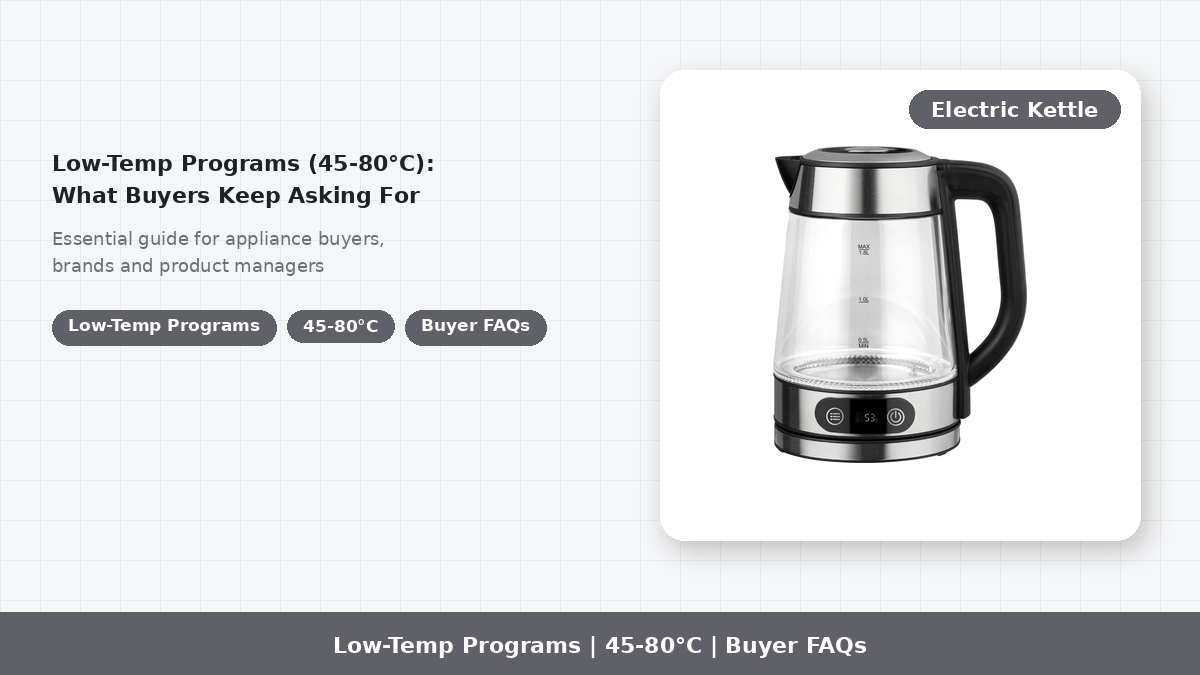
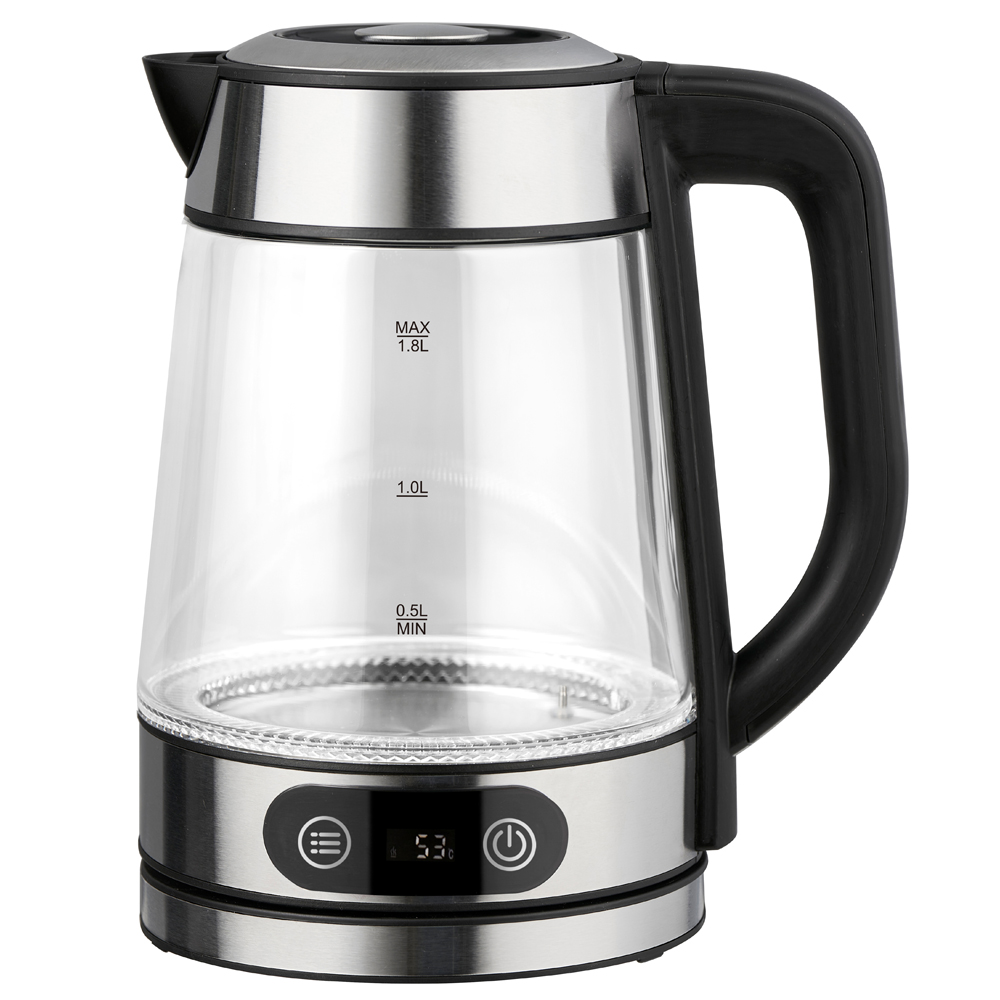
Our published 7-level LED Glass Kettle is the clearest example. It carries seven distinct temperature presets from 40°C to 100°C, and the published application for each band is specific rather than generic: 40°C prepares infant formula at a safe warmth, 70°C and 80°C are calibrated for delicate honey and antioxidant-rich green teas, and 100°C gives a rapid rolling boil for black tea and culinary work. The same product also carries an intelligent memory module and a 2-hour keep-warm cycle, so the second cup is as good as the first without restarting.
That single line explains why the low band is commercially interesting rather than a gimmick. Because a low-temperature programme sells on the accuracy of a band rather than on the power of a boil, and because the brewing result depends on the band being repeatable, the specification the importer buys is a tolerance specification and not a capacity specification.
The Six Questions Buyers Keep Asking
These six questions come up on almost every low-temperature enquiry, and they are the ones worth answering in writing before a quotation is requested.
1. Which steps land in the 45°C to 80°C band, and what are they calibrated for?
The published steps are 40°C, 70°C and 80°C inside that window, and each has a published brewing purpose: formula at 40°C, honey and green tea at 70°C and 80°C. Where a buyer wants finer granularity inside the band, the catalogue already carries a higher-resolution platform: our 7-level LED glass electric kettle with removable tea filter sits alongside a 13-level precision temperature control model in the same digital glass series. The honest answer to "can you do 45°C" is that the step set is a programme decision rather than a catalogue fact, and it belongs in the specification.
2. How tightly does the band hold?
This is the question that decides whether a low-temperature kettle is a brewing instrument or a kettle with a display. Our published technical description of advanced PID control states that temperatures are maintained within 0.5°C variance, precision that was previously available only in laboratory equipment. Because a green tea brewed at 72°C and one brewed at 78°C are different drinks, and because the difference between those two is smaller than the tolerance most buyers would otherwise accept, the variance figure is the number to write into the supply agreement rather than a marketing claim about precision.
3. Does it hold, and does it remember?
Two separate questions that buyers often merge. The hold answer is published: the 7-level platform runs a 2-hour keep-warm cycle. The memory answer is also published: an intelligent memory module keeps the selected temperature so the kettle does not have to be set again each time. In commercial use the published pattern is three or four kettles preset to different temperatures for simultaneous tea variety, and hotels use programmable kettles that remember guest preferences across multiple stays.
4. What touches the water?
Published material for the low-temperature platforms is specific: borosilicate glass and food-grade 304 stainless steel, with a PC double-wall shell on the 13-level model, a naturally stain-resistant and BPA-free boiling environment, and removable, dishwasher-safe components in applications where hygiene standards are audited. For an importer, this is the question that decides whether the programme can go into a hospitality, education or food-service channel at all.
5. What does the electrical and platform specification have to cover?
Both published low-temperature platforms are 1850W to 2200W, 220-240V and 50-60Hz, which is what makes a single SKU viable across Europe and North America without a separate build. Capacity is published at 1.7L to 1.8L, which matches the 1.7L to 2.5L band that hospitality procurement is shifting towards, and quick-boil performance is published at 90 seconds for 1L. Published energy guidance notes that 2200W heating elements cut energy consumption by around 40% against stovetop methods, that double-wall insulation limits heat loss, and that automatic shut-off prevents wasteful re-boiling.
6. How does the carton load?
Published loading figures for the 7-level model are 2340 pieces in a 20-foot container, 4860 in a 40-foot container and 5616 in a 40-foot high cube, with 5700 in the high cube for the 13-level model. Because a low-temperature programme is usually sold as a retail range rather than a single line, and because the number of stock keeping units multiplies with every finish and every gift box, the carton and the loading plan decide the landed cost before the unit price ever enters the conversation.
The Hardware Already in the Catalogue
The low-temperature platforms are not a special build, and that is the point for an importer comparing a bespoke programme against a catalogue route.
- Digital glass with multi-level control.The 7-level LED Glass Kettle and the 13-level precision temperature control model, both 1.7L to 1.8L, both 1850W to 2200W, 220-240V 50-60Hz, both with borosilicate glass and food-grade 304 stainless steel, and both CE, GS and RoHS compliant.
- The tea maker series. Double-layer mother-son glass with multi-gear temperature control, a borosilicate glass double-layer model for connoisseurs, a 304 stainless steel double-layer tea kettle, and a traditional mother-son digital tea kettle, which is where the low-band brewing programs are built.
- Flow and water quality. The published development direction for this category includes gooseneck spouts borrowed from pour-over coffee, water quality sensors that flag dissolved solids outside the 50 to 150 ppm range considered optimal for brewing, and induction heating systems that boil around 30% faster with more even temperature distribution.
The commercial scenarios behind these platforms are published in our guide to hot water kettles for tea, from multi-temperature stations and tasting rooms to hotel in-room and concierge service, where silent operation and programmable presets are the deciding specification.
Compliance: The Part That Differs by Market
The compliance conversation for a low-temperature kettle is short in Europe and longer in North America, and buyers who assume the European file covers both markets get caught at the listing stage.
Our published product certifications for both digital glass platforms are CE, GS and RoHS compliant. For European delivery the two frameworks a buyer asks to see are the Low Voltage Directive 2014/35/EU, which covers the electrical and thermal safety of the appliance, and Regulation (EC) No 1935/2004 on materials and articles intended to come into contact with food, which is what a borosilicate glass body and a 304 stainless steel wetted surface have to be assessed against. In the United States the reference buyers work to is UL 499, the standard for electric heating appliances, and a CE mark does not substitute for that listing.
Because the low-temperature programme sells on water contact and on heat, and because both of those are regulated by different instruments in different markets, the certification file has to be scoped by destination rather than by product, and because the file is per-model, the platform decision and the market decision should be taken together. Our published experience on the commercial side of the same question is that hospitality procurement is moving toward durable, high-capacity models with warranty periods exceeding three years, which is a total-cost-of-ownership conversation rather than a purchase-price one.
How to Scope a Low-Temperature Programme
Seven inputs let us return a specification and a quotation rather than a catalogue page.
- The temperature steps you need inside the band, and the brewing or service purpose of each one.
- The tolerance you need the band to hold, and how you want it expressed in the supply agreement.
- Hold time and memory behaviour, including whether the unit is preset at the factory or set on site.
- Materials for the wetted parts, and the channel the product is sold into.
- Voltage, frequency, wattage and plug configuration for the destination market.
- Destination market and the certification file you need for it.
- Volume, finishes, packaging and the loading plan you are working to.
We do not publish kettle prices on this page. The platform, the step set, the materials, the certification file and the packaging decide the number, so the useful answer is a quotation against a written specification. Because the specification is what survives a listing decision, a re-order and a certification audit, we would rather agree it first and quote against it.
Frequently Asked Questions
1. What temperature range does a low-temperature electric kettle programme need?
Most of the demand sits between the 40°C and 80°C marks, because that band covers infant formula, delicate honey and green tea, and the published purpose of each step on our 7-level LED Glass Kettle. The 40°C to 100°C range of that platform covers the low band and a rolling boil, and our 13-level precision temperature control model gives finer granularity inside the same band.
2. How accurate is the temperature hold?
Our published technical description of advanced PID control states that temperatures are maintained within 0.5°C variance, precision previously available only in laboratory equipment. For a supply agreement this is the figure to quote, because a brewing programme is judged on repeatability rather than on a nominal setpoint.
3. Does the kettle keep warm and remember settings?
The published 7-level platform includes an intelligent memory module and a 2-hour keep-warm cycle, so the selected temperature is retained and the second cup is brewed to the same standard. In commercial use, the published pattern is three or four kettles preset to different temperatures for simultaneous tea variety.
4. Which materials should touch the water?
Our published low-temperature platforms use borosilicate glass with food-grade 304 stainless steel, with a PC double-wall shell on the 13-level model, and describe the boiling environment as naturally stain-resistant and BPA-free. For applications where hygiene standards are audited, the published specification includes removable, dishwasher-safe components and antimicrobial coatings.
5. What certification does a buyer in each market ask for?
Our published product certifications are CE, GS and RoHS compliant. European buyers also work to the Low Voltage Directive 2014/35/EU and to the food contact framework in Regulation (EC) No 1935/2004 for the wetted parts. North American buyers ask for a listing to UL 499, the standard for electric heating appliances, which is a separate file from the European one.
6. How does a low-temperature programme affect packing and freight?
Published loading figures for the 7-level model are 2340 pieces in a 20-foot container, 4860 in a 40-foot container and 5616 in a 40-foot high cube, with 5700 for the 13-level model. Because a low-temperature programme is usually sold as a range with several finishes and gift boxes, the carton and loading plan decide the landed cost before the unit price enters the conversation.