
 0086-574-62518288


Industry News
0102030405
Middle East Hotel Kettle Specs: A Regional Checklist
2026-09-14
A region-by-region procurement checklist for hotel kettles across the Gulf Cooperation Council — UAE, Saudi Arabia, Qatar, Kuwait, Oman, and Bahrain. Covers voltage, plug type, capacity sizing per room tier, climate considerations, and the certification bodies that gate every shipment.
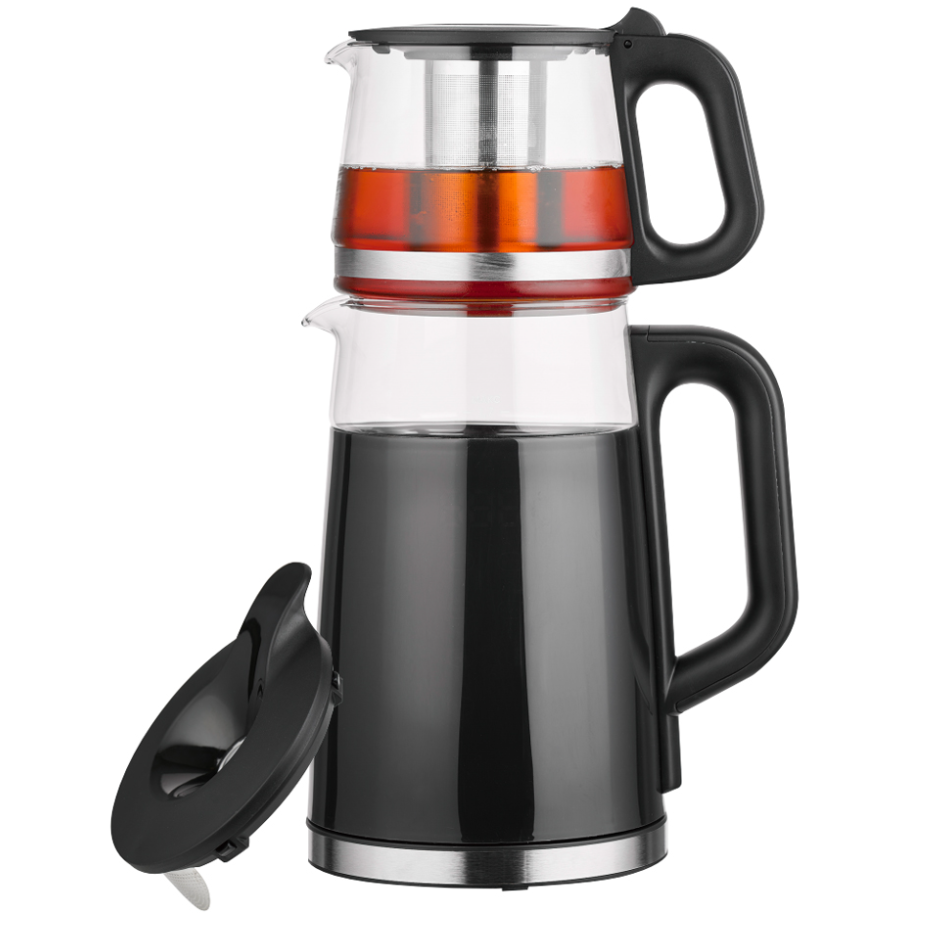
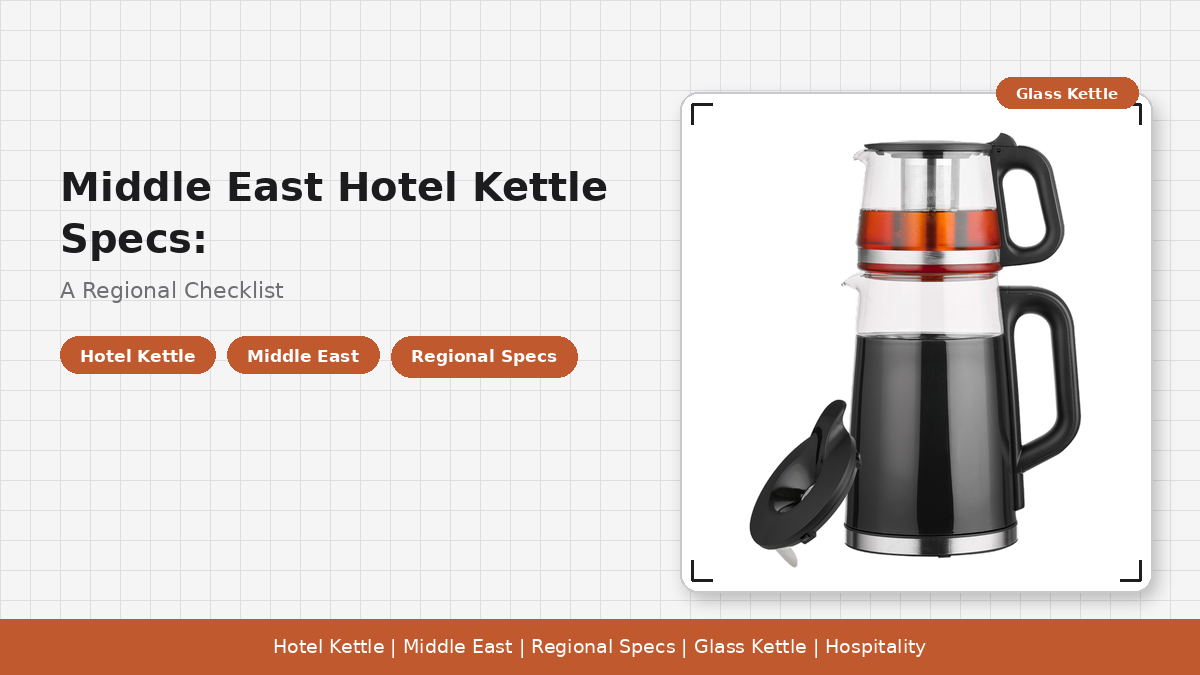
A procurement manager at a hotel group in Dubai called me last spring. His team was outfitting six new properties across the UAE and Saudi Arabia — a mix of four-star business hotels and a five-star resort. The previous supplier had delivered a batch of Glass Kettles where approximately 8% had arrived with cracked bases, a defect that became apparent only when housekeeping filled the kettle and discovered water weeping onto the guest-room furniture. The hotel group needed a new supplier fast, before the openings were compromised. The replacement shipment of borosilicate double-layer Glass Kettles from Goodfriends' production line passed 100% quality inspection with zero defects — and the hotel group subsequently ordered an additional 2,400 units for two properties they were developing in Qatar.
The Middle East hotel procurement track record over the past decade shows a clear pattern: the kettles that survive the region are not the cheapest kettles, but they are the kettles specified to the right regional checklist. The 2.0L family-size rapid-boil glass kettle has become the standard for five-star suites, while the 1.2–1.5L borosilicate unit is the workhorse for standard rooms across the entire GCC.
Regional Snapshot: Six Countries, One Plug Standard
The single most useful fact for a procurement manager specifying kettles for the Middle East is that all six GCC member states use the same voltage, frequency, and plug type. Because Saudi Arabia, the UAE, Qatar, Kuwait, Oman, and Bahrain all standardized on 220-240V/50Hz with Type G (BS 1363) plugs through the Gulf Standardization Organization in the 1980s, a correctly specified kettle is electrically compatible across the entire region — but each state still requires its own conformity paperwork.
United Arab Emirates🇦🇪
Voltage230V / 50Hz
PlugType G (BS 1363)
Cert bodyESMA / ECAS
Major citiesDubai, Abu Dhabi
Avg ambient (summer)42-46°C
Water hardnessVery hard (TDS 400-900)
ESMA ECAS certificate mandatory for customs clearance; type-test reports must be from an accredited lab.
Saudi Arabia🇸🇦
Voltage230V / 60Hz*
PlugType G (BS 1363)
Cert bodySASO / IECEE
Major citiesRiyadh, Jeddah, NEOM
Avg ambient (summer)44-48°C
Water hardnessHard to very hard
*Note: Saudi is officially 60Hz but most appliances including 50Hz kettles operate normally. SASO IECEE certificate is required for customs clearance.
Qatar🇶🇦
Voltage240V / 50Hz
PlugType G (BS 1363)
Cert bodyQS / MoCI
Major citiesDoha
Avg ambient (summer)42-47°C
Water hardnessHard (desalinated + mineralized)
Qatar General Organization for Standardization (QS) oversees conformity; desalination-based water leaves mineral residue on heating elements.
Kuwait🇰🇼
Voltage240V / 50Hz
PlugType G (BS 1363)
Cert bodyKOWS
Major citiesKuwait City
Avg ambient (summer)44-48°C
Water hardnessVariable (desalinated)
Kuwait Public Authority for Industry (KOWS) conformity regime; smaller market, fewer dedicated Type G accessories required.
Oman🇴🇲
Voltage240V / 50Hz
PlugType G (BS 1363)
Cert bodyDGSM
Major citiesMuscat, Salalah
Avg ambient (summer)38-44°C (coastal)
Water hardnessModerate to hard
Directorate General for Specifications and Metrology (DGSM) oversees import conformity; coastal humidity adds salt-air considerations.
Bahrain🇧🇭
Voltage230V / 50Hz
PlugType G (BS 1363)
Cert bodyMOICT
Major citiesManama
Avg ambient (summer)38-42°C
Water hardnessHard (desalinated)
Ministry of Industry, Commerce and Tourism (MOICT) issues conformity approvals; small market but premium resort segment is well-developed.
// Voltage mismatch note: Saudi Arabia is officially listed at 230V/60Hz but in practice most electrical installations supply 50Hz. Standard 50Hz kettles rated for 220-240V/50Hz operate correctly across Saudi Arabia — but always confirm the supply frequency with the hotel engineering team before specifying, because a kettle rated only for 60Hz may under-perform on the 50Hz Saudi supply.
Hotel-Grade Kettle Specification Checklist
The specification checklist that matters for hotel-grade kettles in the GCC is a blend of electrical, material, safety, and durability requirements that come from the operating environment itself. Because Gulf hotels run air-conditioned guest rooms where the kettle is filled from a cool 22°C and heated to 100°C dozens of times per day, the thermal stress on the glass vessel is severe — and because the outdoor ambient temperature in transit and storage can hit 50°C, even the unboxing experience matters.
Material: Borosilicate Glass (not Soda-Lime)
Borosilicate glass has a coefficient of thermal expansion roughly 3× lower than soda-lime glass. In a kettle that goes from cool fill to boil dozens of times per day, the difference in thermal fatigue resistance is the difference between a kettle that lasts 1 year and one that lasts 5 years.
Thermal expansion: Borosilicate ~3.3 ×10⁻⁶/°C · Soda-lime ~9 ×10⁻⁶/°C
Construction: Double-Wall with Air Gap
The air gap between the inner vessel and outer shell provides both thermal insulation (cool-touch exterior at full boil) and noise reduction. In hotel rooms where guests may be on calls or sleeping, the noise reduction is a meaningful guest-experience feature.
Standard exterior surface temperature at full boil: ≤50°C vs single-wall: 85-95°C
Capacity: Match to Room Tier
The right kettle size depends on the hotel's room mix. Limited-service rooms use smaller kettles (1.0–1.2L for single occupancy, 1.5L for double). Four-star and five-star standard rooms use 1.5L. Suites and five-star upgrades use 1.7–2.0L.
Limited-service: 1.0–1.2L · 4-star standard: 1.5L · 5-star suites: 1.7–2.0L
Wattage: 1500-2200W on 220-240V/50Hz
Higher wattage means faster boil time — meaningful for hotel rooms where guests expect near-instant service. The 1500-1800W range is acceptable for 3-star properties; 1800-2200W is the standard for 4-star and above, where a 1.5L kettle should reach full boil in under 4 minutes.
1500-1800W: 3-star · 1800-2200W: 4-star and 5-star · Typical 1.5L boil time: 3.5-4.5 minutes
Safety Features
Automatic shut-off at boil, boil-dry protection, cool-touch exterior, non-slip base, 360° cordless operation. The boil-dry protection is the most-cited safety feature in hotel liability reviews — guests occasionally turn on a kettle and walk away, and a kettle without boil-dry protection can be a fire risk.
Mandatory: auto shut-off, boil-dry protection · Recommended: cool-touch exterior, 360° base, concealed cord storage (min 0.75m cord)
Base: 360° Cordless with Stainless Steel Trim
The 360° cordless base allows guests to pick up and replace the kettle from any angle. Stainless steel base trim resists corrosion from humid coastal climates (Dubai, Abu Dhabi, Doha, Manama all have salt-air exposure).
Base material: 304 stainless steel preferred over ABS plastic · Cord: minimum 0.75m concealed in base
Certifications by Market
The plug and voltage standardization across the GCC makes a single kettle SKU electrically compatible, but each member state requires its own conformity paperwork for customs clearance. The CB certificate (IEC system) is a useful umbrella — most GCC conformity regimes accept a valid CB test certificate as the technical basis for national approval.
Saudi: SASO IECEE · UAE: ESMA ECAS · Qatar: QS/MoCI · Kuwait: KOWS · Oman: DGSM · Bahrain: MOICT
Climate-Resilient Packaging
Hotel procurement timelines land kettles in Gulf warehouses where ambient storage hits 45-50°C in summer. Specify reinforced packaging — extra outer carton, moisture barrier if sea-freighted, and clear handling labels — to prevent transit damage from condensation and heat cycling.
Storage temp range: -10°C to +55°C · Reinforced outer carton · Moisture barrier for sea freight · "Keep dry" / "This side up" labels
Climate-Specific Considerations for the GCC
The Gulf climate adds three operational stresses that buyers in temperate markets rarely consider. Because the GCC operates in a climate of 40-48°C ambient summer temperatures, 70-90% humidity in coastal cities, and desalinated municipal water with elevated mineral content, a kettle that performs well in European or East Asian hotels may under-perform in Gulf conditions — and the under-performance shows up as scale buildup, premature element failure, or warranty claims that surprise procurement managers used to temperate-market supply.
Desalinated Water and Scale Buildup
Qatar, Kuwait, UAE, and Bahrain rely heavily on desalinated municipal water that has a TDS (total dissolved solids) profile different from groundwater. Desalinated water is low in calcium and magnesium but the post-treatment mineralisation adds back sodium and chloride — which leaves a different scale pattern on heating elements than the calcium-based scale from hard well water. A kettle specified for European hard water may not have the right element coating or the right descaling cycle for the Gulf water profile. Specify kettles with stainless steel concealed elements (rather than exposed disc elements) and confirm the supplier has tested the kettle on desalinated water profiles before committing to a full order.
Humidity and Salt Air
Coastal cities (Dubai, Abu Dhabi, Doha, Manama, Muscat, Salalah, Kuwait City) experience 70-90% humidity in combination with salt-laden air. The combination accelerates corrosion on any exposed metal components — kettle bases, plugs, and even the external finish on stainless steel components. Specify 304-grade (not 201-grade) stainless steel for any exposed metal, and confirm the kettle's external finish is rated for marine-coastal environments.
High Ambient Warehouse Storage
Goods arriving in Gulf ports can sit in non-air-conditioned warehouses where ambient temperatures hit 45-50°C in summer. A kettle packaged for temperate-market storage may have plastics that soften, gaskets that lose elasticity, or instruction manuals that fade at these temperatures. Confirm the supplier's packaging specification includes the upper-temperature tolerance and that warranty documentation is heat-resistant.
| Parameter | Hotel-Grade Spec (GCC) | Notes |
|---|---|---|
| Material | Borosilicate glass (preferred) or 304 stainless steel | Avoid soda-lime glass; avoid 201-grade SS in coastal cities |
| Construction | Double-wall with air gap | Required for cool-touch + noise reduction |
| Capacity range | 1.0L to 2.0L | Size to property room mix |
| Wattage | 1500-2200W (220-240V / 50Hz) | 4-star and above: 1800-2200W for <4 min boil |
| Plug | Type G (BS 1363) | Universal across GCC — single SKU compatible |
| Auto safety | Boil-dry protection + auto shut-off | Mandatory in all GCC hotels |
| Base | 360° cordless, 304 SS trim | Salt-air resistance in coastal cities |
| Cord | Min 0.75m, concealed storage | Concealed storage preferred for guest presentation |
| Certifications | SASO (KSA), ESMA ECAS (UAE), CB (umbrella) | Each market requires its own conformity document |
| Packaging | Reinforced, -10°C to +55°C rated | For Gulf warehouse storage tolerance |
| Water tolerance | Tested on desalinated water profile | Qatar, UAE, Kuwait, Bahrain specifics |
| Element | Concealed stainless steel | Better descaling on Gulf water profile |
5 Common Specification Mistakes
First-time GCC procurement managers typically make five predictable mistakes when specifying hotel kettles. Catching them before the order ships saves both the cost of a wrong shipment and the cost of a hotel opening with inadequate equipment.
// Mistake 01 — Specifying soda-lime glass instead of borosilicate
Soda-lime glass looks identical to borosilicate in the catalogue photo but costs less. In a kettle that cycles from 22°C air-conditioned fill to 100°C boil dozens of times per day, soda-lime accumulates thermal stress and cracks within 6-12 months. The kettle looks fine at delivery and fails mid-year.
Fix: Require the supplier to confirm "borosilicate" in writing on the commercial invoice and CoA. Specify coefficient of thermal expansion ≤4 ×10⁻⁶/°C.// Mistake 02 — Assuming Type G plug = single SKU for the entire GCC
The Type G plug standardisation across the GCC means a single SKU is electrically compatible. But SASO IECEE for Saudi Arabia is not the same certificate as ESMA ECAS for the UAE — each is a separate document that must be obtained before customs clearance. Shipments without the correct certificate are held at port.
Fix: Confirm with the supplier which market-specific certificates are included in the unit price and which require additional fees. Obtain all six certificates if shipping across multiple GCC states.// Mistake 03 — Under-sizing wattage for 4-star and 5-star rooms
A 1500W kettle on a 1.5L fill takes 5+ minutes to reach full boil. Guests at 4-star and 5-star properties expect under 4 minutes. The price difference between 1500W and 2200W heating elements is small compared to the guest-experience impact.
Fix: Specify 1800-2200W heating elements for any 4-star or 5-star property. Use 1500-1800W only for 3-star and limited-service rooms.// Mistake 04 — Ignoring water hardness in the warranty terms
Warranty terms from kettle manufacturers often exclude scale-related element failure. In Gulf markets where water hardness is high (TDS 400-900 in the UAE), this exclusion can leave a hotel with a kettle fleet that fails outside warranty within 18 months because of accumulated scale.
Fix: Negotiate warranty terms that include scale-related element failure, or specify kettles with concealed stainless steel elements and a descaling program that the housekeeping team can run weekly.// Mistake 05 — Specifying single-wall glass for noise reduction reasons
Single-wall Glass Kettles are cheaper but louder and hotter on the exterior. In hotel rooms where guests may be on calls or sleeping, the noise difference between single-wall and double-wall is meaningful — and the cool-touch exterior of double-wall is a safety advantage with children in family rooms.
Fix: Always specify double-wall construction for any hotel-grade kettle, regardless of whether the property is 3-star or 5-star.International Standards Anchors
For procurement managers who need to align their kettle specifications with international standards beyond the regional certifications, the relevant anchor standards are:
- IEC 60335-1 — General safety standard for household electrical appliances — the umbrella standard under which all kettle safety certifications sit. [Reference →]
- IEC 60335-2-15 — Particular requirements for appliances for heating liquids — the specific kettle safety standard that GCC conformity regimes reference. [Reference →]
- EN 12875 — Dishwasher resistance of ceramic articles — relevant for hotels that run hospitality tray kettles through commercial dishwashers between guest stays
- ISO 9001 — Quality management systems — the supplier qualification framework that GCC buyers use for vendor approval
- IECEE CB Scheme — International scheme for mutual recognition of electrical safety test certificates — the umbrella under which SASO and ESMA accept test reports
The Intertek Group, UL LLC, and DNV are the three most common third-party certification bodies that GCC buyers see on kettle conformity certificates. European standards alignment through the EN standard system is the practical reference for buyers who need to map GCC requirements back to the standards framework they already know. For GCC-market entry strategy and tariff guidance, the Centre for the Promotion of Imports from developing countries (CBI) publishes market-entry guidance that hotel procurement teams use alongside their kettle specifications.
Quick Reference: Capacity by Room Type
| Property Type | Room Tier | Recommended Capacity | Recommended Wattage | Typical Guest Use |
|---|---|---|---|---|
| 3-star / limited-service | Standard single | 1.0–1.2L | 1500–1800W | Tea, instant coffee |
| 3-star / limited-service | Standard double | 1.2–1.5L | 1500–1800W | Tea, coffee, light breakfast prep |
| 4-star / full-service | Standard double | 1.5L | 1800–2200W | Tea, coffee, light breakfast prep |
| 4-star / full-service | Family / triple | 1.7L | 1800–2200W | Multiple-boil-cycle family use |
| 5-star / luxury | Standard suite | 1.7L | 1800–2200W | Tea, coffee, hot water for hospitality service |
| 5-star / luxury | Premium suite / penthouse | 2.0L | 2000–2200W | Multiple-boil-cycle entertaining |
| Resort villa | Multi-occupancy | 2.0L | 2000–2200W | Family-use, large-volume boil |
// Sizing rule: When in doubt, size up by 0.3L rather than down. A 1.5L kettle that runs at 1.2L fill behaves the same as a 1.2L kettle but covers the occasional 2-cup boil request from guests without requiring a second cycle. For suite categories, the upgrade from 1.5L to 1.7L is a marginal cost that meaningfully improves the guest experience for families and longer-stay occupants.
Procurement Workflow
The procurement workflow that catches the most specification problems before they ship follows five steps — and the order matters.
- Confirm target countries and required certifications — Identify every state the shipment will enter and obtain its conformity certificate in advance. Do not assume one certificate covers all GCC markets.
- Issue RFQ with full regional specification — Voltage, frequency, plug type, capacity range, wattage range, material, safety features, climate-resistant packaging, and target certification list. Generic "GCC kettle" RFQs produce generic quotes that miss regional specifics.
- Request sample units and test on regional water — Order 3-5 sample units and run a 2-week in-room test at the target property. Test on the property's actual municipal water — not on bottled water at the supplier's factory.
- Confirm warranty terms include scale-related failure — For Gulf markets, the warranty should explicitly include scale-related element failure or the buyer should specify a descaling program and accept the risk.
- Schedule shipment timing to avoid peak summer transit — Avoid shipping in July and August if possible, when container temperatures in transit and at Gulf warehouses are at their peak. Spring and autumn shipments land in better condition.
Closing Note
If I had to summarize hotel kettle specification for the Middle East in one sentence: the GCC is electrically unified but bureaucratically fragmented — a single 220-240V/50Hz Type G kettle SKU works across all six member states, but each state still requires its own conformity certificate and the climate-specific stresses of desert heat, desalinated water, and salt air shape the material and packaging specs more than the electrical specs do.
For a property-specific walkthrough of which Goodfriends Glass Kettle model fits which room tier, what the SASO and ESMA conformity paperwork covers, and what the sample-to-bulk lead time looks like for the GCC region, the Goodfriends team is available via theglass kettle series page and the Middle East hotel procurement article.
Specifying Kettles for a GCC Hotel Group?
Send Goodfriends your room count by tier, target countries, and required certifications. The team will return a recommendation covering capacity sizing, wattage range, conformity certificate schedule, and per-room pricing — typically within 3 working days.
VIEW 2.0L HOTEL KETTLE →