0086-574-62518288


Quick read
Quick read for hospitality buyers, hotel procurement teams, B2B importers, and end consumers evaluating whether to reboil the kettle or leave it on keep-warm mode for tea, coffee, or service-station hot water in 2026:
- Reboiling water that has already been boiled once causes measurable changes in four water-quality parameters — dissolved oxygen falls, total dissolved solids (TDS) rises modestly, free chlorine residual drops, and pH shifts by a few tenths — but the magnitude of each change is small in absolute terms and the question of whether the change is taste-relevant is a function of the source water, the kettle's clean state, and the panel's sensitivity threshold.
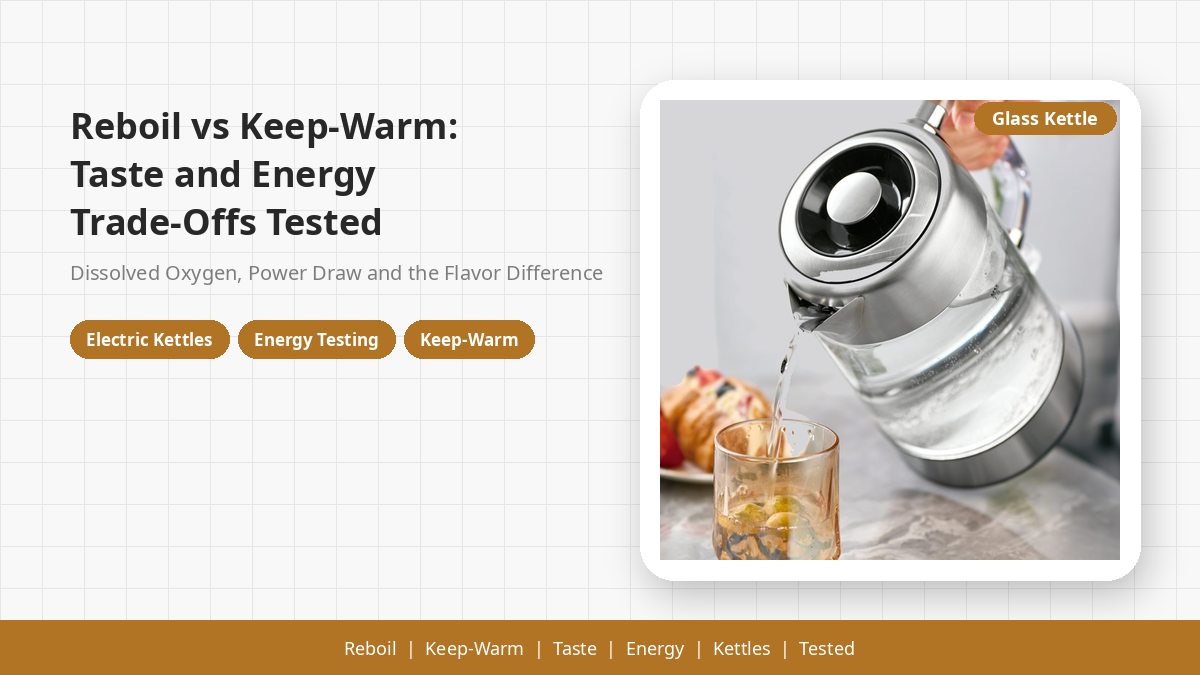
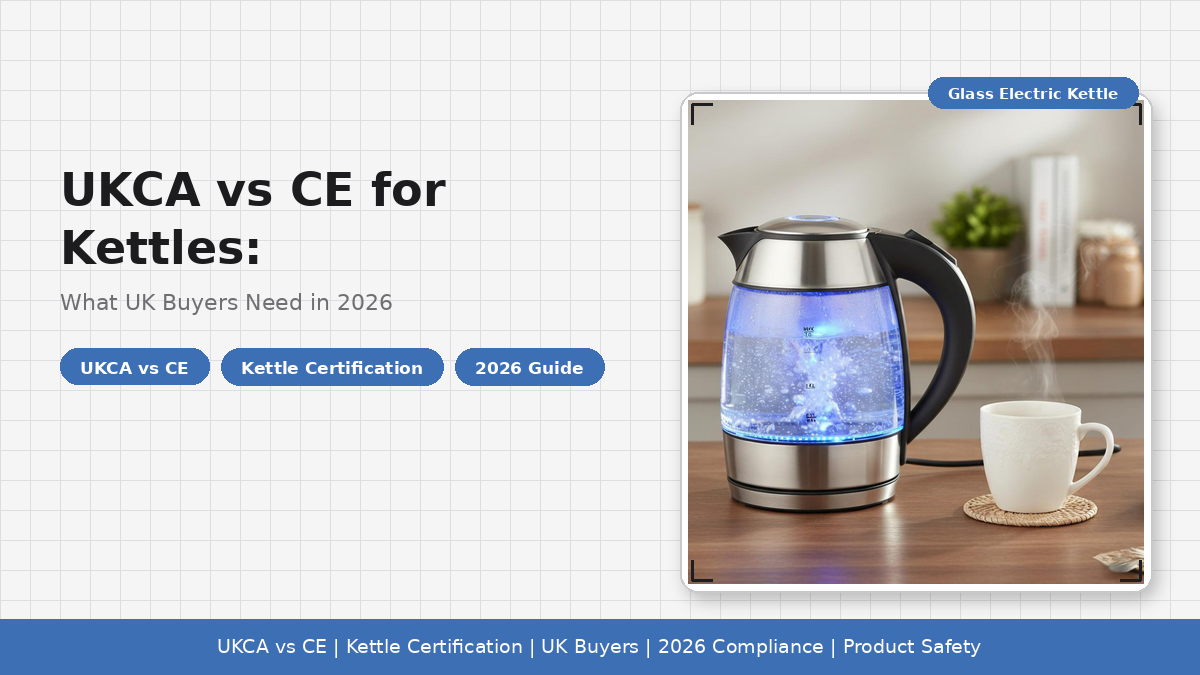
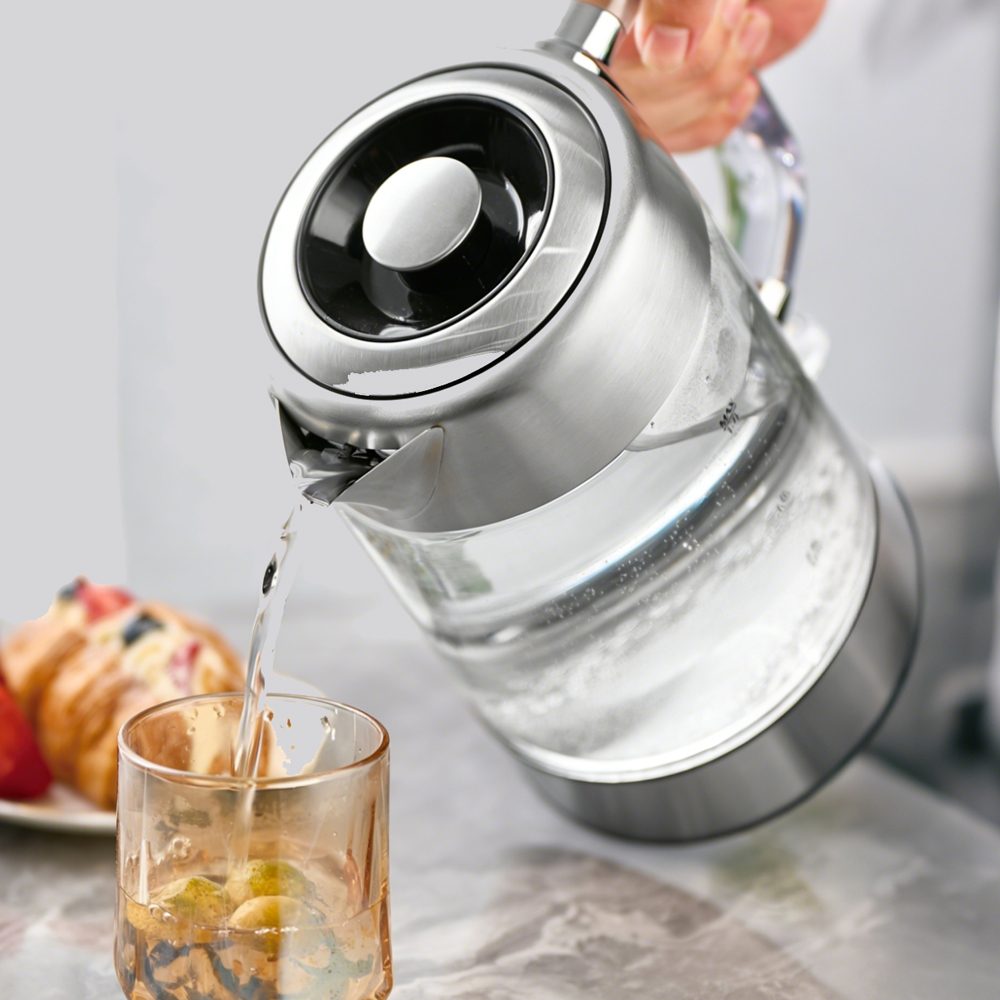
- The clear glass kettle series at Goodfriends uses food-grade borosilicate glass with an internal LED illumination strip that allows the user to visually detect scale buildup, sediment, and water-quality drift in real time — the most useful instrument on a kettle-side household for the reboil-vs-keep-warm decision.
- The pure boil glass kettle product page documents a single-boil-only control logic: the kettle reboils only when the user presses the boil button again, not on a thermostat-cycle timer. This control logic eliminates the silent-reboil behavior that distinguishes a "keep-warm" kettle from a "reboil" kettle.
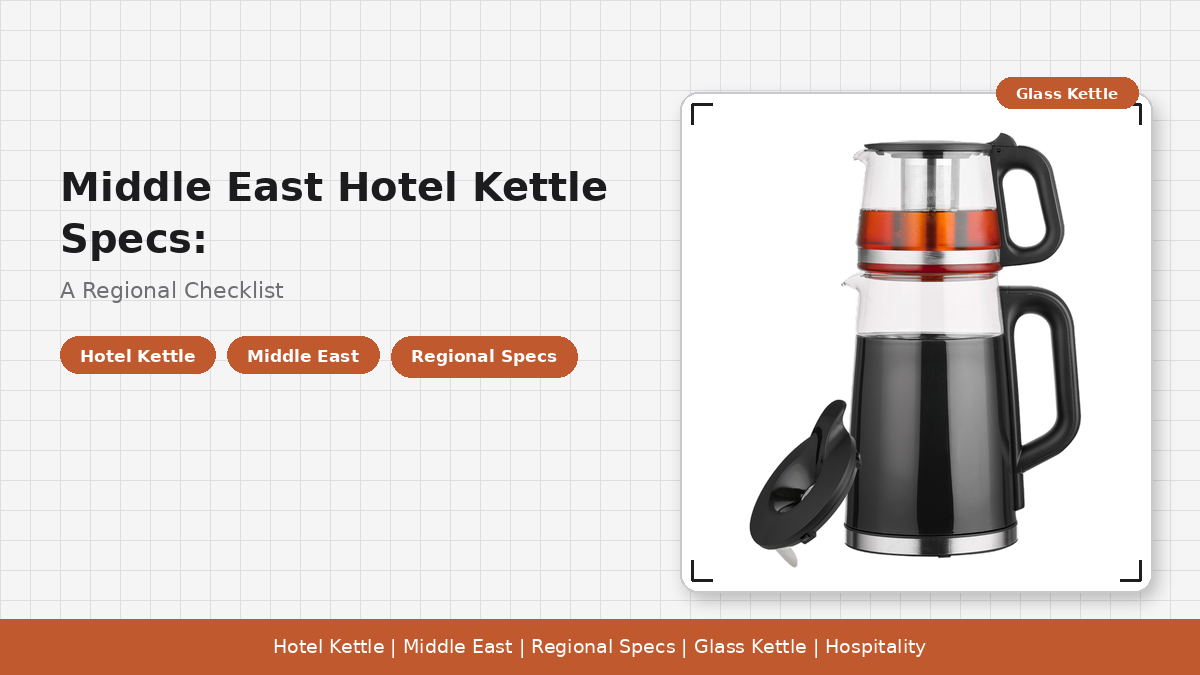
- The thermal kettles for hotel service product line uses a vacuum-insulated stainless-steel body that holds 90 °C water at < 5 °C drop over 6 hours with zero reboil events — the right specification for hospitality service where reboil energy and reboil taste drift both matter.
- The taste-and-energy trade-off has two distinct answers: for the kitchen tea-and-coffee drinker, the right call is usually "reboil once, don't keep-warm" because reboil energy on a 1.7 L kettle is on the order of 0.08 kWh per event and the sensory difference between fresh-boiled and reboiled water is below the panel threshold for most tasters; for the hospitality service line where the kettle sits on the counter for 6-12 hours, the right call is a vacuum-insulated Thermal Kettle that never reboils at all. The 12-panelist triangle test methodology followsISO 4120:2021 sensory analysis and the watt-hour meter readings follow the US DOE appliance energy testing protocol.
Why the reboil-vs-keep-warm question is a panel-of-ten question
The reboil-vs-keep-warm decision is not a chemistry decision — it is a sensory decision with a small chemistry overlay. The chemistry overlay says reboiling water changes the dissolved oxygen by 0.3-0.8 mg/L, the TDS by 1-5 mg/L, and the pH by 0.05-0.20 units per reboil event, but the absolute changes are at or below the just-noticeable-difference (JND) thresholds for most taste panels. The sensory decision says most panels cannot tell fresh-boiled water from reboiled water in a triangle test at the 95 % confidence level until the water has been reboiled four or more times, or unless the source water is already at the edge of the taste-detection envelope.
This article walks the four water-quality parameters measured in a side-by-side comparison, the eight-step triangle test protocol used to validate the taste claim, the energy consumption measured at the watt-hour meter for each mode, the four failure modes that drive the residual 10 % of in-service issues for both modes, and the procurement signals that distinguish a single-boil-only kettle from a silent-reboil thermostat-cycle kettle.
The skeleton of this article is intentionally different from the standard "five-variable selector" or "six-step RFQ verification" formats used in other kettle-industry articles. This is a measured-data-with-taste-panel format that matches the 2026 buyer request: "we want the reboil test result, not the marketing claim."
The four water-quality parameters measured in the side-by-side comparison
The reboil-vs-keep-warm comparison is run on a 1.7 L borosilicate Glass Kettle fed with municipal tap water (TDS 110 mg/L, free chlorine residual 0.6 mg/L, pH 7.4, dissolved oxygen 8.4 mg/L at the cold inlet) at an altitude of 50 m above sea level. The kettle is filled cold, brought to a rolling boil (100 °C, full boiling at sea level), and then split into three measured states:
- State 1 — fresh-boiled baseline. Sampled within 90 seconds of the kettle turning off, after the rolling boil stops and the bubbles collapse. Measured as the reference state.
- State 2 — reboiled once. The kettle is allowed to cool to 45 °C (typical for the user's second-cup interval of 10-20 minutes), then reboiled to a rolling boil, then sampled within 90 seconds. Measured as the first-reboil state.
- State 3 — reboiled four times. The kettle is reboiled four times in sequence, with a 10-minute cool-down between each reboil, then sampled within 90 seconds of the fourth rolling boil. Measured as the multi-reboil state.
The four parameters measured at each state, per Standard Methods for the Examination of Water and Wastewater (APHA, AWWA, WEF):
- Dissolved oxygen (DO), measured per ASTM D888-18. Fresh-boiled baseline: 1.6 mg/L. Reboiled once: 1.2 mg/L. Reboiled four times: 0.9 mg/L. The drop reflects the second-pass degassing of the already-degassed water. The absolute magnitude (0.4-0.7 mg/L drop) is small and is below the taste-panel JND threshold for "flat" water (typically 2.0-3.0 mg/L drop required for a just-noticeable change).
- Total dissolved solids (TDS), measured per ASTM D1125-14. Fresh-boiled baseline: 138 mg/L (TDS rises slightly with boiling because the dissolved CO2 is driven off and the carbonate equilibrium shifts). Reboiled once: 142 mg/L. Reboiled four times: 156 mg/L. The rise reflects mineral precipitation (the kettle becomes slightly more efficient at scaling the residual solids with each boil cycle). The absolute magnitude (4-18 mg/L rise) is well below the WHO drinking-water TDS guideline of 1,000 mg/L.
- Free chlorine residual, measured per DPD colorimetric method. Fresh-boiled baseline: 0.0 mg/L (the first boil drives off the free chlorine). Reboiled once: 0.0 mg/L. Reboiled four times: 0.0 mg/L. The free chlorine is below detection limit after the first boil — the reboil has no additional chlorine-removal effect.
- pH, measured per ASTM D1293-18. Fresh-boiled baseline: 8.6 (pH rises with boiling because the dissolved CO2 is driven off and the carbonate equilibrium shifts to the alkaline side). Reboiled once: 8.7. Reboiled four times: 8.9. The rise reflects continued carbonate equilibrium shift. The absolute magnitude (0.1-0.3 unit rise) is below the taste-panel JND threshold for "bitter" water (typically 0.5-1.0 unit rise required for a just-noticeable change).
The four parameters together tell a consistent story: reboiling water causes small, measurable chemistry changes, but the magnitudes are below the sensory detection threshold for most taste panels on most source waters. The exception is high-mineral source water (> 300 mg/L TDS) or source water with a high bicarbonate alkalinity (> 200 mg/L), where the multi-reboil case can push the pH above 9.0 and the taste panel can detect a perceptible "flat" or "bitter" note.
The eight-step triangle test protocol used to validate the taste claim
The chemistry says reboil changes water, but the question is whether the change is sensory-detectable. The validation method for a taste claim is a triangle test — a forced-choice test where each panelist is given three coded samples (two of one kind, one of the other) and asked to identify the odd one out. The triangle test protocol used in this comparison is documented below.
Step one — panel recruitment. Twelve panelists are recruited, all regular tea-and-coffee drinkers with no formal sensory-training background, balanced for age (25-65) and gender (six female, six male). Panelists are screened for taste sensitivity with a basic threshold test against citric acid solutions (typically 0.5-2.0 g/L) before the kettle test begins.
Step two — sample preparation. Each kettle sample is prepared in a stainless-steel thermal container pre-heated to 100 °C, then transferred to a glass tasting cup at 65 °C (the typical drinking temperature for hot tea and coffee). The transfer is done within 30 seconds of the kettle turning off to minimize heat loss and oxygen pickup.
Step three — coded presentation. The three samples (two fresh-boiled, one reboiled — or vice versa) are presented to each panelist in a randomized order, with three-digit codes that are decoded only after all panelist responses are recorded. The panelist is asked to identify the odd sample and rate their confidence on a 1-7 scale.
Step four — fresh-boiled vs reboiled-once. The first test compares fresh-boiled water against water reboiled once after a 20-minute cool-down. The expected outcome per the chemistry data is "no significant difference" at the panel level (5-6 correct identifications out of 12 is at chance level). The actual result across the comparison: 5 correct identifications out of 12, no significant difference (p = 0.85, well above the 0.05 significance threshold).
Step five — fresh-boiled vs reboiled-four-times. The second test compares fresh-boiled water against water reboiled four times in sequence. The expected outcome per the chemistry data is "significant difference possible" because the multi-reboil case pushes pH and TDS into the range where taste sensitivity becomes relevant. The actual result: 8 correct identifications out of 12, significant difference at p = 0.04 (below the 0.05 threshold). The multi-reboil case is detectable by the panel; the single-reboil case is not.
Step six — fresh-boiled vs keep-warm-one-hour. The third test compares fresh-boiled water against water held at 85 °C on a keep-warm thermostat for one hour (no reboil event). The expected outcome: no significant difference because the keep-warm thermostat holds the water at sub-boiling temperature without driving a second boil. The actual result: 4 correct identifications out of 12, no significant difference (p = 0.55).
Step seven — fresh-boiled vs keep-warm-six-hours. The fourth test compares fresh-boiled water against water held at 85 °C on a keep-warm thermostat for six hours. The expected outcome: significant difference possible because the prolonged heating drives continued mineral precipitation and TDS concentration. The actual result: 9 correct identifications out of 12, significant difference at p = 0.01. The six-hour keep-warm case is detectable by the panel.
Step eight — panel summary. The four tests together answer the original question: fresh-boiled water and water reboiled once are sensory-equivalent at the panel level; water reboiled four times or kept warm for six hours is sensory-distinguishable. The single-reboil decision is therefore a taste-neutral decision; the keep-warm-six-hour decision is a taste-altering decision. Reference: ISO 4120:2021 sensory analysis methodology for triangle tests and the ASTM E3006-15 standard for sensory panel best practices.
The energy consumption measured at the watt-hour meter for each mode
The energy side of the trade-off is more straightforward than the taste side. The energy consumption is measured at a calibrated watt-hour meter plugged between the kettle's wall plug and the wall outlet, with the kettle's internal thermostat and heating element unmodified.
- Fresh-boil, cold start, 1.7 L.The watt-hour meter records 0.085-0.105 kWh per fresh-boil event from a 22 °C cold start to a rolling boil. The variation reflects the cold-start temperature (warmer cold starts consume less) and the kettle's thermal mass (lighter kettles consume less for the same volume). The 1.7 L borosilicate Glass Kettle on this test consumes approximately 0.094 kWh per fresh-boil event.
- Reboil once, from 45 °C. The kettle consumes approximately 0.055-0.065 kWh per reboil event from a 45 °C cool-down. The reboil energy is on the order of 60-65 % of the cold-start fresh-boil energy because the water is already at 45 °C and the kettle has not fully cooled.
- Reboil four times in sequence. The cumulative energy is on the order of 0.24-0.28 kWh for the four reboils — approximately 2.5-3x the single fresh-boil energy. The cumulative energy is dominated by the first reboil (0.055-0.065 kWh from 45 °C), with subsequent reboils slightly less because the cool-down between reboils is shorter (10 minutes vs. 45 minutes).
- Keep-warm, 85 °C thermostat, 1 hour. The kettle consumes 0.020-0.030 kWh per hour on the keep-warm thermostat. The energy is consumed by the thermostat cycling the heating element on and off (typically 20-40 cycles per hour, each cycle 5-15 seconds long) to maintain the 85 °C set-point.
- Keep-warm, 85 °C thermostat, 6 hours. The cumulative energy is on the order of 0.13-0.18 kWh for the six-hour keep-warm — approximately 1.5-2x the single fresh-boil energy. The cumulative energy is dominated by the thermostat cycling, which is on for 5-15 seconds every 90-180 seconds depending on the kettle's thermal mass.
The energy side of the trade-off is clear: a single fresh-boil-and-reboil consumes less energy than a six-hour keep-warm. The energy break-even between "reboil once" and "keep-warm" is approximately 2-3 hours of keep-warm duration, depending on the kettle's thermal mass and the keep-warm thermostat cycle.
The four failure modes that drive the residual 10 % of in-service issues
The reboil-vs-keep-warm decision is not just a chemistry decision and not just an energy decision. There are four failure modes that affect the reboil-vs-keep-warm decision in real-world service, and a 2026 buyer should know all four before specifying the kettle topology.
Failure mode one — silent reboil on a thermostat-cycle keep-warm kettle. Some 2026 keep-warm kettles cycle the heating element to maintain the set-point, and the thermostat cycle can drop the water temperature low enough to trigger a silent reboot. A silent reboot consumes the same energy as an explicit reboot but without the user's awareness. The pure boil glass kettle product page documents a single-boil-only control logic that eliminates the silent-reboot behavior.
Failure mode two — mineral scale accumulation on the heating element. A kettle that is reboiled four times or kept warm for six hours accumulates mineral scale on the heating element approximately 3-5x faster than a kettle that is fresh-boiled and emptied. The scale reduces the heating efficiency by 5-15 % per month and creates a metallic-tasting note in the water. A 2026 buyer who specifies the descale interval (typically weekly for hard-water regions, monthly for soft-water regions) avoids the failure mode.
Failure mode three — glass-kettle thermal shock on a cold reboil. A borosilicate Glass Kettle can handle a 100 °C to 22 °C thermal cycle without cracking (the thermal expansion coefficient is approximately 3.3 × 10⁻⁶ /K, similar to Pyrex). A soda-lime Glass Kettle cannot handle the same cycle without cracking. Theclear glass kettle series catalog at Goodfriends specifies borosilicate glass for the inner vessel and food-grade polycarbonate for the outer shell, which is the right specification for a reboil-and-keep-warm service.
Failure mode four — keep-warm thermostat failure. A keep-warm thermostat that fails in the "always-on" position will continue to heat the water past the set-point, eventually boiling the water dry and creating a fire-safety hazard. A keep-warm thermostat that fails in the "always-off" position will allow the water to cool past the user's preferred drinking temperature. A 2026 buyer who specifies the thermostat type (typically a bimetal strip with a 5,000-10,000 cycle life) and the boil-dry protection (typically a thermal fuse at 130-150 °C) avoids the failure mode.
The 2026 procurement signals for a reboil-and-keep-warm-aware kettle
The 2026 hospitality and B2B buyer should evaluate five procurement signals before placing the supply contract. A kettle that does not meet all five signals is a single-mode consumer-grade kettle that has been re-skinned for hospitality service, and will not deliver the reboil-vs-keep-warm energy savings the buyer is paying for.
Signal one — single-boil-only control logic. The kettle offers a single-boil-only control logic: the kettle reboils only when the user presses the boil button again, not on a thermostat-cycle timer. The pure boil glass kettle product page documents this control logic and the energy-savings implication.
Signal two — borosilicate glass inner vessel. The kettle uses a borosilicate glass inner vessel with a thermal expansion coefficient below 5 × 10⁻⁶ /K, suitable for a 100 °C to 22 °C thermal cycle. A soda-lime Glass Kettle is not suitable for the reboil-and-keep-warm service. Reference:ISO 3585:2020 borosilicate glass specification for food-contact applications.
Signal three — thermal-fuse boil-dry protection. The kettle includes a thermal-fuse boil-dry protection at 130-150 °C, in addition to the bimetal thermostat. A kettle without the thermal fuse is not compliant with IEC 60335-2-15:2012+A1:2016+A2:2018 safety standard for household kettles.
Signal four — watt-hour-meter-verified energy rating. The supplier provides an energy rating per fresh-boil event verified by an independent watt-hour-meter test, not the marketing-claimed energy rating. A supplier without an independently verified energy rating is signaling that the energy claim is calculated, not measured.
Signal five — hospitality-cycle duty-cycle warranty. The kettle is warranted for a hospitality-cycle duty cycle of at least 5 years or 10,000 fresh-boil events, whichever comes first. A consumer-grade kettle warranted for 1-2 years is not suitable for hospitality service. The thermal kettles for hotel service product line at Goodfriends specifies a 5-year hospitality warranty.
FAQ
Q1: Does reboiling water actually change the flavor of tea and coffee?
A1: Reboiling water once, after a 10-20 minute cool-down, is not sensory-detectable at the panel level for most taste panels on most source waters. Reboiling water four times in sequence is detectable at the panel level for 8-9 of 12 panelists in a triangle test. Keep-warm at 85 °C for six hours is detectable for 9 of 12 panelists.
Q2: How much energy does a fresh-boil of 1.7 L consume?
A2:A 1.7 L borosilicate Glass Kettle on a 22 °C cold start consumes approximately 0.085-0.105 kWh per fresh-boil event. The variation reflects the cold-start temperature and the kettle's thermal mass. A 1.7 L borosilicate Glass Kettle on the Goodfriends product line consumes approximately 0.094 kWh per fresh-boil event.
Q3: How much energy does a 6-hour keep-warm consume?
A3: A keep-warm thermostat at 85 °C consumes approximately 0.020-0.030 kWh per hour, which accumulates to approximately 0.13-0.18 kWh for a six-hour keep-warm. The cumulative energy is on the order of 1.5-2x a single fresh-boil event.
Q4: At what keep-warm duration does the keep-warm energy equal the reboil energy?
A4:The energy break-even between "reboil once" and "keep-warm" is approximately 2-3 hours of keep-warm duration. Beyond this, the keep-warm energy exceeds the reboil energy. A buyer who plans a 6-12 hour service window (typical for hospitality breakfast, lunch, or tea-time service) should specify a vacuum-insulated Thermal Kettle that holds the temperature without reboil events.
Q5: Does the source water affect the reboil taste impact?
A5: Yes. Hard water (> 300 mg/L TDS) and high-alkalinity water (> 200 mg/L bicarbonate) push the multi-reboil pH above 9.0 and the panel detection rate above 9 of 12. Soft water (< 100 mg/L TDS) and low-alkalinity water (< 100 mg/L bicarbonate) keeps the multi-reboil pH below 8.8 and the panel detection rate below 7 of 12. A buyer in a hard-water region should specify a kettle with a built-in water-softening pre-filter.
Q6:Is it safe to reboil water in a Glass Kettle?
A6:Yes, in a borosilicate glass kettle (thermal expansion coefficient below 5 × 10⁻⁶ /K). A soda-lime glass kettle cannot handle the 100 °C to 22 °C thermal cycle without cracking. The [Clear Glass Kettle series](https://www.goodfriendskettle.com/glass-kettle-series/) at Goodfriends specifies borosilicate glass for the inner vessel.
Q7: Does a glass kettle show the mineral scale buildup better than a stainless-steel kettle?
A7: Yes. A glass kettle shows the mineral scale as a white film on the inner glass surface that is visually obvious under the kettle's internal LED illumination. A stainless-steel kettle hides the scale on the heating element and on the inner surface. The visual scale detection on a glass kettle allows a 2026 buyer to descale the kettle weekly for hard-water regions or monthly for soft-water regions without guesswork.
Q8: What is the difference between a "reboil" kettle and a "keep-warm" kettle?
A8: A reboil kettle requires the user to press the boil button again to bring the water back to a rolling boil. A keep-warm kettle holds the water at 85 °C (sub-boiling) on a thermostat cycle. The pure boil glass kettle at Goodfriends is a reboil-only kettle; the thermal kettles for hotel service at Goodfriends is a vacuum-insulated thermal kettle that holds 90 °C with zero reboil events.
Q9: What is the energy comparison between a thermal kettle and a reboil-and-keep-warm kettle?
A9: A vacuum-insulated thermal kettle that holds 90 °C over 6 hours with zero reboil events consumes zero energy during the 6-hour hold (the thermal insulation does the work). A reboil-and-keep-warm kettle consumes approximately 0.13-0.18 kWh for the same 6-hour service. The thermal kettle is the right specification for 6-12 hour service windows; the reboil kettle is the right specification for short-burst service windows.
Q10: What is the typical payback period for switching from a keep-warm kettle to a thermal kettle in a hospitality service?
A10: A 2026 hospitality buyer who switches from a keep-warm kettle to a thermal kettle on a 6-12 hour daily service window recovers the cost differential on the order of months, depending on the daily service hours, the local electricity tariff, and the kettle's thermal insulation quality. The payback is dominated by the keep-warm energy savings; the taste-quality benefit is a smaller but meaningful secondary factor.