
 0086-574-62518288


Industry News
0102030405
Smart Automatic Water Dispensing Electric Kettle for Hotel Room Amenities: How Digital Temperature Control Drives Guest Experience Ratings
2026-07-13
Key Takeaways
Hotels upgrading from basic boil-only kettles to smart automatic water dispensing models with digital temperature control are seeing measurable improvements in guest experience scores and online review ratings. The ability to brew beverages at their optimal temperatures — a feature that specialty cafe customers take for granted — is becoming a differentiating amenity in the competitive hospitality market. For hotel procurement teams sourcing in-room amenities at scale, OEM manufacturers like Goodfriends offer customizable Smart Kettles with programmable temperature presets, safety certifications for global markets, and minimum order quantities starting at 500 to 1,000 units.
Hotels upgrading from basic boil-only kettles to smart automatic water dispensing models with digital temperature control are seeing measurable improvements in guest experience scores and online review ratings. The ability to brew beverages at their optimal temperatures — a feature that specialty cafe customers take for granted — is becoming a differentiating amenity in the competitive hospitality market. For hotel procurement teams sourcing in-room amenities at scale, OEM manufacturers like Goodfriends offer customizable Smart Kettles with programmable temperature presets, safety certifications for global markets, and minimum order quantities starting at 500 to 1,000 units.

1. The Evolving Hotel Amenity Landscape: From Basic to Premium In-Room Experiences
The global hospitality industry has undergone a fundamental shift in how hotel room amenities are evaluated, sourced, and marketed. Where a basic electric kettle that simply boiled water was considered adequate a decade ago, today's hotel guests — particularly those in the business, luxury, and boutique segments — expect in-room amenities that reflect the quality standards they encounter in their daily lives. The smart automatic water dispensing electric kettle represents the intersection of this amenity upgrade trend with the specific demands of the global tea and coffee culture that dominates hotel beverage consumption.
Guest satisfaction data from major hotel review platforms consistently shows that in-room beverage amenities rank among the top 10 factors influencing overall stay satisfaction. Hotels that provide premium kettles with temperature control, rapid boiling, and modern design aesthetics receive higher scores in the "room comfort" and "amenities" categories that directly affect their aggregate review ratings and booking conversion rates. A study published by the Cornell University School of Hotel Administration found that a one-point improvement in a hotel's online review score (on a 5-point scale) can increase revenue per available room (RevPAR) by 5 to 9 percent.
For hotel procurement teams, this data creates a clear business case for upgrading in-room kettles. The incremental cost of a smart temperature-controlled kettle versus a basic model — typically 15 to 30 USD per unit at OEM pricing — is trivial compared to the potential RevPAR improvement from even a modest guest satisfaction increase. For a 200-room hotel, the total investment of 3,000 to 6,000 USD for premium kettles can be recovered through a single-digit percentage improvement in average daily rate or occupancy.
Goodfriends, based in Ningbo, China, is one of the leading OEM manufacturers of Electric Kettles for the hospitality sector, with product lines spanning double-wall stainless steel, digital glass, gooseneck, and smart dispensing models. Their factory produces kettles with international safety certifications including CCC, CE, CB, and RoHS, with UL certification available on select models for the North American market.
2. Digital Temperature Control: Why Precision Matters for Hotel Beverages
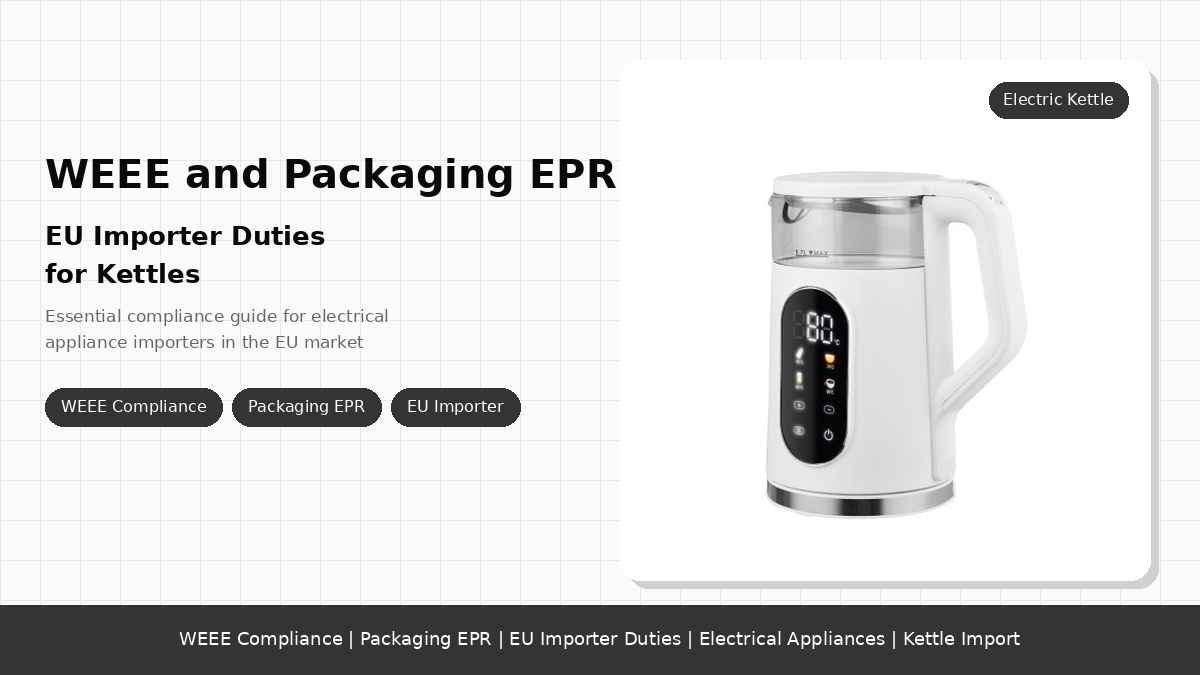
The core feature that distinguishes a smart hotel kettle from a basic model is digital temperature control — the ability to heat water to a specific target temperature rather than simply bringing it to a full boil. This feature addresses a fundamental problem in beverage preparation: different tea types and coffee brewing methods require different water temperatures for optimal flavor extraction, and boiling water (100 °C) is too hot for many of these applications.
Green tea, for example, releases its delicate flavors and health-promoting catechins most effectively at 70 to 80 °C. Brewing green tea with boiling water produces a bitter, astringent taste that most tea drinkers find unpleasant. Oolong tea performs best at 85 to 90 °C, while black tea and herbal teas tolerate near-boiling temperatures. For coffee, the Specialty Coffee Association recommends water temperatures of 90 to 96 °C for optimal extraction, with pour-over methods performing best at 92 to 94 °C.
Hotel guests who are accustomed to preparing their beverages at precise temperatures at home or in specialty cafes find basic boil-only kettles inadequate. This frustration is a recurring theme in hotel reviews, particularly in Asian and European markets where tea culture is deeply embedded in daily life. Guests who care enough about beverage quality to mention it in a review are typically the high-value repeat visitors that hotels most want to retain.
Digital temperature control also supports hotels that offer curated in-room beverage programs. Boutique and luxury hotels increasingly provide guests with premium tea selections or single-origin coffee sachets, paired with a card explaining the optimal brewing temperature for each. The Smart Kettle becomes part of the brand experience — a tangible demonstration of the hotel's attention to detail and commitment to guest comfort. For hotels working withOEM kettle suppliers, temperature presets can be programmed during manufacturing to match the specific beverages included in the room's amenity kit.
3. Automatic Water Dispensing: Hygiene and Convenience for Hotel Operations
The automatic water dispensing feature addresses a specific operational and hygiene challenge in hotel room kettle management. In traditional setups, guests carry the kettle to the bathroom faucet or a corridor water dispenser to fill it — a process that is inconvenient for guests and raises hygiene concerns for hotel operators. Hotel review forums frequently mention kettle cleanliness as a concern, with some guests reporting that they refuse to use in-room kettles entirely due to uncertainty about cleaning standards.
The smart automatic dispensing design eliminates this concern by providing a self-contained water delivery system. Depending on the model configuration, water is either drawn from an integrated reservoir that housekeeping fills during room servicing, or from a plumbed connection that provides filtered water on demand. The guest simply presses a button to dispense the desired amount of water into the kettle chamber, then selects the target temperature and starts the heating cycle.
This design also benefits hotel housekeeping operations. Staff no longer need to fill individual kettles during room turnover — a task that may seem trivial for a single room but becomes significant when multiplied across 200 or more rooms per day. The automatic dispensing system also reduces the risk of water spillage on room furnishings and eliminates the wear on kettle power cords from repeated bathroom-to-desk transport.
For hotel brands that prioritize hygiene as a marketing differentiator — a trend accelerated by post-pandemic traveler expectations — the automatic dispensing feature provides a visible commitment to cleanliness that guests can see and appreciate. Some hotels include a small placard next to the kettle explaining the self-contained water system as part of their hygiene assurance program.
4. Safety Features and International Compliance for Hospitality Deployment
Deploying Electric Kettles in hotel rooms introduces safety considerations that do not apply to residential or office use. Hotel guests may be unfamiliar with the appliance, may leave it operating unattended, or may use it in ways that the manufacturer did not anticipate. Children may have unsupervised access to the kettle. The electrical infrastructure in some hotel properties, particularly older buildings in developing markets, may not provide consistent voltage or grounding.
These deployment realities require kettles with comprehensive safety features that exceed basic consumer product standards. The minimum safety feature set for a hotel room kettle includes automatic shut-off when water reaches the target temperature, boil-dry protection that cuts power if the kettle is operated without water, thermal fuse protection against thermostat failure, and a cool-touch exterior that prevents burns from accidental contact.
Goodfriends kettles incorporate all of these safety features as standard, with additional options for hotels with specific requirements. The 304 stainless steel interior prevents chemical leaching that can occur with plastic components at high temperatures. The food-grade materials comply with FDA food contact regulations for the US market and equivalent European standards. Electrical safety certifications include CCC (China), CE (Europe), CB (international), and RoHS (hazardous substances), with UL certification available for North American deployments.
For hotel procurement teams evaluating kettle suppliers, requesting copies of these certifications and verifying them against the issuing body's database is an essential due diligence step. Hotels that deploy non-certified appliances in guest rooms face potential liability exposure in the event of an electrical incident, as well as insurance coverage complications. Goodfriends provides certification documentation with every OEM order and supports third-party verification through the relevant certification bodies.
5. OEM Customization Options for Hotel Brand Standards
Hotel chains and boutique brands increasingly require in-room amenities that reflect their specific brand identity rather than generic off-the-shelf products. OEM kettle manufacturers like Goodfriends offer a range of customization options that allow hotels to create amenity experiences that reinforce brand recognition and guest loyalty.
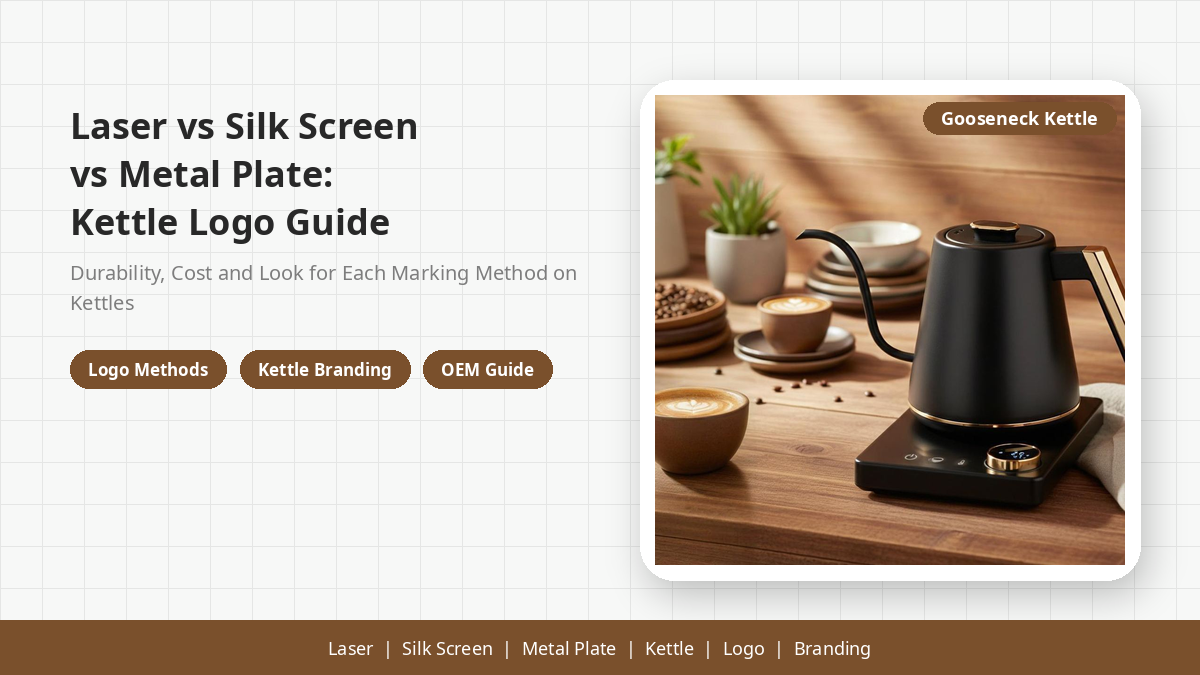
Logo and branding customization is the most common requirement. Goodfriends offers logo printing on the kettle body, custom color matching to brand guidelines, and branded packaging for the retail presentation. For premium hotel brands, custom mold modifications can create unique kettle silhouettes that become part of the room's design language.
Temperature preset customization allows hotels to program kettle temperature buttons to match their specific beverage program. A Japanese hotel chain might preset temperatures for different tea types (sencha at 70 °C, hojicha at 90 °C, matcha at 80 °C), while a European business hotel might optimize for coffee preparation (espresso at 93 °C, filter at 96 °C, decaf at 90 °C). These presets can be accompanied by custom labeling on the control panel that matches the hotel's in-room beverage guide.
Packaging and presentation customization includes custom gift boxes, branded instruction cards, and amenity kit integration. For hotels that include the kettle as part of a welcome amenity package — perhaps paired with premium tea sachets and a personalized note — the unboxing experience becomes part of the guest's first impression of the room.
Minimum order quantities for OEM customization start at 500 to 1,000 units for standard models with logo printing and packaging, rising to 2,000 to 3,000 units for fully custom designs with modified molds or proprietary features. Lead times for standard OEM orders range from 30 to 45 days after sample approval, with expedited production available for hotels with opening deadlines or seasonal demand spikes.
6. Total Cost of Ownership for Hotel Kettle Amenity Programs
| Cost Category | Basic Kettle (per room) | Smart Temperature Kettle (per room) |
|---|---|---|
| Unit Cost (OEM, bulk) | 8–15 USD | 25–45 USD |
| Replacement Rate (annual) | 15–25% (wear, damage) | 8–12% (better durability) |
| Housekeeping Time per Room | 2–3 minutes (fill, transport) | 1–1.5 minutes (reservoir top-up) |
| Annual Housekeeping Cost (200 rooms) | 8,000–12,000 USD | 4,000–6,000 USD |
| Guest Satisfaction Impact | Neutral | Positive (review score uplift) |
| Total Annual Cost (200 rooms) | 10,000–16,000 USD | 6,500–10,500 USD |
The housekeeping labor savings from automatic dispensing and reduced fill-time is the primary cost driver, often exceeding the incremental unit cost difference within the first year. Combined with the guest satisfaction benefits that drive revenue improvements, the Smart Kettle upgrade delivers a positive return on investment within 6 to 12 months for most hotel deployments.
7. Frequently Asked Questions
Q: Why are hotels replacing basic kettles with smart temperature-controlled models?
Guest expectations for in-room amenities have evolved significantly. Modern travelers, particularly business and luxury segment guests, expect the same beverage quality in their hotel room that they get at specialty cafes. Digital temperature control allows guests to brew different tea types and coffee varieties at their optimal temperatures — green tea at 80 degrees Celsius, black tea at 95 degrees, pour-over coffee at 93 degrees — rather than using a basic kettle that only boils to 100 degrees. Hotels that offer this amenity differentiation report measurable improvements in guest satisfaction scores and online review ratings.
Q: What safety certifications are required for Electric Kettles in hotel rooms?
Hotel room kettles must comply with the electrical safety standards of the destination market. Common certifications include CE and RoHS for Europe, UL/ETL for North America, UKCA for the United Kingdom, and CCC for China. Additional safety features required for hospitality use include automatic shut-off when water reaches boiling point, boil-dry protection that prevents the heating element from operating without water, and cool-touch exterior surfaces to prevent guest burns. Goodfriends kettles carry CCC, CE, CB, and RoHS certifications with UL available on select models.
Q: How does automatic water dispensing work in a hotel kettle?
The smart automatic water dispensing feature allows the kettle to fill itself from a connected water source or reservoir without manual pouring. In hotel room applications, this typically means the kettle draws water from an integrated reservoir or a plumbed connection when the guest presses a dispensing button. This eliminates the need for guests to carry the kettle to the bathroom faucet — a common hygiene concern in hotel reviews — and ensures consistent water quality by filtering the dispensed water before heating.
Q: What is the minimum order quantity for OEM hotel kettle orders?
Goodfriends offers OEM and ODM manufacturing for hotel kettle orders with minimum order quantities starting at 500 to 1,000 units depending on the level of customization required. Standard models with custom logo printing and packaging require lower MOQs, while fully custom designs with modified temperature presets, custom color matching, or proprietary branding elements may require 2,000 to 3,000 units. Lead times for standard OEM orders range from 30 to 45 days after sample approval.
Q: Can hotel kettles be configured with preset temperature profiles for different beverage types?
Yes. Goodfriends digital temperature-controlled kettles support programmable temperature presets that can be configured during manufacturing to match the hotel's beverage program. Common preset configurations include 70 degrees for delicate green tea, 80 degrees for oolong tea, 90 degrees for French press coffee, 95 degrees for black tea, and 100 degrees for boiling. Hotels can also request custom presets for specific beverage brands or cultural preferences of their primary guest demographics.
Q: How do hotels handle kettle hygiene and descaling between guest stays?
Hotel housekeeping protocols for in-room kettles typically include emptying remaining water, wiping the exterior, and descaling the interior on a weekly or biweekly cycle using citric acid or a commercial descaling solution. Smart Kettles with stainless steel interiors resist mineral buildup better than plastic models and are easier to clean. The automatic water dispensing feature also reduces hygiene concerns by eliminating guest contact with the water inlet, and some models include a self-cleaning cycle that flushes the internal components with heated water.
Ready to upgrade your hotel's in-room beverage amenity? Browse Goodfriends kettle catalog or contact Goodfriends for OEM customization options and bulk pricing.