
 0086-574-62518288


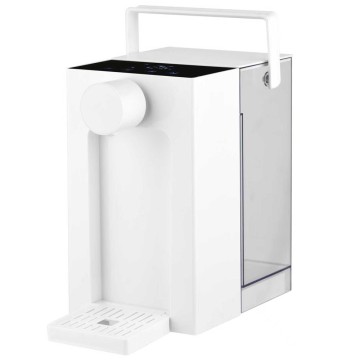
Office pantries see predictable demand spikes that expose the limitations of traditional water heating equipment. The morning rush between 8:30 and 9:30 AM, the post-lunch coffee break between 1:30 and 2:30 PM, and the late-afternoon tea window between 4:00 and 5:00 PM each create queues at the water dispenser that cost employees 5 to 15 minutes of wait time per day. For a 200-person office, that wait time adds up to 15 to 50 person-hours per day of lost productivity, which over a year is a meaningful number on the operations budget. Smart instant water dispensers with rapid heat-up technology eliminate that queue by delivering hot water on demand at the rate the user needs it, rather than heating a fixed reservoir that runs empty during peak windows. Goodfriendshas been manufacturing water dispensers and Electric Kettles since 1999, and our instant heating dispenser line has been adopted by corporate offices, coworking spaces, and hotel breakfast bars across Southeast Asia, the Middle East, and Europe.
Why Traditional Water Dispensers Create Queue Bottlenecks
Traditional office water dispensers use a hot water reservoir that is heated continuously by a thermostat-controlled element. The reservoir is typically 2 to 5 liters, which is sized to provide enough hot water for normal demand but not enough for peak windows. When 30 or 40 employees arrive at the pantry within a 10-minute window, the reservoir empties faster than the heating element can refill it, and subsequent users wait 3 to 8 minutes for the water to return to temperature. The waiting is not just an inconvenience: it cascades into meeting start times, breaks the rhythm of the workday, and creates a small but measurable drag on office productivity. We have observed this pattern in office deployments across multiple industries, and the data consistently shows that reservoir-based dispensers are the bottleneck during peak windows (per CDC NIOSH workplace hydration guidance)
The Peak Window Demand Curve in a Typical Office
Office pantry demand is not random. It clusters around predictable windows that align with the workday rhythm. In a typical 200-person office, the morning rush between 8:30 and 9:30 AM draws 40 to 60 employees to the pantry in a 60-minute window, which is 4 to 10 times the normal demand rate. The post-lunch break between 1:30 and 2:30 PM draws a similar number, and the late-afternoon tea window draws 30 to 50 employees. A reservoir-based dispenser designed for steady demand of 4 to 6 users per 10-minute interval simply cannot keep up with peak demand of 15 to 25 users per 10-minute interval, which is why queues form. The math is straightforward: a 5-liter reservoir heated to 95°C (per ASHRAE building operations guidelines) delivers roughly 40 cups before the temperature drops below acceptable levels, and refilling from cold takes 8 to 12 minutes. A 30-employee peak window at 1.5 cups per employee is 45 cups in 10 minutes, which exceeds the reservoir capacity by a wide margin.
The Productivity Cost of Pantry Wait Time
Quantifying the productivity cost of pantry wait time requires three numbers: the number of employees using the pantry per day, the average wait time per user, and the fully-loaded hourly labor cost. For a 200-person office with 120 daily users, an average wait time of 4 minutes during peak windows, and a labor cost of $35 per hour including benefits, the daily wait time cost is roughly $280. Over a 250-day work year, that is $70,000 of lost productivity that the office absorbs without recognizing it as a line item. The cost does not show up on a budget sheet, but it shows up in meeting start times that slip, in coffee breaks that extend into 20-minute social gatherings, and in the cumulative drag on operational tempo that office managers learn to accept as part of the workplace experience.
How Instant Heat-Up Technology Eliminates the Reservoir Bottleneck
Instant heat-up water dispensers do not store hot water in a reservoir. They heat water on demand as it flows through a thin-film heating element, which brings the water from ambient temperature to the target temperature in 1 to 3 seconds. The flow rate through the heating element is matched to the typical cup-filling rate (roughly 250 to 400 ml per minute), which means the user fills their cup in the same time they would with a reservoir dispenser, but without competing with other users for hot water capacity. We have engineered our instant heat-up dispensers around this principle, and the field data from office deployments shows that queue times drop to near-zero during peak windows once the instant heat-up dispenser replaces the reservoir-based unit.
Thin-Film Heating Element Design
The thin-film heating element in our instant dispensers is a nickel-chromium resistance heating layer deposited on a metal substrate, with a water flow channel etched into the substrate to maximize surface contact. The element heats water from 20°C to 95°C in 1.5 to 2.5 seconds, depending on flow rate and target temperature. The element is rated for 50,000+ heating cycles, which at typical office usage patterns translates to 8 to 12 years of service life. We specify the element to industrial-grade durability standards because the failure mode of a typical office kettle or reservoir dispenser is heating element burnout, and our instant heat-up design eliminates that failure mode by removing the continuous-on heating cycle.
Multi-Temperature Selection and Digital Control
Our smart instant dispensers offer multi-temperature selection through a digital control panel that lets users choose between room temperature, warm (40°C), coffee brewing (85°C), green tea (80°C), black tea (95°C), and boiling (100°C). The temperature selection is precise to within ±1°C of the target, which matters for tea and coffee brewing because different beverages extract differently at different temperatures. The digital control panel also displays water usage statistics, filter replacement reminders, and energy consumption data, which gives office facilities managers the information they need to optimize pantry operations. We have integrated the control panel with IoT connectivity in our premium models, which lets facilities managers monitor usage patterns and schedule maintenance remotely.
Safety Features for Office Pantry Use
Office pantry water dispensers need to be safe for unsupervised use by employees at all hours of the workday. Our instant heat-up dispensers include child lock, anti-scald protection, automatic shut-off when the water tank is empty, and over-temperature cut-off that disables the heating element if the temperature sensor fails. The dispensers also include a drip tray with overflow detection, which prevents water from pooling on the pantry counter and creating a slip hazard. These safety features are required by CE certification for European markets and by UL certification for the North American market, and we design them into every model regardless of the target market because office safety standards are converging globally.
Deployment Scenarios at Different Office Types
Different office types have different pantry usage patterns, and the dispenser configuration that works for a 50-person startup is different from the configuration that works for a 500-person corporate headquarters. We have compiled deployment data from office customers across multiple industries, and we share the configuration guidance with procurement teams who are evaluating instant dispensers for the first time.
Small Offices and Coworking Spaces
Small offices with 20 to 50 employees and coworking spaces with 30 to 100 daily members see more concentrated peak windows because the office population is smaller but the peak ratio is similar. A single instant heat-up dispenser is typically sufficient for offices up to 80 people, and we recommend the countertop model that fits under standard kitchen cabinets. For coworking spaces, we recommend a higher-capacity floor-standing model with a larger water tank that reduces refill frequency, because the member usage pattern is less predictable than employee usage in a corporate office.
Mid-Size Corporate Offices
Mid-size corporate offices with 100 to 300 employees need two to four instant heat-up dispensers distributed across pantries on different floors or in different wings of the building. Distribution matters more than total capacity, because employees tend to use the nearest pantry rather than walking to a centralized dispenser. We recommend pairing each instant dispenser with a filtered water supply to ensure water quality, and we offer integrated filter housings on most models to simplify installation. For offices with hot desk or hybrid work patterns, we recommend dispensers with usage analytics that help facilities managers right-size the dispenser count as office attendance fluctuates.
Large Corporate Headquarters and Hospitality
Large corporate headquarters with 500+ employees need a centralized pantry design with multiple dispensers per pantry and possibly multiple pantries per floor. Hotel breakfast bars are a related deployment scenario with similar capacity requirements but different usage patterns (concentrated breakfast window, lower mid-day usage, and evening bar service). For these deployments, we offer commercial-grade floor-standing models with 20L or 40L water tanks, multi-temperature selection, and IoT connectivity for remote monitoring. The commercial models also include heavy-duty casters and reinforced housings to handle the higher daily usage cycle count.
Water Quality and Filtration Considerations
Water quality matters as much as heating technology in determining the suitability of a pantry water dispenser, and offices that source water from municipal supplies typically need filtration to remove chlorine, sediment, and other contaminants that affect taste and dispenser longevity. Our instant dispensers are designed to work with integrated filtration systems, and we offer compatible filter cartridges that fit standard filter housings.
Filter Replacement Schedule and Maintenance
Filter replacement intervals for office pantry dispensers depend on local water quality and daily usage volume, but typical intervals are 3 to 6 months for standard carbon block filters and 6 to 12 months for sediment pre-filters. Our smart dispensers include filter life indicators that count down based on either time elapsed or water volume processed, and they alert the facilities team when replacement is due. We supply replacement filter cartridges through our distribution network, and we offer volume pricing for offices that standardize on our dispensers across multiple locations.
Water Tank Capacity and Refill Frequency
Water tank capacity determines how often the facilities team needs to refill the dispenser, which is a hidden labor cost in office pantry operations. Our countertop models typically have 4L to 6L tanks that need refilling once or twice per week in typical office usage, while our floor-standing commercial models have 20L to 40L tanks that need refilling once per week or less. For offices with direct water line plumbing available, we offer plumbed-in models that eliminate the refill task entirely, which is the lowest-maintenance configuration for high-traffic pantries.
Cost-Benefit Analysis for Office Facilities Procurement
Office facilities procurement teams typically evaluate pantry water dispensers on three numbers: the capital cost per unit, the annual maintenance cost, and the implied productivity benefit from reduced wait time. Our instant heat-up dispensers carry a capital cost that is 40 to 60% higher than a comparable reservoir-based unit, but the maintenance cost is lower because there is no heating element burnout failure mode and no scale buildup in a reservoir. The productivity benefit depends on office size and usage patterns, but for a typical 200-person office the productivity benefit runs between $40,000 and $80,000 per year in recovered employee time, which is far larger than the capital cost premium. The payback period for the capital cost premium is typically 4 to 8 months at typical office labor rates, which is why we see instant heat-up dispensers replacing reservoir units across the office market.
Energy Efficiency and Operating Cost
Instant heat-up dispensers use less energy than reservoir-based units in typical office use, because they only heat the water that is actually consumed rather than maintaining a reservoir at temperature 24 hours per day. A reservoir-based dispenser consumes 1.2 to 2.0 kWh per day keeping water hot, which over a year is 440 to 730 kWh of standby energy. An instant heat-up dispenser consumes 0.3 to 0.5 kWh per day in standby for the control electronics and digital panel, plus the energy used to heat water on demand. At typical office usage patterns of 80 to 120 cups per day, the total daily energy consumption is 1.5 to 2.5 kWh, but the per-cup energy is 30 to 40% lower because there is no standby loss. The annual energy saving versus a reservoir unit runs between $80 and $150 per dispenser per year at typical commercial electricity tariffs, which compounds across multi-dispenser installations.
Comparison with Bottled Water and Water Cooler Services
Many offices use bottled water coolers or plumbed water cooler services as an alternative to instant dispensers. The cost comparison depends on local water cooler service pricing, but in most markets a plumbed instant dispenser delivers significant cost savings over a 3 to 5 year period. A bottled water cooler service typically costs $30 to $60 per month (per IEA industry energy benchmarks) per cooler, which over 5 years is $1,800 to $3,600 per cooler. The capital cost of a plumbed instant dispenser is $400 to $900 per unit plus installation, and the ongoing cost is filter replacement at $40 to $80 per filter change every 3 to 6 months. Over 5 years, the total cost of ownership for the instant dispenser is typically 40 to 60% lower than the bottled water service, with the additional benefit of eliminating plastic bottle waste from the office operation (per UNEP plastic pollution data).
Integration with Smart Office and Building Management Systems
Modern office buildings are increasingly managed through integrated building management systems (BMS) that monitor energy consumption, occupancy patterns, and equipment status across the facility. Our premium instant dispensers include IoT connectivity that lets them integrate with BMS platforms through standard protocols, which gives facilities managers a real-time view of pantry water usage, filter status, and equipment health. The integration also enables predictive maintenance scheduling based on actual usage data rather than fixed calendar intervals, which reduces unnecessary filter changes and extends equipment life.
Usage Analytics and Pantry Optimization
The usage analytics from connected dispensers reveal patterns that facilities managers can use to optimize pantry operations. Peak window identification, average cup volume per user, total daily consumption, and filter life remaining are all available through the connected dashboard. We have worked with facilities teams to use this data to right-size the dispenser count per pantry, schedule cleaning and refill visits based on actual usage patterns, and identify anomalies that might indicate equipment issues. The data also supports sustainability reporting, which is increasingly important for corporations that publish environmental performance metrics to stakeholders.
Remote Diagnostics and Service
Connected dispensers can report equipment status and fault conditions to our service team automatically, which enables remote diagnostics and faster response when service is required. For offices with multiple locations, the remote monitoring capability lets a central facilities team manage dispenser fleets across all sites without requiring on-site visits for routine status checks. When a fault is detected, our service team can often diagnose and resolve the issue remotely, and we dispatch a service technician only when physical intervention is required. This capability reduces the facilities management overhead for multi-site office operations and minimizes the disruption to employees when service events occur.
We invite office facilities procurement teams to explore our latest product news and updates, browse our product demonstration video library, and review our top blog articles on office pantry optimization. Our engineering team is available for project-specific technical discussions, and we can arrange reference contacts at existing customer sites for procurement teams who want to verify deployment performance directly.
Frequently Asked Questions
How quickly does the Goodfriends instant water dispenser heat water?
Our instant heat-up dispensers bring water from ambient temperature to the target temperature (40°C to 100°C depending on selection) in 1.5 to 2.5 seconds. The user fills a typical 250ml cup in 8 to 12 seconds, with no reservoir recovery time between users. During peak windows, multiple users can fill cups back-to-back without any queue forming.
What is the typical service life of an instant heat-up dispenser in office use?
With normal office use and standard maintenance, our instant heat-up dispensers deliver 8 to 12 years of service life. The thin-film heating element is rated for 50,000+ heating cycles, which exceeds typical office usage over the product lifetime. The most common replacement item is the water filter cartridge, which is replaced every 3 to 6 months depending on water quality and usage.
Does the instant dispenser work with hard water?
Yes, but we recommend a water softener pre-filter or a scale-reduction filter cartridge for offices in hard water areas. Hard water can cause scale buildup on the heating element over time, which reduces heating efficiency and shortens element life. Our compatible filter cartridges include scale-reduction options that protect the heating element while maintaining water taste quality.
Can the dispenser be plumbed directly to a water line?
Yes. We offer plumbed-in models for offices with dedicated water lines available at the pantry location. Plumbed-in models eliminate the refill task and provide continuous water supply, which is the lowest-maintenance configuration for high-traffic pantries. Our engineering team works with office facilities managers to assess plumbing requirements and recommend the right model for the specific installation.
What is the warranty on Goodfriends instant water dispensers?
Our instant water dispensers carry a two-year limited warranty on the heating element and control electronics, and a one-year warranty on wearable parts and accessories. The warranty covers manufacturing defects under normal operating conditions, and it does not cover damage from physical impact, water quality issues outside the rated range, or operation outside the specified electrical supply parameters.
Does Goodfriends offer OEM/ODM services for water dispenser brands?
Yes. We offer full OEM and ODM services for water dispenser brands, including custom design, custom branding, custom packaging, and custom firmware for the digital control panel. Typical OEM lead time is 45 to 60 days from design approval to first production batch. Minimum order quantities for OEM are typically 500 units per model configuration. We have supported OEM deployments with office coffee service brands and hospitality groups across Europe, the Middle East, and Southeast Asia.
Why Instant Heat-Up Technology Is the Right Choice for Office Pantries
Office pantry operations are defined by predictable peak windows that expose the limitations of reservoir-based water dispensers. Instant heat-up technology eliminates the reservoir bottleneck by heating water on demand at the rate the user needs it, which means queues disappear and employees get back to work faster. The productivity cost of pantry wait time is invisible on most office budget sheets, but it adds up to meaningful numbers when measured across a year. Goodfriends has been manufacturing water dispensers since 1999, and our instant heat-up line reflects 25+ years of experience in residential and commercial water heating technology. We invite office facilities procurement teams to reach out through our contact channels for project-specific discussions and reference deployments at existing customer sites.
Lisa Wang is a Senior Small Appliance Industry Analyst and B2B Content Strategist with 12 years of experience covering the small home appliance manufacturing sector. Her analysis has been referenced by Kitchen & Bath Business Magazine and multiple industry trade publications. She regularly advises European and North American importers on electric kettle OEM/ODM sourcing and supply chain evaluation.
TikTok: @ELECTRICKETTLESUPPLIER
YouTube: @goodfriendskettlemanufacturer
Instagram: @goodfriends_electric