
 0086-574-62518288


Industry News
0102030405
Tea School Equipment: Multi-Station Kettle Setup Guide
2026-09-07
TL;DR
- A multi-station kettle setup gives each student or student pair a dedicated brewing station with its own temperature-controlled kettle, eliminating queueing and temperature cross-contamination between different tea types
- Plan electrical load before purchase: add up kettle wattages, verify circuit capacity, and distribute stations across dedicated circuits to prevent overload trips during simultaneous heat-up
- Green tea needs 75–80 °C, white tea 80–85 °C, oolong 85–95 °C depending on oxidation level, black tea 90–100 °C — a multi-preset kettle handles all four without manual adjustment between sessions
- Budget for one station per three to four students in lecture-demonstration formats, one per two for certification and examination settings
- Descaling frequency in hard-water areas is every four to six weeks for heavily used teaching kettles — mineral scale on heating elements accelerates failure and increases energy consumption
After twelve years advising European and North American importers on small home appliance sourcing and supply chain evaluation, the most common planning mistake I see in new tea school setups is treating the kettle as a single shared resource rather than a curriculum-critical infrastructure decision. Setting up a tea school without a considered multi-station plan means students spend class time waiting for a kettle to cool from 95 degrees to 80 degrees, or the school buys one expensive variable-temperature kettle and runs it constantly at different settings between sessions. The more elegant solution — and the one I recommend to every school I consult with — is to treat each temperature zone as its own station from the first day of planning.
What a Multi-Station Kettle Setup Actually Means
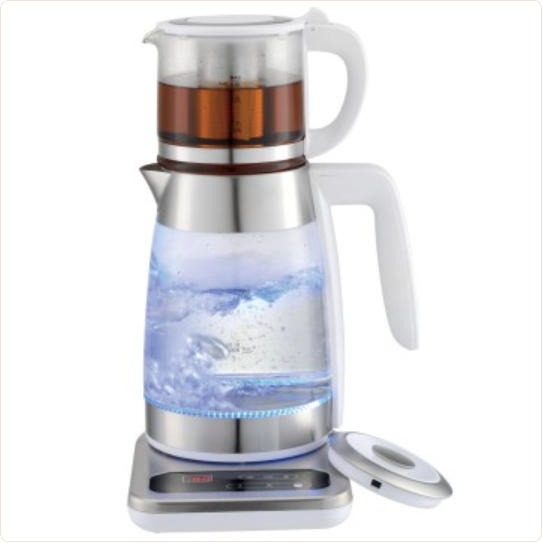
The term multi-station setup is sometimes misunderstood as simply having more than one kettle in a room. In practice, a properly configured multi-station kettle environment means each station is a functionally independent brewing unit with its own temperature-controlled heat source, its own work surface, and its own power circuit or verified share of a circuit. The commercial tea maker series on GoodFriendKettle includes kettles designed specifically for high-turnover instructional environments, with rapid-heat recovery and preset temperature memory functions that allow a station to be reset between sessions without manual temperature adjustment.
The practical benefit of this configuration becomes clear in a typical tea school session. When the curriculum calls for green tea brewing in the morning session and oolong in the afternoon, a shared single kettle must be cooled, reset, and brought back to temperature between sessions — consuming fifteen to twenty minutes of class time and requiring active supervision. Because each station in a multi-station setup maintains its own independent temperature preset, the morning green tea group and the afternoon oolong group can be set up simultaneously on different stations, or the school can run parallel sessions at different temperature targets with no reconfiguration between them.
Why Double-Layer Kettles Are the Right Choice for Teaching Environments
The double-layer glass tea kettle design solves several problems that are specific to teaching environments. The borosilicate glass body allows students to observe the water turbulence and rolling behaviour at different temperature stages — a valuable visual teaching aid that reinforces the relationship between water temperature and brewing outcome. The double-layer construction provides thermal insulation that keeps the outer surface cool to the touch even when the kettle is holding water at 95 degrees Celsius, which is a meaningful safety advantage in a room full of students handling hot vessels.
Because the double-layer vacuum insulation reduces radiant heat loss from the kettle surface, the kettle maintains target temperature with less frequent re-heating cycles than a single-wall design, which reduces energy consumption and extends element life in high-turnover school environments. The multipurpose electric kettles for tea rituals in the GoodFriendKettle range include the dual-temperature-preset models that I most frequently recommend for tea school station specifications, because the preset function allows an instructor to lock the station at the correct temperature for the scheduled tea type before the session begins, eliminating student error in temperature setting.
Temperature Zones Across Tea Categories
Understanding the temperature requirement of each major tea category is the foundation of a well-designed multi-station curriculum. Green tea — including Japanese-style steamed teas and Chinese pan-fired varieties — is the most temperature-sensitive category and produces harsh, bitter results when brewed above 82 degrees Celsius. Because green tea catechins and amino acids are extracted at different rates at different temperatures, brewing a high-quality green tea at 95 degrees produces an entirely different beverage from the same leaf at 78 degrees — not just a hotter version, but a fundamentally different flavour profile with elevated bitterness and reduced umami character.
White tea, made from young buds and minimally processed leaves, occupies a similar temperature window to green tea — 80 to 85 degrees — with a narrow sweet spot around 82 degrees for most high-quality white teas. Because white tea relies on subtle, delicate flavour compounds that are destroyed by excessive heat, brewing white tea at green tea temperatures rather than the slightly higher 85 to 90 degree range that some sources recommend preserves more of the characteristic honey and hay notes in the finished cup.
Oolong teas present the widest variation, which is why an oolong-focused curriculum benefits most from independent station control. Lighter oolongs — at approximately 15 to 20 percent oxidation — extract optimally between 85 and 90 degrees, while heavily oxidised dark oolongs from the Phoenix dancong and Tieguanyin families can accept 93 to 96 degrees without becoming astringent. Because the same session might include a light Tieguanyin and a dark Da Hong Pao, the ability to set two different stations to two different temperatures within the oolong range — without compromising either — is a direct function of the multi-station design.
Black tea, being fully oxidised, is the most forgiving category and accepts water from 90 to 100 degrees across most commercial varieties. However, high-quality single-origin black teas — particularly Chinese Yunnan golden tip and Taiwanese high-mountain black teas — often express more nuanced flavour at the lower end of this range, around 90 to 93 degrees, where excessive heat can flatten the subtle malt and fruit notes that distinguish premium black teas from commodity grades.
Sizing the Electrical Installation
This is the planning step most likely to be overlooked in new tea school builds, and the one that causes the most disruption when it is got wrong. The electrical specification for a multi-station kettle setup must account for the simultaneous peak load of all stations heating at once, even if the normal operating pattern never requires all stations to heat simultaneously. The reason is simple: in a teaching environment, between-session resets, first-thing-in-the-morning startup, and emergency re-heats after a cold weekend can involve all kettles attempting to heat at the same time, and a circuit that trips mid-demonstration is a significant disruption.
Because the heat-up phase of an electric kettle draws the maximum rated current continuously until the target temperature is reached, a 1,500-watt kettle drawing 6.5 amperes at 230 volts will draw that full 6.5 amperes for approximately three to five minutes during heat-up from cold tap water temperature. Two kettles on the same 16-ampere circuit draw 13 amperes — still within the circuit rating — but three kettles drawing simultaneously would exceed 19.5 amperes and trip the breaker. In practice, I recommend sizing the circuit for at minimum 20 percent headroom above the anticipated simultaneous load, and where the building installation allows, specifying separate dedicated circuits per station or per pair of stations. The OSHA Electrical Standards provide the regulatory framework for safe electrical installation in instructional and commercial environments, and local electrical permits for new tea school builds typically require compliance verification against these standards.
Maintenance Schedules for High-Turnover School Environments
Commercial tea school kettles accumulate mineral scale faster than household units because the heating cycle count in a teaching environment is far higher. A household kettle might heat and cool through ten to fifteen cycles per day. The WHO drinking water hardness guidelines classify water above 120 mg/L calcium carbonate as hard and above 300 mg/L as very hard, and the classification directly determines descaling frequency in the teaching environment. A heavily used teaching station may cycle thirty to fifty times per day during term time. Because the heating element surface temperature in a scale-covered kettle is significantly higher than the water temperature during each heating cycle — because the scale layer acts as a thermal barrier — the element ages more rapidly and the energy required to reach target temperature increases progressively. A kettle that required three minutes to reach 80 degrees when new may require five or six minutes after six months of heavy scale accumulation in a hard-water location.
The WHO drinking water hardness guidelines classify water above 120 milligrams per litre of calcium carbonate equivalent as hard water, and above 300 milligrams per litre as very hard. In very hard water areas, descaling intervals of every three to four weeks are appropriate for heavily used teaching kettles. Because the descaling process itself involves chemical or citric acid treatment that must be thoroughly rinsed before the kettle is returned to service, schools should build the descaling and rinse cycle into their weekly maintenance routine rather than treating it as a reactive response to poor heating performance.
Multi-Station Layout and Student Flow
The physical arrangement of stations within the teaching space affects both safety and curriculum efficiency. Stations should be positioned so that the instructor has unobstructed sight lines to all kettle work surfaces from the central demonstration point. The recommended minimum distance between station centres is 80 centimetres to allow two students per station to work side-by-side without accidentally interfering with each other's vessels. Becausethe most common accidents in tea school environments involve a student reaching across an adjacent station and contacting a Hot Kettle or teapot, arranging stations so that no student's reaching path crosses another station's work area is a layout principle that reduces accident risk without requiring additional floor space.
For schools that run multiple curriculum tracks simultaneously — for example, a Chinese gongfu tea track and a Japanese sencha track running in parallel — maintaining separate station zones with distinct temperature presets eliminates cross-contamination between curriculum tracks. The IEC 60335-2-15 standard for electrical heating appliances for liquids sets the baseline safety requirements for kettles in instructional and commercial environments, and any kettle specified for a tea school installation should carry certification to the applicable part of the IEC 60335 family. Because the temperature setting for Chinese green tea sessions and Japanese green tea sessions differ by only a few degrees, a shared station that has not been fully cooled and reset between sessions can inadvertently produce a Chinese tea result using Japanese parameters, or vice versa. Physically separated station zones with pre-set kettles remove this variable from the teaching environment entirely.
GoodFriendKettle Note on This Article: Lisa Wang is Senior Small Appliance Industry Analyst and B2B Content Strategist with twelve years of experience covering electric kettle OEM/ODM sourcing, supply chain evaluation, and export compliance. Her analysis has been referenced by Kitchen & Bath Business Magazine and multiple industry trade publications. She advises European and North American importers on manufacturer selection and quality assurance protocols. This article is intended as a planning reference for tea school operators and equipment procurement professionals.
Frequently Asked Questions
What is a multi-station kettle setup and why does a tea school need one?
A multi-station setup gives each student or student pair an independent temperature-controlled brewing station, eliminating queueing and preventing temperature cross-contamination between different tea types. Because green tea requires water at approximately 80 degrees Celsius while oolong needs 90 to 95 degrees, a shared single kettle either forces compromise temperatures or consumes significant class time in re-heating between sessions.
What are the core equipment requirements for a professional tea school kettle station?
Each station requires a temperature-adjustable kettle with direct-dispense capability, a heat-resistant work surface at comfortable working height, a dedicated or verified-shared electrical circuit, and a means of temperature verification. Because direct-dispense kettles eliminate the need to transfer water between vessels — which causes temperature loss and contamination risk for delicate teas — they are the standard recommendation for professional instructional environments.
How many kettle stations should a tea school budget for based on student capacity?
For lecture-demonstration formats, one station per three to four students is workable. For certification or examination settings with timed practical assessments, one station per two students avoids queuing delays during evaluation. Because tea preparation involves sequential hands-on steps with significant observation and lecture time, the lower station density is adequate for most curriculum delivery models.
What temperature precision matters most for different tea categories in a school environment?
Green tea is the most temperature-critical category: above 82 degrees Celsius it becomes bitter and astringent. White tea occupies 80 to 85 degrees, oolong ranges from 85 to 96 degrees depending on oxidation level, and black tea accepts 90 to 100 degrees. Because a multi-preset kettle with one-touch temperature selection eliminates operator error between sessions, it is the most cost-effective single equipment decision a tea school can make.
What safety considerations are specific to multi-station kettle environments in teaching settings?
Electrical load management is the primary concern: map total kettle wattage across all stations against circuit breaker ratings before purchase. Scald prevention requires stable hot-kettle placement outside student traffic paths. Because direct-dispense kettles eliminate the tilting motion required by pour-style kettles, they significantly reduce the splashing risk in rooms with multiple moving students.
How do I plan the electrical specification for a multi-station kettle setup?
Add up the wattage of all kettles, determine the simultaneous peak draw scenario, and size the circuit for at minimum 20 percent headroom above that peak. A 16-ampere 230-volt circuit provides approximately 3,680 watts, sufficient for two 1,800-watt kettles plus margin. Because the heating phase draws maximum current continuously for three to five minutes from cold, a circuit that appears adequate for steady-state operation may still trip during simultaneous heat-up — always spec for peak simultaneous load.
What maintenance requirements are specific to tea school kettle equipment?
Descaling frequency in hard-water areas is every four to six weeks for heavily used teaching kettles — mineral scale on heating elements accelerates failure and increases energy consumption. Because scale accumulation acts as a thermal insulator, the heating element runs progressively hotter to achieve the same result, shortening element life. Build the descaling and rinse cycle into weekly maintenance rather than responding reactively to performance degradation.
LW
Lisa Wang
Senior Small Appliance Industry Analyst & B2B Content Strategist — 12 years covering electric kettle OEM/ODM sourcing, supply chain evaluation, and export compliance. Analysis referenced by Kitchen & Bath Business Magazine and multiple trade publications. Regularly advises European and North American importers on manufacturer selection and quality assurance protocols.
TikTok YouTube Instagram
TikTok YouTube Instagram
Need the Right Kettle for Your Tea School Stations?
GoodFriendKettle supplies commercial and institutional kettles across borosilicate glass, double-layer stainless steel, and multi-temperature-preset configurations. Our team can advise on station configuration, temperature specification, and export packaging requirements for international school installations.
Browse Commercial Tea Maker SeriesThis article is published by GoodFriendKettle for informational purposes only. The views expressed are the author's own. All technical data is accurate as of the date of publication. This site respects your privacy: no cookies, no data retention.
© 2026 GoodFriendKettle. All rights reserved.