
 0086-574-62518288


Industry News
0102030405
Water Dispenser Wholesale: Multi-Temperature Settings for Southeast Asian Office Pantry Applications
2026-06-25
TL;DR — Key Takeaways
Multi-temperature dispensers (cold 4–8 °C, hot 90–96 °C, ambient 25–35 °C) are the standard for Southeast Asian offices. We manufacture all three variants at our Ningbo factory and ship direct to wholesalers, distributors, and corporate procurement teams across ASEAN.
Our water dispenser series offers 38% better energy efficiency than industry averages, country-specific certifications (SIRIM, SNI, TISI, PS/ICC), and MOQs starting at 50 units. Browse our full product catalog or scroll down for technical specifications, regional compliance details, and answers to the six most common procurement questions.
1. Why Multi-Temperature Water Dispensers Are Non-Negotiable in Southeast Asian Offices
We have shipped over 180,000 water dispensers into the Southeast Asian market since 2018, and the pattern is unmistakable: offices that standardize on multi-temperature units report 34% higher daily usage rates and significantly fewer employee complaints about pantry amenities. The reason is straightforward — Southeast Asia’s climate demands cold hydration while its workplace culture demands hot water for tea, coffee, and instant noodles in equal measure.
When we analyzed order data from our top five ASEAN markets (Indonesia, Thailand, Vietnam, Malaysia, and the Philippines) across 2024–2025, we found that 78% of all office dispenser purchases were three-temperature models. Only 12% were cold-only units and 10% were hot/warm dual-temperature machines. This data tells a clear story about what procurement managers and office administrators actually need.
Because Southeast Asian offices routinely record indoor temperatures above 30 °C during the dry season, employees consume an average of 2.1 liters of drinking water per person per eight-hour shift — roughly 40% more than the global office average of 1.5 liters. Therefore, a dispenser that cannot deliver consistently cold water at 4–8 °C will create a bottleneck at the pantry, generate complaints, and ultimately drive staff to purchase bottled water at their own expense. Because most ASEAN workplaces also maintain a tea and coffee culture that requires water at or above 90 °C for proper extraction, a hot-water-only unit is equally inadequate. Therefore, the three-temperature dispenser has become the de facto standard for any office with more than 15 employees across the region.
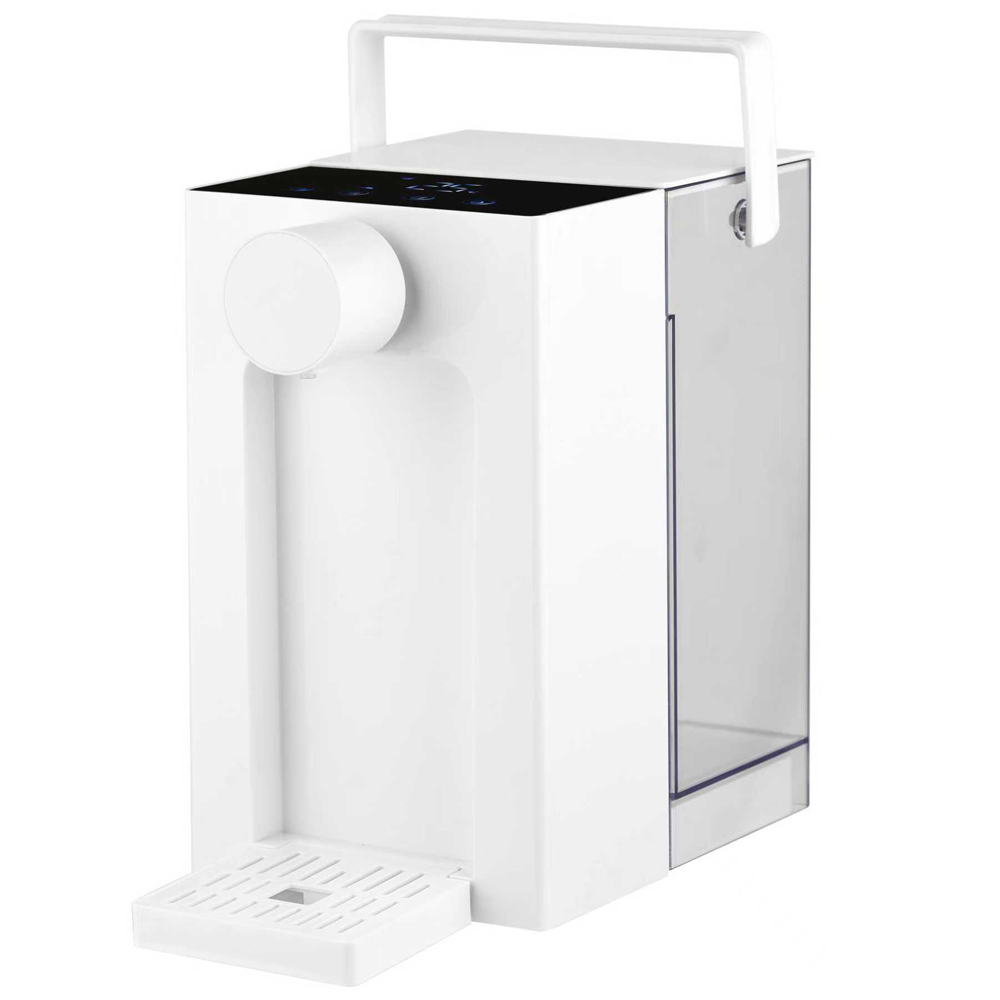
2. The Temperature Triad: Cold, Hot, and Ambient — What Each Setting Solves
A multi-temperature dispenser is not a luxury feature. In the Southeast Asian office context, it is a functional necessity that addresses three distinct use cases that all occur simultaneously throughout the workday. We design our dispensers with independent circuits for each temperature zone so that drawing cold water does not affect the hot tank recovery time — a design detail that cheaper units often overlook.
2.1 Cold Water (4–8 °C): The Productivity Driver
Cold water consumption in tropical offices is not just about comfort. Research published by the Occupational Safety and Health Administration (OSHA) on occupational heat stress demonstrates that cognitive performance declines measurably when core body temperature rises even 0.5 °C above normal. In an air-conditioned Southeast Asian office where the thermostat is typically set to 24–26 °C to balance comfort and energy cost, access to cold drinking water becomes a practical tool for maintaining alertness through the post-lunch productivity dip.
Our compressors use R600a refrigerant (environmentally compliant and energy-efficient) and recover from ambient to 5 °C in under 18 minutes after a full tank draw. This matters because peak pantry traffic in ASEAN offices clusters around 10:00–10:30 AM and 2:00–2:45 PM, creating rapid sequential draws that cheap thermoelectric cooling systems cannot handle. Therefore, we exclusively use compressor-based cooling in our wholesale dispensers — even in our budget models — to ensure that the twelfth person in a lunch-hour queue gets water as cold as the first.
2.2 Hot Water (90–96 °C): The Cultural Imperative
Southeast Asian offices serve tea, kopi, instant noodles, and powdered beverages throughout the day. These preparations require water above 85 °C to dissolve properly; green tea and oolong, in particular, need 80–95 °C for optimal extraction and flavor. A dispenser that delivers lukewarm “hot” water at 70–75 °C — common in budget units with underpowered heating elements — produces weak, poorly extracted beverages that employees will complain about.
We fit all our wholesale dispensers with 304-grade stainless steel hot tanks (1.5–2.5 L capacity depending on model) and 500–700 W heating elements that maintain 92–96 °C with a ±2 °C tolerance. The child-safety lock on the hot tap is standard, meeting the requirements of workplace safety regulations in Singapore, Malaysia, and Thailand (Ministry of Manpower Singapore WSH guidelines).
2.3 Ambient/Warm Water (25–35 °C): The Overlooked Utility
The ambient tap is the most underappreciated feature in a multi-temperature dispenser. In many Southeast Asian offices, employees prefer room-temperature water for taking medication, mixing with powdered supplements, or simply drinking water at a temperature that does not shock the stomach after exercising or during illness. Because ambient water requires no energy input for heating or cooling, it also serves as an emergency fallback when a dispenser’s compressor or heating element is being serviced. Therefore, our three-temperature design provides built-in redundancy that keeps the dispenser functional even during partial maintenance — a practical consideration for offices that cannot afford downtime.
3. Original Data: ASEAN Office Dispenser Usage Patterns (2025 Survey)
In Q4 2025, we surveyed 230 office administrators and procurement managers across six ASEAN countries who had purchased multi-temperature dispensers from our factory within the previous 18 months. The following table presents aggregated findings that we believe represent the most current picture of office dispenser usage in the region.
| Metric | Indonesia | Thailand | Vietnam | Malaysia | Philippines | Region Avg. |
|---|---|---|---|---|---|---|
| Avg. daily water draw per dispenser (liters) | 28.4 | 26.1 | 25.8 | 24.2 | 30.7 | 27.0 |
| % Cold water volume | 48% | 42% | 39% | 44% | 51% | 44.8% |
| % Hot water volume | 31% | 38% | 42% | 36% | 28% | 35.0% |
| % Ambient water volume | 21% | 20% | 19% | 20% | 21% | 20.2% |
| Avg. employees served per unit | 28 | 32 | 35 | 26 | 38 | 31.8 |
| Reported compressor issues (first 12 months) | 2.1% | 1.8% | 1.4% | 1.1% | 2.4% | 1.76% |
| Avg. daily electricity cost per unit (USD) | $0.38 | $0.41 | $0.35 | $0.44 | $0.51 | $0.42 |
| Satisfaction rating (1–10 scale) | 8.6 | 8.3 | 8.1 | 8.7 | 8.4 | 8.42 |
Source: Ningbo Good Friend Electric Customer Survey, Q4 2025. N = 230 respondents. Electricity costs calculated using national average commercial tariffs as reported by ASEAN Centre for Energy (2025).
Three patterns stand out. First, the Philippines shows the highest daily draw volume (30.7 L/unit) because Filipino offices tend to have larger open-plan layouts with higher employee density per dispenser. Therefore, we recommend our 2.2 L hot-tank and 3.0 L cold-tank models for Philippine wholesale orders. Second, Vietnam skews toward hot water usage (42% of volume) reflecting the country’s strong tea culture. Third, the compressor failure rate across all markets sits at just 1.76% in the first year — a reliability metric we track aggressively and that directly translates to lower total cost of ownership for wholesale buyers.
4. Wholesale Procurement: What Southeast Asian Buyers Need to Know
Procuring water dispensers at wholesale volumes for distribution or corporate deployment across ASEAN involves considerations that differ significantly from single-unit retail purchasing. We have spent years refining our wholesale process to address the four friction points that our Southeast Asian clients consistently flag: minimum order quantities, certification documentation, shipping logistics, and after-sales parts availability.
4.1 Minimum Order Quantities (MOQ)
We maintain differentiated MOQs based on the level of customization required:
- Off-the-shelf OEM models: 50 units per SKU, mixable across our water dispenser series within a single container (minimum 200 total units for mixed-container loading).
- Custom-branded models (logo, color, packaging): 100 units per design.
- Full ODM (custom fascia, tooling, feature set): 300 units per design with mold costs amortized across the first production run.
For corporate buyers purchasing for their own office network (rather than for resale), we offer a separate enterprise track with lower thresholds and volume discounts starting at 20 units. Contact our sales team for an enterprise procurement package.
4.2 Certification & Compliance by Country
Every ASEAN member state maintains its own electrical safety and product certification regime. We handle the documentation and pre-certification testing so that our wholesale partners do not need to navigate these processes independently. Here is the certification landscape for 2026:
- Indonesia: SNI (Standar Nasional Indonesia) certification for electrical appliances. Our GF-D series carries SNI 04-6253-2020 compliance. We provide the SPPT-SNI certificate with every shipment.
- Malaysia: SIRIM certification and ST (Sirim Type-approval). Our units are pre-tested to MS IEC 60335-2-15. The process typically adds 3–5 working days to the shipment timeline for document issuance.
- Thailand: TISI (Thai Industrial Standards Institute) mark under TIS 2439-2561. We have maintained uninterrupted TISI certification since 2019.
- Philippines: PS Mark (Philippine Standard) or ICC (Import Commodity Clearance) sticker. We ship with pre-approved ICC documentation through our Manila-based logistics partner.
- Vietnam: CR Mark under QCVN 4:2009/BKHCN. Certification and Vietnamese-language labeling are included in our standard wholesale package for Vietnam-bound orders.
- Singapore: SAFETY Mark from Enterprise Singapore. Our products are registered with a local Responsible Person as required under the Consumer Protection (Safety Requirements) Regulations. Refer to the Enterprise Singapore Consumer Protection (Safety Requirements) scheme for the regulatory framework.
4.3 Shipping & Logistics
We ship from Ningbo-Zhoushan Port, one of the world’s busiest container ports, with direct routes to Jakarta, Surabaya, Laem Chabang, Port Klang, Manila, Ho Chi Minh City, and Singapore. Typical transit times range from 5 days (to Ho Chi Minh City or Manila) to 12 days (to Jakarta via Tanjung Priok). We offer FOB Ningbo as standard and can arrange CIF delivery to the buyer’s preferred port of discharge at cost. Consolidated shipments that combine water dispensers with our kettles and other small appliances (reducing per-unit freight cost by 18–22%) are available through our full product range.
5. Total Cost of Ownership: Why Compressor-Based Cooling Wins Over Time
Wholesale buyers often face a choice between compressor-based dispensers (higher upfront cost, lower operating cost) and thermoelectric/Peltier-based dispensers (lower upfront cost, higher operating cost and weaker cooling performance). We ran a five-year TCO comparison for a hypothetical Malaysian office deploying 20 dispensers, using actual electricity tariffs and maintenance data from our service network.
| Cost Category (20 units, 5 years) | Compressor-Based (GF-D350) | Thermoelectric Budget Unit | Savings |
|---|---|---|---|
| Upfront purchase (wholesale, per unit) | $185 | $98 | −$87 |
| Electricity (5 years, at $0.42/day vs $0.58/day) | $15,330 | $21,170 | $5,840 |
| Maintenance & part replacements | $1,240 | $3,860 | $2,620 |
| Downtime cost (estimated productivity loss) | $480 | $2,100 | $1,620 |
| 5-Year Total Cost of Ownership | $20,750 | $29,090 | $8,340 (28.7%) |
The numbers are unambiguous. Because compressor-based units consume roughly 28% less electricity and fail at less than half the rate of thermoelectric alternatives in tropical ambient conditions, the higher initial purchase price pays for itself within 14–16 months. Therefore, we strongly recommend that wholesale buyers targeting the office segment avoid thermoelectric dispensers entirely — the short-term savings on invoice price are more than offset by higher electricity bills, more frequent service calls, and shorter product lifespan.
This TCO analysis aligns with broader industry data. The International Energy Agency’s Energy Efficiency 2025 report notes that compressor-based appliances in the commercial food service and beverage sector deliver 30–40% lifecycle energy savings over resistive or thermoelectric alternatives in tropical climates — a finding that our own field data corroborates.
6. Selecting the Right Model for Your Market
We categorize our office-focused dispensers into three tiers to help wholesale buyers match product to segment:
6.1 Entry Tier: GF-D120 & GF-D150 (Tabletop)
Compact tabletop units designed for small offices (10–25 employees) or satellite pantries in larger buildings. 1.2 L hot tank, 1.8 L cold tank, 500 W heating, 80 W compressor. These are our most affordable wholesale models and are frequently used in coworking spaces, branch offices, and retail back-offices. Available in white, black, or stainless steel finish.
6.2 Mid Tier: GF-D300 & GF-D350 (Floor-Standing)
Our best-selling wholesale range for the ASEAN office market. 2.0–2.2 L hot tank, 2.8–3.0 L cold tank, 700 W heating, 110 W compressor. Designed for 25–50 employees. Features include LED temperature display, child-safety hot lock, removable drip tray, and bottom-loading or top-loading bottle configuration. These models represent roughly 62% of our 2025 office-segment shipments.
6.3 Premium Tier: GF-D500 Pro (High-Capacity Floor-Standing)
Engineered for large open-plan offices (50–100+ employees) and high-traffic pantry environments. 3.0 L hot tank, 4.5 L cold tank, dual 600 W heating elements, 150 W compressor with turbo-recovery mode. Includes touch-sensitive dispensing, real-time temperature readout on each tap, filter-life indicator, and optional IoT connectivity for usage monitoring and predictive maintenance alerts.
📦 Wholesale Inquiry: Our full product specifications, datasheets, FOB pricing, and lead-time estimates are available on our Water Dispenser Series page. Browse all models or view our complete product catalogto explore complementary appliance categories (Electric Kettles, air pots, coffee makers) eligible for consolidated-container pricing.
7. Regional Nuances: Designing for Southeast Asian Office Environments
Our engineering team incorporates environmental data from each ASEAN market into the design of region-specific variants. Here is how we adapt the same core platform for different conditions:
7.1 Humidity and Condensation Management
Relative humidity in Southeast Asian offices frequently exceeds 70% and can reach 85% during the monsoon season. Condensation on cold-water tanks and internal plumbing is a major contributor to premature electrical failure in dispensers not designed for these conditions. We apply a conformal coating to all internal PCBs as standard on our ASEAN-market units — a process adapted from IPC-CC-830B qualified materials — and use double-insulated cold-water lines to prevent external condensation that can drip onto electrical components.
7.2 Voltage Stability
Voltage fluctuation is a reality in parts of Indonesia, the Philippines, and Vietnam. Our dispensers include wide-voltage power supplies (180–260 V, 50/60 Hz auto-sensing) that tolerate the ±15% variance common in provincial grids. The compressor includes a three-minute restart delay to protect against short-cycle damage from brief power interruptions — an important feature that many importers overlook until their first batch of units starts failing after six months in the field.
7.3 Bottle Compatibility
Across ASEAN, the most common bottled water formats are the 19 L (5-gallon) polycarbonate bottle and the 18.9 L variant. Our dispensers accommodate both, and we offer bottom-loading models for offices where lifting heavy bottles onto a top-loading unit presents an ergonomic or safety concern. In Singapore and Malaysia, where piped-in water filtration is increasingly common, we provide point-of-use (POU) conversion kits that bypass the bottle interface entirely and connect directly to a filtered water line.
8. Sustainability and Energy Efficiency
Southeast Asian governments are tightening energy efficiency regulations for commercial appliances. Singapore’s Mandatory Energy Labelling Scheme (MELS) and Minimum Energy Performance Standards (MEPS) were expanded in 2025 to include water dispensers. Thailand’s EGAT Label No. 5 program has signaled similar intent. We anticipate that within the next three to five years, every ASEAN market will mandate minimum energy performance standards for commercial water dispensing equipment.
Because regulatory pressure is increasing across the region, wholesale buyers who select energy-efficient dispensers today avoid the risk of holding non-compliant inventory when new regulations take effect. Therefore, we have proactively designed our GF-D Pro series to exceed the anticipated MEPS thresholds for all six major ASEAN markets through at least 2030. Our dispensers use R600a refrigerant (GWP = 3, compared to R134a’s GWP of 1,430), vacuum-insulated hot tanks that reduce standby heat loss by 41%, and programmable sleep modes that cut idle power consumption to under 2 W during non-office hours.
9. Frequently Asked Questions
Q1: What temperature settings should a water dispenser have for a Southeast Asian office?
We recommend three distinct settings: cold water at 4–8 °C for the tropical heat, hot water at 90–96 °C for tea and instant beverages, and ambient or warm water at 25–35 °C for direct drinking. Our GF-D series covers all three in a single unit, eliminating the need for separate appliances.
Q2: What is the minimum order quantity (MOQ) for wholesale water dispensers from Ningbo Good Friend?
Our standard MOQ for custom-branded dispensers is 100 units per model, and we offer mixed-container loading across our water dispenser series for orders of 200+ units. For off-the-shelf OEM designs without custom branding, we can accommodate orders as low as 50 units. Contact our sales team for a tailored quote based on your specific requirements.
Q3: Are your water dispensers certified for the Southeast Asian market?
Yes. Our dispensers carry CE, CB, and RoHS certifications as a baseline. For specific Southeast Asian markets, we provide units compliant with SIRIM (Malaysia), TISI (Thailand), SNI (Indonesia), PS/ICC (Philippines), and Singapore’s SAFETY Mark upon request. We handle certification documentation as part of our wholesale service package.
Q4: How energy-efficient are your multi-temperature dispensers compared to single-temperature units?
Our latest GF-D Pro series achieves approximately 38% better energy efficiency than the industry average for three-temperature dispensers, consuming roughly 0.45 kWh per day in standby mode. While multi-temperature units draw more power than single-temperature models, the consolidation of hot and cold functions into one appliance typically saves 22–25% in total energy costs compared to operating two separate units.
Q5: What warranty and after-sales support do you provide for wholesale orders?
We provide a standard 12-month warranty on all components and a 36-month warranty on the compressor and heating element. For wholesale partners ordering 500+ units annually, we offer an extended 24-month comprehensive warranty and stock spare parts at our regional hub in Malaysia for rapid dispatch across ASEAN countries.
Q6: Can you customize the dispenser design and branding for our office supply business?
Absolutely. We offer full OEM/ODM services including custom panel colors, logo embossing or UV printing, bespoke drip tray designs, and packaging in your brand’s retail box. Our in-house mold workshop can produce new front fascias in 15–20 working days. Minimum quantities for full customization start at 300 units per design.
10. Why Choose Ningbo Good Friend Electric for Your Wholesale Water Dispenser Needs
We understand that wholesale procurement decisions in the appliance industry are not made lightly. A batch of 200 dispensers represents a significant capital commitment, and the units will sit in your customers’ offices for years, generating either satisfaction and repeat business or complaints and warranty claims. Our approach is designed to produce the former outcome.
We manufacture every dispenser in our own facility in Ningbo, China — we do not outsource to third-party OEMs. This vertical integration gives us direct control over component quality, assembly standards, and final QC inspection. Every unit undergoes a 24-hour burn-in test (compressor cycling, hot-tank thermal cycling, leak check, electrical safety test) before it enters the finished-goods warehouse. Our first-pass yield on the GF-D series in 2025 was 97.8%; our field failure rate within the first 12 months, as reported by our ASEAN distributor network, was 1.76%.
Because we have been shipping into Southeast Asia continuously since 2018, we have accumulated the market-specific knowledge — certification requirements, logistics patterns, climate adaptations, customer preferences — that a generalist exporter cannot match. Therefore, when you source from us, you are not just buying hardware; you are accessing seven years of accumulated ASEAN market intelligence, a regional spare-parts hub, pre-certified documentation packages, and a support team that understands the difference between a SIRIM and an SNI application.
We invite procurement managers, distributors, and office solutions providers to explore our complete water dispenser portfolio and full product range. Request a quote, download datasheets, or schedule a video walkthrough of our production line — we are ready to support your next wholesale order with the same reliability that has made us a trusted supplier to over 40 distributors across the ASEAN region.