
 0086-574-62518288


Industry News
0102030405
What EU 10/2011 Migration Testing Costs per Kettle SKU
2026-07-22

1. Why EU 10/2011 Migration Testing Is Not Optional
For any B2B buyer sourcing Electric Kettles destined for the European Union,EU Regulation 10/2011 is the single most consequential compliance framework governing plastic, silicone, and rubber food contact materials. The regulation does not apply to the stainless steel body of the kettle itself; rather, it governs every component that contacts food or drinking water during normal use. In a typical electric kettle, this includes the lid seal, the gasket between the lid and the spout, the water level indicator window, any internal tubing, and the seal around the heating element.
The critical point for importers and distributors is this: failure to conduct migration testing before shipping does not merely create a regulatory gap. It exposes the entire supply chain to RAPEX notification, which is the EU's Rapid Alert System for Food and Feed. A RAPEX notification triggers product recalls, port seizures, and can permanently damage a buyer's reputation in the European retail channel. The financial cost of a single recall event routinely exceeds the cumulative cost of full migration testing across an entire kettle product line by a factor of ten or more.
Migration testing under EU 10/2011 is not a one-time gate. Every SKU with a distinct component configuration, material supplier, or manufacturing process requires its own testing protocol. When a buyer evaluates multiple kettle SKUs from a manufacturer such as Ningbo Good Friends Electric Appliance Co., Ltd., the cumulative testing cost becomes a material factor in landed cost calculations. Understanding the cost structure before committing to a production order is essential for maintaining healthy margins on each individual SKU.
This article provides a transparent breakdown of migration testing costs per kettle SKU, covering the three migration categories, the interaction with LFGB, DGCCRF, and CE marking requirements, and practical strategies for reducing per-SKU testing expenditure without compromising compliance.
2. What EU 10/2011 Actually Tests: The Three Migration Categories
EU Regulation 10/2011 establishes three distinct migration test categories, each designed to measure a different aspect of chemical transfer from food contact materials into food simulants. Understanding these categories is the first step in mapping testing costs, because each category requires separate laboratory procedures, separate test specimens, and separate reporting.
Overall Migration Limit (OML)
The Overall Migration Limit measures the total quantity of substances that migrate from a food contact material into food simulants under defined conditions. The regulatory ceiling is 10 mg per square decimetre of surface area (10 mg/dm2). This test is the broadest screening mechanism. It captures the aggregate migration of all non-volatile substances, regardless of their specific chemical identity. Every plastic, silicone, and rubber component in a kettle that contacts water must pass OML testing. The test uses four food simulants: distilled water, 3% acetic acid, 10% ethanol, and olive oil (or substitute simulants), each tested at prescribed temperatures and contact times that simulate worst-case domestic use.
Specific Migration Limits (SML)
Specific Migration Limits target individual chemical substances of concern. For kettle components, the most commonly regulated substances include formaldehyde, melamine, bisphenol A (BPA), heavy metals such as lead and cadmium, and primary aromatic amines. Each substance has its own SML threshold, expressed in milligrams per kilogram of food (mg/kg). SML testing requires advanced analytical instrumentation, typically gas chromatography-mass spectrometry (GC-MS) or inductively coupled plasma mass spectrometry (ICP-MS). Because each substance requires a distinct analytical method, SML costs scale linearly with the number of substances screened.
Sensory Testing
Sensory testing evaluates whether a food contact material imparts any off-taste or off-odour to food or water. While this test is relatively inexpensive on its own, it is mandatory under LFGB Section 31 for the German market and is also a practical requirement for any buyer whose customers will reject kettles that produce a plastic taste when first used. Sensory panels use standardised protocols to assess organoleptic properties, and failure here often points to inadequate curing of silicone seals or residual volatile compounds in plastic components.
3. Cost Breakdown: Testing Fees per SKU Component
The total migration testing cost for a single kettle SKU is a function of three variables: the number of food contact components, the number of migration categories tested, and the number of market-specific certifications required. Below is a representative breakdown based on prevailing industry pricing from accredited EU-notified laboratories. Actual costs vary by laboratory, testing volume, and turnaround time, but the following ranges reflect consistent patterns observed across the European kettle import market.
| Component Type | OML Testing | SML Testing | Sensory Testing | Typical Range (EUR) |
|---|---|---|---|---|
| Silicone lid seal / gasket | 300 - 600 | 400 - 900 | 150 - 300 | 850 - 1,800 |
| Plastic water level indicator | 300 - 600 | 400 - 1,200 | 150 - 300 | 850 - 2,100 |
| Internal plastic tubing | 300 - 600 | 400 - 900 | 150 - 300 | 850 - 1,800 |
| Heating element seal | 300 - 600 | 400 - 900 | 150 - 300 | 850 - 1,800 |
| Lid plastic housing | 300 - 600 | 400 - 1,200 | 150 - 300 | 850 - 2,100 |
For a typical kettle SKU with three to five food contact components, the aggregate migration testing cost per SKU per market typically ranges from approximately EUR 2,500 to EUR 9,500 depending on material complexity, the number of SML parameters required, and the target market. When LFGB sensory testing for Germany or DGCCRF requirements for France are layered on top, the per-SKU figure can increase by 15 to 30 percent.
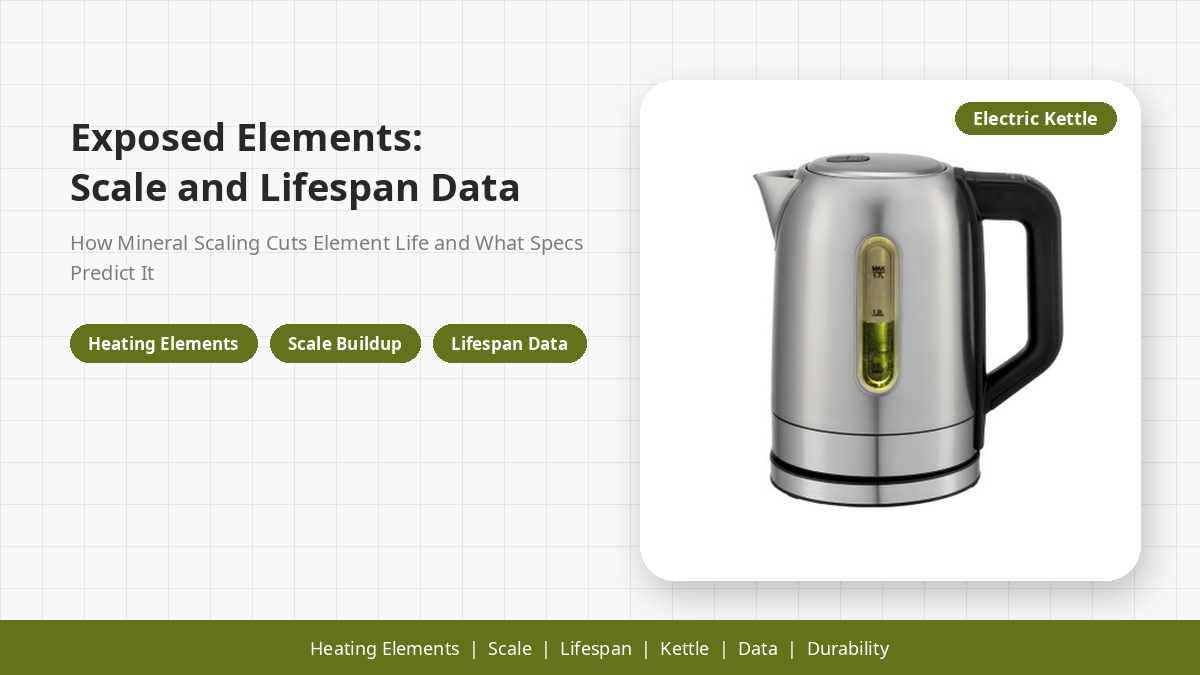
A critical cost driver that many first-time importers overlook is the differential between 304 stainless steel and 316 stainless steel configurations. While the steel body itself is not subject to EU 10/2011 migration testing, kettles built on 316 SS platforms often use higher-grade silicone seals and more complex gasket geometries to achieve the corrosion resistance that 316 SS is specified for. This can introduce additional material variants that require separate migration testing, increasing the certification cost differential by 15 to 25 percent compared to equivalent 304 SS SKUs. For buyers evaluating the 304 stainless steel electric kettle with LED water window, the simpler material stack translates directly into lower per-SKU testing costs.
4. The LFGB, DGCCRF, and RAPEX Layer: Additional Market-Specific Costs
EU 10/2011 provides the harmonised baseline, but individual EU member states impose supplementary requirements that must be satisfied before a kettle SKU can be legally placed on their markets. The three most consequential national frameworks for kettle importers are LFGB (Germany), DGCCRF (France), and the RAPEX notification monitoring system that applies across the entire EU.
LFGB Section 31: The German Market Gate
The Lebensmittel- und Futtermittelgesetzbuch (LFGB) is Germany's food and feed code. Section 31 of LFGB imposes requirements that go beyond EU 10/2011, most notably the mandatory sensory evaluation described above, but also additional specific migration testing for certain substance families that are of particular concern to German regulators. LFGB certification is a prerequisite for placing food contact products on the German market, and German customs authorities actively enforce compliance at the point of import. For a single kettle SKU, LFGB-specific testing beyond the EU 10/2011 baseline adds approximately EUR 500 to EUR 1,500 in incremental laboratory fees.
DGCCRF: The French Compliance Framework
The Direction Generale de la Concurrence, de la Consommation et de la Repression des Fraudes (DGCCRF) oversees food contact material compliance in France. France maintains its own national requirements in addition to EU 10/2011, including specific migration testing for bisphenol A (which France has banned in all food contact materials since 2015) and additional documentation requirements for materials intended for repeated use with hot liquids. DGCCRF compliance testing for a kettle SKU typically adds EUR 400 to EUR 1,200 beyond the EU 10/2011 baseline.
RAPEX Notification Risk
The Rapid Alert System for Food and Feed (RASFF) is the EU-wide mechanism through which member states report non-compliant food contact products. A RAPEX notification resulting from migration test failure can result in product recalls, import bans, and severe reputational damage. The cost of a single RAPEX notification event, including recall logistics, destruction of goods, legal fees, and lost sales, routinely exceeds EUR 50,000 for a single SKU. This risk underscores the importance of pre-shipment testing as an investment rather than a cost.
5. How to Reduce Per-SKU Testing Costs Without Cutting Corners
Reducing per-SKU migration testing costs is a legitimate and achievable objective, provided it is pursued through process efficiency rather than through the elimination of required tests. The following strategies have proven effective for B2B importers managing multi-SKU kettle product lines.
Consolidate Food Contact Materials Across SKUs
The single most effective cost reduction strategy is to specify identical food contact materials across multiple kettle SKUs. When the same silicone compound is used for the lid seal in five different kettle models, the OML, SML, and sensory testing results for that material can be applied across all five SKUs, subject to laboratory confirmation that the contact conditions are equivalent. This approach can reduce aggregate testing costs by 40 to 60 percent for a product line of ten or more SKUs. Manufacturers such as Ningbo Good Friends Electric Appliance Co., Ltd. that maintain consistent material sourcing across their kettle portfolio are better positioned to support this strategy.
Bundle Market Testing into a Single Laboratory Engagement
Engaging a single accredited laboratory for EU 10/2011, LFGB, and DGCCRF testing simultaneously typically costs 10 to 20 percent less than conducting these tests as separate engagements. Many EU-notified laboratories offer bundled food contact testing packages that cover all three frameworks in a single submission, reducing sample preparation costs, administrative overhead, and turnaround time.
Request Subcontractor-Friendly Testing Protocols
When a manufacturer sources silicone seals from a subcontractor who has already conducted migration testing on the same compound, the existing test reports may be accepted by the primary laboratory, subject to documentation review. This does not eliminate the need for final product-level testing, but it can reduce the scope of the testing programme and lower costs accordingly.
Use Component-Level Testing to Eliminate Redundancy
If the same plastic compound is used for both the water level indicator and the lid housing in a single SKU, a single set of migration tests applied to that compound in its most challenging contact condition may be sufficient to demonstrate compliance for both components. The laboratory can advise on whether this approach is acceptable given the specific temperature and contact time profiles of each component.
6. Real-World Failure Scenarios and Their Financial Impact
Understanding what happens when migration testing is skipped, delayed, or conducted improperly is essential for justifying the investment in a robust testing programme. The following scenarios reflect patterns observed in the European electric kettle import market.
Scenario 1: Silicone Seal Failure in Hot Water Contact
A B2B importer shipped 15,000 units of a kettle SKU to a German distributor without LFGB-compliant migration testing. The silicone lid seal, sourced from a new subcontractor, released volatile organic compounds above the SML threshold when exposed to boiling water. German customs intercepted a routine shipment, commissioned independent testing, and issued a RAPEX notification. The importer incurred approximately EUR 85,000 in recall logistics, product destruction, lost sales, and regulatory penalties. The migration testing that would have prevented this failure would have cost less than EUR 3,000.
Scenario 2: BPA Contamination in Plastic Water Level Indicator
A French importer discovered that the polycarbonate water level window in a kettle SKU contained trace levels of bisphenol A that exceeded the zero-tolerance threshold established by French national law. The product was pulled from retail shelves, and the importer was required to issue a consumer-level recall. Total cost: approximately EUR 120,000. The DGCCRF-specific BPA screening test costs EUR 200 to EUR 400 per SKU.
Scenario 3: Sensory Failure in German Retail Channel
A large German retailer rejected an entire container of 8,000 kettles after consumer complaints about a strong plastic taste when boiling water. The manufacturer had not conducted LFGB Section 31 sensory testing. The retailer imposed a contractual penalty, returned the full shipment, and placed the importer on a watch list. The sensory testing cost: approximately EUR 300 per SKU.
7. Building a Compliance-First Kettle Specification
The most cost-effective approach to migration testing is to embed compliance requirements into the kettle specification from the outset, rather than treating testing as an afterthought. A compliance-first specification addresses the following elements before the first production sample is produced.
- Material declaration: Require the manufacturer to provide full material declarations for every food contact component, including the specific polymer or elastomer type, the supplier identity, and any existing migration test reports for the raw material.
- Contact condition profile: Define the worst-case contact conditions for each food contact component, including maximum temperature, contact time, and food type. This information is required by the testing laboratory to configure the migration test protocol.
- Target market matrix: Identify all target markets and their specific requirements before testing begins. A kettle destined for Germany, France, and the UK requires a different testing scope than a kettle destined only for Italy or Spain.
- Material consolidation plan: Where possible, specify identical food contact materials across all SKUs in a product line to maximise the reuse of test results.
- Manufacturer audit: Verify that the manufacturer maintains consistent material sourcing and process control. Variability in material suppliers or manufacturing conditions can invalidate previously obtained test results.
The Goodfriends 304 SS kettle with LED water window, for example, is CE, GS, RoHS, and LFGB certified, which means that the manufacturer has already invested in the testing infrastructure for EU 10/2011 compliance. When a buyer specifies a custom colour, material variant, or accessory component that introduces a new food contact material, the incremental testing cost is significantly lower than starting from scratch because the baseline material stack has already been validated.
CE marking, which is required for all Electric Kettles sold in the EU, encompasses electrical safety under theLow Voltage Directive and electromagnetic compatibility under the EMC Directive. While CE marking does not substitute for EU 10/2011 food contact testing, it is a prerequisite for placing the product on the market. Similarly, RoHS compliance ensures that the kettle's electronic components do not contain restricted substances above permitted thresholds. The ISO 9001 quality management certification of the manufacturer provides additional assurance of consistent production quality, which directly supports the validity of migration test results over time.
8. Frequently Asked Questions
What is the minimum number of migration tests required for a single kettle SKU entering the EU market?
At minimum, each food contact component in a kettle requires Overall Migration Limit (OML) testing using four food simulants under prescribed conditions. If the component contains substances with Specific Migration Limits (SML), additional targeted testing is required. For a typical kettle SKU with three to five food contact components, this translates to a minimum of twelve to twenty individual migration test runs. The exact number depends on the materials used and the specific substances of concern in those materials. A single accredited laboratory can advise on the precise test plan once material declarations are provided by the manufacturer.
How does LFGB testing differ from standard EU 10/2011 testing for kettles?
LFGB, the German food and feed code, imposes all requirements of EU 10/2011 and adds mandatory sensory testing under Section 31, which evaluates whether food contact materials impart off-tastes or odours to food or water. LFGB also applies stricter enforcement at the point of import, with German customs authorities routinely sampling imported products for compliance verification. The incremental cost of LFGB compliance beyond the EU 10/2011 baseline typically ranges from several hundred to over a thousand euros per SKU, primarily driven by sensory panel fees and additional analytical parameters specific to the German market.
Can migration test results from one SKU be applied to a different SKU with similar materials?
Possibly, but only under strict conditions. If two SKUs use the identical food contact material from the same supplier, and the contact conditions (temperature, time, and food type) are equivalent or more favourable in the second SKU, the laboratory may accept the test results from the first SKU for the second. However, this requires formal documentation and laboratory review. It is not sufficient to assume that similar materials produce similar migration profiles. Even small differences in formulation, processing temperature, or surface-to-volume ratio can significantly affect migration outcomes.
What is the typical turnaround time for EU 10/2011 migration testing on a kettle SKU?
Standard turnaround for OML and SML testing at accredited EU laboratories ranges from three to six weeks, depending on laboratory workload and the complexity of the test programme. Sensory testing under LFGB Section 31 adds approximately one to two additional weeks. Expedited testing is available at most laboratories for a premium of 30 to 50 percent above standard rates. Buyers should factor testing lead time into their production planning, as rush testing during peak import seasons can result in significant delays if laboratory capacity is constrained.
What happens if a kettle SKU fails migration testing after production has already been completed?
If a SKU fails migration testing after production, the importer faces several costly options: rework or replacement of the non-compliant component, destruction of finished goods, or shipment to a market with less stringent requirements. In practice, rework is rarely feasible because food contact components in kettles are typically integrated into the assembly and cannot be replaced without full disassembly. The most common outcome is destruction of the affected production run, which represents a total loss of manufacturing, materials, and logistics costs. This scenario underscores the importance of conducting migration testing at the sample approval stage, before committing to mass production.
How often must migration testing be repeated for an existing kettle SKU?
There is no fixed regulatory interval for re-testing under EU 10/2011. However, re-testing is required whenever a material change occurs, including changes in material supplier, material grade, manufacturing process, or tooling that affects the surface properties of food contact components. Best practice among established importers is to conduct periodic verification testing every two to three years, even for unchanged SKUs, to account for potential supply chain drift in raw material quality. Manufacturers with ISO 9001 certified quality management systems are better positioned to maintain material consistency and reduce the frequency of unexpected re-testing requirements.