
 0086-574-62518288


Industry News
0102030405
Why Kettles Fail Abnormal Operation Tests (With Fixes)
2026-10-14
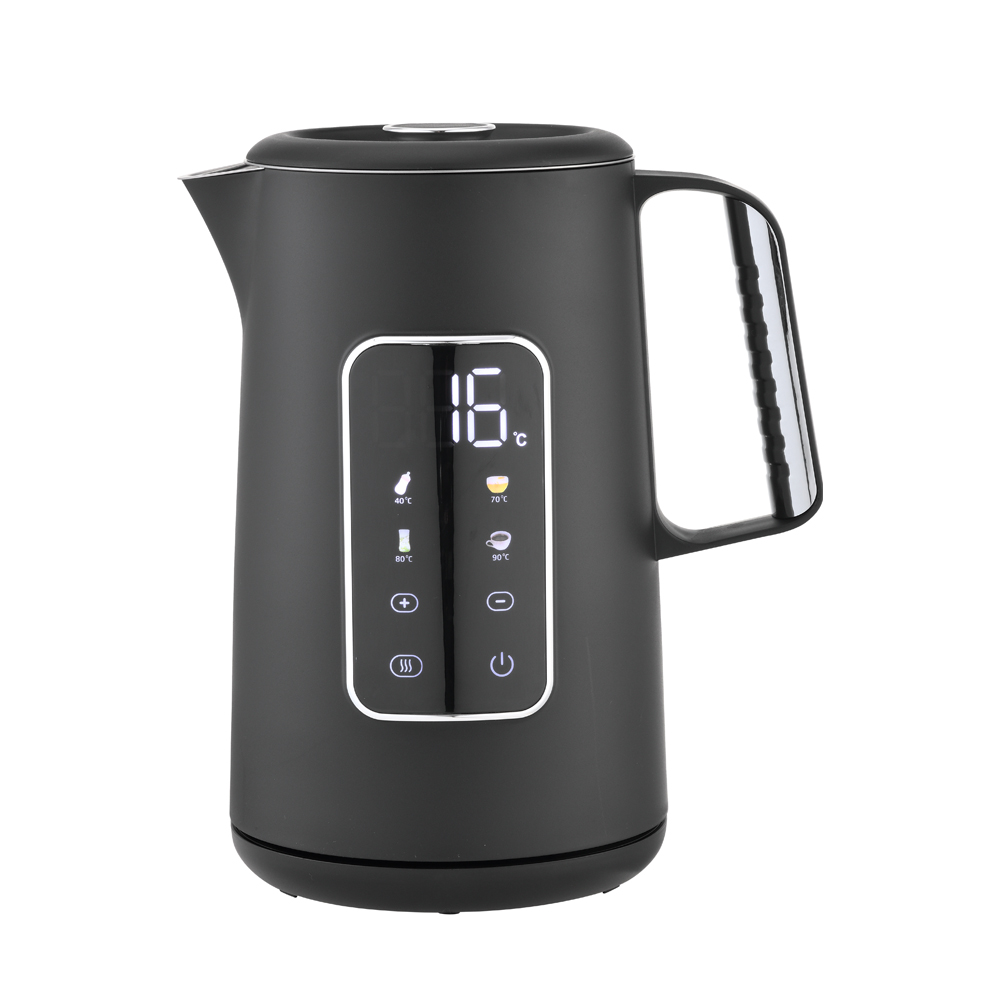
A kettle abnormal operation test is the test that catches what a normal-condition test cannot: the kettle that is operated empty, the kettle that is operated with the lid open, the kettle that is operated with the thermal limiter jammed, the kettle that is left on the base after the water has boiled away, and the kettle that is restarted seconds after a thermal cut-out has fired. These are not the conditions the user is supposed to create; they are the conditions the user creates by accident, and the test is the one the buyer-side compliance file has to contain before the kettle ships to Europe, North America or the Gulf. The most common reason a kettle fails an abnormal operation test is not a manufacturing defect in the heating element; it is a thermal protection design that is sized for the boiling case and not for the empty-base case, a controller that is sized for the no-fault case and not for the stuck-relay case, or a construction detail that is sized for the upright case and not for the tipped case. This guide is written for B2B buyers, brand owners, importers and QA engineers who already work with a fail-safe digital kettle product line such as the Goodfriends HHB6712D precise temperature home kettle (1.7 L rated capacity, 1850-2200 W heating element, 220-240 V at 50-60 Hz, 13 adjustable temperature levels from 40 to 95 deg C, four one-touch presets at 40 / 70 / 80 / 90 deg C, up to 2 hours of Keep Warm mode with smart memory, double-wall stainless steel with a premium matte PP outer shell for cool-touch handling, 304 stainless steel interior, extra-wide opening, sensor touch controls) and who want to plan a safety compliance framework honestly, with the right abnormal-operation coverage in place. It is grounded in the published references on household-appliance safety the buyer-side qualification work is normally measured against — the IEC 60335-1 generic household-appliance safety standard and the IEC 60335-2-15 particular requirement for liquid heating appliances, the UL1082 household Electric Kettles standard on the North American side, theEN 60335 series on the European side, and the supplier-side compliance framework Goodfriends publishes on its safety-certification news page.
TL;DR
- Abnormal operation is the test the normal-condition test cannot catch. Empty base, lid open, thermal limiter jammed, tipped over, restarted after a cut-out — the abnormal operation test exists because the user creates these conditions by accident, and the kettle's protection system has to keep the user safe in all of them.
- The four failure modes a buyer should expect. Boil-dry failure, thermal limiter fatigue, controller logic error, and construction-tipover failure. The fixes are different for each, and the supplier's compliance file should name which protection covers which mode.
- Fail-safe Digital Kettle design is the 2026 default. A redundant thermal limiter, a thermostat + thermal cut-out pair, a controller that defaults to off on sensor fault, and a base geometry that survives a tipover test are the four engineering layers a 2026 kettle is expected to ship with.
- Compliance framework matters as much as the kettle. IEC 60335-1, IEC 60335-2-15, EN 60335 series, UL 1082, and the destination-market plug / voltage / frequency choice are the five items a B2B compliance file has to name before the first PO is signed.
- The supplier's compliance file is the buyer's safety story. The supplier that publishes a written abnormal-operation test report, a sample-by-sample test log, and a destination-market certification list is the supplier whose 2026 program a brand can ship without re-doing the qualification work.
What an abnormal operation test actually is
An abnormal operation test is the second of two test families the household-appliance safety standard applies to a kettle. The first family, the normal-condition test, exercises the kettle the way the user is supposed to use it: filled to the rated capacity, lid closed, base level, controller on the boil cycle, water heated to a controlled temperature, and the kettle allowed to cycle off when the thermostat opens. The second family, the abnormal operation test, exercises the kettle the way the user creates the conditions by accident. The kettle is operated empty. The kettle is operated with the lid removed. The kettle is operated with the thermostat jammed in the closed position. The kettle is operated with the thermal limiter bypassed. The kettle is operated past the rated capacity. The kettle is restarted seconds after a thermal cut-out has fired. Because the user creates these conditions by accident, therefore the abnormal operation test is the one the safety standard uses to verify that the kettle's protection system keeps the user safe in all of them, not just in the normal-condition case.
The IEC 60335-1 generic household-appliance safety standard and the IEC 60335-2-15 particular requirement for liquid heating appliances are the international reference set the abnormal operation test is built against. On the European side, the EN 60335 series is the harmonised implementation of the IEC reference set, and a kettle that ships to the EU is expected to hold a CB certificate (IEC scheme) or an EN 60335 test report. On the North American side, the UL1082 household Electric Kettles standard is the reference, and a kettle that ships to the US or Canada is expected to hold a UL or ETL listing. The destination-market certification list is the first item a B2B compliance file has to contain, and the supplier that publishes the list openly is the supplier whose 2026 program a brand can ship without re-doing the certification work.
The abnormal operation test is structured the same way across the IEC and UL frameworks: the test fixture exercises one fault at a time, the kettle is observed for the duration of the test, the pass criterion is the absence of flame, molten metal, or insulation failure, and the test report records the peak temperature the kettle reached and the time it took to either reach steady state or to fire the protection. The supplier that publishes the test report openly is the supplier whose abnormal operation results the buyer's qualification team can put in the buyer's own compliance file. The supplier that publishes only the certification badge is the supplier whose abnormal operation results the buyer has to ask the sales inbox to get, and the supplier that publishes nothing at all is the supplier whose abnormal operation coverage the buyer's qualification team has to assume is missing.
The four failure modes a buyer should expect on a kettle
On a kettle, the abnormal operation test catches four failure modes, and the protection engineering is different for each. Because the four modes are mechanically and electrically different, therefore a kettle that passes the test on one mode is not a kettle that passes the test on all four. The supplier's compliance file should name the protection that covers each mode, and the buyer's qualification team should be able to read the name of the protection from the file.
Failure mode 1: boil-dry
Boil-dry is the mode the abnormal operation test exercises by operating the kettle with the water level below the minimum mark, or with the kettle empty. The mode is the one the user creates by switching the kettle on without checking the water level, and the protection is the one the user expects: a thermal cut-out that opens the heating circuit when the bottom-of-the-kettle temperature exceeds a defined threshold. The protection is usually a bimetallic strip or a thermal fuse, mounted against the heating element or against the bottom plate, and the design intent is that the cut-out opens before the heating element reaches a temperature that would damage the kettle or start a fire.
The failure mode a buyer should expect is the cut-out that fires at the wrong temperature, the cut-out that fires and latches (so the kettle cannot be reset by the user) when the standard requires a self-resetting cut-out, or the cut-out that fires and the heating element still has a residual thermal path. The fix on the engineering side is to size the cut-out for the worst-case bottom-of-the-kettle temperature the empty kettle can reach, to use a self-resetting cut-out where the standard requires a self-resetting cut-out, and to verify the cut-out by a documented abnormal operation test report. The fix on the buyer-side is to ask the supplier for the abnormal operation test report, and to verify the report names the cut-out and the test result.
Failure mode 2: thermal limiter fatigue
Thermal limiter fatigue is the mode the abnormal operation test exercises by repeating the boil-dry cycle, or by holding the kettle at the cut-out temperature for a defined time, and observing whether the cut-out remains operational. The mode is the one the user creates by re-using a kettle that has fired a cut-out, and the protection is the cut-out's fatigue life. The design intent is that the cut-out fires reliably for the number of cycles the standard requires (commonly 1,000 to 10,000 cycles depending on the test condition), and the failure mode a buyer should expect is the cut-out that fires once and latches, or the cut-out that degrades in trip temperature after a few hundred cycles.
The fix on the engineering side is to use a cut-out rated for the cycle count the standard requires, and to document the cycle count in the cut-out's specification. The fix on the buyer-side is to ask the supplier for the cut-out's specification, and to verify the cycle count is at or above the standard's requirement. The supplier that publishes the cut-out's cycle count openly is the supplier whose fatigue life the buyer's qualification team can put in the buyer's own compliance file.
Failure mode 3: controller logic error
Controller logic error is the mode the abnormal operation test exercises by simulating a sensor fault (a stuck relay, an open thermistor, a shorted thermistor) and observing whether the controller defaults to a safe state. The mode is the one the user creates by using a kettle with a damaged temperature sensor, and the protection is the controller's default-to-off behavior. The design intent is that the controller treats any sensor fault as a request to stop heating, and the failure mode a buyer should expect is the controller that ignores the sensor fault and continues to heat, or the controller that resets the cut-out and continues to heat after the cut-out has fired.
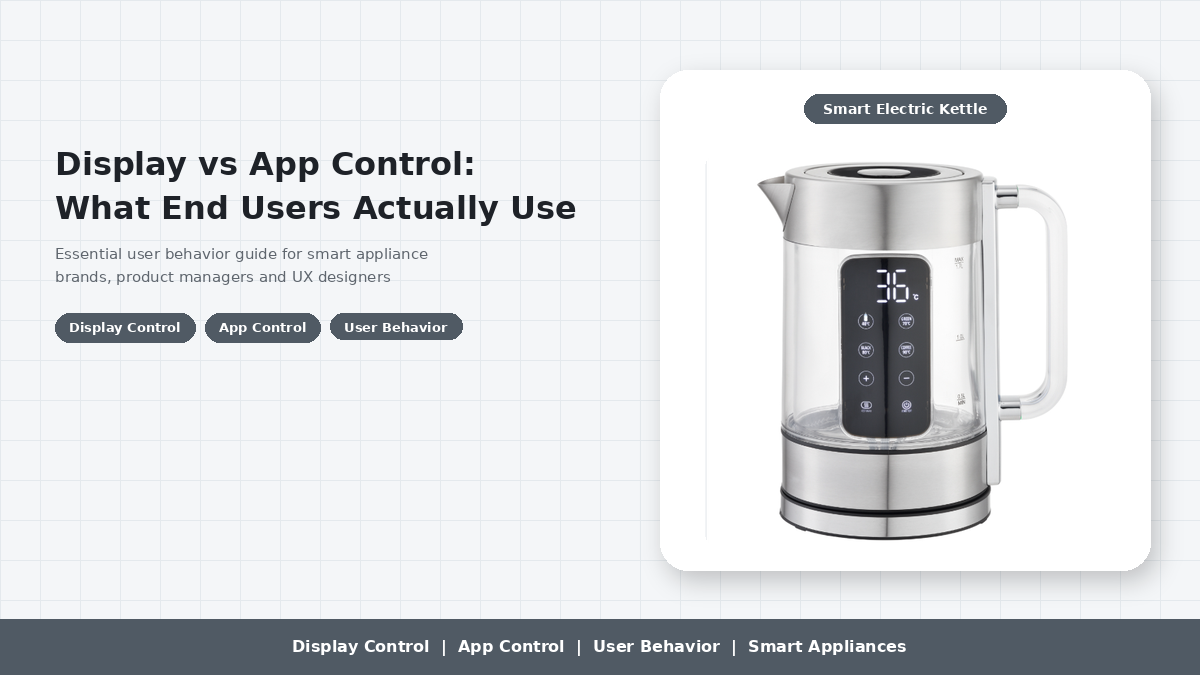
The fix on the engineering side is to use a fail-safe Digital Kettle controller that defaults to off on sensor fault, and to verify the default-to-off behavior by a documented abnormal operation test report. The fix on the buyer-side is to ask the supplier for the controller's default-to-off specification, and to verify the specification is at or above the standard's requirement. The HHB6712D anchor kettle in this article is a digital controller with sensor touch and a digital temperature display, and the published specification includes the smart memory function and the up to 2 hours Keep Warm mode, both of which are controller features the abnormal operation test exercises.
Failure mode 4: construction-tipover
Construction-tipover is the mode the abnormal operation test exercises by tipping the kettle over on its side and observing whether the heating element continues to heat, and whether the kettle's thermal protection fires. The mode is the one the user creates by knocking the kettle off the base, and the protection is the kettle's base geometry (a flat-bottomed kettle stays stable; a tall-narrow kettle tips), the kettle's centre-of-mass design (a bottom-heavy kettle is harder to tip), and the kettle's cord design (a cord that pulls the kettle off the base is a design that creates the condition the test exercises). The failure mode a buyer should expect is the kettle that tips and continues to heat, or the kettle that tips and the heating element stays energised while the water spills.
The fix on the engineering side is to use a wide, flat base geometry, a bottom-heavy centre of mass, and a short-cord design that does not pull the kettle off the base. The HHB6712D anchor kettle is a double-wall stainless steel design with a wide base, which is the design intent a tipover test is friendly to. The fix on the buyer-side is to ask the supplier for the base-diameter and centre-of-mass specification, and to verify the specification is at or above the standard's requirement. The supplier that publishes the base geometry openly is the supplier whose tipover resistance the buyer's qualification team can put in the buyer's own compliance file.
Fail-safe digital kettle design: the four engineering layers a 2026 kettle is expected to ship with
Fail-safe Digital Kettle design in 2026 is the engineering pattern the abnormal operation test exercises, and the pattern is layered.Because the abnormal operation test exercises four failure modes, therefore the engineering pattern has to cover all four, and the supplier that publishes the four layers openly is the supplier whose 2026 program a brand can ship without re-doing the qualification work. The four layers are the ones the HHB6712D anchor kettle is designed against, and the four layers a 2026 buyer should expect on any precise temperature home kettle are:
- Redundant thermal limiter. A primary thermostat for normal cycling, a secondary thermal cut-out for abnormal conditions, and a tertiary thermal fuse for the worst case. The three layers are mechanically independent, electrically in series with the heating element, and rated for the cycle count the standard requires. The supplier that publishes the layer count and the cycle rating is the supplier whose redundant-limiter design the buyer's qualification team can put in the buyer's own compliance file.
- Thermostat + thermal cut-out pair. The thermostat opens at the rated boil temperature and the cut-out opens at the abnormal-condition temperature, with the two devices mounted at different points on the heating element or the bottom plate. The pair is the engineering the abnormal operation test exercises when the test jams the thermostat in the closed position; the cut-out is the protection that opens the heating circuit when the thermostat fails.
- Controller that defaults to off on sensor fault.A fail-safe Digital Kettle controller that reads the thermistor, the boil cycle, and the Keep Warm cycle, and that defaults to off on any sensor fault (open thermistor, shorted thermistor, out-of-range reading). The default-to-off behavior is the engineering the abnormal operation test exercises when the test simulates a sensor fault; the controller is the protection that stops heating when the sensor fails.
- Base geometry that survives a tipover test. A wide, flat base, a bottom-heavy centre of mass, a short-cord design that does not pull the kettle off the base, and a power-base interlock that disconnects the heating element when the kettle is lifted off the base. The geometry is the engineering the abnormal operation test exercises when the test tips the kettle; the interlock is the protection that disconnects the heating element when the kettle is not on the base.
The four layers are the engineering, and the abnormal operation test is the verification. The supplier that publishes all four layers in the compliance file is the supplier whose engineering the buyer's qualification team can put in the buyer's own compliance file. The supplier that publishes one or two of the four is the supplier whose engineering the buyer's qualification team has to ask the sales inbox to complete.
The compliance framework: what the 2026 buyer's file has to name
On a 2026 B2B electric kettle sourcing program, the compliance framework is the second layer the buyer's qualification file has to contain (after the engineering layers above), and the framework is the one the destination market's regulator uses to verify that the kettle is safe to ship. The framework is structured the same way across the IEC, EN and UL reference sets, and the items the file has to name are the ones below. Because the regulator's verification is structured the same way, therefore the buyer's file can be structured the same way, and the supplier that publishes the framework openly is the supplier whose 2026 program a brand can ship without re-doing the certification work.
| Standard / framework | Reference set | What it covers | What the buyer's file has to name | Goodfriends published coverage |
|---|---|---|---|---|
| IEC 60335-1 | Generic household-appliance safety | General construction, marking, mechanical hazards, electrical safety, abnormal operation | CB certificate or test report, dated, with the model number on it | Published via the in-house compliance framework article |
| IEC 60335-2-15 | Particular requirement for liquid heating appliances | Boil-dry, lid open, thermostat jammed, restart after cut-out — the four abnormal operation modes the IEC scheme exercises | CB certificate or test report, dated, with the model number on it | Published via the in-house compliance framework article |
| EN 60335 series | European harmonised implementation | CE marking, EU market access, EU plug and voltage choice | EU declaration of conformity, dated, with the model number and the EU plug / voltage / frequency choice on it | Published via the in-house compliance framework article |
| UL 1082 | North American household Electric Kettles | Construction, marking, electrical safety, abnormal operation under US / Canadian mains | UL or ETL listing, dated, with the model number and the US / Canadian plug and voltage (120 V at 60 Hz) on it | Published via the in-house compliance framework article |
| Destination-market certification list | Country-by-country | The exact set of certifications the supplier holds for the destination market (CB / EN / UL / ETL / GCC / SASO / PSE / KC / BSMI / RCM / etc.) | List of certifications, dated, with the destination-market country and the certification mark on each line | Published via the in-house compliance framework article, with the destination-market list as the key evidence |
The table is intentionally drawn across standards, not across individual part numbers, because the buyer's qualification work is usually structured around the standard first and the part number second. The supplier that publishes the standard coverage openly is the supplier whose certification list the buyer's qualification team can put in the buyer's own compliance file. The supplier that publishes only the certification mark (CE, UL, ETL) without the test report is the supplier whose certification list the buyer's qualification team has to verify against the destination-market regulator's database.
Reading the supplier's compliance file: what a 2026 buyer's qualification team should look for
The compliance file that comes with a qualified kettle lot is the document the buyer's qualification team reads to decide whether the supplier's abnormal operation coverage is complete. A well-formed compliance file contains six items, and the absence of any one of them is a reason to ask the supplier to re-test rather than to re-use the result.
- CB certificate or test report, dated, with the model number on it. The certificate is the evidence the destination-market regulator will accept; the date is the evidence the certificate is current; the model number is the evidence the certificate covers the specific kettle being shipped, not a similar kettle.
- Abnormal operation test report, dated, with the four failure modes named. The report is the evidence the abnormal operation test was actually run; the four failure modes (boil-dry, thermal limiter fatigue, controller logic error, construction-tipover) are the modes the IEC and UL frameworks exercise; the absence of any one of the four is a reason to ask the supplier to re-test.
- Thermal cut-out specification, with the cycle count and the trip temperature. The specification is the evidence the cut-out is rated for the cycle count the standard requires; the trip temperature is the evidence the cut-out opens at the right temperature; the supplier that publishes both is the supplier whose fatigue life the buyer's qualification team can put in the buyer's own compliance file.
- Controller default-to-off specification.The specification is the evidence the controller defaults to off on sensor fault; the supplier that publishes the specification is the supplier whose fail-safe Digital Kettle design the buyer's qualification team can put in the buyer's own compliance file.
- Base geometry and centre-of-mass specification. The specification is the evidence the kettle is rated for the tipover test; the supplier that publishes the specification is the supplier whose tipover resistance the buyer's qualification team can put in the buyer's own compliance file.
- Destination-market certification list, with the country, the certification mark, and the plug / voltage / frequency choice. The list is the evidence the kettle is rated for the destination market; the country is the evidence the certification mark covers the right country; the plug / voltage / frequency choice is the evidence the kettle can be plugged in without an external transformer. The HHB6712D anchor kettle in this article ships at 220-240 V at 50-60 Hz, which is the European / UK / Asia / Africa voltage and frequency choice, and the destination-market certification list is the layer where the US / Canadian 120 V at 60 Hz choice is named separately.
The six items are the buyer's safety story. The supplier that publishes all six openly is the supplier whose 2026 program a brand can ship without re-doing the qualification work. The supplier that publishes three or four of the six is the supplier whose coverage the buyer's qualification team has to ask the sales inbox to complete, and the supplier that publishes only the certification mark is the supplier whose coverage the buyer's qualification team has to assume is missing until the missing items are produced.
| Failure mode | User-side cause | Engineering protection | What the abnormal operation test does | What the buyer's file has to name |
|---|---|---|---|---|
| Boil-dry | User switches the kettle on with the water level below the minimum mark, or empty | Thermal cut-out that opens the heating circuit when the bottom-of-the-kettle temperature exceeds a defined threshold | Operates the kettle empty and observes whether the cut-out opens before the heating element reaches a damaging temperature | Cut-out specification, trip temperature, abnormal operation test report |
| Thermal limiter fatigue | User re-uses a kettle that has fired a cut-out, or holds the kettle at the cut-out temperature for an extended time | Cut-out rated for the cycle count the standard requires (commonly 1,000-10,000 cycles) | Repeats the boil-dry cycle, or holds the kettle at the cut-out temperature, and observes whether the cut-out remains operational | Cut-out cycle rating, abnormal operation test report |
| Controller logic error | User uses a kettle with a damaged temperature sensor (open or shorted thermistor) | Fail-safe Digital Kettle controller that defaults to off on sensor fault | Simulates a sensor fault (open or shorted thermistor) and observes whether the controller defaults to a safe state | Controller default-to-off specification, abnormal operation test report |
| Construction-tipover | User knocks the kettle off the base, or the cord pulls the kettle off the base | Wide, flat base geometry; bottom-heavy centre of mass; short-cord design; power-base interlock | Tips the kettle over and observes whether the heating element continues to heat, and whether the kettle's thermal protection fires | Base geometry, centre-of-mass, interlock specification, abnormal operation test report |
The table is intentionally drawn across failure modes, not across individual part numbers, because the buyer's qualification work is usually structured around the failure mode first and the kettle specification second. The supplier that publishes a test report that names all four failure modes is the supplier whose abnormal operation coverage the buyer's qualification team can put in the buyer's own compliance file. The supplier that publishes a test report that names three of the four is the supplier whose coverage the buyer's qualification team has to ask the sales inbox to complete, and the supplier that publishes a test report that names one or two of the four is the supplier whose coverage the buyer's qualification team has to assume is incomplete until the missing modes are produced.
A 2026 buyer's playbook for qualifying a kettle on abnormal operation
For a B2B buyer qualifying a kettle line for a new program, the abnormal operation coverage is one of three evidence items the qualification file has to contain, alongside the normal-condition coverage and the destination-market certification coverage. The three evidence items, in the order they should be collected, are the ones below.
- Engineering review. Read the published specification for the kettle and confirm the four engineering layers (redundant thermal limiter, thermostat + cut-out pair, controller default-to-off, base geometry) are named in the specification or in the compliance article. The HHB6712D anchor kettle in this article is a digital controller with sensor touch and a digital temperature display, with the smart memory function and the up to 2 hours Keep Warm mode published as the controller features the abnormal operation test exercises. The supplier that publishes the four layers is the supplier whose engineering the buyer's qualification team can put in the buyer's own compliance file.
- Sample abnormal operation test. Order a small sample of the kettle (commonly 3 to 5 pieces), run an abnormal operation test in the buyer's own lab or at a third-party test house, and confirm the result against the supplier's published test report. The sample test is the test that catches the supplier's published coverage being a marketing summary rather than a measured coverage.
- First-article abnormal operation test. Once the production order is placed, run an abnormal operation test on the first articles off the line. The first-article test is the test that catches the supplier's process drifting between the qualified sample and the production run. The first-article test is the test that catches a kettle whose controller default-to-off behavior has drifted between the sample and the production run.
The three evidence items form a chain. Because the engineering review confirms the design intent, therefore it is the cheapest of the three and the one that should be done first. Because the sample abnormal operation test confirms the design execution, therefore it is the test that catches a supplier whose published coverage is not the coverage the supplier can actually build to. Because the first-article abnormal operation test confirms the production process, therefore it is the test that catches a supplier whose sample was hand-built and whose production run is not. Skipping any of the three converts the qualification file from evidence to marketing.
Editorial note on financial figures: No dollar amounts, percentage pass rates, percentage defect rates, warranty cost per unit, or qualification-lab cost figures for any electric kettle on any destination market, any certification, or any supplier are asserted in this article. The cost-line items for a 2026 kettle qualification — the unit price at the buyer's volume tier, the destination-market duty rate, the CB / EN / UL / ETL certification cost, the third-party abnormal operation test cost, and the field-replacement rate at the operator's site — belong on the buyer's books, measured against the buyer's own before-and-after qualification baseline. A higher published abnormal operation coverage is not a justification for a higher unit price until the buyer's qualification file proves the higher coverage is the coverage the supplier is actually building to.
Frequently Asked Questions on Kettle Abnormal Operation Tests
What is a kettle abnormal operation test?
It is the test the household-appliance safety standard applies to a kettle to verify that the kettle's protection system keeps the user safe in the conditions the user creates by accident. The four modes the test exercises are boil-dry (kettle empty), thermal limiter fatigue (kettle held at the cut-out temperature), controller logic error (sensor fault), and construction-tipover (kettle on its side). The IEC 60335-1 / 60335-2-15 and UL 1082 reference sets are the international and North American frameworks the test is built against.
Why do kettles fail abnormal operation tests?
Because the protection system is sized for the boiling case and not for the empty-base case, the controller is sized for the no-fault case and not for the stuck-relay case, or the construction detail is sized for the upright case and not for the tipped case. The four failure modes a buyer should expect are boil-dry failure, thermal limiter fatigue, controller logic error, and construction-tipover failure, and the fix on the engineering side is different for each.
What is a fail-safe Digital Kettle design?
It is the engineering pattern a 2026 kettle is expected to ship with: a redundant thermal limiter (primary thermostat + secondary thermal cut-out + tertiary thermal fuse), a thermostat + thermal cut-out pair, a controller that defaults to off on sensor fault, and a base geometry that survives a tipover test. The supplier that publishes all four layers in the compliance file is the supplier whose 2026 program a brand can ship without re-doing the qualification work. The Goodfriends HHB6712D precise temperature home kettle is a published worked example of the fail-safe digital kettle pattern.
What safety certifications cover electric kettle abnormal operation?
On the international side, the IEC 60335-1 generic household-appliance safety standard and the IEC 60335-2-15 particular requirement for liquid heating appliances cover the abnormal operation test, and the IEC scheme issues a CB certificate that the destination-market regulator can accept. On the European side, the EN 60335 series is the harmonised implementation, and a CE-marked kettle is expected to hold a CB certificate or an EN 60335 test report. On the North American side, the UL 1082 household electric kettles standard is the reference, and a kettle that ships to the US or Canada is expected to hold a UL or ETL listing. The supplier that publishes the destination-market certification list is the supplier whose 2026 program a brand can ship without re-doing the certification work.
How is a kettle abnormal operation test different from a normal-condition test?
A normal-condition test exercises the kettle the way the user is supposed to use it (filled to the rated capacity, lid closed, base level, controller on the boil cycle). An abnormal operation test exercises the kettle the way the user creates the conditions by accident (empty, lid open, thermostat jammed, tipped over, restarted after a cut-out). The abnormal operation test is the one the safety standard uses to verify that the kettle's protection system keeps the user safe in all the conditions the user can create by accident, not just in the normal-condition case.
What is boil-dry protection on a kettle?
It is the thermal cut-out that opens the heating circuit when the bottom-of-the-kettle temperature exceeds a defined threshold, and the protection the user expects when the kettle is switched on without checking the water level. The cut-out is usually a bimetallic strip or a thermal fuse, mounted against the heating element or against the bottom plate, and the design intent is that the cut-out opens before the heating element reaches a temperature that would damage the kettle or start a fire. The cut-out's cycle count and trip temperature are the two engineering items the buyer's compliance file has to name.
What does the supplier's compliance file have to name for a 2026 kettle program?
Six items: the CB certificate or test report, the abnormal operation test report covering the four failure modes, the thermal cut-out specification with cycle count and trip temperature, the controller default-to-off specification, the base geometry and centre-of-mass specification, and the destination-market certification list with the country, the certification mark, and the plug / voltage / frequency choice. The supplier that publishes all six is the supplier whose 2026 program a brand can ship without re-doing the qualification work; the supplier that publishes only the certification mark is the supplier whose coverage the buyer's qualification team has to assume is missing until the missing items are produced.
Where can I get an abnormal operation test report for a kettle I am qualifying?
Request the report from the supplier's compliance framework team alongside the published specification. The report should include the four failure modes named in this article, and the supplier that cannot produce all four is the supplier whose coverage should be re-tested in the buyer's own lab or at a third-party test house before the kettle is qualified for the program.