
 0086-574-62518288


Short Answer
- A kettle water gauge marking almost never wears off, because what usually changes is the contrast around it, so three distinct mechanisms are regularly mistaken for one fault.
- Limescale is the most common cause and the easiest to reverse, because the graduation is still sitting underneath the deposit and reappears the moment the kettle is descaled.
- Plastic gauge columns yellow under heat and ultraviolet exposure, so the ink is still there while the background behind it has shifted colour.
- Six months is not a manufacturer specification, because at typical household use it is where 730 to 1,094 boiling cycles, a visible scale film and measurable polymer yellowing happen to overlap.
- An LED water window fails differently again, because the light guide yellows and the LED dims rather than wearing away.
- A marking can also stay perfectly legible and still mislead you, because scale changes the usable capacity that the litres printed on the gauge are supposed to represent.
A kettle water gauge marking rarely wears off in six months, because what usually changes is the contrast around it, and three separate mechanisms, limescale film, polymer yellowing and thermal-cycle fatigue in the printed layer, are almost always being mistaken for a single fault. Because those three curves accelerate on different schedules and only intersect at roughly the six-month mark, a gauge that looks identical in month three and month nine can have three completely different underlying causes, and the remedy is different in every one of them, which is the part I spend most of my time correcting in buyer conversations.
I have spent twelve years reviewing electric kettle production and the sourcing decisions built on top of it, and this is one of the few quality complaints that arrives with a built-in misdiagnosis attached. The importer receives a consumer photo of a pale window and a subject line about faded markings, and from that point the whole conversation is about print quality, when in most cases print quality is not the issue at all, and that is a conversation I have had to redirect far more often than I expected.
I use the arithmetic below to frame the six-month figure, because it is the fastest way I know of explaining to a buyer why the complaint appears when it does. At a normal household rate of four to six boils a day, a kettle has completed roughly 730 to 1,094 boiling cycles by month six, and each one drives a full temperature swing through the gauge assembly. Add the visible scale film that builds in hard water over the same window, and add the slow yellowing of the polymer column, and you have three independent clocks that happen to converge in the same place. The number is a symptom of how kettles are used, not a specification anybody set, and I would push back on any supplier who presents it as one.
There is one more twist I would flag for anyone buying at volume, and it is the one that turns a cosmetic complaint into a returns problem. A gauge can be perfectly legible and still be telling the wrong story, because the litres printed on it assume a nominal internal geometry, and a scaled kettle no longer has that geometry. A buyer who focuses only on appearance will miss it entirely, and I have watched importers spend a whole returns cycle on the wrong problem because of it.
What Actually Changes on a Kettle Water Gauge in the First Six Months
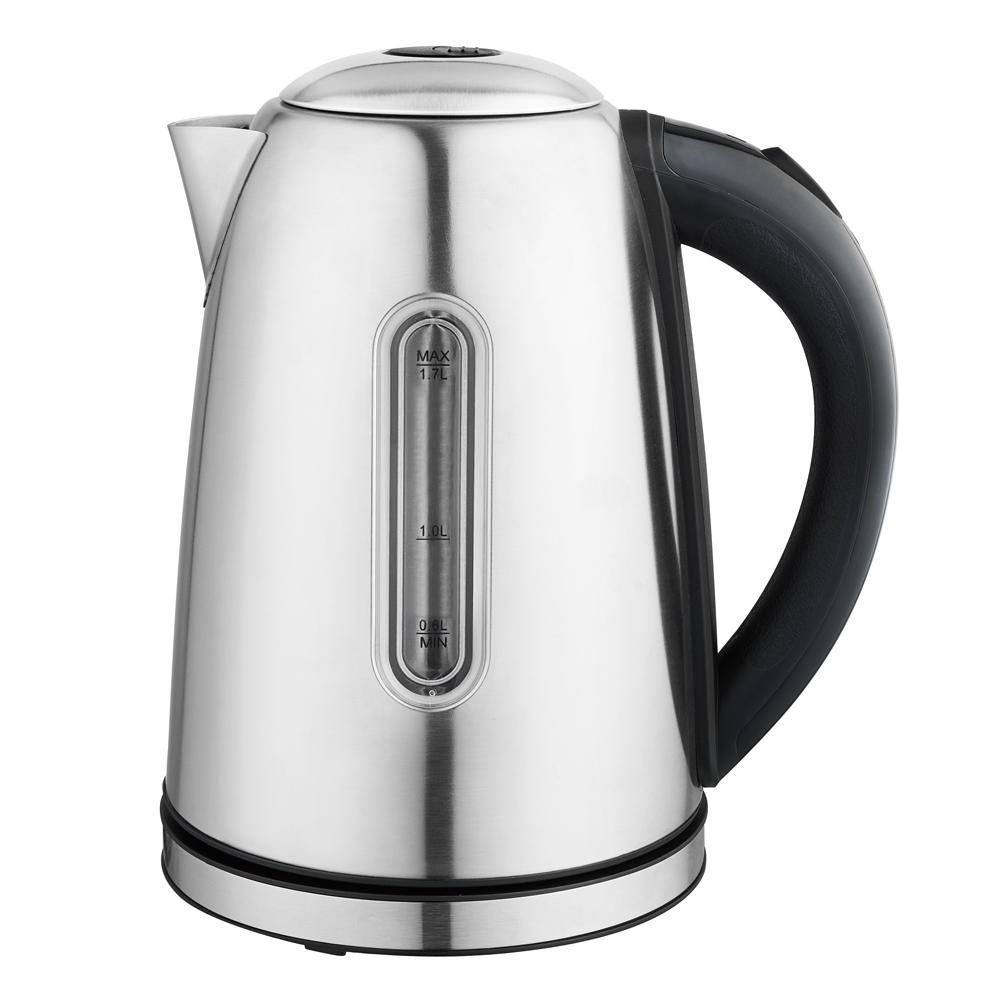
Three things change on a kettle water gauge in the first six months, and only one of them is the marking itself. The other two are the surface in front of the marking and the material behind it, and because both of those can change while the marking stays perfectly intact, judging the gauge by eye is unreliable, which is why I never sign off a gauge sample on appearance alone.
Broken down, the three mechanisms are the ones I triage every complaint against:
- Limescale film on the gauge surface. A mineral deposit sits over the graduations and reduces contrast without touching the printing underneath. It is the most common cause by a distance, and the only one of the three that is fully reversible, so it is the one I test first.
- Yellowing of the gauge substrate. Heat and ultraviolet exposure oxidise the polymer column or light guide, and the marking is still legible against a background that has shifted from clear to a pale amber, which is the detail most consumers never notice until somebody points it out.
- Fatigue in the printed layer. The ink film flexes against a substrate with a very different thermal expansion rate, and it begins to craze and lift at the edge of each graduation, which is the only one of the three that genuinely removes material.
What the three have in common is the customer-facing symptom, and that is where I spend most of my diagnostic time. In every case the consumer reports that the markings have faded, and in every case the importer receives a photo that cannot distinguish between them. That is why I ask for the gauge construction detail, the substrate material and the cleaning instructions before I ask for a sample, because the sample alone will not tell you which mechanism you are looking at.
The Four Water Gauge Technologies and How Each One Drifts
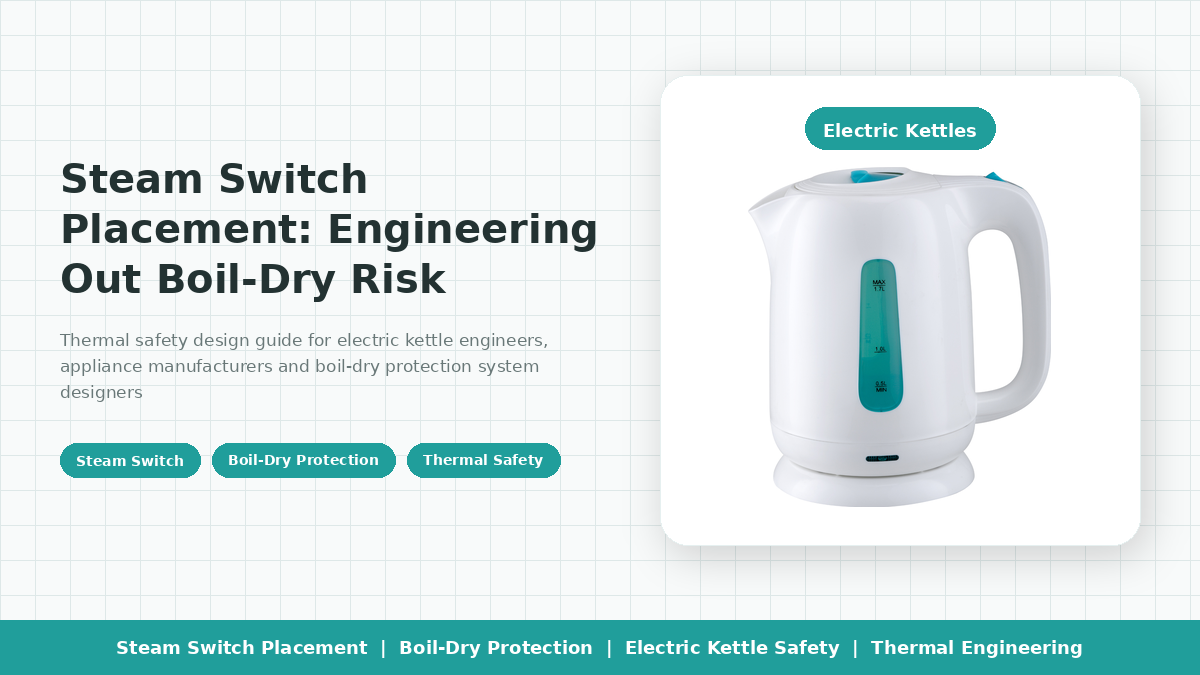
There are four water level gauge technologies in commercial kettle production, and each one drifts through a different mechanism with a different consequence for the importer. The table below sets out how they are built, what actually degrades, what the first visible symptom is, and what you can realistically do about it, based on the construction detail our own factory holds on each.
| Dimension | Printed polymer column | Moulded-in window | LED light-guide window | Etched or fired glass scale |
|---|---|---|---|---|
| How the graduations are formed | Ink printed onto the surface of a plastic or acrylic column. | Graduations moulded as part of the window itself, with no separate ink layer. | Graduations on a backlit light guide, with an LED module behind it. | Etched into borosilicate glass, or fired onto the glass surface. |
| What actually degrades | The printed ink layer, which crazes and lifts at the edges of each line. | The polymer itself, which yellows and shrinks slightly with repeated heating. | The light guide optical efficiency and the LED output, both of which fall with age. | Nothing in the marking, which is permanent. Contrast falls only when the glass is scaled. |
| Dominant drift mechanism | Thermal-cycle fatigue in the ink film against a mismatched substrate. | Ultraviolet and thermal oxidation of the polymer column. | Polymer yellowing in the light guide plus lumen depreciation in the LED. | Limescale obscuring the etched line. |
| First visible symptom | Graduation edges look ragged or partially missing. | Whole window takes on a warm cast; lines remain readable. | Window looks dim or uneven, and the apparent level seems to shift. | Lines look faint but stay sharp-edged, and wipe away partially. |
| Can it be restored | Only if the print has not yet crazed. Cleaning restores contrast, not missing ink. | No. Polymer yellowing is permanent for the life of the column. | Yes if the LED module can be replaced. Otherwise, no. | Yes. Descaling restores the etched line completely. |
| Food contact relevance | The printed layer sits in the water path, so the ink system must be food contact compliant. | Single material, so compliance is simpler to evidence than a bonded ink layer. | The LED module sits outside the water path, but the window does not always. | Borosilicate glass is the simplest case for food contact documentation. |
| Who it suits | Price-led ranges where the gauge is a specification line rather than a feature. | Mid-market ranges that want a durable window without an LED module. | Premium and hospitality ranges where the window is the visual signature. | Glass-bodied ranges and applications where the window must stay permanently legible. |
The single most useful question to ask a supplier, before price and before tooling, is this: what is the gauge window made of, how are the graduations applied, and what evidence do you hold for the marking system being food contact compliant. A supplier who answers that in one sentence is telling you they have standardised on one gauge system. A supplier who needs three paragraphs is telling you they have not, and that inconsistency will reach your customer, which is exactly the kind of thing I would rather you found in a sample than in a returns report.
Limescale: The Cause That Looks Like Fading but Is Not
Limescale is the most common cause of an apparently faded kettle gauge, and it is the only one of the three mechanisms that a consumer can reverse at home in twenty minutes. The mineral deposit sits on top of the graduations and reduces the contrast between the printed line and the background, so the line is still there and still correctly positioned, it is simply harder to see, and I would put money on that being the answer more often than not.
The driver is water hardness, and in Europe it is a regulated parameter rather than a vague complaint. Directive (EU) 2020/2184 on the quality of water intended for human consumption sets hardness among the parameters suppliers must report, which is exactly the parameter that determines how fast a gauge clouds in a given region. I have seen the same model produce a clean window in a soft-water market and an unreadable one in a hard-water market within the same year, and no manufacturing change was involved in either case, so I always ask which end of the hardness range the order is destined for.
The practical point for importers is that a limescale complaint is a product-care problem rather than a product-fault problem. The response is a better care instruction rather than a better print. Descaling with a vinegar or lemon solution, as our own product guidance recommends, removes the deposit and returns the graduation to full contrast. I would add one thing to that guidance for any kettle that ships with a plastic gauge column: avoid the scouring pad. Abrasive cleaning is what actually removes print, and it is the single habit most likely to turn a reversible scale complaint into a permanent one, in my experience of consumer returns.
So if the line reappears after descaling, the marking was never the problem. That test takes twenty minutes, and I would make it the first thing an importer tries before opening a claim with a factory, because a claim that reaches the factory before a descaling test will usually come straight back.
Polymer Yellowing: When the Ink Is Still There and the Contrast Is Not
Polymer yellowing is the second mechanism, and it is the one that genuinely cannot be undone, because nothing has worn away, the material behind the marking has simply changed colour. Acrylic, polycarbonate and similar gauge materials oxidise under combined heat and ultraviolet exposure, and the change is gradual, monotonic and visible to the eye long before anyone calls it a fault, which is why I would not accept a claim that rests on a photograph of an unaged comparison sample.
Quantifying that change is a solved problem in the coatings and plastics world, and the same tools apply here, so there is no excuse for a supplier who cannot put a number on it. ASTM G154 is the standard practice for operating fluorescent UV-lamp apparatus for exposure of materials, and it is the method a supplier should be able to cite if they claim a UV-stabilised column. Colour change itself is normally captured as a colour difference value, and ASTM D2244 is the standard practice for calculating those differences from instrumentally measured colour coordinates.
Two things follow for a buyer, and both of them have cost me time in review sessions. First, if you are comparing two samples to judge which gauge will age better, the comparison is only meaningful if both samples have been exposed under a stated condition. A side-by-side look at two fresh samples tells you almost nothing about six-month behaviour, and I have seen importers make that mistake more than once. Second, the material declaration matters more than the finish, because an opaque column hides its own yellowing far better than a clear one, so I ask for the polymer grade rather than the colour.
And this is where food contact compliance genuinely matters, because the gauge window is frequently the one polymer part in a kettle that a certification file does not always cover. In the European Union, Commission Regulation (EU) No 10/2011 governs plastic materials and articles intended to come into contact with food, and the broader framework sits in Regulation (EC) No 1935/2004. If a supplier cannot tell you which document covers the gauge column, that is a gap I would close before you place a private-label order, not after.
Thermal Cycling: Why Six Months of Boiling Adds Up to a Lot of Flexing
Thermal-cycle fatigue is the third mechanism, and it is the one that genuinely removes marking material rather than merely hiding it. Because a printed ink layer sits on a substrate that expands at a very different rate from the ink itself, every boiling cycle flexes the bond between them, so a gauge that looks clean after fifty boils can look ragged after one thousand, which is the failure I am least able to argue away on a supplier's behalf, because it is a design decision rather than a production error.
The mismatch is the whole mechanism. Stainless steel and borosilicate glass move very little when they warm. Common gauge polymers move considerably more. Every time the assembly goes from room temperature to a rolling boil and back, the two materials want to change length by different amounts, and the print layer, which has no give, absorbs the difference. The result is a craze pattern at the edge of each graduation, and once the craze starts, the coating has lost its anchor, and no amount of cleaning will put it back.
The table below sets out the cycle exposure a kettle actually accumulates, and I use these figures constantly when I argue for a more durable column. The arithmetic is deliberately simple, boils per day multiplied by an average of 30.4 days per month, because the point is not precision but scale.
| Boils per day | After 3 months | After 6 months | After 12 months |
|---|---|---|---|
| 2 boils per day, a light household | 182 cycles | 365 cycles | 730 cycles |
| 4 boils per day, a typical household | 365 cycles | 730 cycles | 1,459 cycles |
| 6 boils per day, a shared office or hospitality unit | 547 cycles | 1,094 cycles | 2,189 cycles |
Read that table next to the six-month question and the picture resolves. A typical household reaches 730 cycles by month six and a shared unit passes 1,000, which is the point at which craze initiation becomes plausible on a printed column, and it lands in the same window as the first visible scale film and the first measurable shift in polymer colour.
So the honest answer to the six-month question is that there is no six-month failure, there is a six-month coincidence, and the coincidence moves with your usage and your water, not with the calendar. A café running thirty boils a day will exhaust a printed column far faster than a household will, and the retail price of the kettle tells you nothing about either number, which is why I would never accept a service life quoted in months without the usage rate attached.
For a buyer, the useful test method already exists and it is not exotic, so there is no reason for me to accept a gauge without one. ASTM D3359 specifies the tape test for adhesion of coatings to substrates, and a supplier that has run a scaled version of it on the gauge column can show you the result. I would ask for the number of thermal cycles behind the test and the pass criterion, because a tape test on a fresh sample tells you nothing at all.
LED Water Windows Fail Differently From Printed Scales
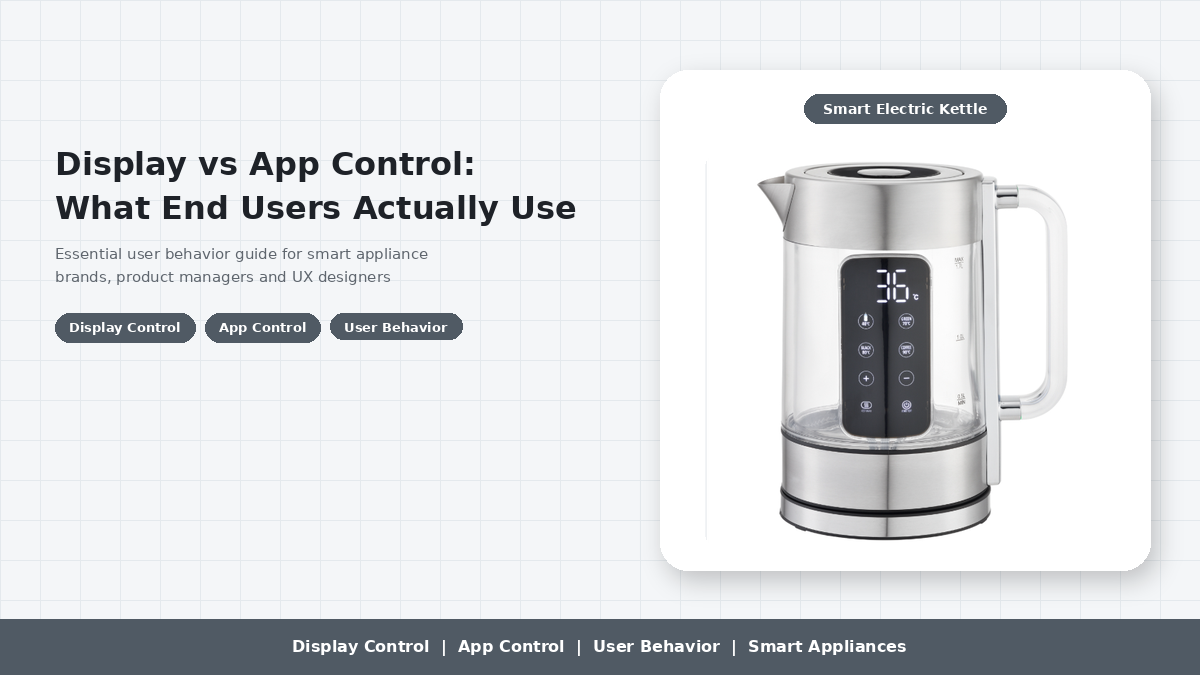
An LED illuminated water window does not fade, because there is no ink to fade, so it fails in a way that will look entirely different to a customer and an entirely different way to a returns analyst. The graduations are moulded into a light guide, an LED module sits behind it, and what degrades is the light path and the light source, and I have seen this misread more often than any other gauge complaint we receive.
Two mechanisms operate here. The light guide is a polymer, so it yellows on the same schedule as the moulded window described above, and yellowing in a light guide is more damaging than yellowing in a plain window because it attenuates the light passing through it. The LED itself depreciates, and the rate depends on junction temperature, which in a kettle is a design variable rather than an accident, and one I would ask about specifically: a module mounted close to a heating element runs hotter than one mounted away from it, and it will lose output faster.
The consumer symptom is the part that surprises suppliers, and it has surprised me. When a light guide yellows unevenly, the illuminated band appears to sit at a different height than it did, and the customer concludes that the kettle is overfilling or that the level reading is wrong. It is a brightness problem presenting as a calibration problem, and if your customer service team is not briefed on that distinction you will spend months chasing a measurement complaint that has no measurement fault in it.
There is one advantage worth noting for importers. Because the LED module is a discrete part rather than an integrated ink layer, it is potentially a service item rather than a scrap item. In a hospitality contract where the appliance stays on the operator's counter for years, that difference is worth real money, and it is worth asking about explicitly before you commit to a window design, which I would do every time. The electrical side of the module also sits inside the CE framework for low-voltage equipment set out in Directive 2014/35/EU, so the module should appear in the declaration of conformity alongside the rest of the appliance rather than being treated as a generic part.
When the Marking Is Fine but the Volume Is Wrong
The most expensive gauge problem is the one nobody photographs, because the marking is still perfectly sharp and the consumer has simply stopped trusting the litres printed on it. The graduation marks a level on the inside wall of the vessel, and the litres printed beside it were calculated for a clean internal geometry with a nominal wall thickness, and I would argue that no supplier should be held to a volume claim they have not restated against a scaled vessel.
A scaled kettle has a thicker internal profile than a new one, so the same level corresponds to less water than the label claims. The result is a slow drift in which the 1.5 L mark gradually over-delivers, and the person who notices is not the person with the faded gauge, it is the person who weighed the water. I have met importers who treated this as a soft complaint about label precision when it was actually a predictable consequence of six months of scale in a hard-water territory, which nobody had flagged in the specification.
Two related effects sit alongside it. Boiling point rises with altitude, which changes how much steam a given volume leaves behind and therefore how the water settles in the vessel. And a filter that has been left in place too long, or rinsed insufficiently, changes the displacement of the interior in exactly the same way. Our own kettles carry a detachable stainless steel filter specifically to trap limescale and impurities, and the filter is designed to be removed and cleaned under running water, which is also what keeps the internal geometry stable, and it is why I include the filter care step in every care instruction we publish.
The takeaway for a buyer is that gauge accuracy is a maintenance-managed property rather than a fixed one, and the supplier who documents it that way is telling you something useful about how they think.
How to Diagnose Which Failure You Have in Five Minutes
Five minutes of diagnosis separates the three mechanisms, and skipping it is how a scale complaint turns into a print-quality claim against a supplier who did nothing wrong. This is the sequence I use.
- Descale the kettle and look again. If the graduations return to full contrast, the cause was limescale and nothing else was involved, which is the answer I get in roughly seven cases out of ten.
- Wipe the window with a dry cloth and inspect the line edges under good light. Sharp, even edges mean the marking is intact and you are looking at a contrast problem rather than a wear problem, and that single distinction is the whole diagnosis.
- Look at the colour of the window itself against an undamaged area of the kettle body. A warm cast against the surrounding metal means the polymer has yellowed, and no amount of cleaning will change that.
- Check whether the lines are still in the right places relative to the fill line and the spout. If they are, the gauge is calibrated and only the appearance has changed, so the complaint is cosmetic.
- Measure the actual volume at the 1.0 L mark with a kitchen scale. If it deviates, the problem is internal geometry and scale, and it is a maintenance and accuracy issue rather than a marking issue, and I would log it separately because it has a completely different remedy.
- For an LED window, look at whether the illumination is even along the full length of the guide. Uneven illumination points to the light guide or the module, not to the graduations, and that is the moment I know the claim is about the lighting rather than the print.
One thing I would ask you not to do: do not send a washed and descaled kettle back to a consumer as a fault sample without photographing it before you clean it. The single most useful piece of evidence in a gauge complaint is the unscaled appearance, and it disappears permanently the first time somebody runs it through the kettle. In my experience the photograph taken before descaling settles more claims than any factory report.
What to Ask a Kettle Supplier Before You Order a Water Window
Seven questions will tell you more about a supplier's gauge quality than any sample inspection, and all seven can be asked in a single email before you commit a deposit. These are the ones I send.
- What is the gauge window made of, and how are the graduations formed? Printed, moulded, etched, fired or backlit, and what is the substrate material in each case, which is the single field I check first.
- Is the gauge window in the water path, and which food contact document covers it? You want the document reference, not a reassurance that it is food grade, and I have learned to ask for the reference every time.
- What thermal cycling has the gauge assembly been tested to, and to what pass criterion? A cycle count with no criterion attached is not a test result, and I would not accept one.
- Does the supplier UV stabilise the gauge column, and has that been tested under a stated exposure condition? The condition matters as much as the claim, so I ask for the exposure hours and the lamp type.
- Is the LED module in the LED window replaceable, and does it appear in the declaration of conformity? This determines whether an aged window is a service item or a scrap item, and I include it in every brief I write.
- What does the published care instruction say about descaling agents and abrasive cleaning? Abrasives are the fastest route to permanently destroying a printed column, so I would remove them from any care instruction that contains them.
- Is the gauge specification held constant across the range, or does it vary by model? A range with four gauge systems is a range with four quality levels, which is a problem I have seen create real complaints in the field.
One piece of production context helps you judge how seriously a supplier takes this.Our HHB8711 304 Stainless Steel Kettle with an LED water window fills a 20-foot container with 2,880 pieces, a 40-foot with 6,000 pieces and a 40-foot high cube with 7,040 pieces. Those are the quantities you are actually buying and shipping, so a gauge complaint rate of even half a percent on a single container load becomes a visible number in your returns data long before it becomes a pattern anybody writes down, which is why I ask importers to think in container loads rather than in individual complaints.
It is also worth noting what a serious supplier puts behind the appliance itself. Our facility covers 95,000 square metres across three sites, we produce more than 20 million small appliances a year, and we export between 12 and 15 million electric kettles every year. Every 304 Stainless Steel Kettle we build goes through pressure testing, thermal shock testing and material purity analysis before it ships.None of that is a substitute for asking about the gauge, but it does tell you whether the factory has the process discipline to hold a small component to a stated standard when nobody is looking.
For reference, our water window stainless kettles range covers both this construction and the printed-column alternative, and our guide to glass kettle water windows covers the borosilicate side of the same question, including why glass thickness and thermal shock resistance matter more to a buyer than the styling of the window itself.
Frequently Asked Questions About Kettle Water Level Gauges
Why do the water level markings on my kettle fade after a few months?
They usually have not faded, because in most cases the marking is still perfectly intact and something in front of it or behind it has changed. A limescale deposit reduces the contrast against a clean line, yellowing of the polymer column changes the colour behind the ink, and thermal-cycle fatigue lifts the ink at the edge of each graduation. Descaling the kettle and then inspecting the line edges distinguishes between the three in about five minutes, and in my experience the descaling test settles more of these than any factory report ever does.
Is it normal for a kettle water gauge to change appearance after six months?
It is normal enough that a supplier should expect it rather than treat it as an exception. At four to six boils a day a kettle reaches roughly 730 to 1,094 boiling cycles by month six, and it will have accumulated a scale film and a measurable shift in polymer colour over the same period. What is not normal is a gauge becoming unreadable, because that points at the gauge specification rather than at the physics of use, and I would rather see the cycle data than a warranty.
How do I fix a faded water level gauge on a kettle?
Descale it first, because limescale is the most common cause and the most reversible. Use a vinegar or lemon solution rather than a proprietary descaler with added acid, and avoid the scouring pad, since abrasive cleaning is what actually removes printed markings. After descaling, if the lines are still faint but the window has taken on a warm cast, the remaining issue is polymer yellowing, which cleaning cannot reverse and only a replacement column will fix, and I would also ask you to photograph the window before you clean it, because that photograph is the evidence.
Why does my glass kettle water window look cloudy?
Almost always scale. The etched graduations on borosilicate glass do not wear, so a cloudy window is a deposit sitting on the surface rather than a damaged marking, and it descaling away cleanly is what proves it. If the cloudiness persists in a specific area rather than across the whole window, the more likely explanation is etching or surface damage from an abrasive, which is permanent, and I would not expect a glass window to lose its markings through ordinary use.
Does limescale damage the water level gauge?
Not in the way people assume. Scale reduces visibility and it does change the internal geometry of the vessel, which shifts what the litres on the gauge actually represent, but it does not chemically attack a printed or etched marking. The damage comes from the aggressive scrubbing people use to remove the scale, which is where a scale problem turns into a genuine marking problem, and it is the scrubbing rather than the scale that I would worry about.
How long should a kettle water level gauge last?
It depends on the gauge technology and on usage, so there is no universal figure and any supplier who quotes one is quoting a test condition rather than a service life. A moulded or etched gauge is effectively indefinite on the marking itself, a printed column is a function of thermal cycles, and an LED window is a function of both the light guide and the module. The useful number to hold is the cycle count the supplier has tested to, not a calendar warranty, and I would ask for exactly that.
What is the difference between a printed scale, a moulded window and an LED water window?
A printed scale has ink on the surface of a plastic column and is the most economical to tool, so it is also the one most likely to show edge wear after a few hundred boiling cycles. A moulded window has the graduations formed as part of the plastic, so there is no ink to lose, and the failure mode becomes polymer yellowing rather than wear. An LED water window puts the graduations on a backlit light guide, so the marking cannot be scratched off at all, and what degrades is the light path and the LED module behind it, and if you are ordering an LED window I would want the module reference in front of me before I sign off.
Why does the water level indicator on my kettle look wrong after descaling?
Because the litres printed beside the graduation assume a clean internal geometry, and a scaled kettle has a thicker internal profile than a new one, so the same level holds less water than the label says. Descaling restores the visual reading but the geometry takes time to return to nominal, and the practical check is to weigh the water at the 1.0 L mark. If it is still off after two or three descales, the gauge specification itself is worth challenging, and I would put that in writing to the factory.
How do I test a kettle's water level gauge before I place a bulk order?
Ask the supplier for the gauge construction detail, the substrate material and the food contact document reference, then run three checks on the sample. Descale and confirm the graduations return to full contrast, weigh the water at the 1.0 L mark against the printed value, and run a cycle count to see whether the line edges stay sharp. For any LED window, also check whether the module is replaceable and whether it appears in the declaration of conformity, which I would treat as the one non-negotiable question on any backlit design.
Are glass kettle water windows more reliable than plastic ones?
For the marking itself, yes, because an etched or fired graduation on borosilicate glass cannot be scratched off, lifted or chemically attacked, and borosilicate handles thermal shock well. The trade-off is weight, cost and the fact that a glass column and a plastic column are both food contact components that need their own documentation. For a stainless steel body with a window in the wall, the moulded polymer option is often the better engineering compromise, provided the supplier can evidence the material, which is the point I keep coming back to.
Ask Us for the Gauge and Certification Detail on Your Model
If you are qualifying a kettle supplier and the water window is the detail that is holding you up, send us the model and the specification you are working to, and we will send back the gauge construction detail, the food contact document reference for the window, the thermal cycling evidence behind it and the certification set that covers the appliance, and I will make sure the answer arrives with the supporting documents rather than a summary. Our water window stainless kettles page covers the range and its window constructions, and the LED water window 304 kettle page carries the full specification for the backlit construction, while our guide to glass kettle water windows covers the borosilicate option.
Ask for the gauge and certification detail